
Now that we are past Memorial Day, it is time to start thinking about that beach vacation.
To help with your reading selections, below I have highlighted episodes from Planetary Radio’s Book Club Edition that discussed three different books. I have included a link to the podcast as well as a quick summary from each book jacket.
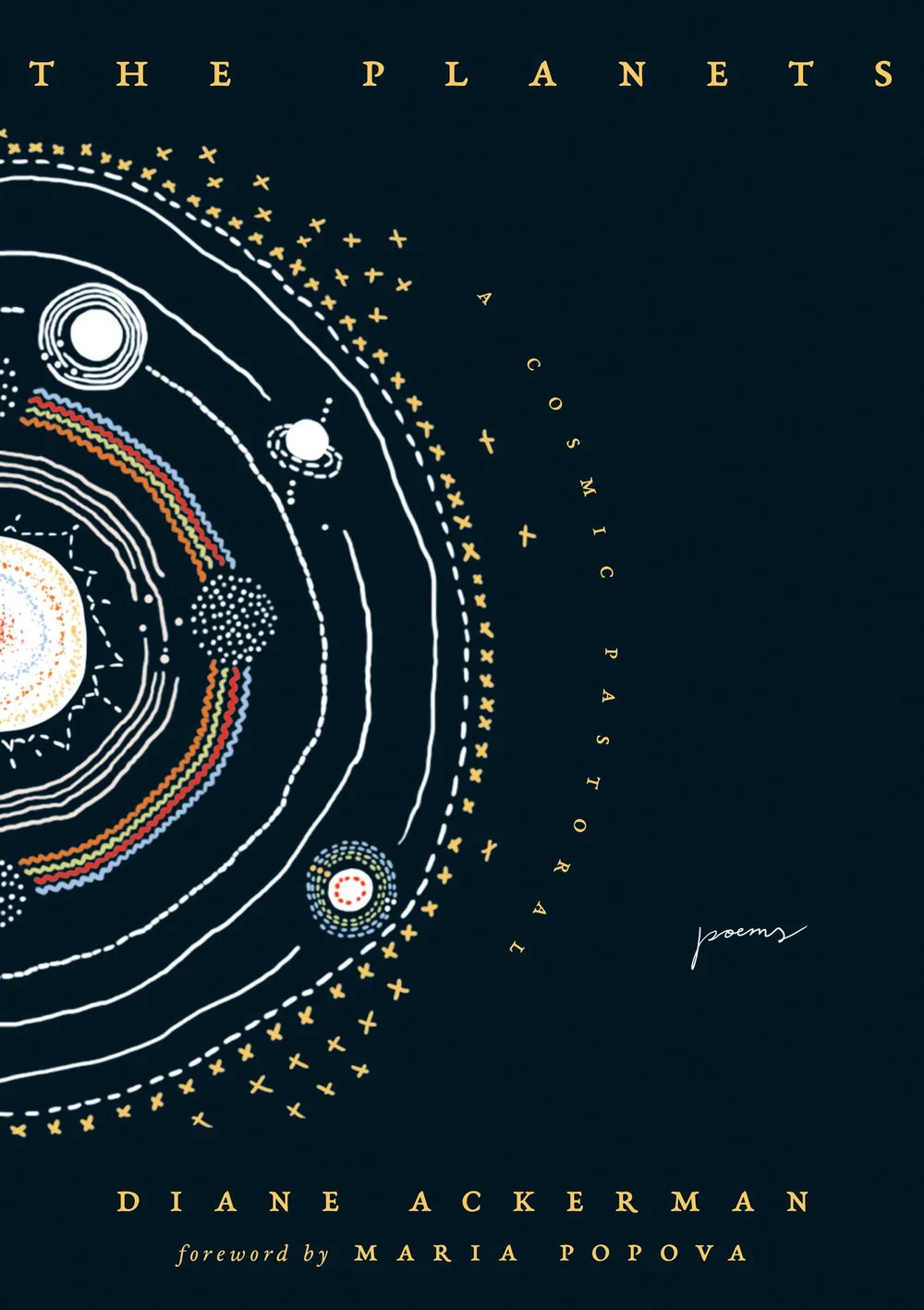
Diane Ackerman and “The Planets: A Cosmic Pastoral”
First published in 1973, The Planets: A Cosmic Pastoral introduced not only a splendid new poet but a whole new adventure in poetry. With bravura style, unbridled imagination, and a connoisseur’s eye for precise scientific detail, Diane Ackerman’s debut brought us an unforgettable ode to each planet in our solar system, not to mention the moon, the comet Kohoutek, and the asteroid belt, as well as strange voyages to the stars, the bottom of the sea, through the human body, and into the mind.
Diane Ackerman herself says: “I’ve always been baffled by people who write about nature only in terms of, say, junipers and cornfields, eschewing all things so-called ‘scientific,’ as if science were, per se, the spoil-sport of feeling. So wonderless a view of nature really doesn’t appeal to me.” The Planets is a rare fusion of art and science—one of the great poetic works of cosmic imagination.
Founder and CEO Peter Beck on “The Launch of Rocket Lab”
The Launch of Rocket Lab takes you behind the scenes of one of the most innovative aerospace companies in the world. From humble beginnings in Auckland to launching rockets from the Mahia Peninsula and Virginia and listing on the Nasdaq, this is the remarkable story of Kiwi ingenuity on a global scale.
The book chronicles how Rocket Lab founder Peter Beck and his team challenged traditional aerospace giants to create a revolutionary approach to satellite launches, overcoming extraordinary technical and business challenges along the way.
Through exclusive interviews and unprecedented access, discover how Rocket Lab is redefining our approach to space with their Electron rocket, Photon satellite bus, ambitious interplanetary missions and the new Neutron Rocket. Featuring hundreds of beautiful high quality images from the archives and new graphics.
Caleb Scharf and “The Giant Leap: Why Space is the Next Frontier in the Evolution of Life”
The story of life has always been one of great transitions, of crossing new frontiers. The dawn of life itself is one; so, too, is the first time two cells stuck together rather than drifting apart. And perhaps most dramatic were the moves from the sea to land, land to air. Each transition has witnessed wild storms of innovation, opportunity, and hazard. It might seem that there are no more realms for life to venture. But there is one: space.
In The Giant Leap, astrobiologist Caleb Scharf argues that our journey into space isn’t simply a giant leap for humankind—it’s life’s next great transition, an evolution of evolution itself. Humans and our technology are catalysts for an interplanetary transformation, marking a disruption in the story of life as fundamental as life’s movement from sea to land, and land to sky.
Inspired by Darwin’s account of his journey on the Beagle, and packed with stories from the past, present, and future of space travel, The Giant Leap thrills at both life’s creativity and the marvels of technology that have propelled us into the cosmos. And it offers an awesome glimpse of the grander vistas that wait in the great beyond.
Note: An earlier post on this site also discussed Mr. Scharf’s book.

