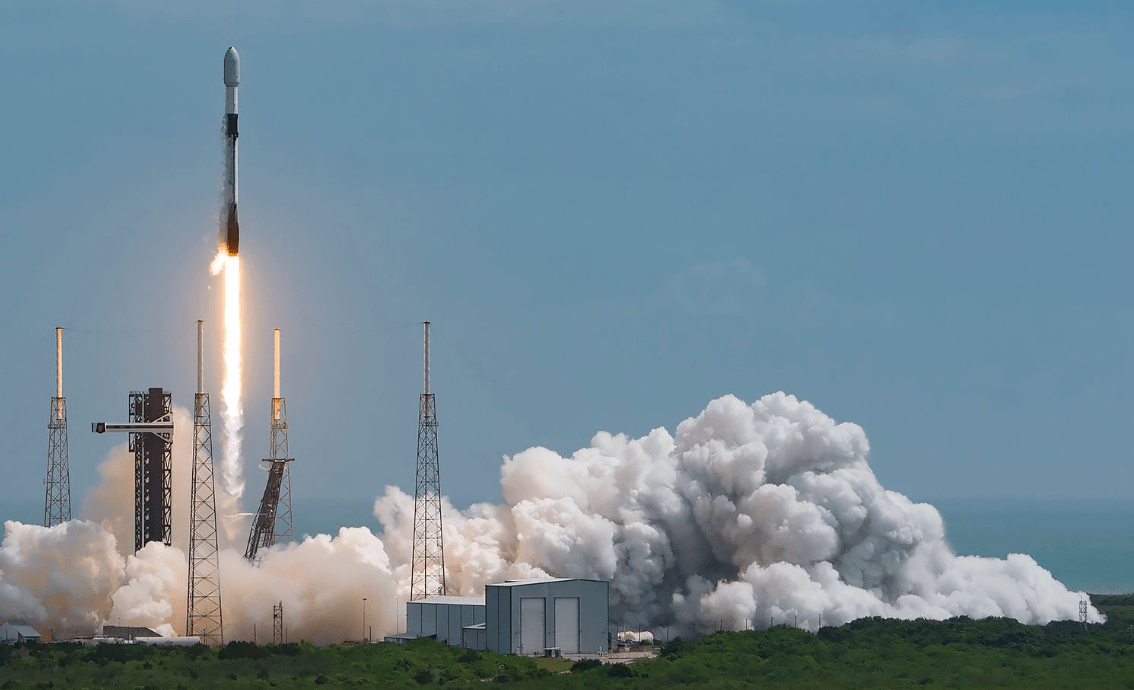
Image (Credit): Successful launch of a SpaceX Falcon 9 on August 4, 2024 sending supplies to the ISS. (SpaceX)
The weather cleared enough in Florida on Sunday for the SpaceX launch to take place, sending the Northrop Grumman Cygnus cargo spacecraft towards the International Space Station (ISS) after some earlier delays.
At 11:02 am ET, SpaceX’s Falcon 9 launched Northrop Grumman’s 21st Commercial Resupply Services mission (NG-21) to the ISS from Space Complex 40 (SLC-40) at Cape Canaveral Space Force Station in Florida.
The spacecraft will intercept the ISS on Tuesday, August 6. With the extra Starliner astronauts on board awaiting permission from Boeing to return to Earth, it is likely that the supplies will be very welcome.
Another three astronauts will be launched to the ISS on August 18 as part of the normal crew rotation. Hence, it will get even more crowded at the station by mid-August.
Update: The next crewed mission to the ISS was moved to “no earlier than” September 24 to give the Starliner more time to return to Earth.
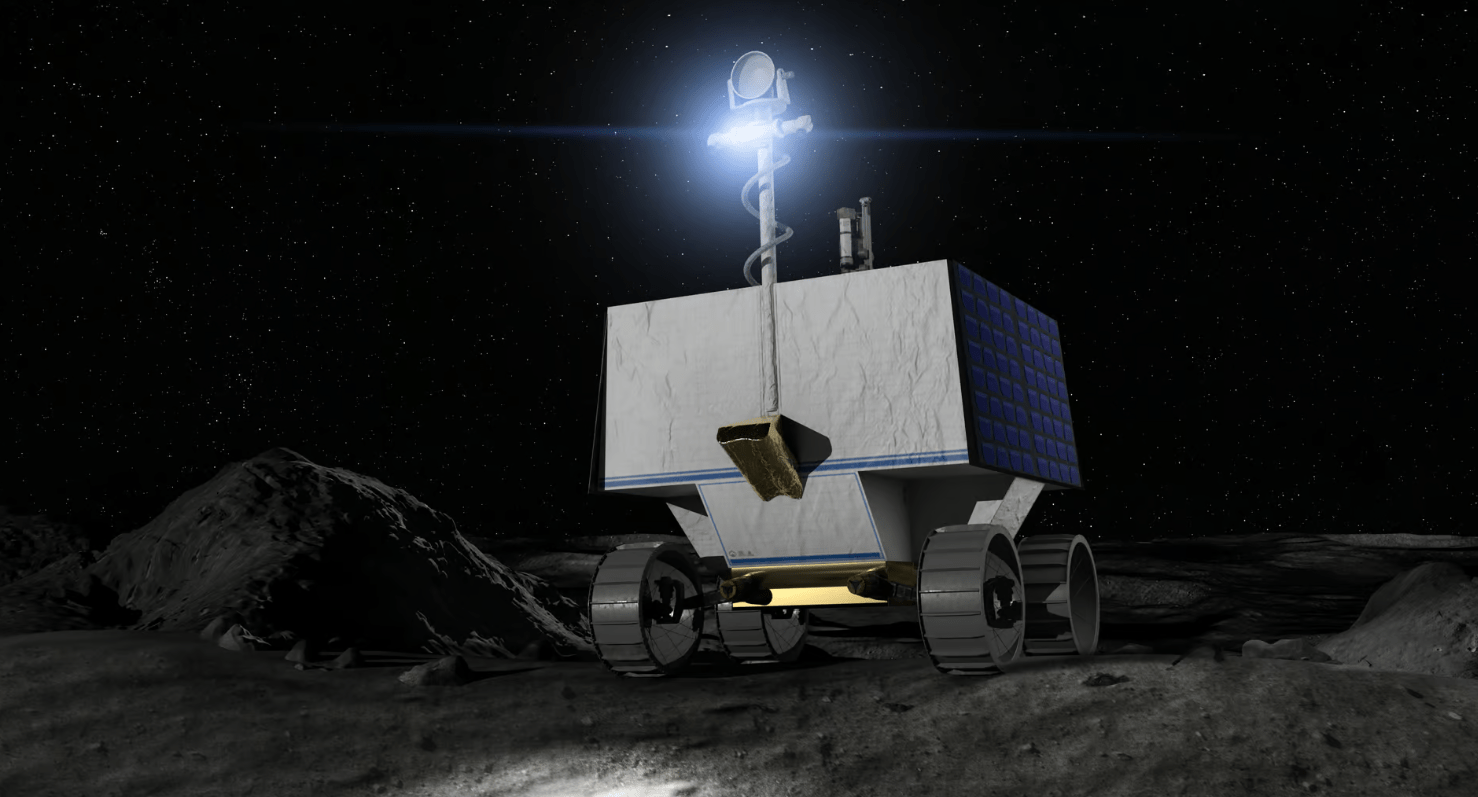
Image (Credit): Artist’s rendering of NASA’s Volatiles Investigating Polar Exploration Rover (VIPER) on the lunar surface. (NASA)
“I’m very disappointed in the recent NASA decision to cancel the VIPER rover…Please work with me as the bill moves forward to look for ways to repurpose the lander portion of this mission to advance moon-to-Mars objectives. The mission directly supports a national imperative for continued US leadership in science and exploration in the face of urgent geopolitical competition.”
-Statement by Senator Shelley Moore Capito (R-WV) at a July 25, 2024 budget hearing, as quoted by CNN. The CNN story highlights efforts by The Planetary Society to encourage the continuation of the mission as well as NASA’s efforts to solicit U.S. industry and international partners’ “expressions of interest” by August 1, 2024 for ways to use “the existing VIPER rover system at no cost to the government.”
Image (Credit): Northrop Grumman’s Cygnus cargo spacecraft as seen from the ISS. (Northrop Grumman)
The weather in Florida has delayed today’s Northrop Grumman resupply mission to the International Space Station (ISS). In fact, SpaceX is launching the payload for Grumman from the Cape Canaveral Space Force Station rather than the typical launch facility in Virginia. The Northrop Grumman Cygnus cargo spacecraft with its 8,200 pounds of supplies will probably need to sit on the launch pad for a few more days until the weather clears.
Why is SpaceX launching a Grumman resupply mission, you might ask? Doesn’t Grumman have its own rocket? Yes, and no. It has launches most of its resupply missions on its own Antares rocket, but the newest version of the rocket, the Antares 330, is still being finalized and is not expected to be ready until next year. As a result, Grumman procured three flights from SpaceX.
The ability of the commercial parties to support one another’s missions is encouraging, just as the European Space Agency dependied on SpaceX while it developed a new generation of its Ariane rocket.
SpaceX is always there to help (at a cost, of course) as other rocket companies prepare for the challenges ahead. In the case of Northrop Grumman, it needed to move away from its reliance on Ukrainian/Russian rockets and create a more reliable supply chain.
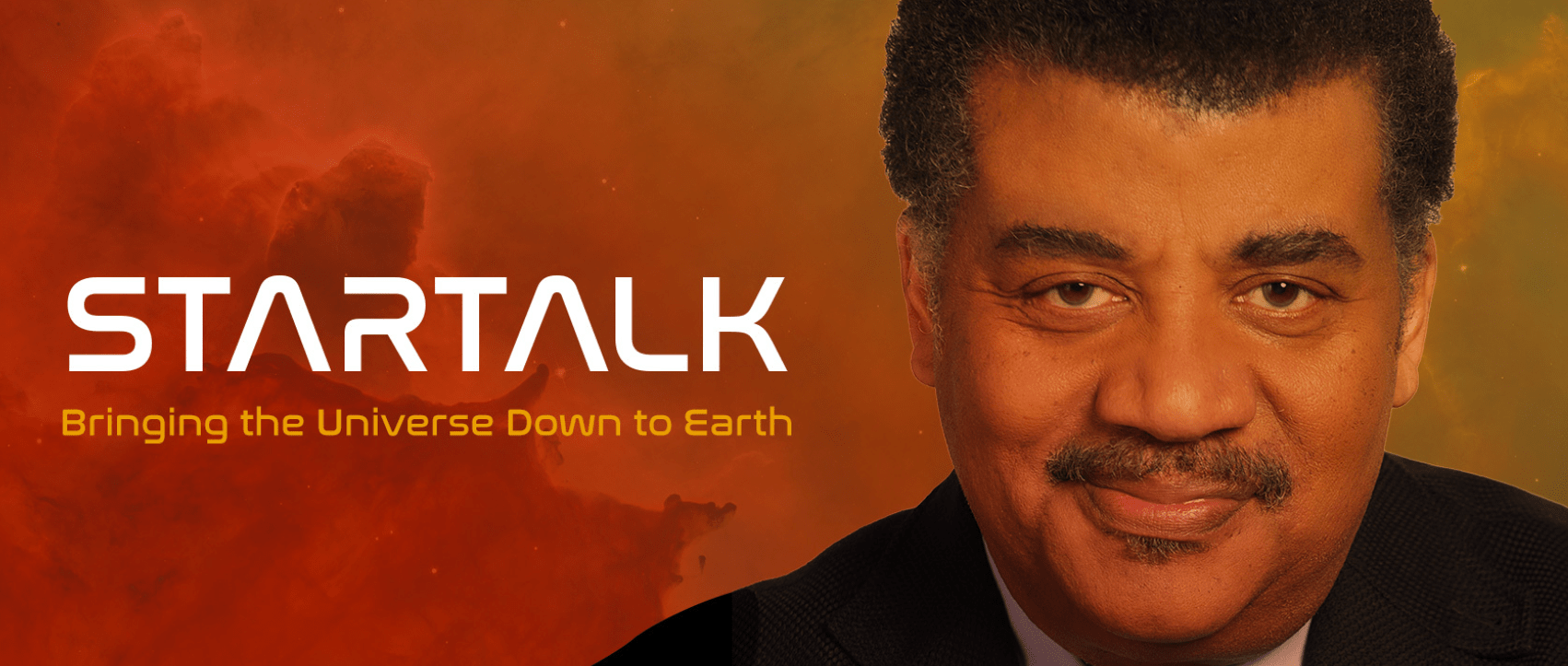
Neil deGrasse Tyson interviews futurist Ray Kurzweil in this repeat StarTalk episode from November 2022 titled “Could We Someday Liver Forever? With Ray Kurzweil.” It is a heavy conversation about living forever as we integrate technology even more into our lives. Throughout the conversation Neil makes reference to a book coming out in 2023. In fact, the book came out in June of this year, which is probably why the episode is available again.
Here is a description of the new book from the publisher:
In this entirely new book Ray Kurzweil brings a fresh perspective to advances toward the Singularity—assessing his 1999 prediction that AI will reach human level intelligence by 2029 and examining the exponential growth of technology—that, in the near future, will expand human intelligence a millionfold and change human life forever. Among the topics he discusses are rebuilding the world, atom by atom with devices like nanobots; radical life extension beyond the current age limit of 120; reinventing intelligence by connecting our brains to the cloud; how exponential technologies are propelling innovation forward in all industries and improving all aspects of our well-being such as declining poverty and violence; and the growth of renewable energy and 3-D printing. He also considers the potential perils of biotechnology, nanotechnology, and artificial intelligence, including such topics of current controversy as how AI will impact employment and the safety of autonomous cars, and “After Life” technology, which aims to virtually revive deceased individuals through a combination of their data and DNA.
The culmination of six decades of research on artificial intelligence, The Singularity Is Nearer is Ray Kurzweil’s crowning contribution to the story of this science and the revolution that is to come.
You will want listen to the podcast interview, and afterward you might even want to pick up the book.
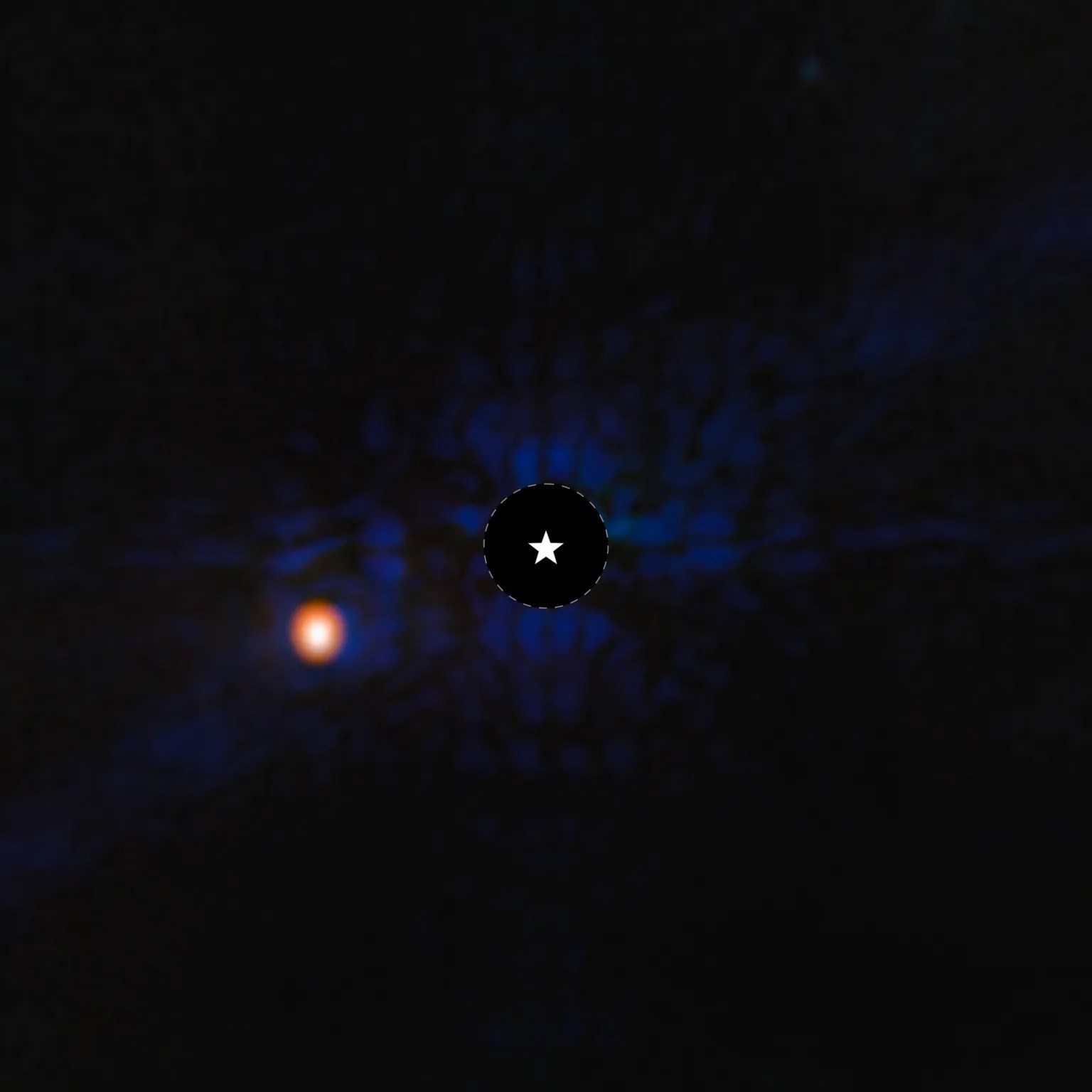
Image (Credit): JWST’s view of exoplanet Epsilon Indi Ab. (NASA, ESA, CSA, STScI, E. Matthews (Max Planck Institute for Astronomy))
This week’s image looks dark and simple, and yet it is an amazing sight provided by NASA’s James Webb Space Telescope (JWST). It shows a directly imaged exoplanets that resides about 12 light-years from us. It is called Epsilon Indi Ab and is several times the mass of Jupiter.
Here is an explanation from NASA about what you are seeing in the image:
This image of the gas-giant exoplanet Epsilon Indi Ab was taken with the on NASA’s James Webb Space Telescope’s MIRI (Mid-Infrared Instrument). A star symbol marks the location of the host star Epsilon Indi A, whose light has been blocked by the coronagraph, resulting in the dark circle marked with a dashed white line. Epsilon Indi Ab is one of the coldest exoplanets ever directly imaged. Light at 10.6 microns was assigned the color blue, while light at 15.5 microns was assigned the color orange. MIRI did not resolve the planet, which is a point source.