
Here are some recent space-related stories of interest.
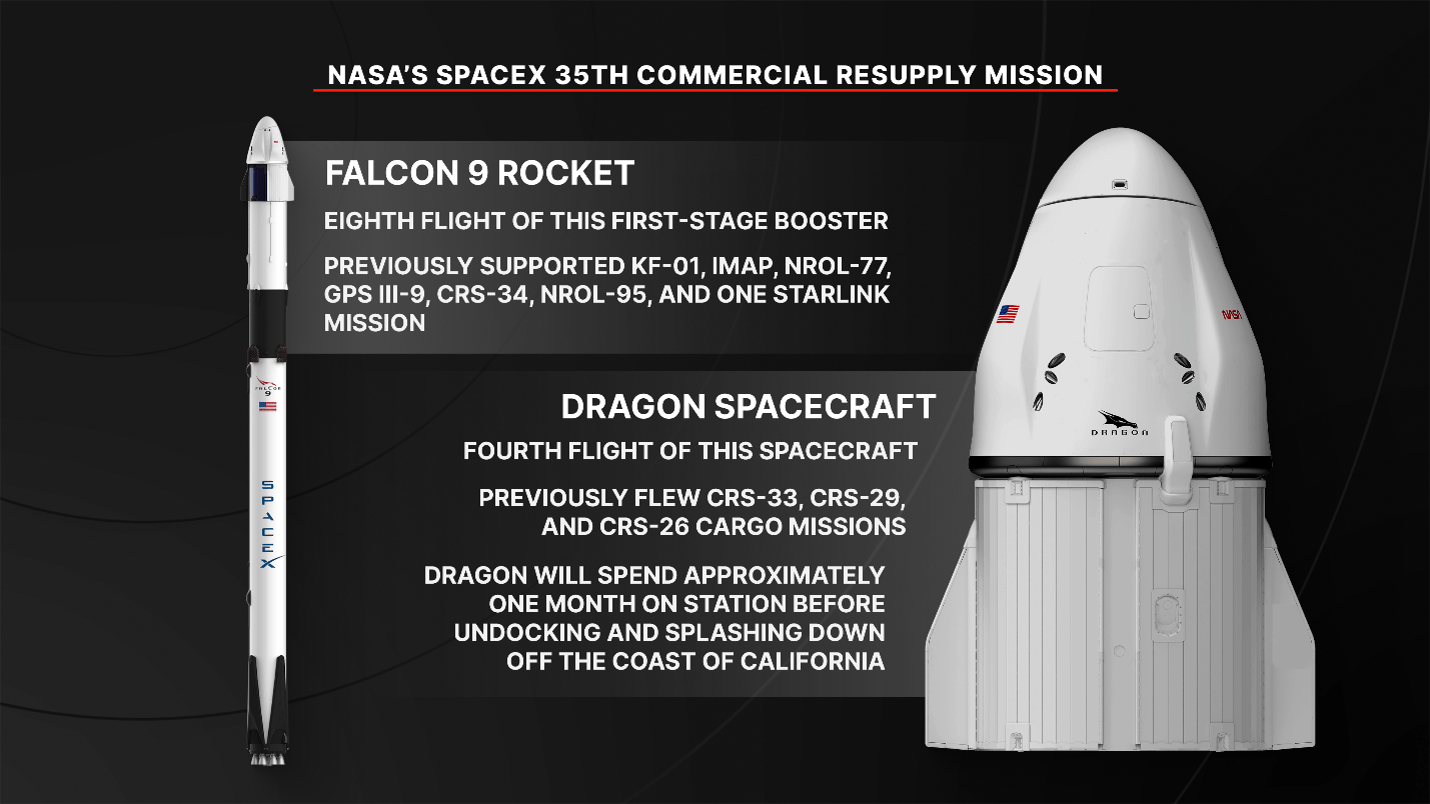
—NASA: “NASA’s SpaceX 35th Commercial Resupply Mission Overview”
NASA and SpaceX are targeting no earlier than Tuesday, Oct. 13 to launch scientific investigations, supplies, and equipment to the International Space Station. Loaded with more than 6,300 pounds of supplies, the SpaceX Dragon spacecraft will lift off aboard the company’s Falcon 9 rocket from Space Launch Complex 40 at Cape Canaveral Space Force Station in Florida. Following its arrival to the orbital complex, Dragon will autonomously dock to the space-facing port of the space station’s Harmony module.
—Ideastream: “NASA Glenn is Designing the First U.S. Nuclear Reactor in Space in More Than 60 Years“
Scientists at NASA Glenn in Cleveland are rushing to meet a two-year deadline for launching a small nuclear reactor to power the next Mars mission — the first time the U.S. has launched a nuclear reactor into space in 60 years. The mission to send three mini-helicopters to Mars will use a new nuclear electric propulsion system. NASA Glenn is designing both the reactor and the propulsion system. NASA Glenn nuclear engineer Lindsay Kaldon feels confident both will be ready in time for a federally imposed deadline of 2028. “It’s accomplishable — if that’s a word,” Kaldon said. “It’s something we can do.”
—Science Daily: “MIT Astronomers Catch a Star in a Feast That Could Last Billions of Years“
Astronomers have discovered an unusual star system about 300 light-years from Earth where a small star is gradually consuming a nearby brown dwarf. Instead of swallowing its companion in one dramatic event, the star is steadily pulling material from it, creating a cosmic feeding process that could continue for billions of years…The system, designated ZTF J0440+2325, lies within our Milky Way galaxy approximately 300 light-years away. It is the first observed example of a low-mass star steadily drawing material from another low-mass object.
Note: Here is the podcast version of this post.

