Image (Credit): The Expedition 74 crew members launched towards the space station earlier today aboard a Soyuz rocket from Baikonur Cosmodrome in Kazakhstan. (NASA/Bill Ingots)
This week’s image shows a Soyuz rocket sending a crew to the International Space Station (ISS) on Thanksgiving Day. One NASA astronaut and two Russian cosmonauts are thankful today that they are safe and sound on the ISS. NASA astronaut Chris Williams joined Roscosmos cosmonauts Sergey Kud-Sverchkov and Sergei Mikaev aboard a Soyuz rocket launched from Russia earlier today.
The three crew members of Expedition 74 join the Expedition 73 crew members already on the station, increasing the crew count to 10 members for the next few weeks. Expedition 74 is scheduled to begin on Monday, December 8th, once three members depart the ISS.
These crews change like clockwork, regardless of holidays, government shutdowns, or even hot wars back on the surface. This dedication to duty is something we can all be thankful for.
Image (Credit): NASA Expedition crew members (clockwise from the left) Zena Cardman, Mike Fincke, Jonny Kim, and JAXA astronaut Kimiya Yui recording their holiday message. (NASA)
The NASA Expedition 73 crew on the International Space Station (ISS) has recorded a Thanksgiving greeting for all of us down here looking up.
So what can the astronauts expect to eat for Thanksgiving? Astronaut Mike Fincke mentioned turkey and cranberry sauce, while astronaut Zena Cardman added mashed potatoes, crab meat, salmon, lobster, and more.
In a Florida Todaynews story, Steve Siceloff, a NASA public affairs officer, stated:
The crews’ holiday meals, including Thanksgiving, were flown up on NG-23 [on September 14]. On board the spacecraft was a special Holiday Bulk Overwrapped Bag (BOB) filled with festive foods like clams, oysters, crab meat, quail, and smoked salmon, along with shelf-stable treats such as candies, icing, almond butter, and hummus,
Happy Thanksgiving wishes to the ISS crew as well as everyone back here on Earth.
Image (Credit): Some of the new characters in the upcoming Star Trek: Starfleet Academy. (Paramount+)
You only have to wait until January 15th for the latest Star Trek series on Paramount+, but you may want to see this most recent trailer because it sets up some of the background on the characters.
Paramount+ has already shared quite a few details about Star Trek: Starfleet Academy on its site, so here are some important items:
Plot: Star Trek: Starfleet Academy is about a young group of Starfleet cadets navigating friendships and rivalries, as well as first loves and a new enemy that poses a threat not to just the Academy, but to the Federation.
The Names of the Cadets:
Caleb Mir is an orphaned human who hasn’t yet declared his major, or focus, at Starfleet Academy.
Jay-Den Kraag is a Klingon cadet whose focus is the sciences.
SAM is a hologram – a Series Acclimation Mil, or SAM, for short. She’s the first of her kind at Starfleet Academy. SAM’s focus is operations.
Darem Reymi is a Khionian from a well-to-do background who aims to be in command – hence, the focus of his studies at Starfleet Academy.
Genesis Lythe is a Dar-Sha, a species new to the Star Trek universe. She’s the daughter of an admiral, and is also studying command.
Time Period: Star Trek: Starfleet Academy is set in the 32nd century, at the upper end of the Star Trek timeline. More specifically, it takes place 125 years after The Burn, a catastrophic event that ravaged the galaxy, and hobbled the Federation. The cadets we meet represent a fresh start for the Federation; they belong to the first Starfleet Academy class since The Burn. You will need to watch Star Trek: Discovery season three to understand The Burn.
Key Actors in Season 1:
Holly Hunter as Capt. Nahla Ake Hunter’s character is the Chancellor of Starfleet Academy – and the captain of the U.S.S. Athena.
Tig Notaro as Jett Reno Notaro reprises her role as Jett, an engineering whiz, from Star Trek: Discovery.
Robert Picardo as The Doctor Picardo reprises the role he originated on Star Trek: Voyager.
Gina Yashere as Lura Thok Yashere is billed as a recurring guest star. She plays a Klingon/Jem’Hadar hybrid who serves as the Chancellor’s First Officer and Cadet Master.
Stephen Colbert as the voice of Starfleet Academy’s Digital Dean of Students The Emmy® winner (The Late Show With Stephen Colbert) will be heard as the faculty member who makes daily announcements – and issues alerts.
Number of Episodes: Season 1 will have 10 episodes.
Number of Seasons: A second season has already been green-lighted.
Your Mission: Simply enjoy this new Star Trek series.
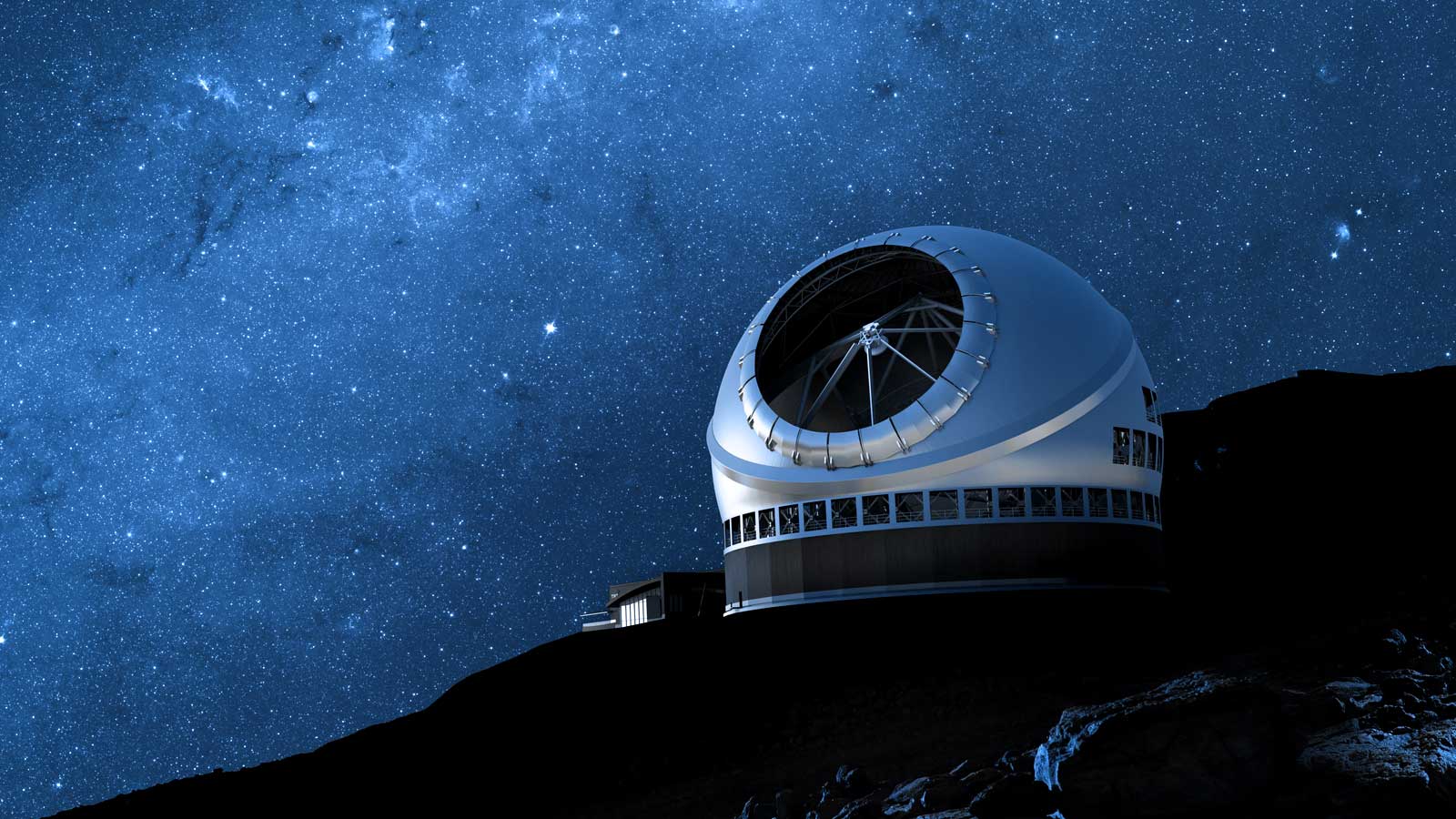
The Thirty Meter Telescope (TMT) was conceived more than two decades ago as the largest and most advanced telescope in the Northern Hemisphere. However, the telescope has encountered significant roadblocks, from funding uncertainties — now heightened by President Trump’s proposed budget cuts — to local resistance to building the telescope on Mauna Kea, a volcanic mountain in Hawai‘i that’s sacred to native communities. Now, the telescope might find a new home in La Palma on the Canary Islands of Spain. In July, the Spanish government offered to host the telescope, with an investment of up to €400 million ($460 million) to help cover some of the costs. In a brief statement posted on November 11th, the TMT announced that it is officially considering the move to La Palma.
In its latest shakeup to the Commercial Crew Program, NASA announced on Monday it has reduced the number of missions Boeing is required to fly to the International Space Station and changing the next flight from a crew mission to a cargo mission. The original contract NASA awarded to Boeing and SpaceX called for each to fly an uncrewed demonstration flight to the ISS, followed by a crewed demo mission and then conduct six regular crew rotation missions.
In the airless, radiation-saturated void outside of the International Space Station, researchers tested whether a common moss species known as Physcomitrium patens could survive at all, and if it could, for how long. The answers are yes and probably forever if it wants...Tomomichi Fujita, the study’s lead author, thinks moss could last up to 15 years in space, knowledge that could help build future extraterrestrial farms or entire ecosystems on the Moon or Mars.
If you are interested in the idea of settling Mars, and the book A City on Mars has not scared you away, then you should plan on tuning into the upcoming 25-part video series by the Mars Society.
In a news release, the Mars Society defines the new series in this way:
Created for a broad public audience, each video offers a clear, accessible look at how Mars exploration drives scientific discovery, technological innovation, economic growth, and long-term planetary resilience.
I recommend you view the series, but also read the book cited above. The authors of that book seem to think we should have a Mars plan that will settle humans in the next few centuries rather than they next few decades. Or maybe we should be settling on a space station or asteroid, as suggested in the book The Giant Leap, though I expect that a society with “Mars” in its name might disagree.