Multiple Choice: In the television series Star Trek, which of the following was not a founding species of the United Federation of Planets, a collection of governments based on universal liberty and equality?
A. Vulcans B. Andorians C. Tellarites D. Betazoids
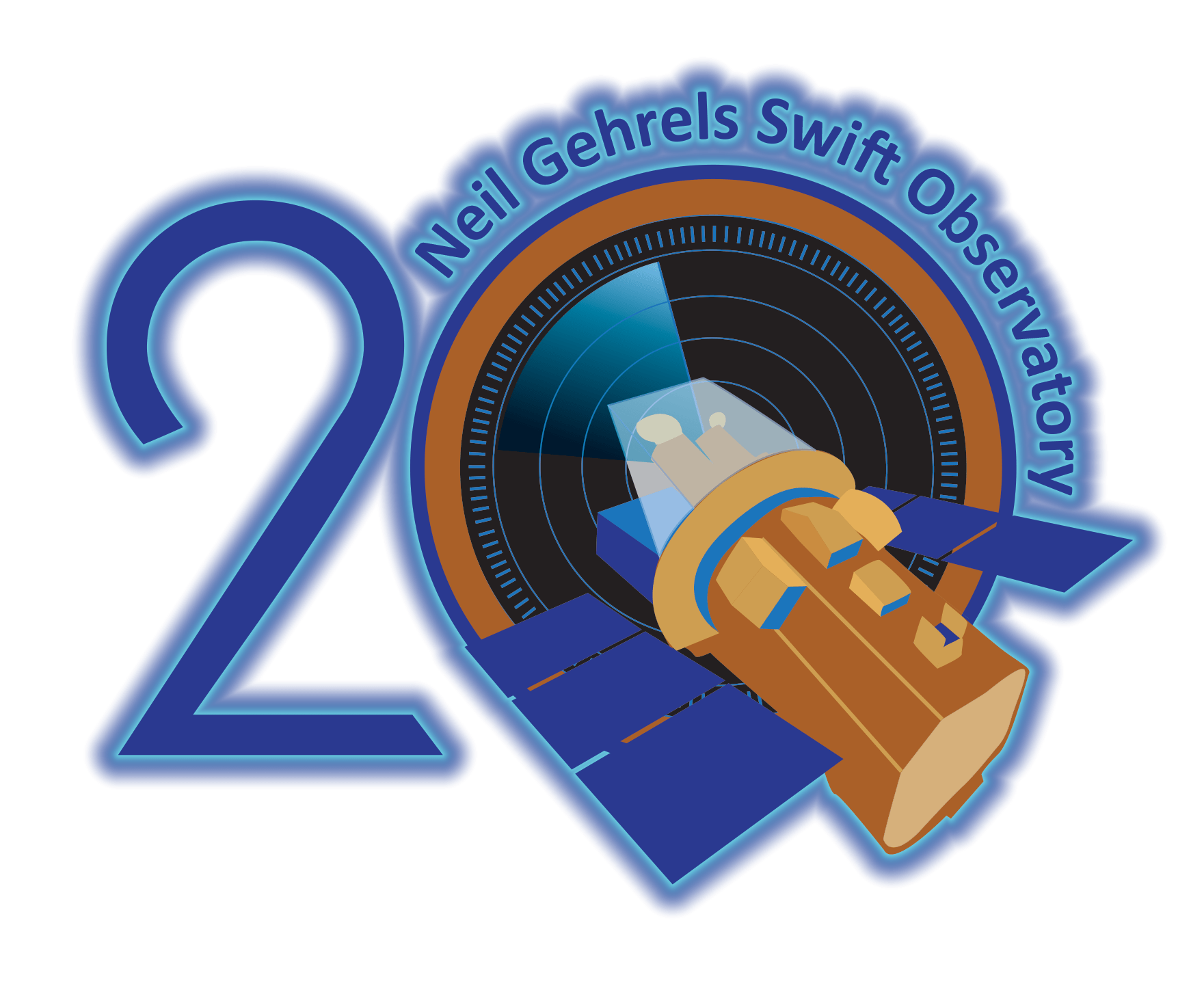
A Flagstaff-based space company has won a $30 million contract to raise the orbit of a space-based NASA observatory next year before it can drop uncontrolled back into Earth’s atmosphere. NASA officials say they are in a race against time as the agency’s Neil Gehrels Swift Observatory and its three-telescope system studying gamma rays from space needs a rescue.
NASA has activated a global planetary defense group to study a massive interstellar object exhibiting strange, possibly artificial characteristics—fueling speculation that it could be an alien probe operating within our solar system. The object, designated 3I/ATLAS, is approximately the size of Manhattan and was first captured by the Hubble Space Telescope on July 21. It has been selected as the first-ever official target of the International Asteroid Warning Network (IAWN)—a NASA-backed coalition of global agencies and astronomers tasked with identifying and tracking potential threats to Earth.
Japan’s space agency successfully launched Sunday its most powerful flagship H3 rocket, carrying a newly developed unmanned cargo spacecraft for its first mission to deliver supplies to the International Space Station. The Japan Aerospace Exploration Agency said the HTV-X1 spacecraft successfully lifted off atop the No. 7 H3 rocket from Japan’s Tanegashima Space Center in the country’s south and confirmed it entered targeted orbit 14 minutes after liftoff. The spacecraft was separated and placed into a planned orbit, JAXA said. If everything goes smoothly, it is expected to arrive at the ISS in a few days to deliver supplies. Japanese astronaut Kimiya Yui, currently at the ISS, is set to catch the craft with a robot arm in the early hours of Thursday.
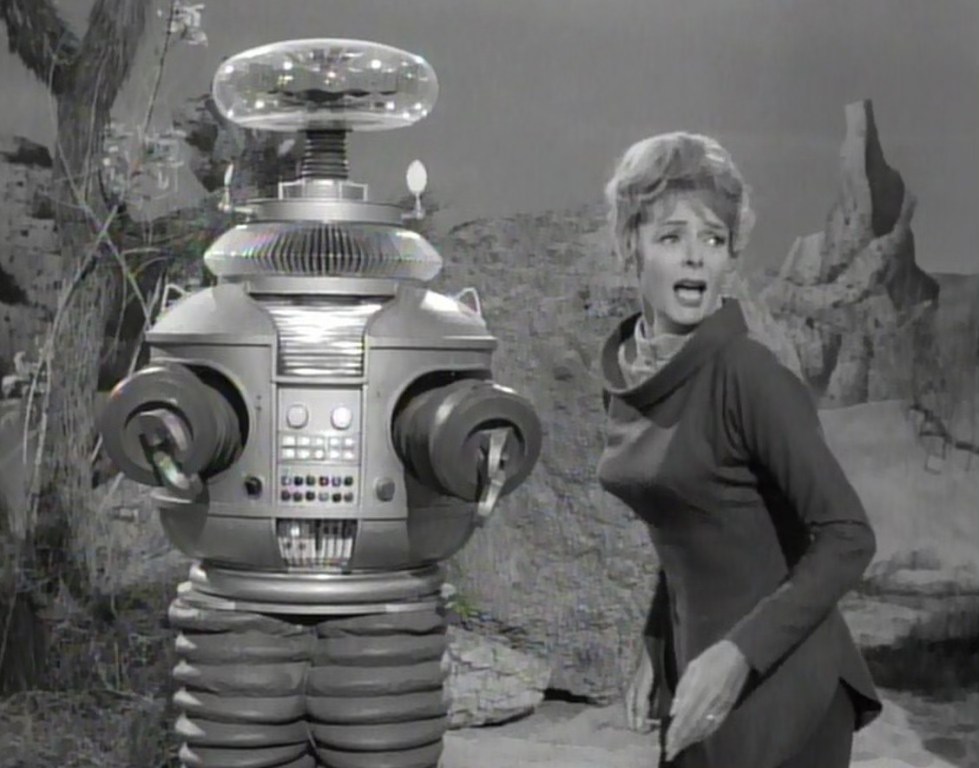
Image (Credit): June Lockhart in the television series Lost in Space. (20th Century Fox Television)
Actress June Lockhart passed away last Thursday at the age of 100. She had a storied career in both movies and television, including the 1960s television shows Lassie and Lost inSpace.
Lost in Space was a somewhat silly story about the Robinson family migrating from an overpopulated Earth to a exoplanet orbiting Alpha Centauri. Of course, just like the story in Gilligan’s Island, the five-and-a-half year tour turned into a new adventure among the stars.
The show was best known for the robot always spouting “Danger, Will Robinson!” in reference to the son whose mother was played by June Lockhart. Of course, Star Trek premiered during that same period with some of the same silliness. It seems we did not achieve our darker sentiments about humans in space until somewhat later.
With regard to her time with Lost in Space, Ms. Lockhart stated to Fox News:
I was over the moon – pun intended. … I have been told that my contribution inspired many astronauts to pursue a career in space science and exploration … it is lovely to know that I touched so many people by doing things that interested me!
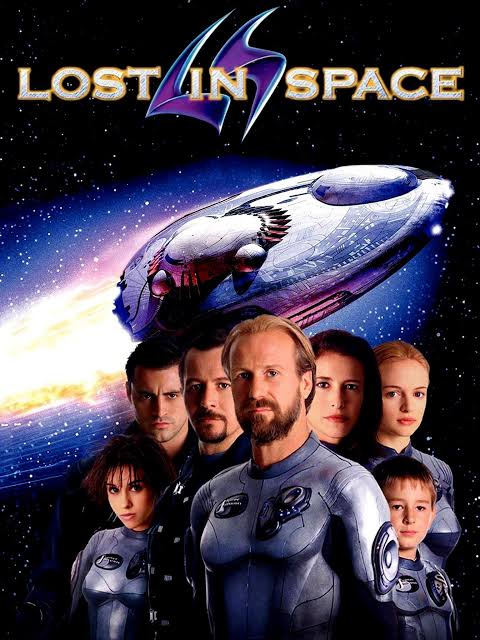
The 1998 movie Lost in Space did little to revive interest in the series (or space from what I can tell), but the Neflix television series of the same name did a nice job bringing the Robinson family back to life. If you are looking for a great updated adventure story about a boy and his robot traveling through space, you might want to start with the Netflix version.
You can read more on Ms. Lockhart’s life and career at these sites:
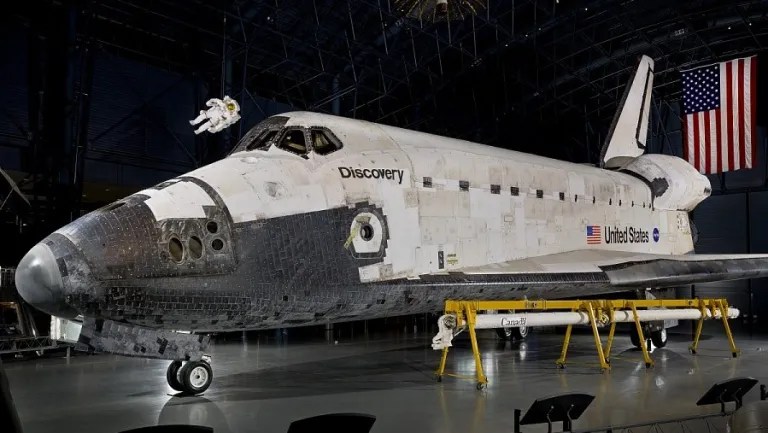
Image (Credit): Space shuttle Discovery in the Smithsonian Institution’s Stephen F. Udvar-Hazy Center of the National Air and Space Museum in Chantilly, Virginia. (National Air and Space Museum)
”The Smithsonian estimates that transporting Discovery from Virginia to Houston could cost more than $50 million, with another $325 million needed for planning, exhibit reconstruction, and new facilities. These costs far exceed the $85 million appropriated in the One Big Beautiful Bill Act, P.L. 119-21. Dedicating hundreds of millions of taxpayer dollars to move an artifact that is already housed, displayed, and preserved in a world-class facility is both inefficient and unjustifiable.”
-Statement in an October 23, 2025 bipartisan letter from the US Senate Committee on Appropriations. In addition to the cost, the letter also highlights potential damage to the shuttle, stating:
Moving the shuttle would inevitably and irreparably compromise the artifact and render it unusable as a museum-quality collection item, permanently diminishing its historical and cultural value for future generations.
Applying a principle of “radical mundanity”, this paper examines explanations for the lack of strong evidence for the presence of technology-using extraterrestrial civilizations (ETCs) in the Galaxy – the Fermi paradox. With this principle, the prospect that the Galaxy contains a modest number of civilizations is preferred, where none have achieved technology levels sufficient to accomplish large-scale astro-engineering or lack the desire to do so. This consideration also leads to the expectation that no ETC will colonize a large fraction of the Galaxy, even using robotic probes, and that there are no long-duration high-power beacons. However, there is a reasonable chance that we may make contact on a short, by historical standards, timescale. This event would be momentous, but could still leave us slightly disappointed. Such a Universe would be less terrifying than either of the two possibilities in the quote generally attributed to Arthur C. Clarke on whether we are alone or not. Also, if there is a modest number of ETCs in the Galaxy, that would suggest that there is a large number of planets with some form of life.
Citation: Robin H.D. Corbet. A less terrifying universe? Mundanity as an explanation for the Fermi Paradox. arXiv.org (2025).