Space Stories: Near Earth Hazards, Mars Helicopter, and Super-Earths

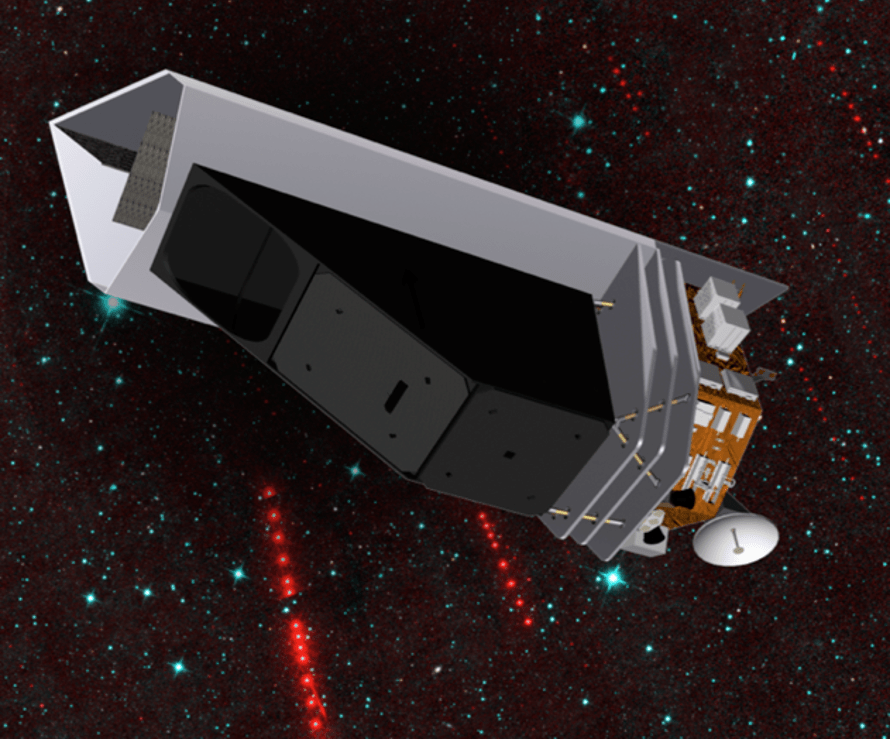
Image (Credit): he NEO Surveyor infrared space telescope is optimized for finding, tracking and characterizing potentially hazardous asteroids and comets. (NASA/JPL)

Here are some recent stories of interest.

Spacenews.com:House committee questions proposed delay in NASA asteroid mission

Members of the House Science Committee used a hearing about the planetary science decadal survey to criticize a proposal in NASA’s budget request to delay work on a space telescope to track near Earth objects (NEOs).

NASA: NASA’s Ingenuity Mars Helicopter Captures Video of Record Flight

The Ingenuity Mars Helicopter’s black-and-white navigation camera has provided dramatic video of its record-breaking 25th flight, which took place on April 8. Covering a distance of 2,310 feet (704 meters) at a speed of 12 mph (5.5 meters per second), it was the Red Planet rotorcraft’s longest and fastest flight to date. (Ingenuity is currently preparing for its 29th flight.)

Space.com:James Webb Space Telescope will study two strange ‘super-Earths

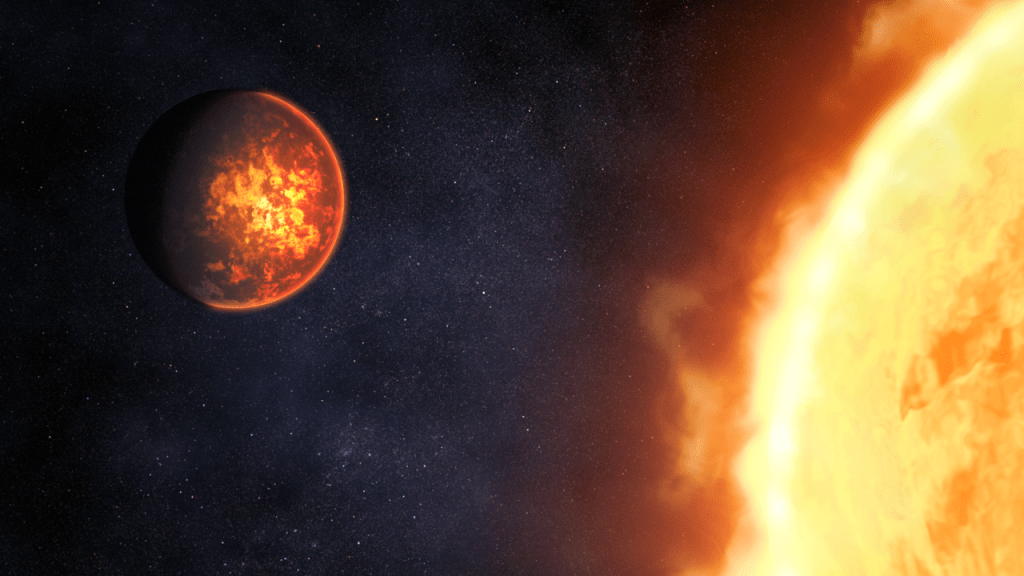
The James Webb Space Telescope plans to explore strange, new rocky worlds in unprecedented detail...Rocky planets are more difficult to sight than gas giants in current telescope technology, due to the smaller planets’ relative brightness next to a star, and their relatively tiny size. But Webb’s powerful mirror and deep-space location should allow it to examine two planets slightly larger than Earth, known as “super-Earths.”

Image (Credit): Illustration showing what exoplanet 55 Cancri e could look like, based on current understanding of the planet. (webbtelescope.org)

Profile: Asteroid Bennu

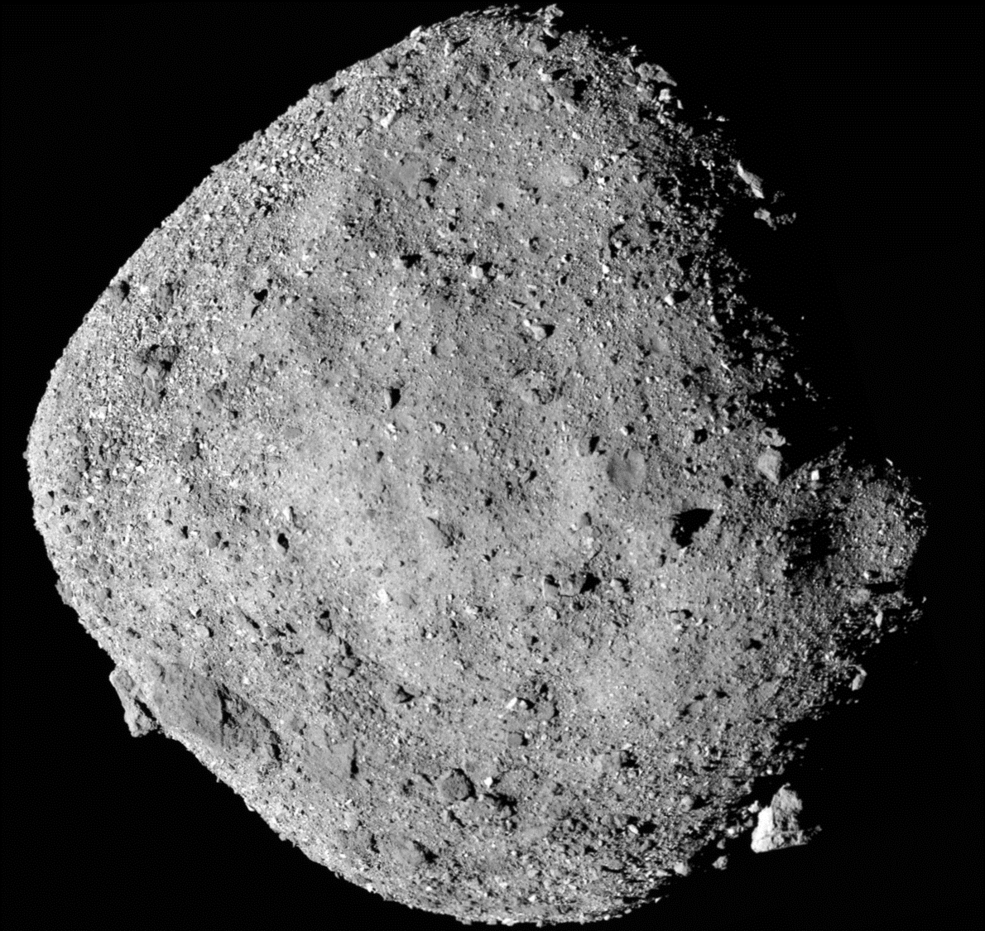
Image (Credit): Mosaic image of asteroid Bennu composed of 12 PolyCam images collected on Dec. 2, 2018 by the OSIRIS-REx spacecraft from a range of 15 miles. (NASA/Goddard/University of Arizona)

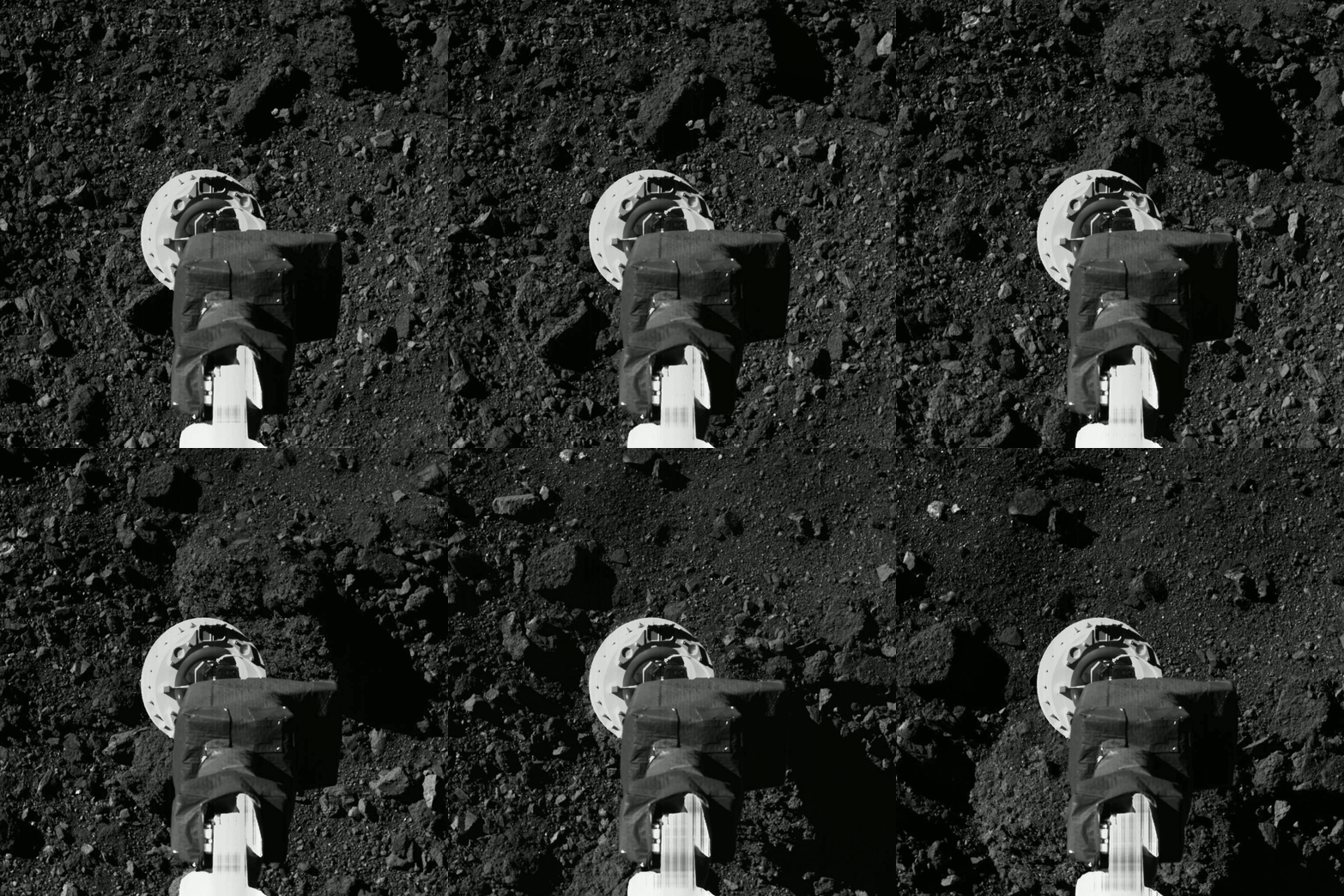
Back in 2020, NASA’s OSIRIS-REx spacecraft collected samples from asteroid Bennu, named after the ancient Egyptian mythological bird associated with the Sun, creation, and rebirth. These samples are scheduled to return to Earth until next year, but in the meantime there is already a lot that NASA knows about this asteroid. Some of the key points are listed below:

  • Bennu is over 4.5 billion years old.
  • Bennu is a “rubble-pile” asteroid, meaning it is rocky debris compressed by gravity.
  • Bennu is likely to be rich in platinum and gold compared to the average crust on Earth.
  • Between the years 2175 and 2199, the chance that Bennu will impact Earth is only 1-in-2,700.

You can tour the surface of Bennu by viewing a video produced by NASA’s Goddard Space Flight Center in Greenbelt, Maryland. Titled “Tour of Asteroid Bennu,” the film was featured in the SIGGRAPH Computer Animation Festival Electronic Theater. While it did not win any awards, it was still a great opportunity to share the mission with a wider audience.

Missions to planets and moons tend to get most of the attention, but asteroids can reveal plenty about the origins of our solar system. You can learn more about the OSIRIS-REx mission to Bennu here.

Hubble and the Unexpected Asteroids

Image (Credit): This Hubble image is a mosaic of many exposures where some asteroids appear multiple times. (NASA, ESA, and B. Sunnquist and J. Mack/STScI)

The Hubble Space Telescope’s old data still holds some secrets. The European Space Agency (ESA) has reported that astronomers have found 1,031 unidentified asteroid trails in earlier data from the NASA/ESA Hubble Space Telescope. The asteroids were located by the Hubble Asteroid Hunter project, which defines the project in this way:

…we use archival images made by the Hubble Space Telescope to find asteroids observed by chance. The ESASky team compared the observation epoch and field of view of these images with the computed orbits of asteroids, to identify possible observations. The positions predicted by the algorithm, nevertheless, have some associated uncertainty because the ephemerides are not always known to great precision. This uncertainty increases with the amount of time between the last observation date and the date we predict the position for. Identifying the asteroids in the images (if present) and marking the exact position of their trail allows us to update the ephemerides and help us better characterise these objects.

More than 11,000 volunteers studied about 37,000 composite images taken by the Hubble between April 2002 and March 2021. The volunteers found about 1,000 asteroid trails, which when combined with other images spotted using artificial intelligence added to 1,701 asteroid trails. Of these, 1,031 are unidentified trails most likely associated with smaller asteroids. The analysis of these unidentified trails will continue.

This is a great example of the public assisting with astronomy and allowing for more timely results. It’s a helpful model for future astronomy endeavors.

Bernie Sanders Has Questions About Private Space Companies

Image (Credit): Senator Bernie Sanders. (Rollcall)

In a recent The Guardian newspaper editorial, Bernie Sanders had some questions about the role of private companies, such as Blue Origin and SpaceX, in the future of space exploration or, as he sees it, space profiteering. In his editorial, “Jeff Bezos is worth $160bn – yet Congress might bail out his space company,” he noted the following:

At this moment, if you can believe it, Congress is considering legislation to provide a $10bn bailout to Jeff Bezos’s Blue Origin space company for a contract to build a lunar lander. This legislation is taking place after Blue Origin lost a competitive bid to SpaceX, Musk’s company. Bezos is worth some $180bn.

He then cites the costs of Jeff Bezos’ yacht and homes while pointing out the plight of those living paycheck to paycheck. Of course, the same could be said about Elon Musk, rumored to be the wealthiest man in the world and now in the papers for buying another company unrelated to space (or the car industry).

First, this battle between Bernie and Bezos has been going on for some time, but the “bailout” in question was debunked by Verifythis.com last year, which stated:

Although NASA recently chose SpaceX over Blue Origin and one other company to receive funding for development of a human lunar lander, NASA stated in its decision that it wanted to fund two companies but lacked the budget to even fund one without negotiating the price down. The Senate bill is in response to that, allocating NASA enough funding to award a second contract. Blue Origin is the likely frontrunner for that contract, but it’s not guaranteed. Even if Blue Origin does win the contract, the allocated $10 billion to NASA isn’t just for this contract and therefore wouldn’t all go to Blue Origin.

Of course, the editorial is really a lead in to the real issue – who owes the minerals in space? Mr. Sanders highlights the worth of a single asteroid, stating “Just a single 3,000ft asteroid may contain platinum worth over $5tn.” It is a good point as we consider the next great race for minerals. Of course, maybe Uncle Sam can get some of it back via taxes, but it is not hard to believe space companies would incorporate in the Bahamas or somewhere similar to avoid such taxation.

Mr. Sanders is calling for a “rational space policy,” and wants Congress to be part of the process. Given the number of nations heading to the Moon and Mars, it is much bigger than the U.S. Congress. The United Nations will need to play a role here via the Outer Space Treaty, which NASA is attempting to update via the Artemis Accords. In addition, maybe Congress needs to update the rescind the 2015 U.S. Commercial Space Launch Competitiveness Act, which states in § 51303:

A United States citizen engaged in commercial recovery of an asteroid resource or a space resource under this chapter shall be entitled to any asteroid resource or space resource obtained, including to possess, own, transport, use, and sell the asteroid resource or space resource obtained in accordance with applicable law, including the international obligations of the United States.

By the way, NASA has already issued a press release regarding more lunar lander opportunities. You can find the press release here.

A Second Trojan Asteroid Accompanies the Earth

Source: Graphic from NOIRLab showing where the Earth Trojan asteroid 2020 XL5 would appear in the sky from the SOAR Telescope in Chile as the asteroid orbits the Earth-Sun Lagrange point 4 (L4).

The National Science Foundation’s NSF’s National Optical-Infrared Astronomy Research Laboratory (NOIRLab) recently reported that the Southern Astrophysical Research (SOAR) Telescope in Chile confirmed asteroid 2020 XL5 is in fact a second and the largest Trojan asteroid accompanying the Earth. “Trojan” means that the asteroid orbits the Sun along the same path as the Earth. The first discovered Trojan asteroid is called 2010 TK7, which is about 400 meters in diameter. The new asteroid 2020 XL5 is about 1.2 kilometers in diameter.

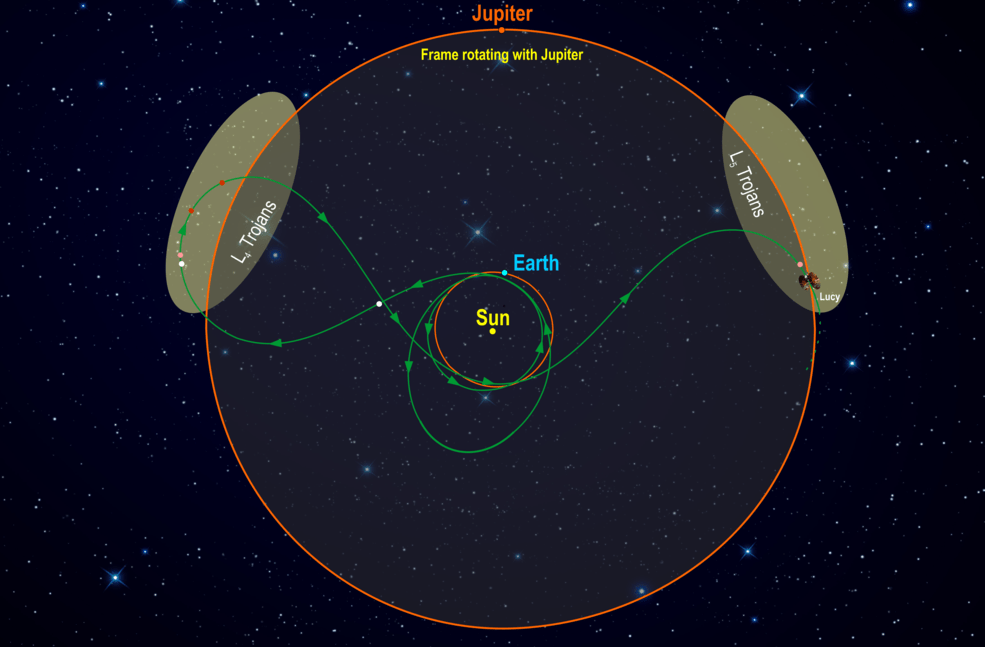
The Earth may have more than just two of these Trojan asteroids, so stay tuned. But we are not unique. Jupiter has more than 5,000 of them. Trojan asteroids are found at Lagrange point 4 (L4) and L5 (see graphic below). Both the the Trojans asteroids mentioned above are located in L4.

These companion asteroids could also be useful in the future. Cesar Briceño of NOIRLab stated:

If we are able to discover more Earth Trojans, and if some of them can have orbits with lower inclinations, they might become cheaper to reach than our Moon…So they might become ideal bases for an advanced exploration of the Solar System, or they could even be a source of resources.

Source: Lagrange points pertaining to Earth and the Sun (not to scale) from NOIRLab.

Extra: To learn what else you can find at these Lagrange points, see my earlier post.