
Here are some recent space-related stories.
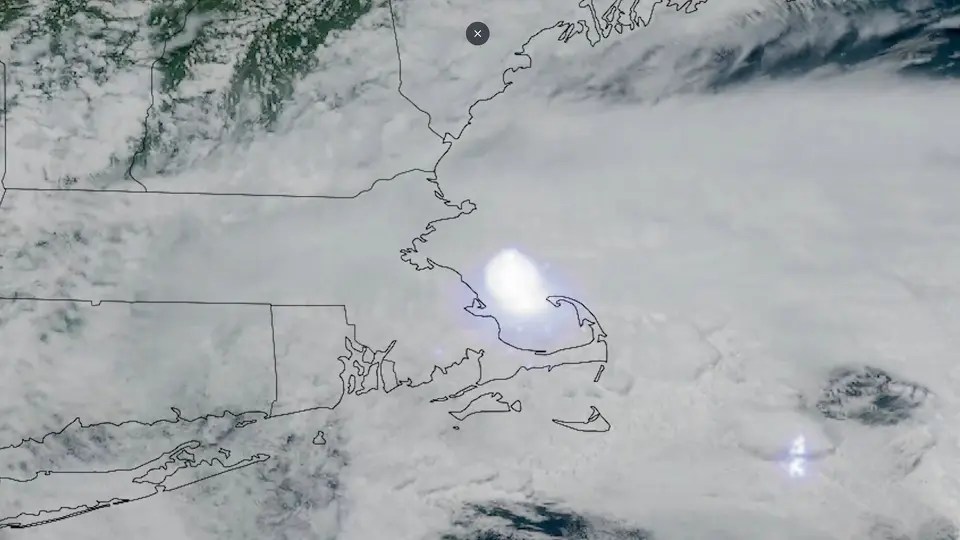
—WCVB5 News: “Meteor That Rattled Massachusetts Was Bigger Than First Thought, NASA Says“
A meteor that created a sonic boom heard by thousands in Massachusetts and parts of the Northeast Saturday afternoon was larger than previously believed, NASA said Monday. Scientists now say the meteor was 5 feet in diameter, up from the initial thought of 3 feet, NASA said. “The meteor was about 5 feet (1.6 meters) in diameter with a mass of 5.6 metric tons and entered Earth’s atmosphere at roughly 42,000 mph,” NASA said Monday. Scientists believe it traveled through the atmosphere from northwest to southeast for 26 miles before breaking up at an altitude of 31 miles and producing a meteorite fall into Cape Cod Bay.
—Royal Astronomical Society: “Red Dwarf Stars Detected ‘Eating’ Earth-like Planets“
Astronomers have found some of the strongest evidence yet that stars can swallow their own planets. A new study, published in Monthly Notices of the Astronomical Society, supports the long-held belief that young stars are capable of ‘eating’ nearby worlds as planetary systems form. Researchers from Keele University and the University of Exeter studied thousands of stars and found evidence that six different red dwarfs – the smallest, coolest, and most common type of star in the universe – had engulfed Earth-like rocky planets.
—Phys.org: “One of Our Planets May Be Missing, And it Could Explain Why the Solar System Looks the Way it Does“
Our solar system has two ice giants, Uranus and Neptune, but there may have been a third. According to a new study published in the journal Icarus, this extra world might have triggered a violent planetary shuffling billions of years ago that could have disrupted some of Jupiter’s and Uranus’s moons and possibly led to the formation of others.
Note: Here is the podcast version of this post.

