Space Stories: Fewer Eyes on Asteroids, Volunteer Martians Released, and Russians Plans for a New Space Station

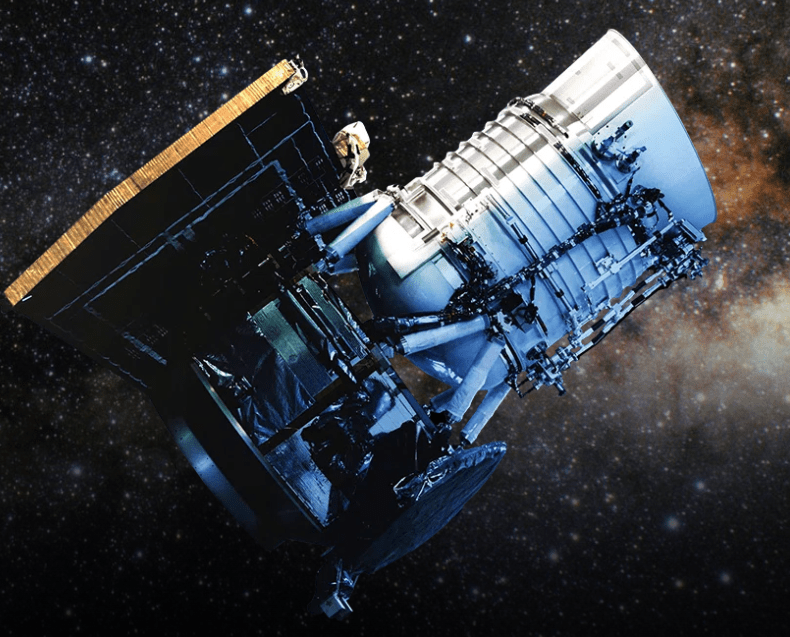
Image (Credit): NEOWISE space telescope. (NASA)

Here are some recent stories of interest.

Flying Magazine: NASA’s Asteroid, Comet Hunting Telescope Set to Retire at End of Month

A NASA space telescope designed to “hunt” asteroids and comets that could pose a threat to life on Earth and orbiting spacecraft will soon burn up in orbit. In late 2024 or early 2025, the agency’s Near-Earth Object (NEO) Wide-field Infrared Survey Explorer—or NEOWISE—is expected to come home in pieces following the conclusion of its second mission later this month…However, NASA has a replacement lined up: the Near Earth Object Surveyor (NEO Surveyor), set for a 2027 launch. The infrared space telescope is the first to be designed specifically for hunting large numbers of NEOs in and around Earth orbit. It has a baseline development cost of $1.2 billion to which NASA committed in 2022.

NPR: Volunteers Who Lived in a NASA-created Mars Replica for Over a Year Have Emerged

Four volunteers who spent more than a year living in a 1,700-square-foot space created by NASA to simulate the environment on Mars have emerged. The members of the Crew Health and Performance Exploration Analog mission — or CHAPEA — walked through the door of their habitat at NASA’s Johnson Space Center in Houston on Saturday to a round of applause…Haston and the other three crew members — Anca Selariu, Ross Brockwell and Nathan Jones — entered the 3D-printed Mars replica on June 25, 2023, as part of a NASA experiment to observe how humans would fare living on the Red Planet.

Reuters: Russia Plans to Create Core of New Space Station by 2030

Russia is aiming to create the four-module core of its planned new orbital space station by 2030, its Roscosmos space agency said on Tuesday. The head of Roscosmos, Yuri Borisov, signed off on the timetable with the directors of 19 enterprises involved in creating the new station. The agency confirmed plans to launch an initial scientific and energy module in 2027. It said three more modules would be added by 2030 and a further two between 2031 and 2033.

More on the Recent Asteroid Flybys

Image (Credit): Asteroid 2024 MK captured by NASA’s Goldstone Solar System Radar. (NASA, JPL-Caltech)

Remember asteroid 2024 MK from last Saturday? Well, NASA has some nice shots (shown above) of the asteroid as it made it close approach to the Earth. It shows the 500 foot-wide asteroid in all of its scary glory. We were lucky to be nothing but observers that day.

Another asteroid that shot by the Earth on June 27th at a distance that was about 17 time the distance between the Earth and the Moon was asteroid UL21. This asteroid was not a surprise, having been spotted back in 2011. However, it had a surprise when viewed up close. The asteroid had its own moon (shown below).

I’m impressed we have these amazing images, but if they price for these images is a risky rendezvous then I can live without them.

Note: Another asteroid is coming our way next week – asteroid 2024 MT1. The asteroid is 260 feet in diameter and will be come much closer than UL21, or about four times the distance between the Earth and the Moon.

Image (Credit): Asteroid UL21 captured by NASA’s Goldstone Solar System Radar. You can see its moon as the small speck at the bottom of the image. (NASA, JPL-Caltech)

A Day in Astronomy: The Tunguska Event

Image (Credit): A current map showing the location of the Tunguska Event in Russia. (Wikipedia)

It was on this day in 1908 that about 800 square miles of forest in Siberia were decimated in what was later attributed to an meteor exploding 3 to 6 miles above the Tunguska River area. As a result of the aerial explosion, no impact crater was created from what was called the Tunguska Event.

The meteor that hit Russia has been estimated top be 160–200 feet wide. The asteroid that passed by the Earth yesterday, 2024 MK, has been estimated to be 400 and 850 feet wide. We are lucky that we did not need to go through this again more than 100 years later.

The Tunguska Event is the largest impact event in recorded history. It was this event that later inspired what we celebrate today – Asteroid Day.

Happy Asteroid Day!

Just in Time for Asteroid Day

Tomorrow we recognize Asteroid Day around the world, but today we witnessed an asteroid coming so close to the Earth that it was within the Moon’s orbit.

Asteroid 2024 MK flew past the Earth earlier today with no incident, but it was pretty close. Its closest approach was about 75 percent of the distance between Earth and the Moon. The asteroid, about the size of a skyscraper, would have made quite a mess had it hit us.

What is somewhat disturbing is that we have set up systems and processes to detect Near Earth Objects (NEO) to better prepare for potential collisions, yet this particular asteroid was first detected this month. Had it been on a collision course, we would have had less than two weeks to prepare.

NASA and others continue with efforts to step up NEO detection. One planned improvement is the NEO Surveyor, which will be the first space telescope specifically designed to locate potentially hazardous NEOs. The NEO Surveyor is scheduled to launch in June 2028.

Better detection, as well as defenses, can help to ensure we have many more Asteroid Days far into the future.

What to do When an Asteroid is Heading for Earth

Back in early April, officials from NASA, FEMA, other domestic and foreign government agencies, and private think tanks conducted an exercise – Planetary Defense Interagency Tabletop Exercise 5 – to devise ways to deal with an incoming asteroid that threatened the planet. You can see the presentation components and results in the May 13th NASA report.

Here is the scenario:

  • 72% chance than an asteroid may hit Earth in 14 years.
  • Requirements for preventing its impact are unknown.
  • Models indicate the asteroid could devastate a regional- to country-scale area, if it should impact.

And the objective:

Awareness raising; space mission options; disaster preparedness; information sharing and public messaging.

Some of the takeaways were as follows:

  • Many stakeholders expressed that they would want as much information about the asteroid as soon as possible but expressed skepticism that funding would be forthcoming to obtain such information without more definitive knowledge of the risk.
  • Misinformation and disinformation would have to be dealt with.
  • Although specific disaster management plans for an [Near Earth Object] impact threat do not currently exist, plans for response to other catastrophes may be a suitable starting point.

You can read all about the results in the report itself, but it is clear we are not ready for such an event.

Maybe we would do better with a NASA tabletop exercise covering an alien invasion 400 years in the future, giving us plenty of time to plan it out. Of course, this scenario is already being played out on television (as well as the book that started it all).