Image (Credit): A current map showing the location of the Tunguska Event in Russia. (Wikipedia)
It was on this day in 1908 that about 800 square miles of forest in Siberia were decimated in what was later attributed to an meteor exploding 3 to 6 miles above the Tunguska River area. As a result of the aerial explosion, no impact crater was created from what was called the Tunguska Event.
The meteor that hit Russia has been estimated top be 160–200 feet wide. The asteroid that passed by the Earth yesterday, 2024 MK, has been estimated to be 400 and 850 feet wide. We are lucky that we did not need to go through this again more than 100 years later.
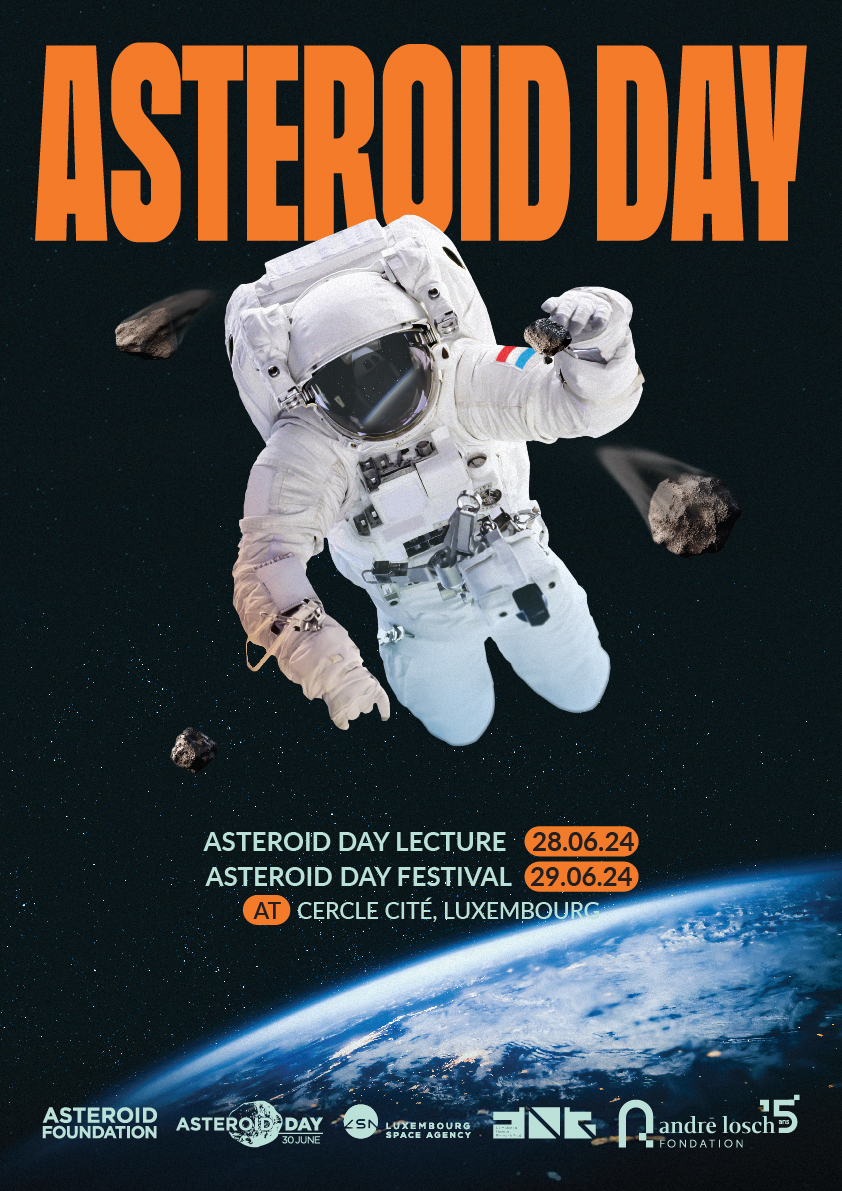
The Tunguska Event is the largest impact event in recorded history. It was this event that later inspired what we celebrate today – Asteroid Day.
Tomorrow we recognize Asteroid Day around the world, but today we witnessed an asteroid coming so close to the Earth that it was within the Moon’s orbit.
Asteroid 2024 MK flew past the Earth earlier today with no incident, but it was pretty close. Its closest approach was about 75 percent of the distance between Earth and the Moon. The asteroid, about the size of a skyscraper, would have made quite a mess had it hit us.
What is somewhat disturbing is that we have set up systems and processes to detect Near Earth Objects (NEO) to better prepare for potential collisions, yet this particular asteroid was first detected this month. Had it been on a collision course, we would have had less than two weeks to prepare.
NASA and others continue with efforts to step up NEO detection. One planned improvement is the NEO Surveyor, which will be the first space telescope specifically designed to locate potentially hazardous NEOs. The NEO Surveyor is scheduled to launch in June 2028.
Better detection, as well as defenses, can help to ensure we have many more Asteroid Days far into the future.
Back in early April, officials from NASA, FEMA, other domestic and foreign government agencies, and private think tanks conducted an exercise – Planetary Defense Interagency Tabletop Exercise 5 – to devise ways to deal with an incoming asteroid that threatened the planet. You can see the presentation components and results in the May 13th NASA report.
Here is the scenario:
72% chance than an asteroid may hit Earth in 14 years.
Requirements for preventing its impact are unknown.
Models indicate the asteroid could devastate a regional- to country-scale area, if it should impact.
And the objective:
Awareness raising; space mission options; disaster preparedness; information sharing and public messaging.
Some of the takeaways were as follows:
Many stakeholders expressed that they would want as much information about the asteroid as soon as possible but expressed skepticism that funding would be forthcoming to obtain such information without more definitive knowledge of the risk.
Misinformation and disinformation would have to be dealt with.
Although specific disaster management plans for an [Near Earth Object] impact threat do not currently exist, plans for response to other catastrophes may be a suitable starting point.
You can read all about the results in the report itself, but it is clear we are not ready for such an event.
Maybe we would do better with a NASA tabletop exercise covering an alien invasion 400 years in the future, giving us plenty of time to plan it out. Of course, this scenario is already being played out on television (as well as the book that started it all).
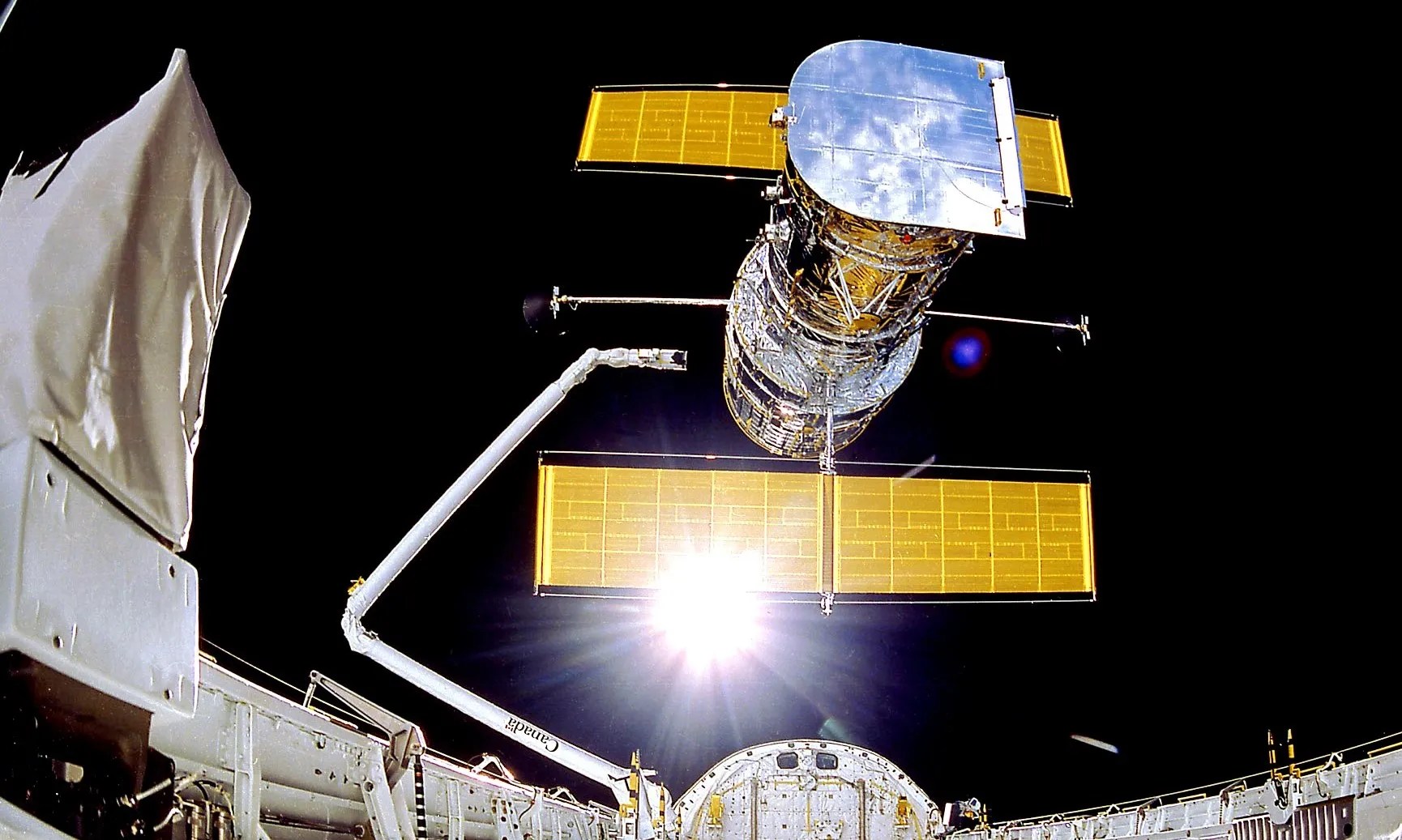
Image (Credit): The deployment of the Hubble Space Telescope on April 25, 1990 from the space shuttle Discovery. (NASA/Smithsonian Institution/Lockheed Corporation)
The Hubble Space Telescope is suffering the kinds of aches and pains that can come with being old, and NASA officials say they’re shifting into a new way of pointing the telescope in order to work around a piece of hardware that’s become intolerably glitchy. Officials also announced that, for now, they’ve decided not to pursue a plan put forward by a wealthy private astronaut who wanted to go to Hubble in a SpaceX capsule, in a mission aimed at extending the telescope’s lifespan by boosting it up into a higher orbit and perhaps even adding new technology to enhance its operations.
NASA announced Friday it selected three industry proposals to help develop technologies for future large space telescopes and plan for the agency’s Habitable Worlds Observatory mission concept, which could be the first space telescope designed to search for life outside our solar system. The mission would directly image Earth-like planets around stars like our Sun and study their atmospheres for the chemical signatures of life, as well as enable other investigations about our solar system and universe. NASA is currently in the early planning stages for this mission concept, with community-wide working groups exploring its fundamental science goals and how best to pursue them. The agency is also in the process of establishing a Habitable Worlds Observatory Technology Maturation project office at NASA’s Goddard Space Flight Center in Greenbelt, Maryland.
When NASA’s Lucy spacecraft flew past the tiny main belt asteroid Dinkinesh last November, the Southwest Research Institute-led mission discovered a trough and ridge structure on the main asteroid as well as the first-ever-encountered contact binary satellite. The flyby data of this half-mile-wide object revealed a dramatic history of sudden breakups and transformation. Scientists think a big chunk of Dinkinesh suddenly shifted, excavating the trough and flinging debris into its vicinity. Some materials fell back to the asteroid body, forming the ridge, while others coalesced to form a contact binary satellite known as Selam. The complex shapes show that Dinkinesh and Selam have significant internal strength and a complex, dynamic history.
Aeon is a website of ideas run by Aeon Media. It’s mission is to explore and communicate knowledge that addresses our shared need to make sense of the world.
While it covers quite a few topics, I wanted to highlight some of its videos on astronomy and space travel. Below are just a few I recommend. You should explore the site on your own to learn more.