Video: Brian Cox Talks About Alien Life – A 2026 Special

Image (Credit): Professor Brian Cox discussing the evolution of intelligence. (Science Time channel)

If you have followed the career of English physicist Brian Cox, then you know he is a dynamic speaker who has hosted several series on astronomy, including Wonders of the Solar System and Wonders of the Universe.

In this short video from Science Time channel, “Brian Cox Talks About Alien Life – A 2026 Special,” Professor Cox walks the viewer through the chances of finding intelligent life among the 60 billion exoplanets in our galaxy that lie within the habitable zone. To be clear, he is not very optimistic.

The series does not cover much new ground except for some hopeful comments about the James Webb Space Telescope investigating the atmospheres of exoplanet (with Professor Cox wondering whether we will find life on an exoplanet before we find it on Mars). Even so, it is still enjoyable to spend a little bit of time playing around with the Fermi Paradox again.

One of the more intriguing ideas being discussed here and elsewhere is the idea that we may not want to limit our ideas to biological life. The longevity of a civilization may be dependent on its ability to evolve from carbon-based to silicon-based lifeforms. While not explicitly discussed in the video, that could broaden our search beyond a star’s habitable zone yet also frustrate our attempts to find biological signatures in an exoplanet’s atmosphere.

Again, it is worth your time to listen in. I would just ignore the goofy animations that accompany the discussion.

Pandora and Friends Start New Missions

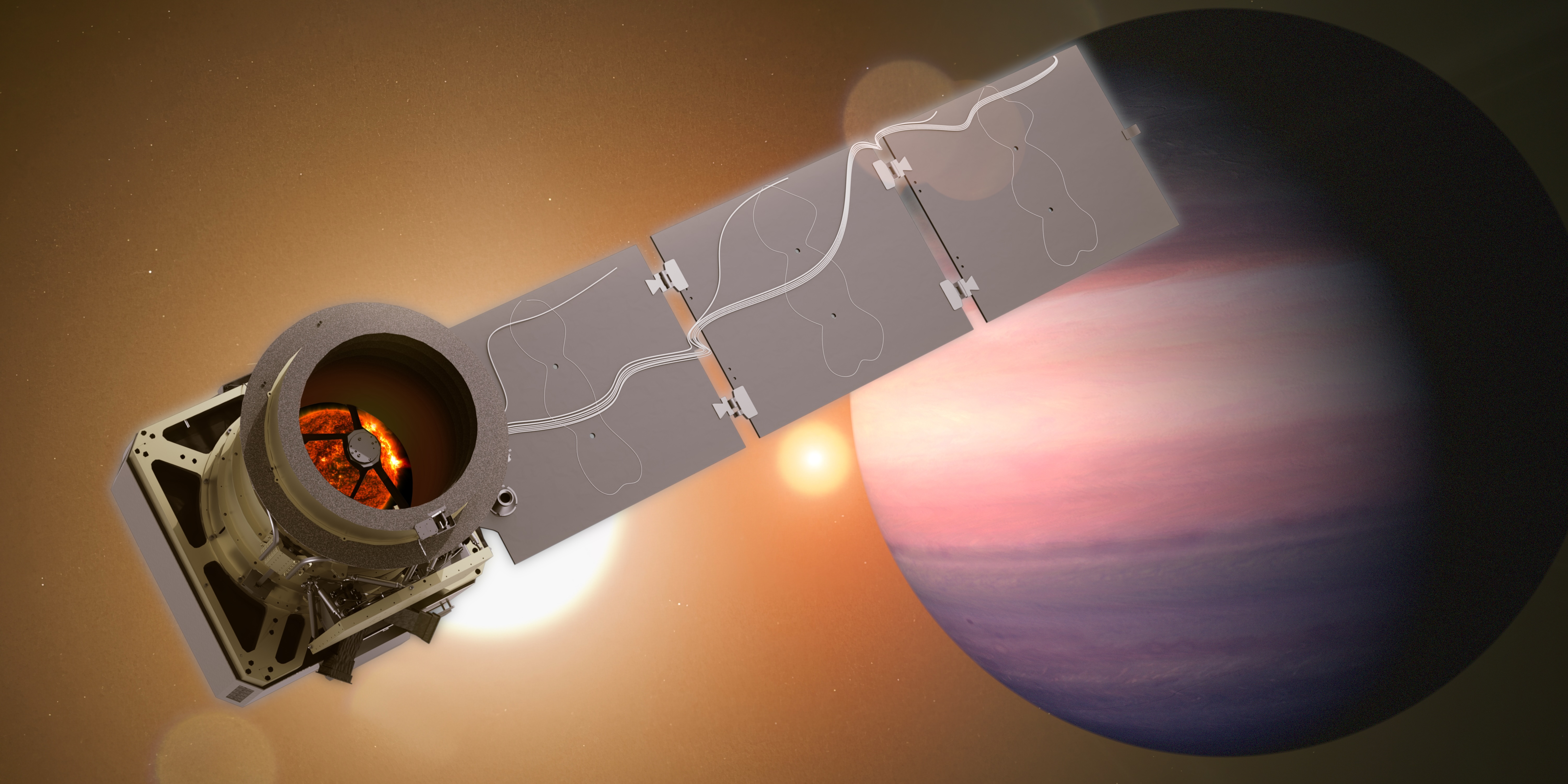
Image (Credit): An artist’s rendering of NASA’s Pandora mission. (NASA)

Earlier today, NASA’s Pandora mission got its start aboard a SpaceX rocket launched from California’s Vandenberg Space Force Base.

The Pandora satellite, once fully operational, will view exoplanet atmospheres and their host stars to learn more about these exotic worlds. In its first year, the satellite will focus on approximately 20 known exoplanets. This NASA video describes the process.

The 716-pound Pandora satellite is much smaller than the 14,300-pound James Webb Space Telescope (JWST). Of course, the JWST has a much larger mission that expands over a much longer time period.

If you are looking for something small, you might be interested in the two CubeSats launched with Pandora. One is called the Star-Planet Activity Research CubeSat (SPARCS), which will study coronal mass ejections on small stars, while the second is named the Black Hole Coded Aperture Telescope (BlackCAT) with the mission of observing X-ray flares from active galaxies with supermassive black holes as well as gamma-ray bursts.

It was a successful Sunday for NASA and space enthusiasts everywhere.

Study Findings: A Carbon-rich Atmosphere on a Windy Pulsar Planet

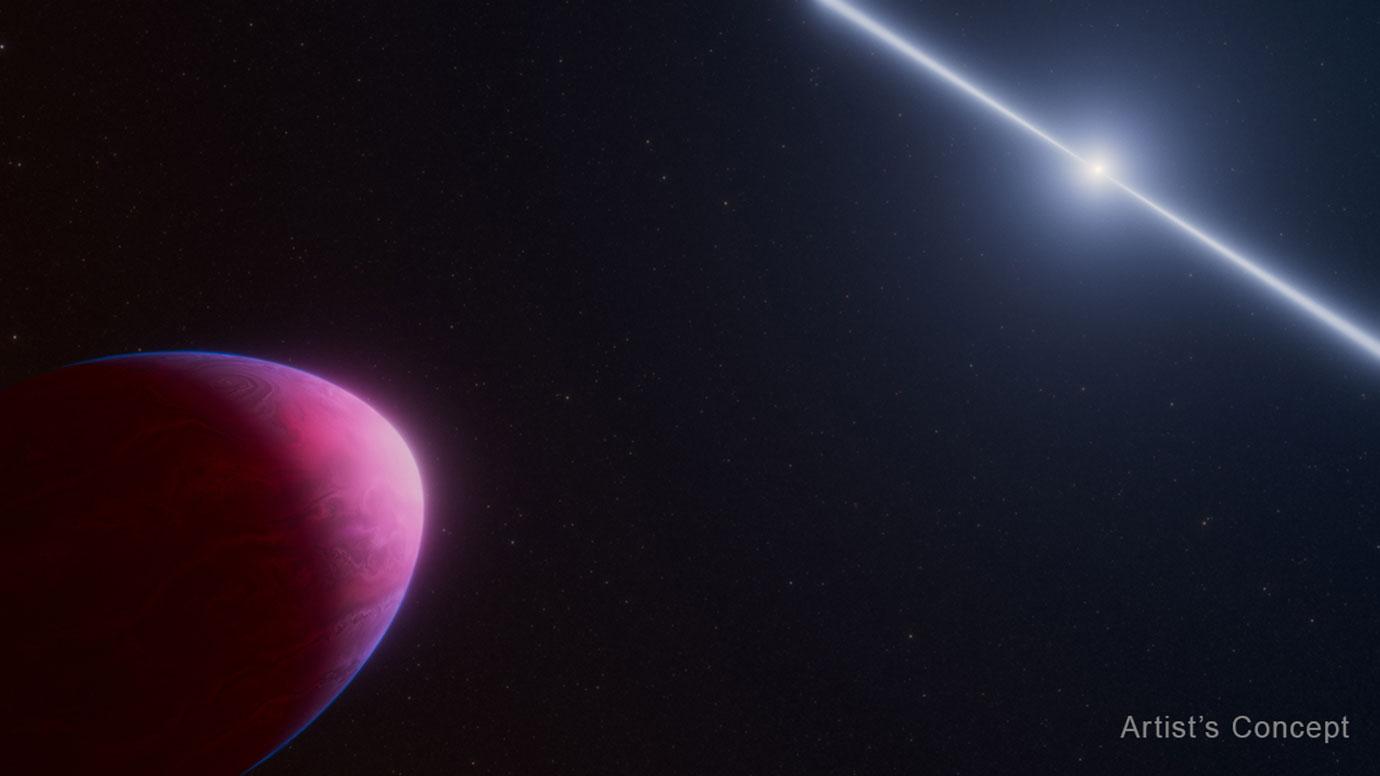
Image (Credit): Artist’s rendering of of an exoplanet orbiting a rapidly spinning neutron star called a pulsar. (NASA, ESA, CSA, Ralf Crawford (STScI))

Abstract of pre-publication study findings:

A handful of enigmatic Jupiter-mass objects have been discovered orbiting pulsars. One such object, PSR\,J2322-2650b, uniquely resembles a hot Jupiter exoplanet due to its minimum density of 1.8 g/cm^3 and its ~1900 K equilibrium temperature. We use JWST to observe PSR J2322-2650b’s emission spectrum across an entire orbit. In stark contrast to every known exoplanet orbiting a main-sequence star, we find an atmosphere rich in molecular carbon (C3, C2) with strong westward winds. Our observations open up new exoplanetary chemical (ultra-high C/O and C/N ratios of >100 and >10,000, respectively) and dynamical regimes (ultra-fast rotation with external irradiation) to observational study. The extreme carbon enrichment poses a severe challenge to the current understanding of “black widow” companions, which were expected to consist of a wider range of elements due to their origins as stripped stellar cores.

Citation: Michael Zhang et al. A carbon-rich atmosphere on a windy pulsar planet. ApJL (2025).

https://doi.org/10.48550/arXiv.2509.04558

Study-related stories:

University of Chicago – “NASA’s Webb Telescope Finds Bizarre Atmosphere on a Lemon-shaped Exoplanet”

Scientific American – “This Planet Is the Shape of a Lemon. That May Be the Least Weird Thing about It”

Space Daily – “Webb Maps Carbon Rich Atmosphere on Distorted Pulsar Planet”

Space Quote: British Satellite to Study Impact of Stars on Exoplanets

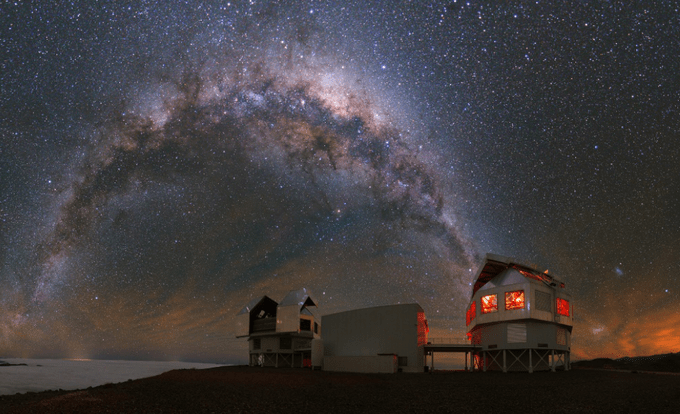
Credit: Blue Skies Space

“Mauve will open a new window on stellar activity that has previously been largely hidden from view…By observing stars in ultraviolet light, wavelengths that can’t be studied from Earth, we’ll gain a much deeper understanding of how stars behave and how their flares may impact the environment of orbiting exoplanets. Traditional ground-based telescopes just can’t capture this information, so a satellite like Mauve is crucial for furthering our knowledge.”

–Statement by Professor Giovanna Tinetti, Chief Scientist and Co-founder of Blue Skies Space, regarding today’s launch of the Mauve cubesat satellite. This satellite contains a 13 cm telescope that will be used to observe hundreds of stars in the ultraviolet and visible wavelengths over a three-year period. Data from this mission will be sold via subscriptions, and used to study the stars and how their activity influences the habitability of distant exoplanets. You can find more information on the mission here.

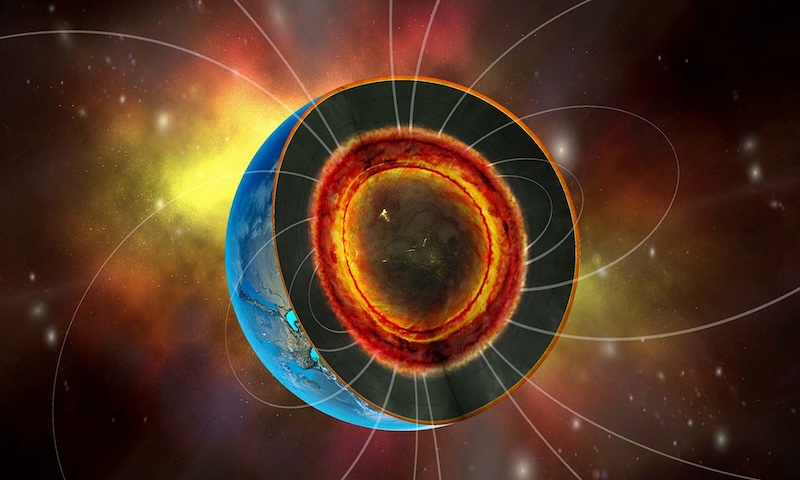
Study Findings: Not All Sub-Neptune Exoplanets Have Magma Oceans

Credit: Image by Enrique from Pixabay

The Astrophysical Journal Letters abstract of the study findings:

The evolution and structure of sub-Neptunes may be strongly influenced by interactions between the outer gaseous envelope of the planet and a surface magma ocean. However, given the wide variety of permissible interior structures of these planets, it is unclear whether conditions at the envelope–mantle boundary will always permit a molten silicate layer or whether some sub-Neptunes might instead host a solid silicate surface. In this work, we use internal structure modeling to perform an extensive exploration of surface conditions within the sub-Neptune population across a range of bulk and atmospheric parameters. We find that a significant portion of the population may lack present-day magma oceans. In particular, planets with a high atmospheric mean molecular weight and large envelope mass fraction are likely to instead have a solid silicate surface, since the pressure at the envelope–mantle boundary is high enough that the silicates will be in solid postperovskite phase. This result is particularly relevant given recent inferences of high-mean molecular weight atmospheres from JWST observations of several sub-Neptunes. We apply this approach to a number of sub-Neptunes with existing or upcoming JWST observations and find that in almost all cases, a range of solutions exist that do not possess a present-day magma ocean. Our analysis provides critical context for interpreting sub-Neptunes and their atmospheres.

Citation: Bodie Breza et al. Not all sub-Neptune exoplanets have magma oceans. ApJL 993 L46 (2025).

https://doi.org/10.3847/2041-8213/ae0c07

Study-related stories:

Universe Today – “It Looks Like All Mini-Neptunes Aren’t Magma Oceans After All”

University of Chicago – “New Study Revises Our Picture of the Most Common Planets in the Galaxy”

Space.com – “Is Our Dream of Finding Ocean-Covered Exoplanets Drying Up?”