Image (Credit): Artist’s rendering of the Europa Clipper above Europa. (NASA)
NASA has decided to move forward with the Europa Clipper mission even though there have been some questions about its ability to withstand the moon’s radiation. The launch is set for an October 10 aboard a SpaceX Falcon Heavy rocket from Launch Complex 39A at NASA’s Kennedy Space Center in Florida.
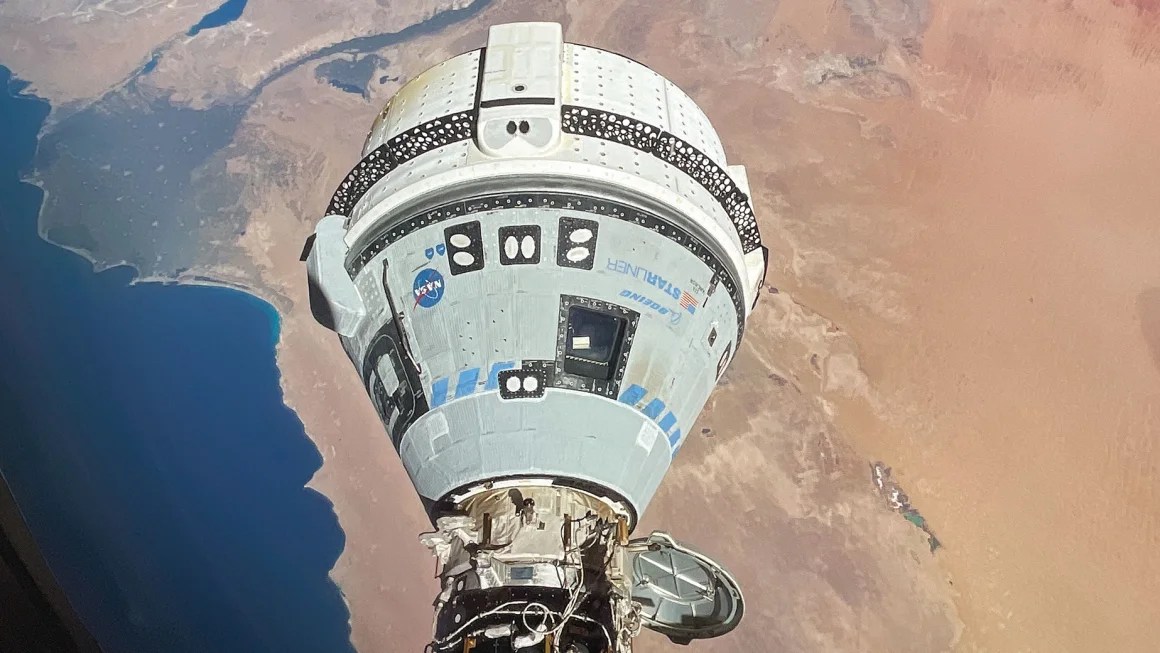
NASA is also moving forward with the return of the empty Starliner capsule currently attached to the International Space Station. This Friday, September 6, Boeing’s CST-100 Starliner will disconnect from the station and land at White Sands Space Harbor in New Mexico. If all goes well, NASA can continue to study the capsule and learn more about what went wrong.
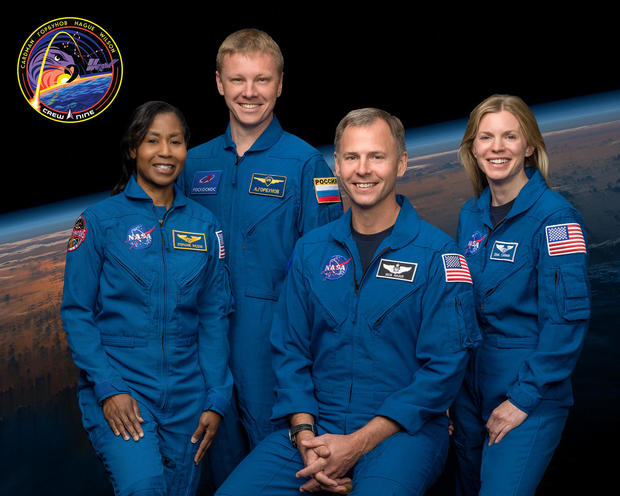
Image (Credit): Initial crew 9 portrait (left to right): Stephanie Wilson, cosmonaut Alexander Gorbunov, pilot Nick Hague and commander Zena Cardman. (NASA)
NASA astronauts Zena Cardman and Stephanie Wilson will not make the September 24 flight, but they are most likely going to go on later missions.
While we await their future flights, NASA has a profile page on each of them that you can review (as well as the other NASA astronauts, Nick Hague, who remains on this month’s flight):
– Zena Cardman: Zena Cardman was selected by NASA as a member of the 2017 “Turtles” Astronaut Class. The Virginia native holds a Bachelor’s of Science in Biology and a Master’s of Science in Marine Sciences from the University of North Carolina, Chapel Hill. Her research focused primarily on geobiology and geochemical cycling in subsurface environments, from caves to deep sea sediments. Cardman’s experience includes multiple Antarctic expeditions.
–Nick Hague: Col. Tyler N. Hague was selected by NASA as an astronaut in 2013. The Kansas native earned a Bachelor of Science in astronautical engineering from the United States Air Force Academy in 1998, and a Master of Science in aeronautical and astronautical engineering from the Massachusetts Institute of Technology in 2000. Selected as an astronaut by NASA in 2013, Hague completed astronaut candidate training in July 2015. During his first mission to the International Space Station in 2018, he and his crewmate Alexey Ovchinin, of the Russian space agency Roscosmos, experienced a catastrophic rocket booster malfunction that resulted in the launch abort of their Soyuz MS-10. In 2019, Hague launched on Soyuz MS-12 and served as Flight Engineer on the International Space Station for 203 days during Expedition 59 and 60. During 2020-2022, Hague completed a developmental rotation with the United States Space Force, serving as the new military service’s Director of Test and Evaluation at The Pentagon in Washington D.C. He returned to NASA in August 2022 to work on the Boeing Starliner Program. Hague is currently training for his second spaceflight, where he will serve as commander for NASA’s SpaceX Crew-9 mission.
–Stephanie Wilson: Stephanie D. Wilson is a veteran of three spaceflights, STS-121 in 2006, STS-120 in 2007, and STS-131 in 2010 and has logged more than 42 days in space. Born in Boston, she attended high school in Pittsfield, Massachusetts, earned her Bachelor of Science in Engineering Science from Harvard University in 1988, and earned her Master of Science in Aerospace Engineering in 1992 from the University of Texas at Austin. Wilson has served as the Space Station Integration Branch Chief from 2010 to 2012, the Mission Support Crew Branch Chief from 2018 to 2020, and Deputy of the Assigned Crew Branch from 2021-2023. In 2013, she completed a 9-month detail to NASA’s Glenn Research Center as the Acting Chief of Program and Project Integration in the Spaceflight Systems Directorate.
Delays and changes seem to be the norm at NASA, but there are plenty of missions coming up that should keep all of the astronauts busy.
The good news is that the crewed resupply flight this month will also be supplying the two stuck astronauts with supplies, including clothing and pressure suits. I hope their families were also able to throw in a few fun items as well to keep their spirits up.
For the second time in two months, a SpaceX Falcon 9 rocket launch has had problems, leading to a temporary grounding of the rocket by the Federal Aviation Administration. In the latest case, a rocket booster crashed into the Atlantic Ocean after a successful launch of Starlink satellites.
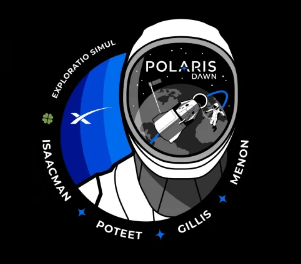
As a result of the malfunction, the privately-funded Polaris Dawn mission scheduled for this Friday will most likely need to be delayed. One of the goals for the Polaris Dawn mission is a spacewalk, which will be the first private space walk to date.
Of greater concern is the role of the Falcon 9 in upcoming International Space Station launches, be it crewed or uncrewed. With the Boeing capsule stuck at the station, SpaceX is currently the one game in town for NASA’s station needs.
Image (Credit): Boeing Starliner attached to the ISS. (NASA)
“Spaceflight is risky, even at its safest and most routine. A test flight, by nature, is neither safe, nor routine. The decision to keep Butch and Suni aboard the International Space Station and bring Boeing’s Starliner home uncrewed is the result of our commitment to safety: our core value and our North Star…I’m grateful to both the NASA and Boeing teams for all their incredible and detailed work.“
–Statement by NASA Administrator Bill Nelson regarding NASA’s decision to return Boeing’s Starliner to Earth without astronauts Butch Wilmore and Suni Williams aboard the spacecraft. Instead the two astronauts will remain on the International Space Station (ISS) until February 2025 when they will return to Earth aboard a SpaceX Dragon capsule.
As if NASA needed another issue with the Boeing Starliner stranded at the International Space Station (ISS), the media (particularly the Indian media) is now reporting that one of the Starliner astronauts is having eyesight issues.
According to one media source, Astronaut Sunita Williams is experiencing eyesight problems that may be linked to her exposure to microgravity. The issue, called Spaceflight Associated Neuro-ocular Syndrome (SANS), is not an uncommon symptom related to space flight. It can lead to blurred vision over time and worsens over time.
Most astronauts’ eyes and brain structure change in space…Weightlessness causes blood and cerebrospinal fluid to shift toward the head. This fluid shift is believed to be the underlying cause of the eye and brain structural changes…The longer they are in space, the more they may be impacted. Many astronauts only experience effects in space, but some changes may be permanent in some astronauts.
This has only become an issue now that an 8-day tour has turned into a potential 8-month tour. This Gilligan’s Island tour needs to come to an end so that the ISS can return to regular operations.
Image (Credit): Scene from the television show Gilligan’s Island. (CBS Television Network)




 Our Awesome Universe