Continued Traffic to the International Space Station

This image has an empty alt attribute; its file name is soyuz-ms-23-docking_blog.png
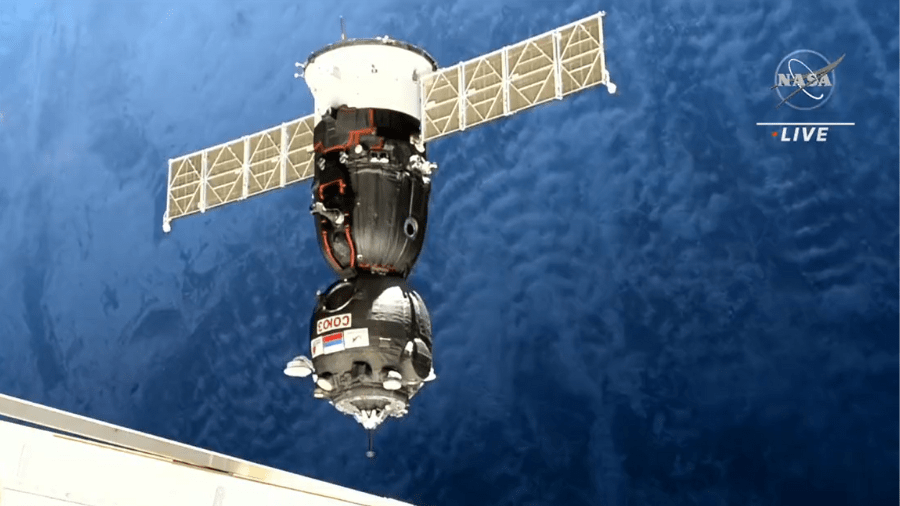
Image (Credit): Soyuz M-23 capsule approaching the ISS. (NASA)

Yesterday, Russia’s M-23 capsule has safely arrived at the International Space Station (ISS). It was carrying supplies but no crew. Now the M-22 crew has a safe way to return to Earth when the are ready.

And tomorrow, SpaceX is preparing to launch a new crew to the ISS:

SpaceX and NASA are targeting no earlier than Monday, February 27 for Falcon 9’s launch of Dragon’s sixth operational human spaceflight mission (Crew-6) to the International Space Station from Launch Complex 39A (LC-39A) at NASA’s Kennedy Space Center in Florida. The instantaneous launch window is at 1:45 a.m. ET (6:45 UTC), with a backup opportunity available on Tuesday, February 28 at 1:22 a.m. ET (6:22 UTC).

Things are starting to return to normal up there. Boring is welcome at this point.

Image (Credit): SpaceX Crew 6 mission on the launchpad. (SpaceX)

The Rescue Mission to the ISS has Started

Image (Credit): Launch of Russia’s Soyuz M-23 mission to the ISS. (NASA)

Yesterday, Russia launched the uncrewed Soyuz M-23 mission from the Baikonur Cosmodrome in Kazakhstan (it was actually “today” in Russian time). The spacecraft will replace the damaged M-22 capsule attached to the International Space Station (ISS).  As a result, the earlier M-22 crew of Russian cosmonauts Sergey Prokopyev and Dmitri Petelin, and NASA astronaut Frank Rubio, will return in this replacement capsule.

NASA noted that the M-22 capsule will be studied by the Russian upon its return in March:

The damaged Soyuz MS-22 is scheduled to undock from the station in late March and return to Earth for an uncrewed parachute-assisted landing in Kazakhstan, and post-flight analysis by Roscosmos.

Given recent leaks on two Russian spacecraft, let’s hope the M-23 mission goes without a hitch. Fingers crossed.

SpaceX will also be shipping a new crew up to the ISS next week, so the space traffic continues even with these hiccups.

What’s Going on at the International Space Station?

Image (Credit): The Progress 82 cargo craft approaches the ISS on October 27, 2022. (NASA)

It appears that we now have two problematic capsules attached to the International Space Station (ISS). Late last year, we learned about a liquid coolant lead in the Russian Soyuz Crew Return Vehicle (Soyuz MS-22 crew ship), and now we have a leak in the second Russian capsule as well (Progress 82 cargo capsule). This is not a good sign for the seven ISS crew members, some of whom were already scheduled to go home.

After inspecting the Progress 82 spacecraft, it was set loose on Friday to burn up over the Pacific Ocean, as noted by NASA:

Loaded with trash, Progress 82 undocked from the space station’s Poisk module at 9:26 p.m. EST Friday, Feb. 17. The Progress deorbit was delayed about 24-hours while Roscosmos engineers analyzed imagery acquired after undocking of the radiator area of the spacecraft, which is the suspected region where a coolant leak occurred on Feb. 11.

As a result of this second incident, the Russian launch of a replacement capsule (Soyuz MS-23), scheduled for this week, may need to be delayed until the issues with both spacecraft are fully discussed and understood. In a discussion about the two leaks, an NPR commentator noted:

Analysts say Russia’s supply chain has been stretched thin due to the war in Ukraine.

This is not good news for anyone. If we cannot rely on the Russian missions, the SpaceX and Northrop Grumman will be doing double duty.

Pic of the Week: ISS Space Junk

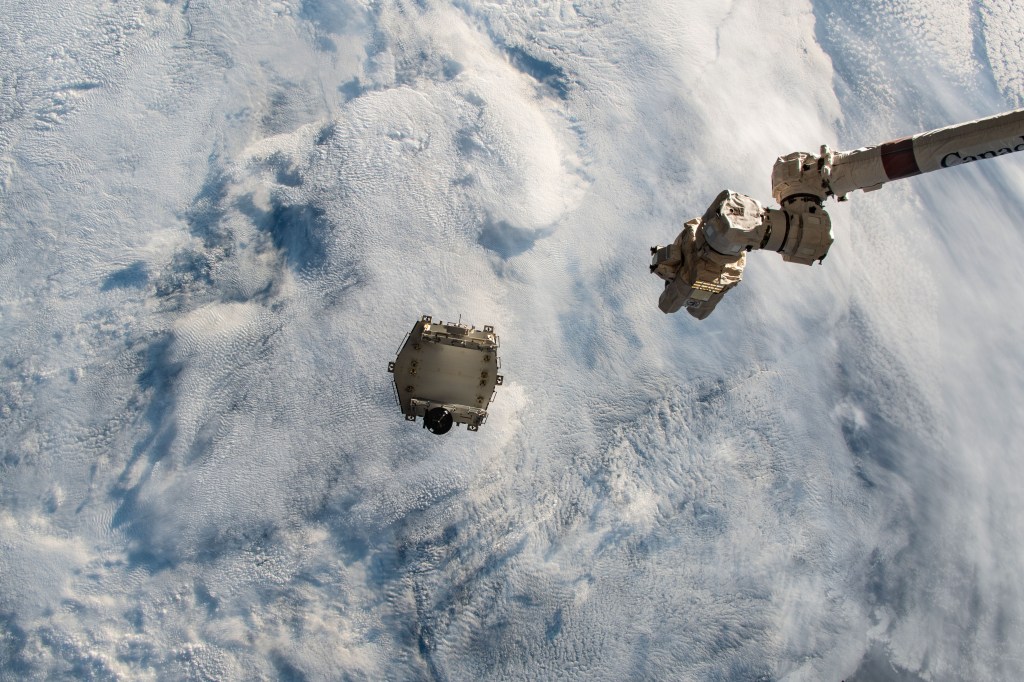
Image (Credit): Canadarm2 robotic arm jettisoning flight support equipment toward the Earth’s atmosphere. (NASA)

This week’s image is a recent shot from the International Space Station (ISS) showing how it deals with unneeded equipment. Fortunately, this “space junk” will quickly burn up in the Earth’s atmosphere rather than remain a threat to the ISS. Given the size of that junk, I hope nothing else bumps into it on the way down.

Here is the story from NASA:

The Canadarm2 robotic arm is pictured extending away from the International Space Station after jettisoning flight support equipment toward the Earth’s atmosphere. The flight hardware secured a pair of roll-out solar arrays inside the SpaceX Dragon cargo ship’s trunk during its ascent to orbit and rendezvous with the space station in November 2022. The jettisoned support equipment drifted safely away from the station and will eventually harmlessly burn up in the atmosphere with no chance for recontacting the space station.

Note: As this story illustrates, NASA has a habit of tossing out the trash from orbit.

Space Stories: JWST Confirms Earth-Size Exoplanet, Russia Sending Rescue Mission to ISS, and IO Erupts

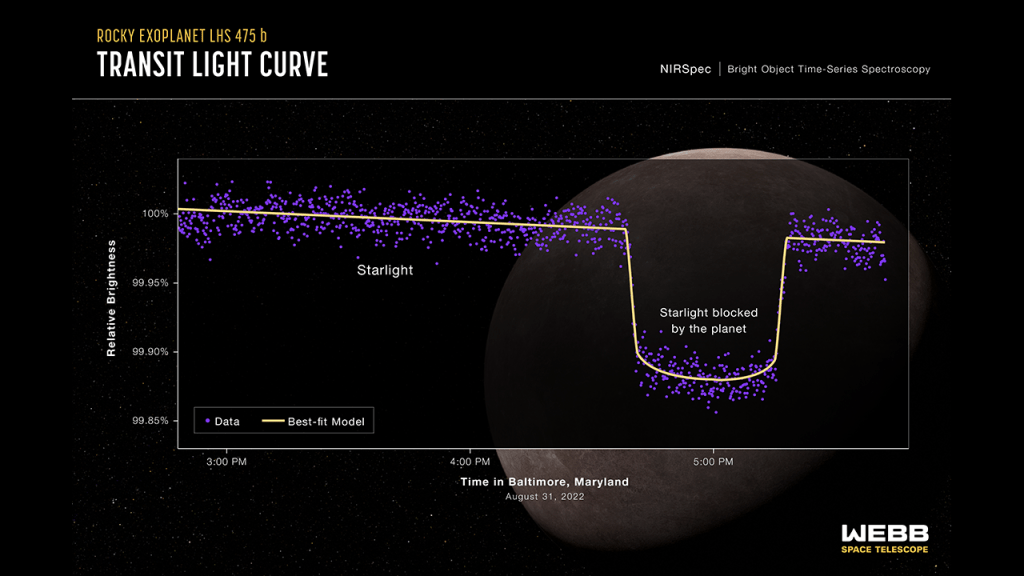
Image (Credit): James Webb Space Telescope (JWST) data associated with exoplanet LHS 475 b. (NASA, ESA, CSA, Leah Hustak (STScI))

Here are some recent stories of interest.

Webb Space Telescope: “NASA’s Webb Confirms Its First Exoplanet

Researchers confirmed an exoplanet, a planet that orbits another star, using NASA’s James Webb Space Telescope for the first time. Formally classified as LHS 475 b, the planet is almost exactly the same size as our own, clocking in at 99% of Earth’s diameter. The research team is led by Kevin Stevenson and Jacob Lustig-Yaeger, both of the Johns Hopkins University Applied Physics Laboratory in Laurel, Maryland.

ABC News: “Russia Will Launch New Capsule to Return Space Station Crew

Russia will send up a new capsule next month to bring back three space station crew members whose original ride home was damaged, officials said Wednesday. The two Russians and one American will stay several extra months at the International Space Station as a result of the capsule switch, possibly pushing their mission to close to a year, NASA and Russian space officials told reporters.

MSN Science Alert: “Massive Volcanic Outburst Detected on Jupiter’s Hellish Moon Io

In the space around Jupiter, a torus of plasma created and fed by Io’s volcanic emissions grew significantly richer between July and September of last year and persisted until December, showing the moon underwent a spate of volcanic activity that released a huge amount of material. For something that’s just a little bit bigger than Earth’s Moon, Io is an absolute beast of volcanism. It’s bristling with volcanoes, with around 150 of the 400 known volcanoes erupting at any given time, creating vast lakes of molten lava.