Has Russia Lost its Space Mojo?

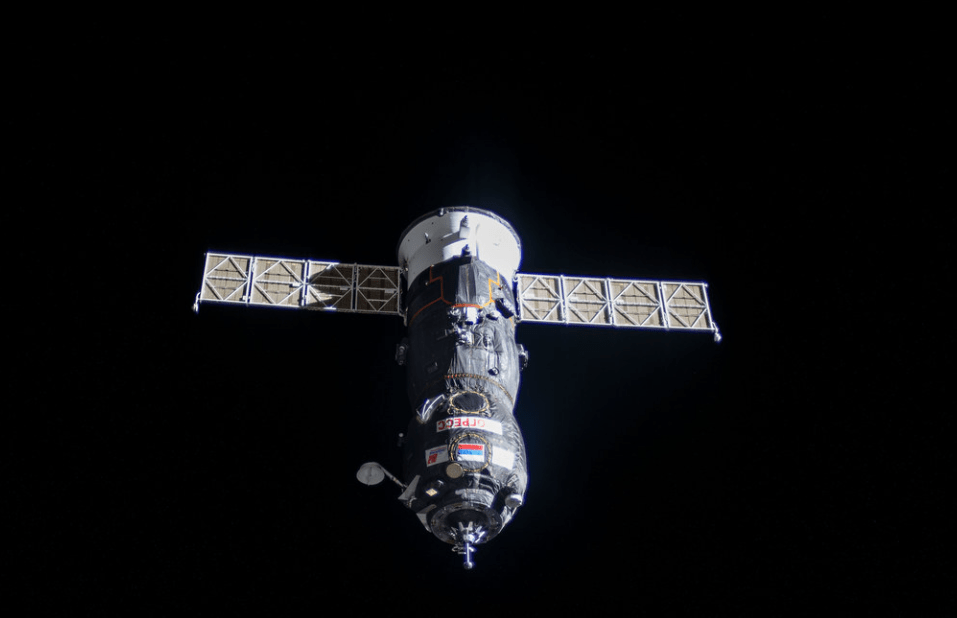
Image (Credit): Russia’s Progress 76 resupply ship approaching the ISS in July 2020. (NASA)

Marina Koren’s article in The Atlantic, titled “The Russian Space Program Is Falling Back to Earth,” has plenty to say about the state of Russia’s space program. Her assessment is pretty bleak outside of the continued collaboration related to the International Space Station (ISS).

She notes:

Beyond the ISS, though, Russia’s space portfolio isn’t all that grandiose these days. Although cosmonauts fly into orbit regularly, Russia does not have a rover on the far side of the moon, as China has, or orbiters around Mars, as India and the United Arab Emirates have. It does not have a fleet of space telescopes like the U.S has. The Soviet Union was the first to send a human being to space, decades ago, and its early accomplishments are a distinct point of national pride. But the Russian space program has stalled for years, plagued by sparse budgets. And that was before Vladimir Putin’s onslaught on Ukraine: Some of the space plans the country still had in the works are falling apart. Now the Russian space effort may be more adrift than ever.

The Russian invasion of Ukraine may be the last straw. It led to the cancellation of various collaborative space projects with other nations. For instance, back in March the European Space Agency (ESA) was forced to suspend its joint ESA/Roscosmos ExoMars Rover mission to Mars.

China seems to be pulling ahead of Russia in the space race, with Russia taking a back seat on future projects, such as a Moon base or new space station. On the ground, Russia has shown it is not up to a war with Ukraine, making its role as a military power questionable. The article notes that Russia’s status as a space power is now also in question.

And shooting down another nation’s satellites will not be seen as a sign of strength in either the military or space arena.
Space Quote: The Russians Are All In on the Space Station

“We are going to keep flying [to the] International Space Station as long as our new infrastructure [is being] buil[t]. We don’t know yet how it’s going to be built and what kind of modules we will have, but I’m sure that we will stay in international partnership when we fly [to the] ISS and [the] future station and future infrastructure is also going to be with international partnership.”

Statement by Sergei Krikalev, executive director of human space flight programs at Roscosmos, during an October 5th briefing following the successful SpaceX launch of the latest crew to the International Space Station (ISS), which included Russian cosmonaut Anna Kikina. His comments were seen as part of a continuing Russian clarification of earlier comments about the Russians leaving the ISS in 2024. It appears the Russian will be staying with the station even longer, even if this support does not last until 2030.

Successful Start to NASA’s SpaceX Crew-5 mission

Image (Credit): October 5, 2022 departure of a SpaceX Falcon 9 rocket from the Kennedy Space Center in Florida carrying NASA’s SpaceX Crew-5 mission to the ISS. (NASA/Joel Kowsky)

Earlier today, SpaceX Crew-5 successfully departed from NASA’s Kennedy Space Center in Florida on their way to the International Space Station (ISS). The four members on this flight are NASA astronauts Nicole Mann and Josh Cassada, Japan Aerospace Exploration Agency astronaut Koichi Wakata, and Roscosmos cosmonaut Anna Kikina. The population of the ISS will increase to 11 until 3 astronauts return to Earth a few days later.

Here is NASA’s bio on the new crew members:

  • As commander, Mann is responsible for all phases of flight, from launch to re-entry, and will serve as an Expedition 68 flight engineer. This will be her first spaceflight since becoming an astronaut in 2013. Mann was born in Petaluma, California, and will be the first indigenous woman from NASA in space. She is a colonel in the U.S. Marine Corps, and she served as a test pilot in the F/A-18 Hornet and Super Hornet.
  • Cassada is the spacecraft pilot and second in command for the mission. He is responsible for spacecraft systems and performance. Aboard the station, he will serve as an Expedition 68 flight engineer. This will be his first flight since his selection as an astronaut in 2013. Cassada grew up in White Bear Lake, Minnesota, and is a physicist and U.S. Navy test pilot.
  • Wakata will be making his fifth trip to space and as a mission specialist he will work closely with the commander and pilot to monitor the spacecraft during the dynamic launch and re-entry phases of flight. Once aboard the station, he will serve as a flight engineer for Expedition 68. With Crew-5’s launch, Dragon will be the third different type of spacecraft Wakata has flown to space.
  • Kikina will be making her first trip to space, and will serve as a mission specialist, working to monitor the spacecraft during the dynamic launch and re-entry phases of flight. She will be a flight engineer for Expedition 68.

NASA News: An Eye on Hurricane Ian

Image (Credit): Images from the ISS’s instruments monitoring Hurricane Ian as the storm neared Cuba. (NASA/JPL-Caltech)

It may have been a bad week for NASA regarding the delayed launch of the Artemis I mission from Florida, but it has been a good week for NASA as it illustrates the benefits of monitoring Hurricane Ian as it crosses the Caribbean and heads towards Florida.

Two NASA instruments on the International Space Station (ISS) in particular are helping with this monitoring:

  • Compact Ocean Wind Vector Radiometer (COWVR) to measure the amount of rain in the atmosphere; and
  • Temporal Experiment for Storms and Tropical Systems (TEMPEST) to track the volume of ice particles pushed into the upper atmosphere by the storm.

Together these instruments give us a much better understanding of the storm hitting the eastern coast of the United States. In this type of situation, any additional details can assist civic leaders and potentially save lives.

We are all fascinated by NASA’s images showing dust storms sweeping across Mars or highlighting the Great Red Spot on Jupiter, which represents a violent storm that has marked the planet’s surface for hundreds of years. Enormous storms mark and transform the face of our Earth as well. Monitoring our own planetary storm systems is another worthwhile goal for our NASA scientists.

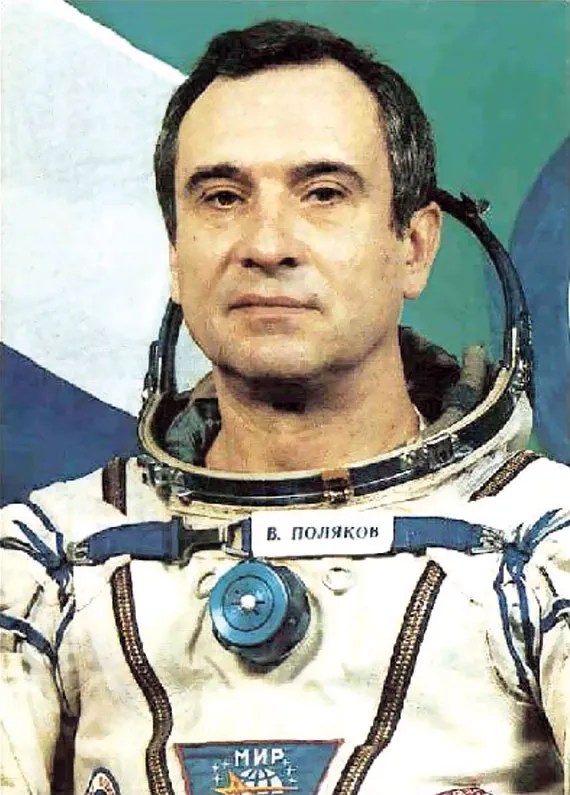
RIP: Cosmonaut Valery Vladimirovich Polyakov

Image (Credit): Cosmonaut Valery Polyakov. (NASA)

Last week cosmonaut Valery Polyakov passed away at the age of 80 (1942 to 2022). He still holds the record for the longest single spaceflight in history when he was aboard the Mir space station for 437 days and 18 hours during one stay between 1994 and 1995. By the time he retired later in 1995, he had spent 678 days in space.

Russians have a history of long tours in space, including four cosmonauts from the last century who spent at least one year in a single tour:

  • Valery Polyakov – 437 days aboard Mir (1994-95)
  • Sergei Avdeyev – 379 days aboard Mir (1998-99)
  • Vladimir Titov – 365 days aboard Mir (1987-88)
  • Musa Manaro – 365 days aboard Mir (1987-88)

When U.S. astronaut Astronaut Scott Kelly returned to Earth with cosmonaut Mikhail Kornienko from the International Space Station in 2016 after 340 days in space, the Russians were not so impressed according to a story in arsTECHNICA. The story notes cosmonaut Talgat Musabayev, serving as the head of the Kazakh space agency, stated, “Congratulations on your record. Of course it was already done 28 years ago.” 

Image (Credit): The Soviet Mir space station. (Encyclopaedia Britannica)