Space Quote: Understanding NASA Interplanetary Transmissions and Applying it to SETI

Image (Credit): Artist’s rending of the Perseverance Mars rover on the Martian surface. (NASA/JPL-Caltech)

”Based on data from the last 20 years, we found that if an extraterrestrial intelligence were in a location that could observe the alignment of Earth and Mars, there’s a 77% chance that they would be in the path of one of our transmissions — orders of magnitude more likely than being in a random position at a random time.”

Statement by Penn State graduate student Pinchen Fan, one of the authors of a recent study, Detecting Extraterrestrial Civilizations that Employ an Earth-level Deep Space Network. The study looked at NASA transmissions from Earth to space missions in the the solar system to determine if it could assist with the search for extraterrestrial intelligence (SETI).

Space Stories: New Glenn’s Martian Probes, AI Space Doctors, and Questions About a Mission to Uranus

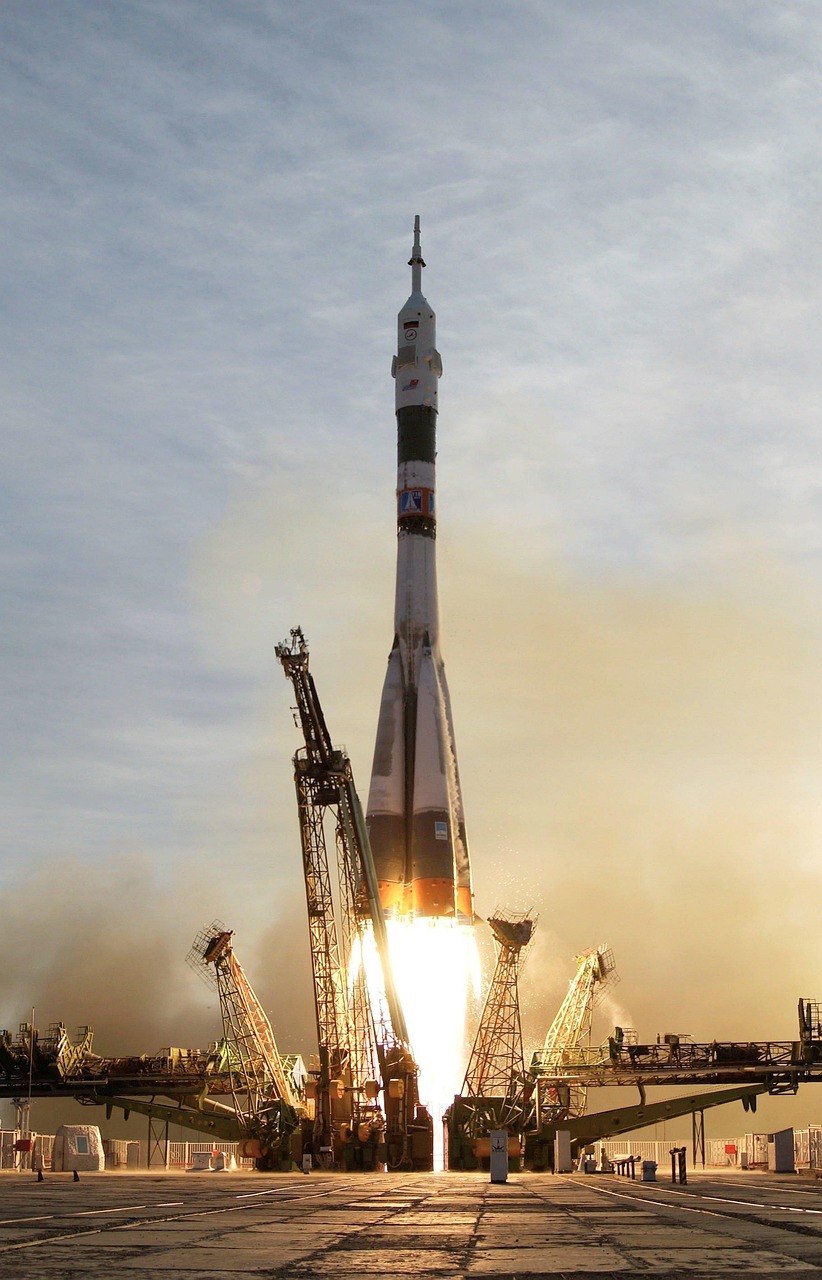
Image (Credit): Blue Origin’s New Glenn Rocket. (Blue Origin)

Here are some recent space-related stories of interest.

Space.com: Blue Origin’s 2nd New Glenn Rocket Launch will Fly Twin NASA Mars Probes to Space on Sep. 29

Blue Origin is gearing up for the second-ever launch of its powerful New Glenn rocket, which will loft NASA’s ESCAPADE mission to Mars. The company says it has been working closely with NASA on preparations leading up to New Glenn’s next launch, dubbed NG-2, and is targeting no earlier than (NET) Sep. 29. The twin ESCAPADE (Escape and Plasma Acceleration and Dynamics Explorers) probes have been awaiting their turn aboard New Glenn, which was originally slated to carry the satellites on its maiden launch in January. However, NASA opted not to risk a costly mission delay due to the debut liftoff of the new rocket.

American Bazaar: NASA and Google Test AI Medical Assistant for Astronaut Missions

NASA, which is committing to a new era of human spaceflight with its Artemis mission, is working with Google to test a proof of concept for Crew Medical Officer Digital Assistant (CMO‑DA), a type of Clinical Decision Support System (CDSS). This has been created to allow astronauts to diagnose and treat symptoms when no doctor is available or communications to Earth are blacked out. “Trained on spaceflight literature, the AI system uses cutting-edge natural language processing and machine learning techniques to safely provide real-time analyses of crew health and performance,” Google representatives said in a statement.

Scientific American:“NASA Budget Cuts Could End U.S. Exploration of the Outer Solar System

In the spring of 2022 the U.S. space community selected its top priority for the nation’s next decade of science and exploration: a mission to Uranus, the gassy, bluish planet only seen up close during a brief spacecraft flyby in 1986. More than 2.6 billion kilometers from Earth at its nearest approach, Uranus still beckons with what it could reveal about the solar system’s early history—and the overwhelming numbers of Uranus-sized worlds that astronomers have spied around other stars. Now President Donald Trump’s proposed cuts to NASA could push those discoveries further away than ever—not by directly canceling the mission but by abandoning the fuel needed to pull it off.

A Day in Astronomy: The Discovery of Phobos

Image (Credit): Mar’s moon Phobos. (NASA / JPL-Caltech / University of Arizona)

On this day in 1877, American astronomer Asaph Hall discovered the Martian moon Phobos while at the US Naval Observatory in Washington, D.C. He had discovered Mar’s other moon Deimos six days earlier.

Oddly enough, the idea of two moons orbiting Mars was first proposed in 1726 by Jonathan Swift in his tale Gulliver’s Travels. In the book, astronomers on the flying island of Laputia were noted to have

… discovered two lesser stars, or satellites, which revolve around Mars, whereof the innermost is distant from the center of the primary exactly three of his diameters, and the outermost five: the former revolves in the space of ten hours, and the latter in twenty-one and a half.

All Professor Hall had to do was confirm the work of the Laputian astronomers.

Americans Still Believe in Returning to the Moon and Visiting Mars

With all of the current chaos related to NASA funding, one might think America has moved away from its previous support for space missions. However, a poll reported last month by CBS News tells a different story.

As shown in the image above, 67 percent of Americans polled by CBS News and YouGov are in favor or NASA returning astronauts to the Moon, and 65 percent feel the same way about a trip to Mars.

This is encouraging yet may not be enough to save NASA as it faces severe budget cuts and the loss of thousands of employees.

Some might say that the cuts are unrelated to the Moon and Mars missions, which are still being funded by the White House. However, that does not matter. NASA is losing expertise in all areas while its employees feel harassed and unappreciated. It is hard to build a successful space program on top of this disarray.

If so many Americans believe we should be back on the Moon and travel to Mars, how will they feel should China beat us to one or both? How will the current White House be viewed?

Maybe that is what should keep the White House and others proposing these drastic cuts up at night.

Do We Need to Worry About Boeing as a Space Partner?

Image (Credit): International partners empowering NASA’s mission on Mars. (US Embassy & Consulates in Italy)

While spreading out the manned missions to the International Space Station (ISS) among various private sector partners sounded like a great idea, it has proven less than perfect. First we had to worry about the emotional stability of SpaceX’s CEO, and now we need to worry about the financial viability of Boeing, the only other company on a path to bring astronauts to the ISS.

At least that is the argument of Sophia Pappalardo in a Reason magazine article titled “America’s Reliance on Boeing Is a National Security Liability.” She cites a Congressional Research Service report on Boeing that states that since 2018 the company has:

…faced challenges including labor actions, production delays, quality control problems, and financial losses on government contracts. Given Boeing’s importance to the defense industrial base, Congress may assess whether or not these developments have implications for U.S. national security…Some analysts have speculated that Boeing could declare bankruptcy or seek to sell elements of its space or defense business.

One of the author’s suggestions is for the US government to expand its contracting efforts with “trusted international companies.” While the article is focused on the defense realm, it sounds like a good idea for the space realm as well.

The major US space goals already include our trusted international partners, such as the ISS, Artemis and Mars programs, so none of this much of a stretch. Maybe it just needs to be more of the focus as the current US firms show their vulnerabilities when poorly managed. I would add to this list the need to offer greater support to other, newer US-based space companies to further diversity the workload.

This may not be a time to call for greater international coordination led by NASA when the agency is also showing its vulnerabilities when poorly managed, yet we need to plan for future days when the craziness dies down. In the meantime, as Europe prepares for NASA cuts to joint programs, we have a lot of convincing to do if we want a deeper international space industry.

A new administrator for NASA may help, as well as a Congress that does its job and protects the future of our space programs.

I don’t care if you call it “Make the Moon the Goal Again.” Just get started.