A Day in Astronomy: Flyby of Asteroid Gaspra

Image (Credit): Asteroid Gaspra as photographed by the Galileo spacecraft. (NASA)

On this day in 1991, NASA’s Galileo spacecraft conducted a flyby of asteroid Gaspra, an asteroid that orbits in the asteroid belt between Mars and Jupiter. The asteroid is about 10.5 miles long. Gaspra was discovered in 1916 by Russian astronomer G. N. Neujmin, who named it after a famous Russian spa retreat in Crimea.

The Galileo spacecraft’s primary mission was to visit Jupiter and its moons, but it also conducted other observations along the way, including flybys of asteroids Gaspra and Ida.

Here are a few facts about the Galileo mission from NASA:

  • Galileo was the first spacecraft to orbit an outer planet.
  • It was the first spacecraft to deploy an entry probe into an outer planet’s atmosphere.
  • It completed the first flyby and imaging of an asteroid (Gaspra, and later, Ida).
  • It made the first, and so far only, direct observation of a comet colliding with a planet’s atmosphere (Shoemaker-Levy 9).
  • It was the first spacecraft to operate in a giant planet magnetosphere long enough to identify its global structure and to investigate its dynamics.

Pic of the Week: Get Ready for Halloween!

Image (Credit): View of Jupiter taken by the NASA’s Juno mission. (NASA/JPL-Caltech/SwRI/MSSS, Vladimir Tarasov)

NASA has an image for all of us just in time for Halloween. The strange face you see above is a view of Jupiter taken on September 7, 2023 by NASA’s Juno spacecraft on its 54th close flyby of the planet.

NASA explains what you are seeing in this northern region of Jupiter:

The image shows turbulent clouds and storms along Jupiter’s terminator, the dividing line between the day and night sides of the planet. The low angle of sunlight highlights the complex topography of features in this region, which scientists have studied to better understand the processes playing out in Jupiter’s atmosphere.

Now I want to see the images from the first 53 flybys to understand what we might have missed.

A Day in Astronomy: The Launch of Voyager 2

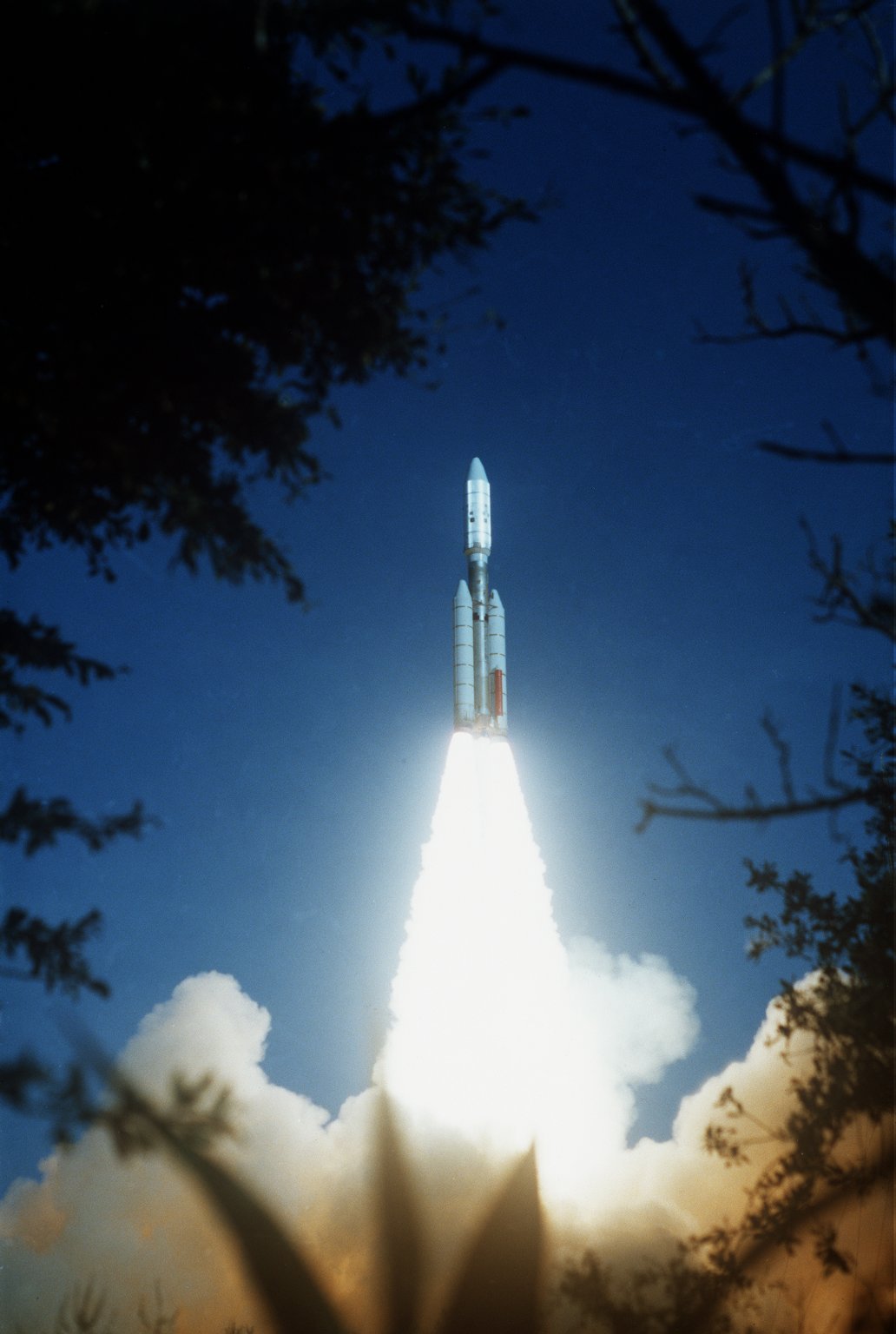
Image (Credit): The launch of Voyager 2. (NASA)

On this day in 1977, NASA launched the Voyager 2 space probe from the Kennedy Space Center at Cape Canaveral in Florida to study the solar system’s outer planets as well as interstellar space beyond the Sun’s heliosphere.

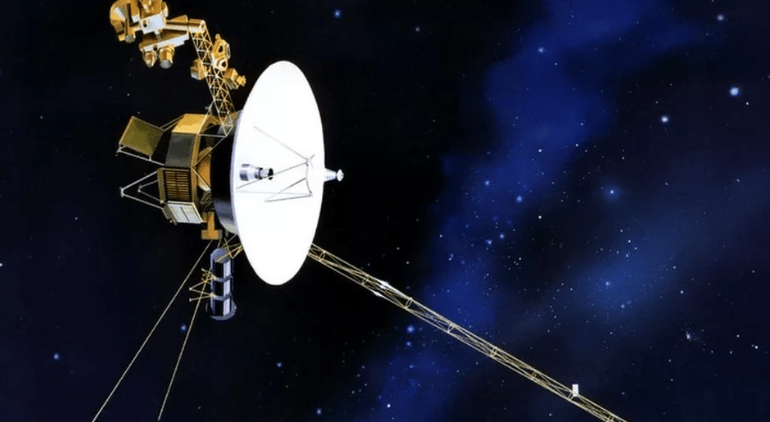
The Voyager 2 space probe is still talking to us as it continues its journey beyond the planets with a special message for anyone it may encounter.

During its initial mission, the space probe provided us with many images from an little known region of our solar system, including the image below of Jupiter’s moon Europa.

Image (Credit): Europa during Voyager 2’s closest approach. (NASA)

Voyager 2 is Still Talking to Us

After two weeks with no word, Voyager 2 is back to communicating with us as it continues its journey beyond our solar system. The whole incident started when NASA sent a bad command, but all is well.

Voyager 2 first left Earth back in August 1977 and exited the solar system in December 2018. Like Voyager 1, which is also outside the solar system now, Voyager 2 had the initial task of studying the planets. Voyager 2 focused on Jupiter, Saturn, Uranus and Neptune. It has shown it was capable of much more as it dragged the human race to the bleeding edge of space.

You can read all about Voyager 2’s accomplishments at this NASA site, including:

  • Voyager 2 is the only spacecraft to study all four of the solar system’s giant planets at close range.
  • Voyager 2 discovered a 14th moon at Jupiter.
  • Voyager 2 was the first human-made object to fly past Uranus.
  • At Uranus, Voyager 2 discovered 10 new moons and two new rings.
  • Voyager 2 was the first human-made object to fly by Neptune.
  • At Neptune, Voyager 2 discovered five moons, four rings, and a “Great Dark Spot.”

An impressive list of accomplishments, and the spacecraft is still ticking as it goes into the great unknown.

We need to keep these achievements in mind as we battle over this year’s NASA budget. We also need to remember that there was supposed to be four Voyager-like spacecraft rather than two, but budget cuts nixed the second set. Meaning we can still get some great things done even if we don’t have the budget to fund every piece of a grand vision.

Video: Flyby of Jupiter’s Moon Io

Image (Credit): View of Jupiter’s moon Io. (NASA/JPL-Caltech/SwRI/MSSS)

Last week, NASA released this video showing the Juno spacecraft’s view of Jupiter and its moon Io as it flew by on May 16, 2023. The clip includes music by Vangelis. It is short but stunning video.

Juno was launched back in 2011 and first started orbiting Jupiter in 2016. Sent to study Jupiter, the current flyby is part of the spacecraft’s extended mission.

Juno’s closest approach to Io will occur today, so you can expect more images shortly.

If you want to read more about Io and the mission, visit this NASA site.