Space Stories: New Stars in the Heavens, Moon Budget Passes Senate, and Lunar Trailblazer Needs to Call Home

Image (Credit): The Stingray nebula (Hen-1357), the youngest known planetary nebula. (Matt Bobrowsky, Orbital Sciences Corporation and NASA)

Here are some recent space-related stories of interest.

Live Science: 2 ‘New Stars’ Have Exploded into the Night Sky in Recent Weeks — and Both are Visible to the Naked Eye

A second “new star” has unexpectedly appeared in the night sky, less than two weeks after a near-identical point of light first burst into view without warning. The first nova, dubbed V462 Lupi, was initially spotted June 12 shining in the Lupus constellation, after its progenitor star suddenly became more than 3 million times brighter than normal. Then, on June 25, multiple astronomers detected another nova, dubbed V572 Velorum, within the Vela constellation, according to EarthSky.org. Astronomers normally expect to see a classical nova once a year at most, and more than one of these explosions shining simultaneously is almost unheard of.

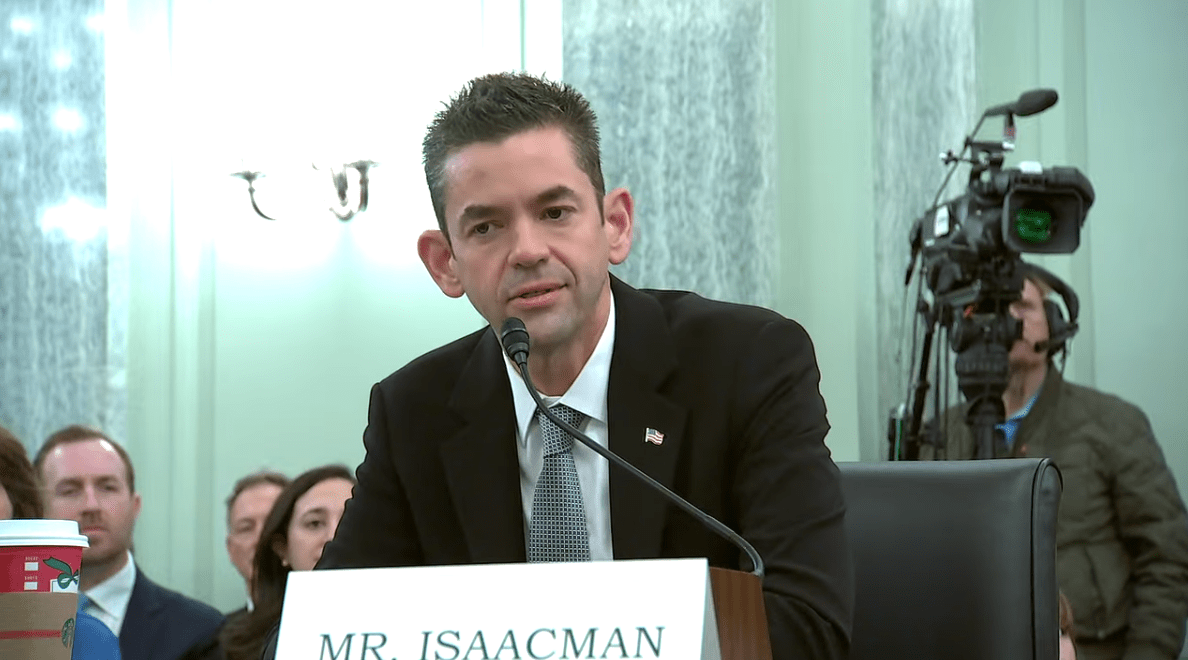
TechCrunch: Congress Just Greenlit a NASA Moon Plan Opposed by Musk and Isaacman

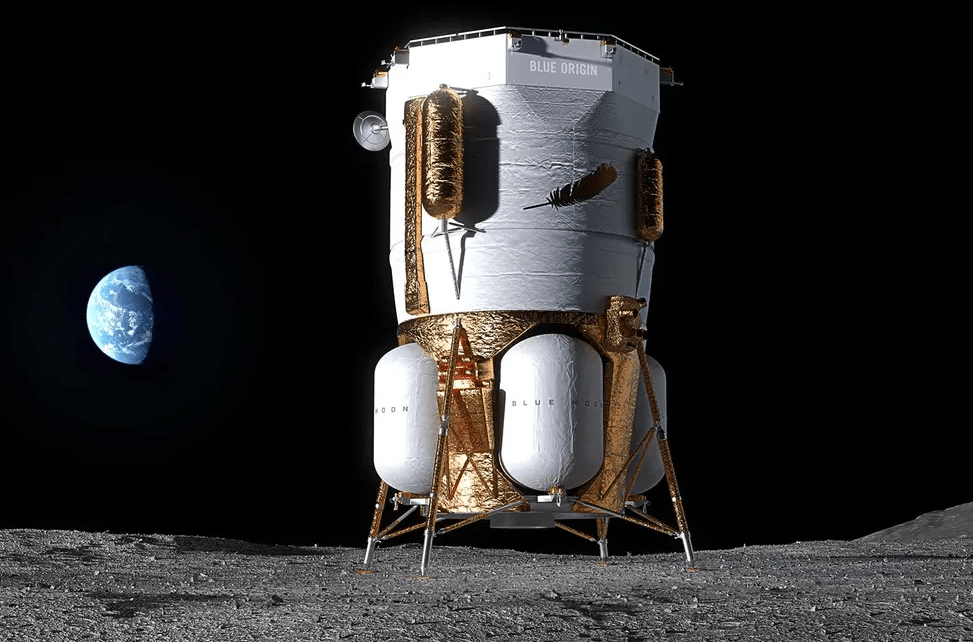
Legacy aerospace giants scored a win Tuesday when the U.S. Senate passed President Trump’s budget reconciliation bill that earmarks billions more for NASA’s flagship Artemis program. The $10 billion addition to the Artemis architecture, which includes funding for additional Space Launch System rockets and an orbiting station around the moon called Gateway, is a rebuke to critics who wished to see alternative technologies used instead. Among those critics are SpaceX CEO Elon Musk and billionaire entrepreneur Jared Isaacman, who Musk proposed as the next NASA administrator.

The Register: NASA Gives Lunar Trailblazer a Few More Weeks to Pick Up the Phone

NASA has extended recovery efforts for its stricken Lunar Trailblazer spacecraft to mid-July, but is warning that if the probe remains silent, the mission could end. Contact with the small satellite was lost the day after its launch on February 26. Controllers were initially able to receive engineering data from the vehicle, but the telemetry indicated power system issues, and the spacecraft eventually fell silent.

Mission Possible, But Not Yet

Image (Credit): The Mission Possible vehicle during construction. (The Exploration Company)

A new European space company came close to success with its space capsule early this week until it had problems with reentry. The Exploration Company, discussing its Mission Possible vehicle, had this to say:

The capsule was launched successfully, powered the payloads nominally in-orbit, stabilized itself after separation with the launcher, reentered and reestablished communication after black out…We are still investigating the root causes and will share more information soon. We apologize to all our clients who entrusted us with their payloads.

The Mission Possible capsule was expected to complete the following tasks:

  • Phase 1: Separation from the Launcher
  • Phase 2: Stabilizing the Capsule and Putting its Heatshield Forward
  • Phase 3: Atmospheric Re-entry
  • Phase 4: Parachute Deployment and Descent
  • Phase 5: Splashdown and Recovery

The problem appears to be related to the parachute deployment in Phase 4.

Launched into space aboard a SpaceX Falcon 9 rocket, the European company was preparing the way for its planned Nyx capsule. With the Nyx capsule, the company hopes to carve out a place for itself in the space cargo business – first in low-Earth orbit and later between the Earth and the Moon.

In an earlier press release, the company outlined its European roots:

Germany, Munich:Core of spacecraft avionics, power systems, and flight software. Also, a leader in additive manufacturing.
France, Bordeaux: Specializing in propulsion systems, reentry phase, thermal engineering, system engineering, and mission safety, also hosts the main control center.
Italy, Turin: Home to the babckup control center, docking and other complex mechanisms, life support system and high-thrust engine turbomachinery.
Luxembourg, opening in 2025: Dedicated to cryogenic refuelling, a critical development for deep-space missions.

This bold European company’s partial success should pave the way for more attempts and contribute to a greater European presence in the space industry.

Space Stories: Mysterious Signal Solved, Trusting AI in Astronomy, and a New Particle Detected on the Moon

Credit: Image by Anjana Daksh from Pixabay.

Here are some recent space-related stories of interest.

Phys.org: Mysterious Fast Radio Burst Turns Out to be From Long-dead NASA Satellite

A team of astronomers and astrophysicists affiliated with several institutions in Australia has found that a mysterious fast radio burst (FRB) detected last year originated not from a distant source, but from one circling the planet—a long-dead satellite. The team has posted a paper outlining their findings on the arXiv preprint server…The findings could lead to the development of new tools for studying signals coming from space, whether near or far, and possibly new ways to monitor the movement of dead satellites.

Futurism: Nobel Prize Winner Warns About Astronomers Using AI to Make Discoveries

A team of astronomers say they’ve gleaned the mysterious traits of our galaxy’s black hole by probing it with an AI model. But a pretty big name on the field is throwing a little bit of cold water on their work. Just a little bit. Reinhard Genzel, a Nobel laureate and an astrophysicist at the Max Planck Institute, expressed some skepticism regarding the team’s use of AI, and the quality of the data they fed into the model. “I’m very sympathetic and interested in what they’re doing,” Genzel told Live Science. “But artificial intelligence is not a miracle cure.”

Swedish Institute of Space Physics: Swedish-built Instrument Discovers New Type of Particle on the Lunar Surface

A space instrument, built by the Swedish Institute of Space Physics (IRF), has for the first time detected negative hydrogen ions on the surface of the Moon – a type of particle never seen there before. The discovery was recently published in the scientific journal Nature Communications Earth and Environment.

The Recently Created iSpace Crater Has Been Spotted

Image (Credit): The arrow indicates the impact site for ispace’s Resilience lunar lander, as seen by the Lunar Reconnaissance Orbiter Camera on June 11, 2025. (NASA/Goddard/Arizona State University)

It doesn’t look like much, but NASA’s Lunar Reconnaissance Orbiter recently spotted the small crater made by the crashed ispace lunar lander named Resilience. The Japanese lander crashed on the Moon’s surface earlier this month after the company’s second try at a lunar landing.

The Moon is littered with debris and pockmarks from various successful and failed missions. The Apollo crew alone left enormous amounts of trash, debris, and space equipment scattered around the Moon. The Russians also left quite a bit of space equipment on the Moon many years ago, as well as its most recent Luna-25 mission, which crash-landed.

We can only hope that the Artemis mission will soon enough be adding to the equipment on the Moon without the drama of crash landings.

Pic of the Week: Mars or Bust?

Image (Credit): The explosion of a Starship rocket during testing at the Brownsville, Texas Starbase on June 18, 2025. (LabPadre Space)

As shown in the image above, SpaceX lost one of its Starships yesterday in a massive explosion at the Brownsville, Texas Starbase, making the Moon and Mars seem even farther away. Fortunately, no one was injured during this failed test firing of the Starship 36 rocket engines.

We should expect some problems along the way, but the trend is going backwards for Mr. Musk.

In a press release, SpaceX stated:

Engineering teams are actively investigating the incident and will follow established procedures to determine root cause. Initial analysis indicates the potential failure of a pressurized tank known as a COPV, or composite overwrapped pressure vessel, containing gaseous nitrogen in Starship’s nosecone area, but the full data review is ongoing. There is no commonality between the COPVs used on Starship and SpaceX’s Falcon rockets.

In separate comments, Mr. Musk initially stated:

Just a scratch.

Yes, the scratch heard round the world.