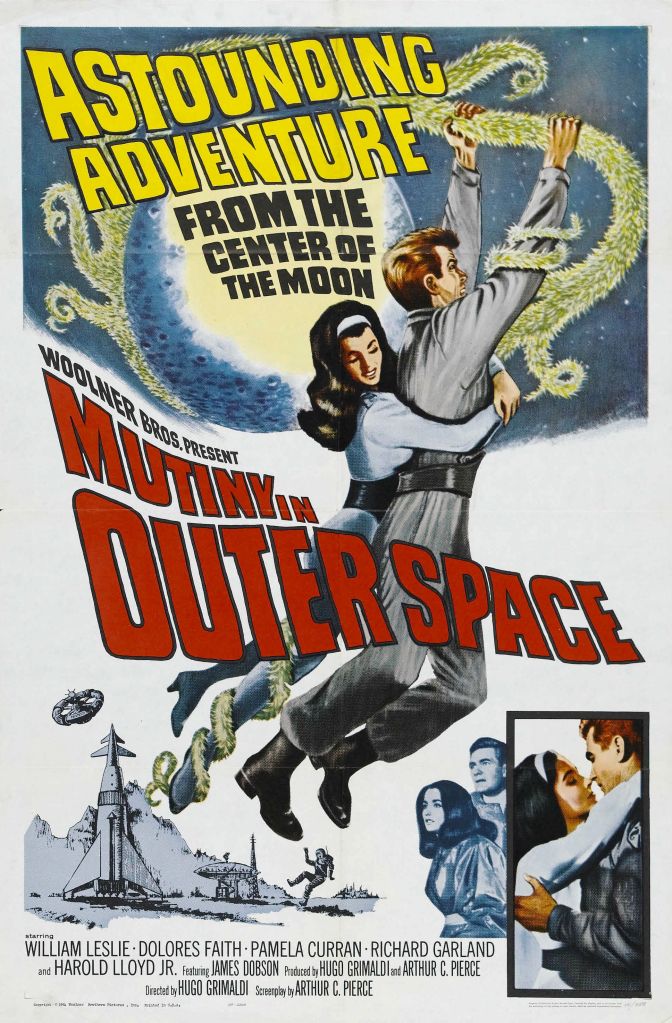
Movie: Mutiny in Outer Space

Image (Credit): Poster for the 1965 film Mutiny in Outer Space. (Hugo Grimaldi Film Productions)

If Hollywood is not planning to provide any summertime space movies, maybe it’s time to check the archives for something fun from the past. One such movie is Mutiny in Outer Space, a black and white film from 1965. You can find it on the Internet Archive and Youtube.

The story involves a space station infected by a lunar sample and efforts by the crew to contain the damage. It reminded me of Star Trek with deadly tribbles, though the special effects are pretty primitive compared to Star Trek, which came out the next year in color. Even so, the story hit on some themes that are recognizable today, such as space junk threatening the space station, the discovery of water on the Moon, and the establishment of lunar bases.

One humorous bit from the movie was the arrival of astronauts from the Moon at the space station. It appears the incoming rocket was unable to dock at the station, so the two astronauts had to float from the rocket to the space station. After they departed, the rocket oddly broke into two pieces and somehow landed on the space station like a suitcase on top of a station wagon. I remember hearing that Star Trek did away space transportation, and such awkward scenes, by simply creating the transporter room. It saved a lot of production money and became a key part of the series.

The film is earnest and humorous at the same time. I recommend you check out the film if you need a fun diversion some evening.
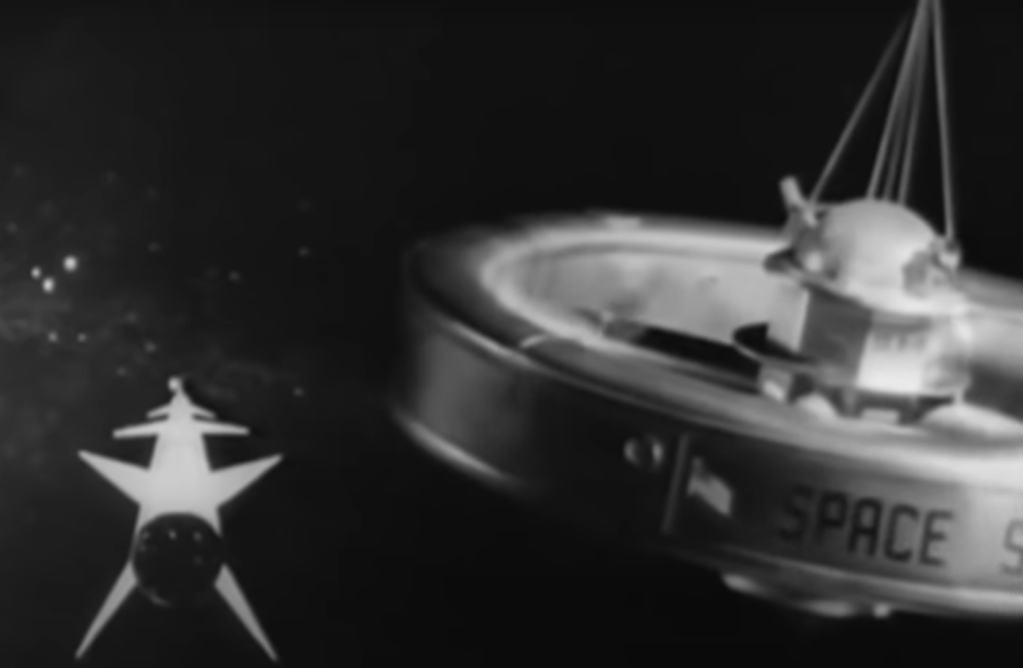
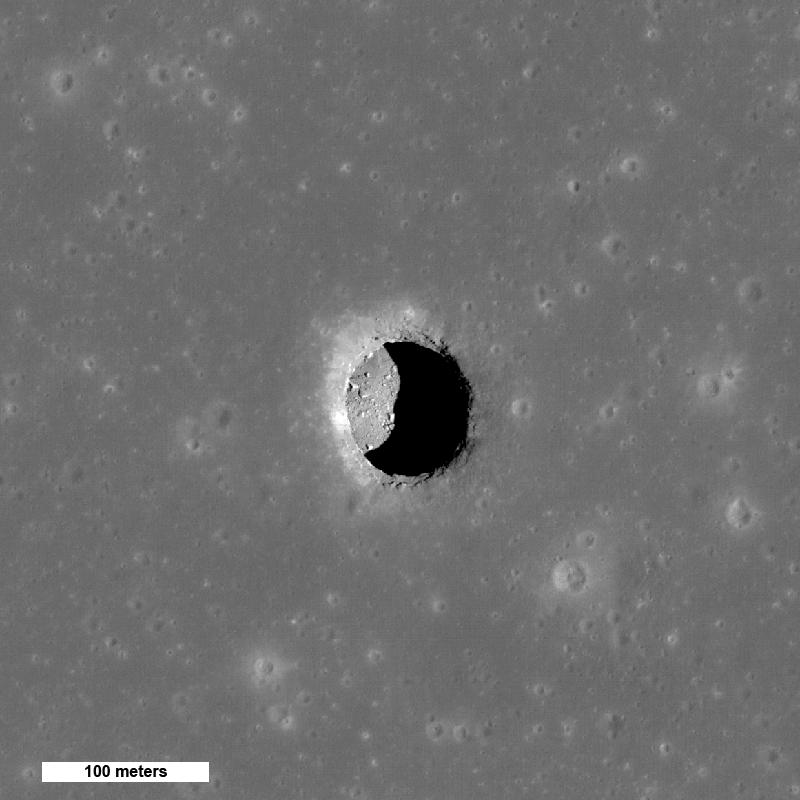
Image (Credit): Scene from the film Mutiny in Outer Space. (Hugo Grimaldi Film Productions)

Lunar Pits Offer Refuge

Image (Credit): Mare Tranquillitatis pit crater revealing boulders on an otherwise smooth floor. (NASA/Goddard/Arizona State University)

If you are looking for a comfortable spot on the Moon, you could do much worse than a lunar pit. These pits have shaded portions that maintain a comfortable temperature of about 63 F. That is much better than the surface temperatures of 260 F in the day and minus 280 F at night. Such pits can also be useful to visitors by protecting them cosmic rays, solar radiation, and micrometeorites.

You can see one of these pits above, as detected by NASA’s Lunar Reconnaissance Orbiter (LRO) spacecraft.

You may ask why we are looking at building space habitats when such locations exist. A good question, but I expect the location, size, and stability of these pits will also be important. Maybe they can at least serve as a safe shelter should the be needed.

More study is necessary, of course, before any big decisions on human settlement can be contemplated.

You can read more about the lunar pits here. You can also check out this video.

Space Quote: China is Not Seizing the Moon

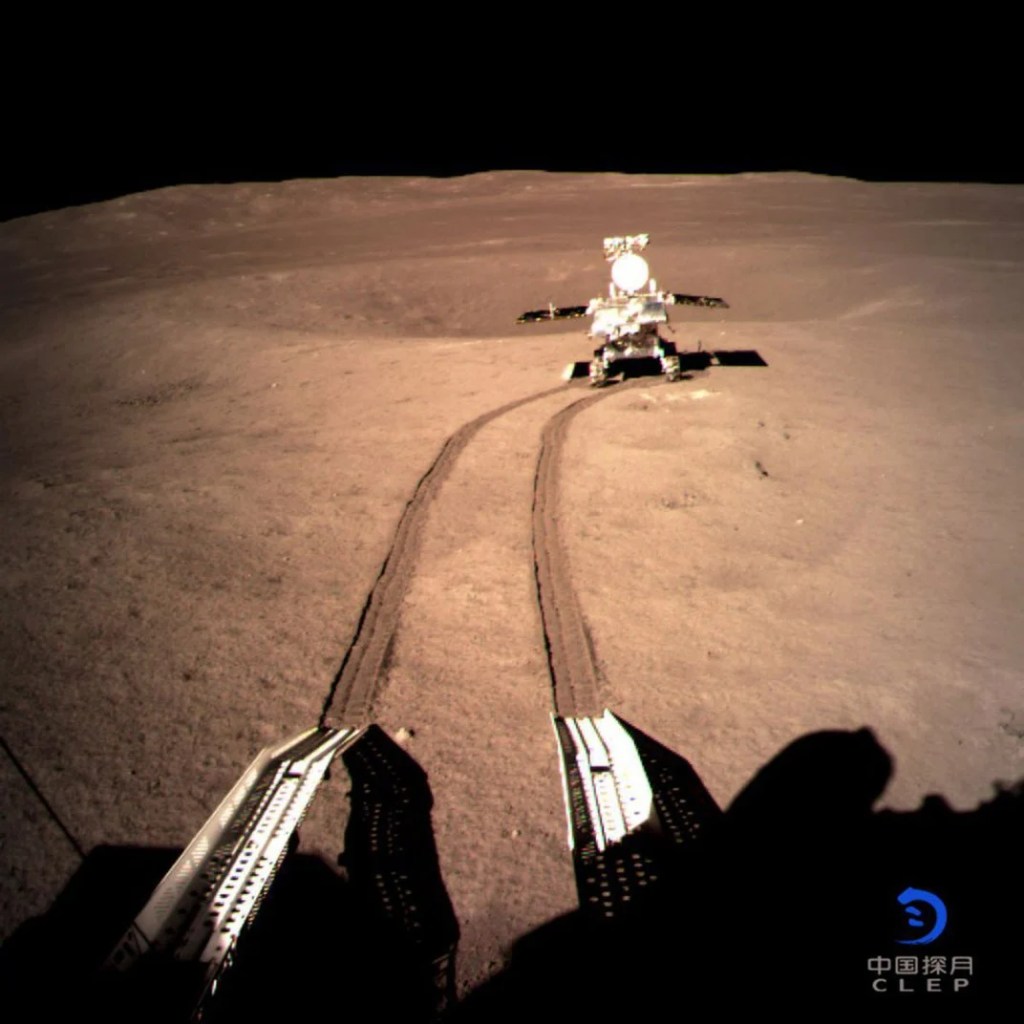
Image (Credit): China’s Yutu 2 rover explores the far side of the moon shortly after its Jan. 2, 2019, touchdown. (China National Space Administration)

“As two scholars who study space security and China’s space program, we believe that neither China nor any other nation is likely to take over the Moon in the near future. It is not only illegal, it is also technologically daunting – the costs of such an endeavor would be extremely high, while the potential payoffs would be uncertain.”

-Statement by Svetla Ben-Itzhak, Assistant Professor of Space and International Relations, Air University and R. Lincoln Hines, Assistant Professor, West Space Seminar, Air University in the Astronomy magazine article “Why China is unlikely to claim the Moon anytime soon.” It follows an earlier statement by NASA Administrator Bill Nelson, who said, “We must be very concerned that China is landing on the Moon and saying: ‘It’s ours now and you stay out.‘”

A Day in Astronomy: First Men on the Moon

Image (Credit): Neil Armstrong outside the Eagle lunar module on the surface of the Moon. (NASA)

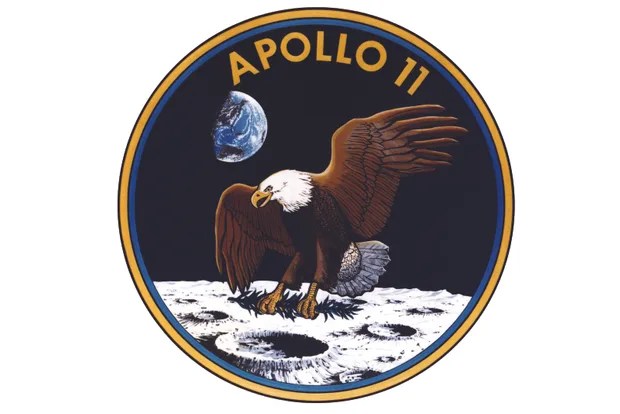
On this day in 1969, two Apollo 11 crew members – commander Neil Armstrong and pilot Buzz Aldrin – became the first men to walk on the Moon. The two landed in NASA’s Eagle lunar module in the Sea of Tranquility and remained on the Moon’s surface for about 21 hours and 36 minutes collecting samples, placing scientific equipment, and photographing/filming the terrain.  The astronauts also spoke with President Nixon while on the Moon.

You can rewatch the ABC News video feed here showing Neil Armstrong as he steps on the surface of the Moon and famously states, “That’s one small step for man, one giant leap for mankind.”

You can read more about the Apollo 11 mission here.

Podcast: Elon Musk on the Moon and More

Credit: New York Times.

On this week’s podcast program Sway, you can re-listen to a September 2020 interview between host Kara Swisher and Elon Musk. This was long before all the Twitter nonsense, when Mr. Musk was still focused on cars and space (mostly). The discussion covers plenty of topics, including the need to settle Mars (Mr. Musk disagress with Jeff Bezos who he said believes a space station will be enough to save humanity from an existential crisis), neural implants, and a return to the Moon.

You can tell the program is dated because Mr. Musk complains that NASA cannot find a way to return to the Moon, whereas today we have the Artemis lunar program that includes SpaceX as one of its contractors. Nonetheless, it is good to hear from the old Musk when he was a little more focused.

Then again, the neural implants still seem odd. Neuralink, a company he co-founded, is focusing on those with disabilities at the moment, but the application is expected to be more widespread:

Neuralink is currently focused on making medical devices. These devices have the potential to help people with a wide range of injuries and neurological disorders, and we hope to develop treatments for many of these conditions in the coming years. We expect that as our devices continue scale, and as we learn to communicate with more areas of the brain, we will discover new, non-medical applications for our [brain-machine interface] BMIs. Neuralink’s long-term vision is to create BCIs that are sufficiently safe and powerful that the general population would want to have them.

In a Fortune magazine article, “Elon Musk Claims Neuralink’s Brain Implants will ‘Save’ Memories Like Photos and Help Paraplegics Walk Again. Here’s a Reality Check,” the authors take him to task on his neural implant idea, stating:

Helping paraplegics walk and curing brain disorders are certainly noble goals. And, hey, ordering a pizza just by thinking about it sounds cool. But many experts are concerned that Musk is seriously overhyping what Neuralink’s implants will be able to accomplish.

Elon Musk overhyping an idea? Never!

Check it out. You can download the podcast at the New York Times, the Apple Store, and elsewhere.