If you are looking for a fun gift that will encourage kids to learn more about the universe around them, then you cannot go wrong with a nightlight that illustrates the beauty of the nighttime objects above us. For instance, the Moon lamp shown above (there are many others like it on Amazon and elsewhere) allows an up-close view of this amazing orb. As with the Earth globes of old, seeing a world in three-dimensions and being able to touch it assists with understanding. Besides, in the case of the Moon, a youngster looking out the bedroom window will only see one side of the Moon, whereas the lamp provides the entire surface.
You can find similar lamps and nightlights showing Mars, Jupiter, and even the Milky Way (see below).
Or why not simply project the constellations onto the bedroom ceiling so kids can learn about the night sky even when it is cloudy outside? There is nothing like a personal planetarium.
Mind you, these gifts are not only for children, but it’s a good place to start. I may yet get one of those Moon lamps for my desk. Why should the kids have all the fun?
Image (Credit): A trasch bag lying beneath the Apollo Lunar Module in 1969. (NASA)
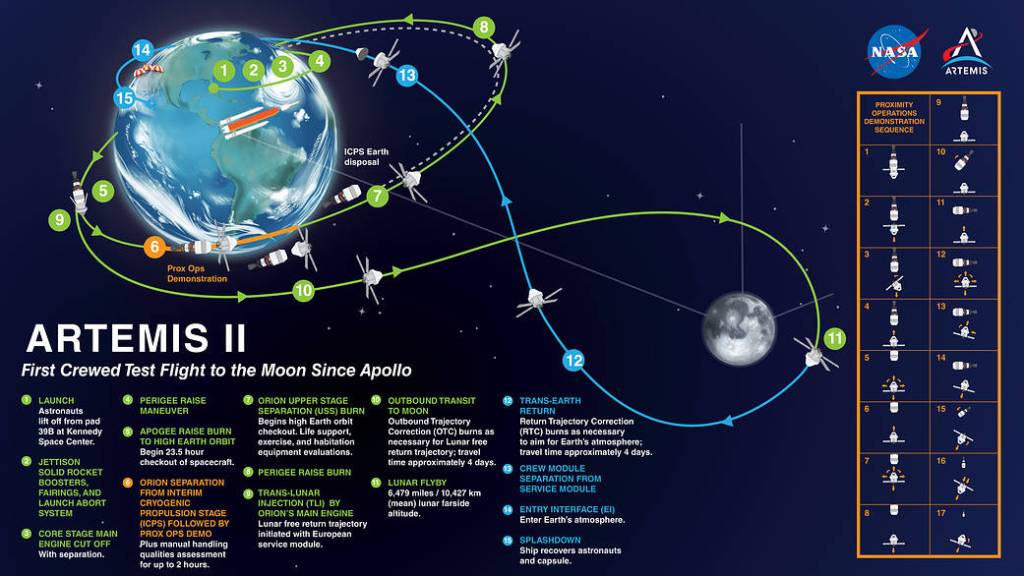
Back in July 2019, Vox had a great article about the waste astronauts left behind on the Moon. In the article, “Apollo Astronauts Left Their Poop on the Moon. We Gotta Go Back for That Shit.,” we learn about approximately 96 bags of human waste left behind on the moon. The topic is relevant today because (1) we are talking about returning to the Moon under the Artemis mission and (2) we probably want to learn more about the lifespan of this waste before we continue to deposit it on the Moon, Mars, and elsewhere. So maybe it is time to revisit the poop.
Earlier, The Atlantic had another article that listed much more human debris on the Moon than just the 96 bags (of urine, feces, and vomit, mind you). Here is the incomplete list:
more than 70 spacecraft, including rovers, modules, and crashed orbiters;
5 American flags;
2 golf balls;
12 pairs of boots;
TV cameras;
film magazines;
96 bags of urine, feces, and vomit;
numerous Hasselbad cameras and accessories;
several improvised javelins;
various hammers, tongs, rakes, and shovels;
backpacks;
insulating blankets;
utility towels;
used wet wipes;
personal hygiene kits;
empty packages of space food;
a photograph of Apollo 16 astronaut Charles Duke’s family;
a feather from Baggin, the Air Force Academy’s mascot falcon, used to conduct Apollo 15’s famous “hammer-feather drop” experiment;
a small aluminum sculpture, a tribute to the American and Soviet “fallen astronauts” who died in the space race—left by the crew of Apollo 15;
a patch from the never-launched Apollo 1 mission, which ended prematurely when flames engulfed the command module during a 1967 training exercise, killing three U.S. astronauts;
a small silicon disk bearing goodwill messages from 73 world leaders, and left on the moon by the crew of Apollo 11;
a silver pin, left by Apollo 12 astronaut Alan Bean;
a medal honoring Soviet cosmonauts Vladimir Komarov and Yuri Gagarin; and
a cast golden olive branch left by the crew of Apollo 11.
In the 2022 movie Moonshot, we sent Martian trash back to Earth. But that was not the case with the Moon. And now China and Russia are clamoring to do the same in the near future. Will the Moon someday be marked with more trash heaps than craters?
One might argue that explorers throughout time have had to leave something behind. Think of the piles of trash as well as corpses left on the top of Mount Everest. The great sea explorers also left plenty of men, material, and ships at the bottom of the sea where they would remain unclaimed.
But the interesting part of the Vox story is the potential of life remaining in that trash and even producing new life. If such biological material can seed new life, then who can say whether the Earth was simply a rest stop for aliens on their way somewhere else, and we are the product of their poop.
One more thing. If we do manage to let the Earth slip away from us and flip into another Venusian nightmare, the Moon poop may be the only human biology for a future alien to analyze. We sent the Voyager and other spacecraft out into the void with recordings and data, but no one thought about adding a biological component. Well, now we have that surviving piece on the Moon should it be needed. If we can figure out what a Tyrannosaurus was eating millions of years ago, maybe future visitors can figure out what the astronauts were eating in 20th century Texas.
Intense stuff, and worth reading about when you have a moment.
The Hungarian government plans to spend $100 million to send an astronaut to the International Space Station in two years through a deal with Axiom Space. In a presentation at the European Space Agency’s ministerial council meeting Nov. 22, Péter Szijjártó, Hungarian foreign minister, said the country was in the middle of a process to select an astronaut to fly on a month-long mission to the ISS in late 2024 or early 2025. Axiom Space announced in July it signed a memorandum of understanding with the government of Hungary regarding that country’s Hungarian to Orbit (HUNOR) program, which would fly a Hungarian astronaut to space on a future Axiom Space mission. That announcement, though, provided few details about when that person would fly.
Three Chinese astronauts docked early Wednesday with their country’s space station, where they will overlap for several days with the three-member crew already onboard and expand the facility to its maximum size. Docking with the Tiangong station came at 5:42 a.m. Wednesday, about 6 1/2 hours after the Shenzhou-15 spaceship blasted off atop a Long March-2F carrier rocket from the Jiuquan Satellite Launch Center...The station’s third and final module docked earlier this month, one of the last steps in China’s effort to maintain a constant crewed presence in orbit.
A tiny spacecraft is ready to head out for a big job: shining a light on water ice at the Moon’s south pole. Lunar Flashlight is a cubesat about the size of a briefcase, set to launch on December 1 on a SpaceX Falcon 9 rocket, sharing a ride with the Hakuto-R Mission to the Moon. The tiny 14 kg (30 lb) spacecraft will use near-infrared lasers and an onboard spectrometer to map the permanently shadowed regions near the Moon’s south pole, where there could be reservoirs of water ice.
The December issue of Reason Magazine has plenty of fun articles on space travel, the ethics of terra-forming, science fiction books and films, and more. The magazine tends to favor privatization of just about everything, so expect some cheering for space billionaires like Elon Musk and Jeff Bezos, but overall it is a nice collection of thought-provoking articles.
Here is a sample of the articles:
We Are Going to the Moon: Thanks to the rise of private spaceflight companies, mankind will have a future off-Earth.
Why We Should Terraform the Galaxy: One critic calls it “arrogant vandalism,” but advocates say it might be a necessary form of self-preservation.
Image (Credit): View of the Earth from the Apollo 11 Command and Service Module. (NASA)
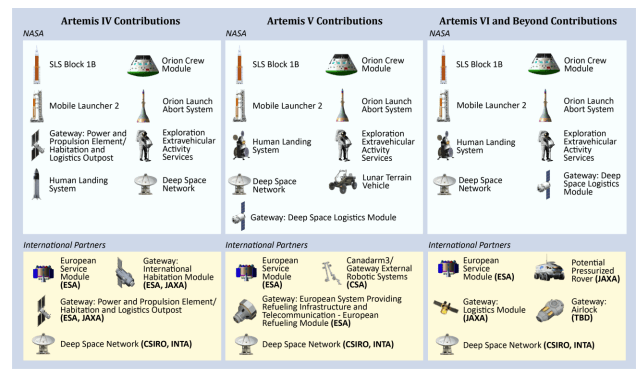
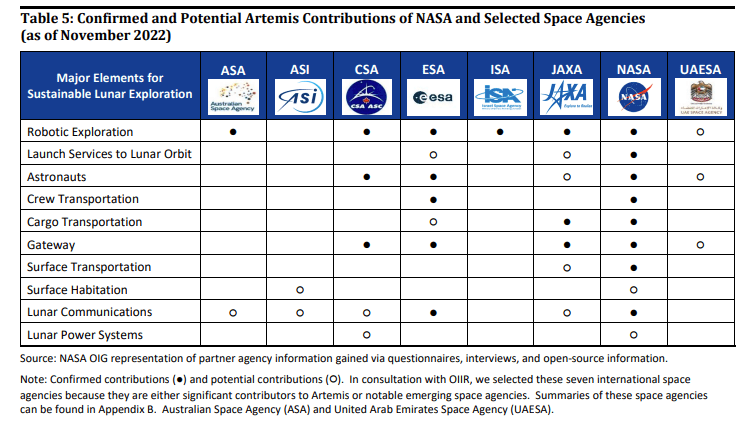
“Lunar orbit would be filled with many more satellites, including a lunar GPS network and a human space station capable of housing human astronauts that serves as a rest stop before they land on the moon’s surface. While there are no plans for a lunar city, there are proposals for a permanent outpost on the south pole of the moon, where crews might one day spend six-month rotations (China and Russia have announced plans for a lunar outpost, too). If NASA has its way, the lunar surface might eventually include a series of nuclear power plants, a resource extraction operation, and even something akin to moon internet. Given these plans, the US government estimates that the level of human activity in cislunar space over the next decade could exceed everything that’s happened there between 1957 and today, combined.”
-Quote from a November 22 Vox article, “The White House’s Plan to Colonize the Moon, Briefly Explained.” The article comments on the recently released report by the White House’s National Science & Technology Council, National Cislunar Science & Technology Strategy. By the way, the term “Cislunar space” in the report refers to “…the three-dimensional volume of space beyond Earth’s geosynchronous orbit that is mainly under the gravitational influence of the Earth and/or the Moon. Cislunar space includes the Earth-Moon Lagrange point regions…, trajectories utilizing those regions, and the Lunar surface.”