Television: Star City

Credit: Apple TV

We are only one month away from the premiere of Apple TV’s Star City.

Premiering on May 29th, the series is a spin-off from For All Mankind, which is an alternative history showing the race to the Moon and then Mars among the Americans, Soviet, and North Koreans. Star City will focus on the Soviet program, just as For All Mankind focused primarily on the American program.

Apple TV describes the new series in this way:

A bold new chapter inspired by the critically acclaimed space-race drama, “For All Mankind,” “Star City” is a propulsive paranoid thriller that takes us back to the key moment in the alt-history retelling of the space race — when the Soviet Union became the first nation to put a man on the moon. But this time, we explore the story from behind the Iron Curtain, showing the lives of the cosmonauts, the engineers and the intelligence officers embedded among them in the Soviet space program, and the risks they all took to propel humankind forward.

While For All Mankind was mostly a bombastic show with plenty of American daredevil fun, the Star City promises to be a much darker view of another space program that we only saw in quick glimpses during the first series. Keeping the show interesting and not too bleak may be a challenge.

Will we ever see another spin-off covering the North Korean version of the space race? It is doubtful, yet it would be both fascinating and bleak as well.

I imagine Star City can be a stand-alone series for those who missed For All Mankind, but I think half the fun in watching the new series will be watching where the two stories interweave and discovering what was really happening on the Soviet side.

If history has multiple perspectives, even alternative history, then I look forward to understanding more of the story through more voices.

Credit: Apple TV

Audit Report: Will the Artemis Astronauts Have Spacesuits?

Credit: NASA OIG

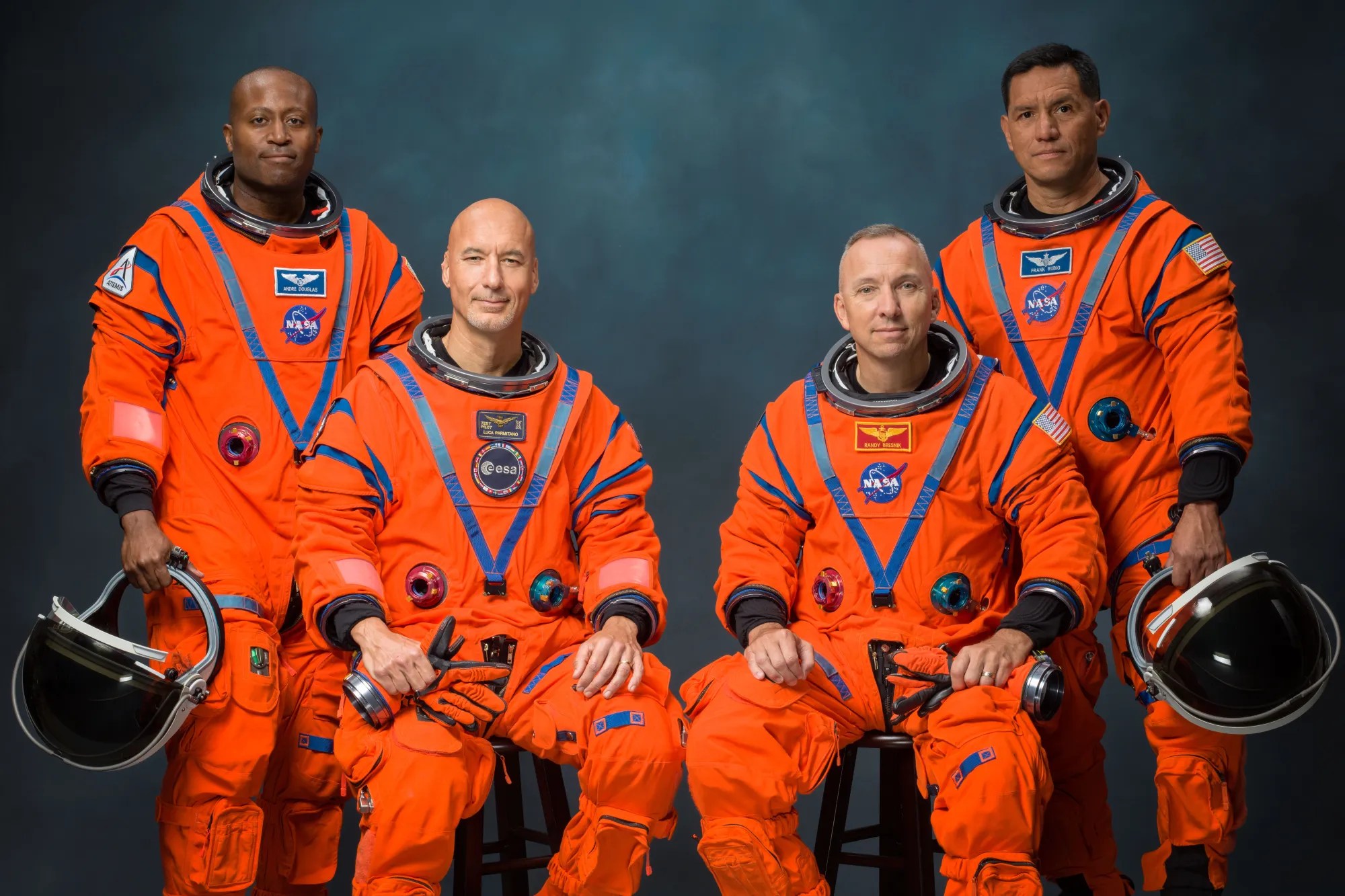
A new audit report from NASA’s Office of Inspector General (OIG) expressed some concerns about whether the contractor, Axiom Space, will have spacesuits ready in time for the planned lunar landing.

The audit report, NASA’s Acquisition of Next-Generation Spacesuit Services, states:

NASA faces challenges in ensuring next-generation spacesuits are available to meet the Agency’s current schedules for the Artemis lunar landing mission in 2028 and prior to the ISS’s decommissioning in 2030. NASA’s original schedules to demonstrate the lunar and microgravity spacesuits in 2025 and 2026, respectively, were overly optimistic and ultimately proved unachievable, as evidenced by delays of at least a year and a half for both spacesuits. Based on our analysis, if Axiom experiences design and testing delays in line with the historical average for recent space programs, the Artemis and ISS demonstrations may not occur until 2031.

That is a damning conclusion at a time NASA is struggling with other Artemis timetables. All of the pieces need to come together soon, including the necessary equipment for the lunar surface. It also does not help that NASA is completely reliant on one contractor for these spacesuits. Even the lunar lander has two competing contractors.

NASA Administrator Isaacman has one more item now keeping him awake at night.

Space Stories: Blue Origin Brings Satellite to Wrong Orbit, Space Force Preparing for Moon Base, and Japan Refocuses After Deletion of Lunar Gateway

Image (Credit): NG-3 mission patch. (Blue Origin)

Here are some recent space-related stories.

Associated Press: “Blue Origin’s New Glenn Rocket is Grounded After Launching Satellite into the Wrong Orbit

Jeff Bezos’ rocket company, Blue Origin, blamed a bad engine Monday for a failed weekend launch that left a satellite in the wrong orbit, dooming it. Launches of the huge New Glenn rocket are grounded until Blue Origin and the Federal Aviation Administration complete their investigation.The rocket blasted off from Cape Canaveral Space Force Station on Sunday. The recycled first-stage booster performed well, landing on an ocean barge several minutes into the flight. But the upper stage was unable to put the satellite into a high enough orbit to begin operations.

Breaking Defense: With Eyes on Future NASA Moon Base, Space Force Launches Cislunar Acquisition Task Force

The Space Force is launching a new acquisition task force to study how the Defense Department should move into cislunar space as it looks to support a planned NASA moon base, according to Maj. Gen. Stephen Purdy, senior advisor to Air Force Secretary Troy Mink for space acquisition. “We’re going to stand up a Cislunar Coordination Office on the Space Force acquisition side,” he told the annual Space Symposium here on April 15, who said the new office will bring together program managers and engineers to “build road maps” for “acquiring the necessary technology and a schedule for action.”

South China Morning Post: Japan to Focus on Lunar Rover After US Halts Moon Space Station

A US move to freeze the Lunar Gateway orbiting space station could render Japan’s new technologies redundant – but its space agency is expected to be diplomatic in its response. The Lunar Gateway project was initially planned as an installation that would orbit the moon as part of the United States’ Artemis programme, which recently made headlines for a record-breaking journey that went deeper into space than anyone had ever flown before…On March 24, however, Nasa announced it was freezing the project to focus on the construction of a base on the lunar surface, with future crewed missions to Mars in mind…The agency is now expected to focus all its attention on the third element of its collaboration with Nasa, the pressurised lunar rover that is being developed with Toyota to allow astronauts to drive on the moon.

A Day in Astronomy: Apollo 13 Sets a Distance Record

Image (Credit): Apollo 13 mission patch. (NASA)

On this day in 1970, the Apollo capsule traveled to the farthest point from Earth of any Apollo mission. It was an unbroken record until last week, with the Artemis II mission exceeded this distance by 4,105 miles.

Of course, that was a great achievement in an otherwise troubled Apollo mission. The Apollo 13 crew, consisting of Commander James A. Lovell, Command Module Pilot John L. “Jack” Swigert and Lunar Module Pilot Fred W. Haise, would never make it to the surface of the Moon. That is a story worth reading (as well as a movie worth watching).