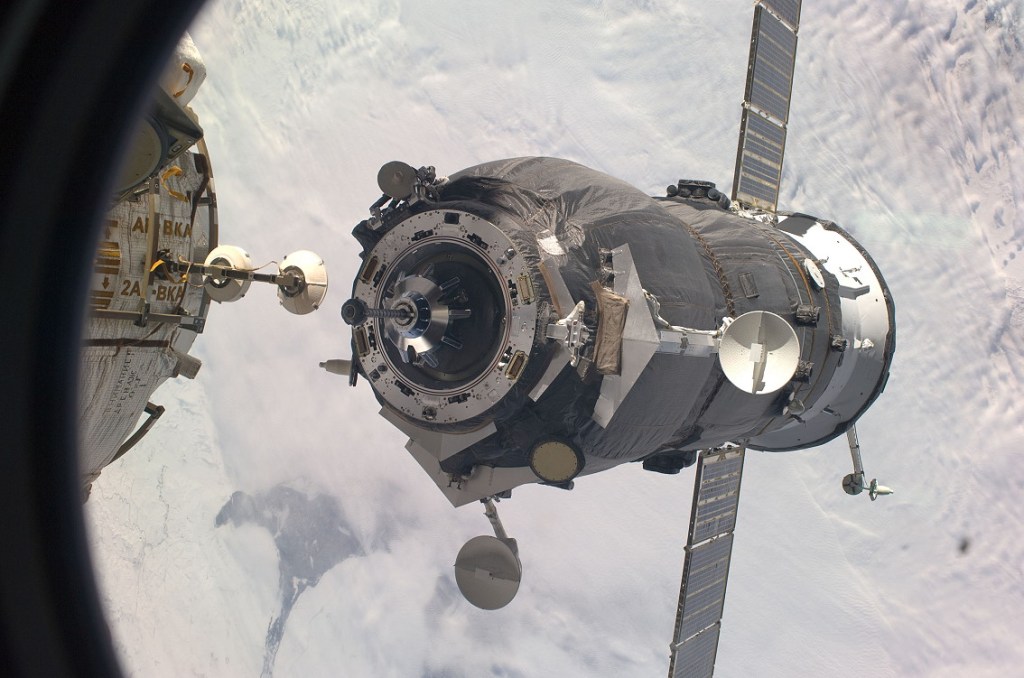
Image (Credit): Russian Soyuz capsule outside the International Space Station. (Spacefacts.de)
Fortunately, we now know the source of the leak in the extra Soyuz Crew Return Vehicle attached to the International Space Station (ISS). However, we do not know the cause of this radiator coolant leak, which creates risk should the capsule be used early next year to bring two cosmonauts and an astronaut back to Earth. Hence, it may be better to bring another capsule up to the ISS for the change in crew and send the damaged one back empty for repairs.
The ISS doesn’t technically have an escape pod. Instead, a Crew Return Vehicle more or less serves this purpose. It has been used more than once to host astronauts and cosmonauts fleeing space junk, so maybe it’s time to think over these procedures again. You would think a $100 billion orbiting space station could ensure the survival of its passengers.
Image (Credit): Official emblem of the Apollo 17 lunar landing mission. (NASA)
On this day in 1972, Apollo 17 commander Eugene Cernan was the last human to be on the Moon. He was the eleventh human to ever step on the Moon.
Here is the full crew of Apollo 17:
Eugene A. Cernan, Commander
Harrison H. Schmitt, Lunar Module Pilot
Ronald E. Evans, Command Module Pilot
Mr. Cernan, who passed away in 2017, was also part of the Apollo 10 mission that orbited the moon without landing (similar to the upcoming Artemis II mission).
With the successful orbit of the Orion spacecraft around the Moon this month, let’s hope the 50 year dryspell is finally over and the United States can again be the nation putting humans back on the lunar surface. Of course, we will be followed by others, including the Chinese. Yet it’s important the first space-faring nation get back in the game and restart the human exploration of the Moon, and then Mars soon thereafter.
Jeff Bezos’ space company Blue Origin is partnering with Boeing Co and Lockheed Martin Corp to pitch a lunar lander to NASA as the agency seeks to send humans to the moon again, the companies announced on Tuesday. The joint moon lander proposal, led by Blue Origin, marks the companies’ second attempt to win a coveted moon lander contract as NASA seeks more options for getting astronauts to the lunar surface under its multibillion dollar Artemis program.
Researchers from Western have shown that a fireball that originated at the edge of the Solar System was likely made of rock, not ice, challenging long-held beliefs about how the Solar System was formed. Just at the edge of our Solar System and halfway to the nearest stars is a collection of icy objects sailing through space, known as the Oort Cloud. Passing stars sometimes nudge these icy travellers towards the Sun, and we see them as comets with long tails. Scientists have yet to observe any objects in the Oort Cloud directly, but everything detected so far coming from its direction has been made of ice. Theoretically, the very basis of understanding our Solar System’s beginnings is built upon the foundation that only icy objects exist in these outer reaches and certainly, nothing made of rock.
The EnVision mission is ESA’s fifth medium-class mission to Venus. It’s being planned in a partnership between NASA and ESA, and NASA will be providing the synthetic aperture radar instrument, which will map the surface (much as Magellan did). In addition to the two radars, the orbiter will carry spectrometers to study the atmosphere and surface. They will monitor trace gases in the atmosphere and analyze surface composition. The idea is to look for surface changes that might be linked to signs of active volcanism. Along with the VERITAS and DAVINCI missions, EnVision should reveal all we need to know about volcanic activity on Venus.
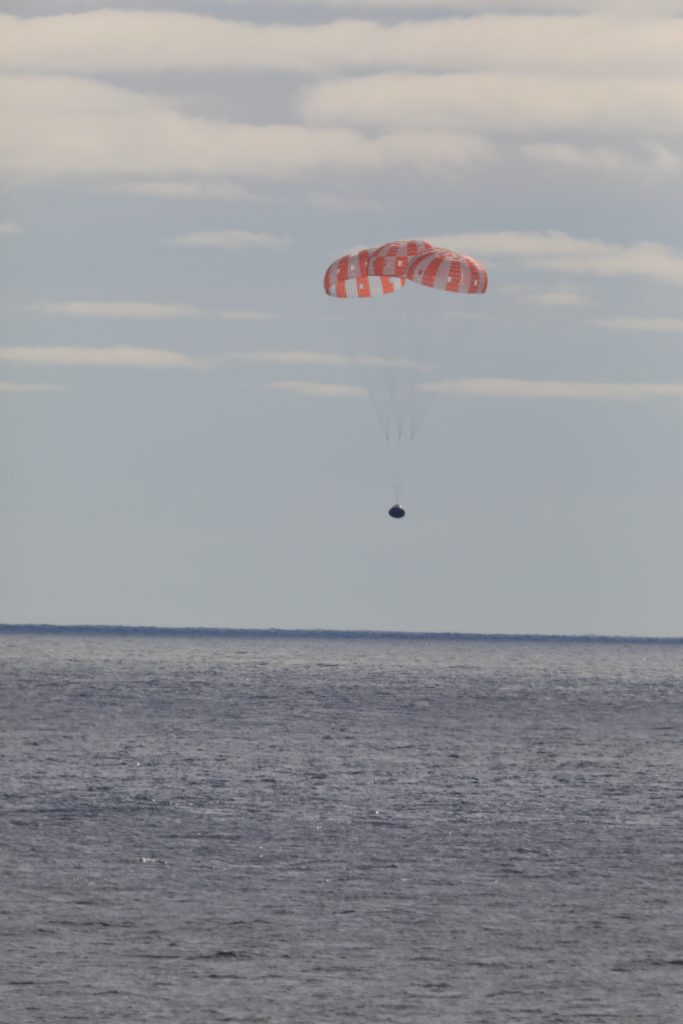
Image (Credit): The return on the Orion capsule over the Pacific Ocean on December 11th. (NASA)
The Orion has landed, or splashed down to be more accurate. The Artemis I mission had a successful finish with the Orion capsule parachuting down into the Pacific at 12:40 p.m. EST today. At the time of this posting, the capsule was still afloat in the water while awaiting a review by engineers before being taken aboard the USS Portland.
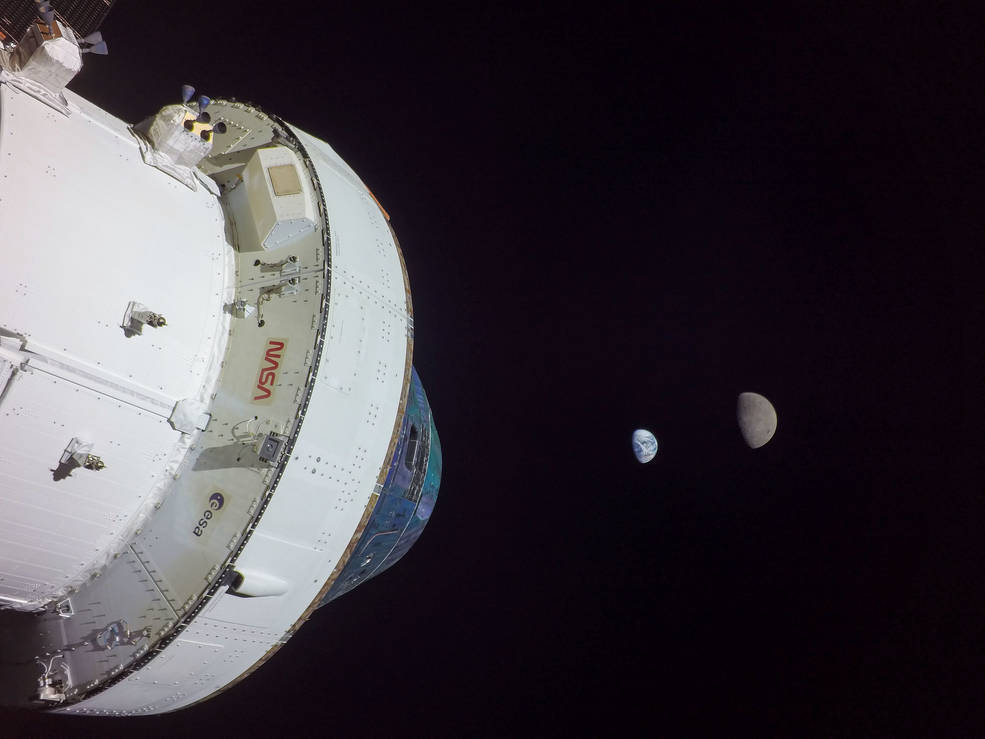
Image (Credit): November 28, 2022 image from NASA’s uncrewed Orion spacecraft when it was nearly 270,000 miles from Earth during the Artemis I flight test. (NASA)
This Sunday, November 11th, will see the return of the Orion spacecraft. Tune into NASA to watch Orion’s re-entry and spashdown. Live splashdown coverage will begin at 11 a.m. EST. The splashdown itself is scheduled for 12:39 p.m. EST. You can watch all of the coverage live on NASA TV, the agency’s website, and the NASA app.
Image (Credit): The Artemis I recovery team aboard the USS Portland in the Pacific Ocean. The team is out at sea ahead of the Dec. 11 Orion splashdown. (NASA)