Pic of the Week: Preparing for the Artemis II Mission

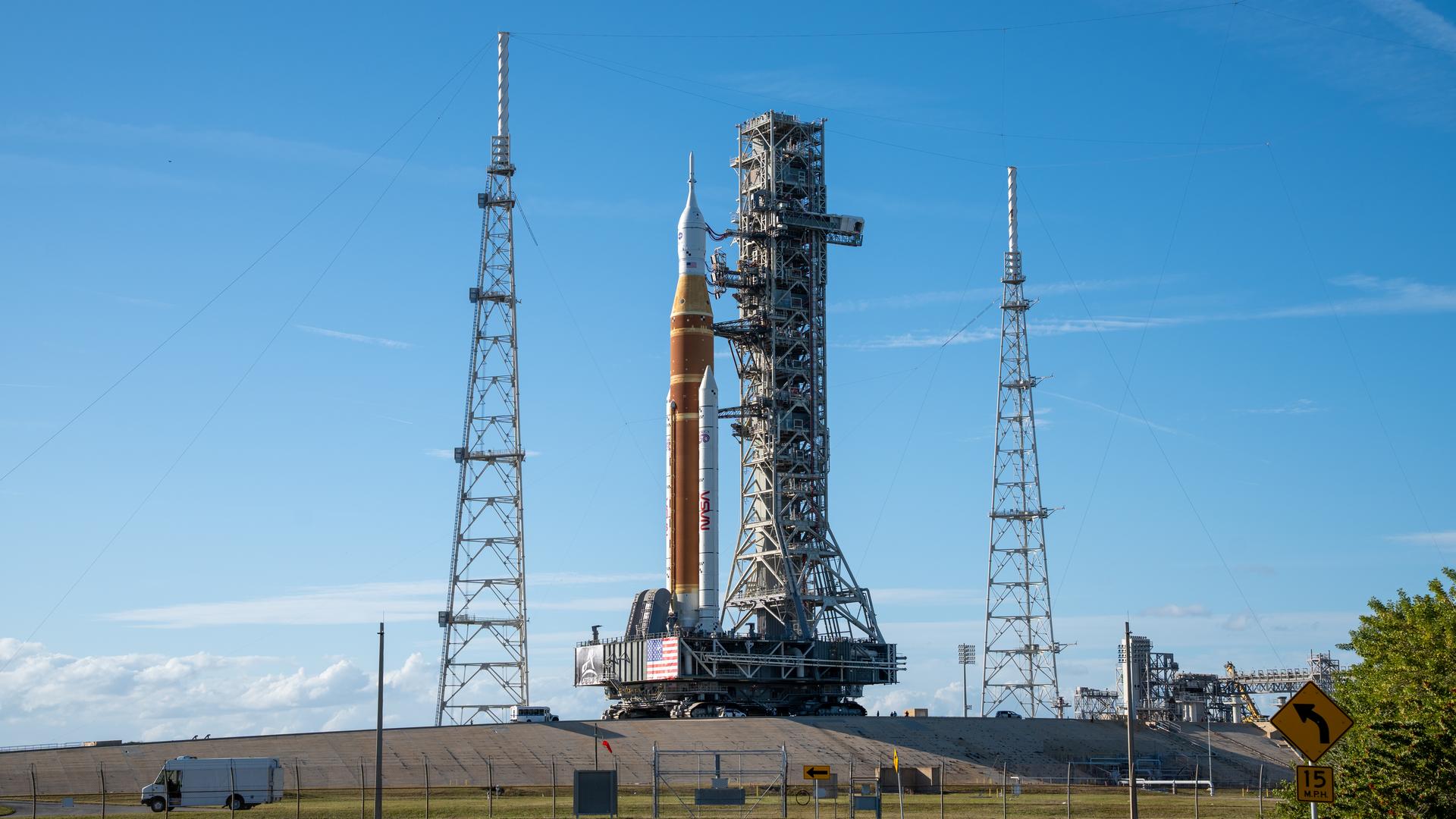
Image (Credit): NASA’s SLS and Orion spacecraft moving from the Vehicle Assembly Building to Launch Pad 39B at the Kennedy Space Center. (NASA)

This week’s image shows NASA’s Space Launch System (SLS) and Orion spacecraft making its way from the Kennedy Space Center’s Vehicle Assembly Building to Launch Pad 39B via the crawler-transporter. All of this is in preparation for the Artemis II mission, which will take four astronauts around the Moon. The flight could launch as early as February 6th.

NASA has reported that the Artemis II mission will include various items to mark the 250th anniversary of the United States, including:

  • a 1-inch by-1-inch swatch of muslin fabric from the original Wright Flyer the Wright Brothers used to make the first powered flight in 1903;
  • a 13-by-8-inch American flag, which flew with the first shuttle mission, STS-1, the final shuttle mission, STS-135, and NASA’s first crewed test flight of SpaceX’s Crew Dragon spacecraft, SpaceX Demo-2;
  • a flag that was set to fly on NASA’s Apollo 18 mission is included in the flight kit and will make its premiere flight with Orion;
  • a 4-by-5-inch negative of a photo from the Ranger 7 mission, the first U.S. mission to successfully make contact with the lunar surface;
  • soil samples collected from the base of established Artemis I Moon Trees planted at NASA’s 10 centers;
  • an SD card including the millions of names of those who participated in the “Send Your Name to Space” campaign, bringing the public along on this journey; and
  • items from several NASA partners.

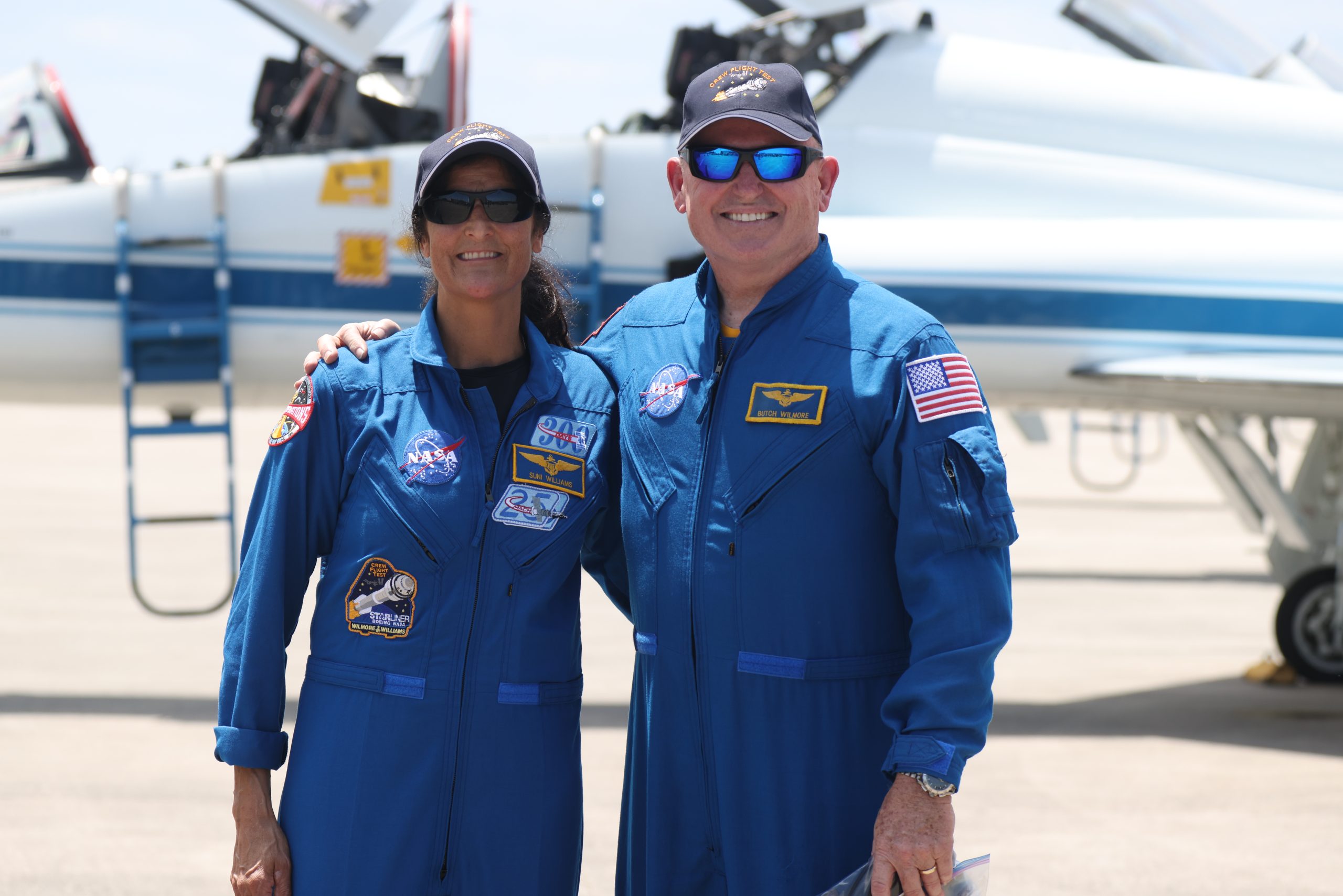
Space Quote: NASA Astronaut Suni Williams Retires

Image (Credit): NASA astronauts Suni Williams and Butch Wilmore. (NASA)

“It is hard to imagine people arguing down there, not to mention fighting. It looks so peaceful… so calm down on earth. From space, there are no borders that you can see. We are lucky to live on such a planet and we should not take it for granted. After my space experience, I am a lot more tolerant of people and opinions, of everything.”

-A 2007 statement by NASA astronaut Suni Williams, who announced her retirement from the agency earlier today. Although she spend 27 years with NASA, she will probably be best remembered for her Boeing Starliner flight to the International Space Station in 2024 that was supposed to last one week but became nine months instead. It was a replay of Gilligan’s Island in space. Her fellow astronaut on that troubled flight, Butch Wilmore, retired from NASA last August.

Space Stories: A Peruvian Solar Observatory, NASA Rocket Traffic, and a Reborn Back Hole

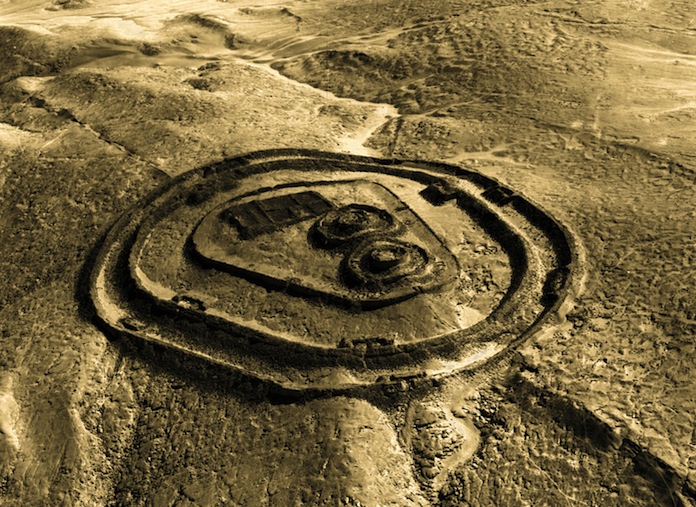
Image (Credit): Aerial view of the fortress at Chankillo. (Servicio Aerofotográfico Nacional, Lima)

Here are some recent space-related stories of interest.

Discover Magazine: The Earliest-Known Astronomical Observatory in the Americas May Offer New Insights

There was a time when Stonehenge was believed to be a kind of “Neolithic computer.” Archaeology has since corrected that misconception. Today, the evidence points strongly in another direction: to an arid hill in the Casma Valley on Peru’s northern coast, about 200 miles north of Lima. There stands Chankillo, a complex built around 250 B.C.E., considered the earliest known solar observatory in the Americas and the clearest known example of a monument designed to track the sun’s position throughout the entire year, according to a study in Science. Modest in appearance and largely absent from tourist posters and classic postcards, Chankillo has renewed attention as archaeologists report preliminary findings from ongoing excavations.

CBS News: NASA Juggling Piloted Moon Mission and Space Station Crew Replacement Flight

With a space station medical evacuation safely completed, NASA is focused on two challenging missions proceeding in parallel: launching four astronauts on a flight around the moon, at the same time as the agency is planning to send four replacement astronauts to the International Space Station...The Artemis 2 mission and Crew 12’s planned space station flight present a unique challenge for NASA. The agency has not managed two piloted spacecraft at the same time since a pair of two-man Gemini capsules tested rendezvous procedures in low-Earth orbit in 1965. The agency has never flown a deep space mission amid another launch to Earth orbit.

Royal Astronomical Society: ‘Reborn’ Black Hole Spotted ‘Erupting like Cosmic Volcano’

One of the most vivid portraits of “reborn” black hole activity – likened to the eruption of a “cosmic volcano” spreading almost one million light-years across space – has been captured in a gigantic radio galaxy. The dramatic scene was uncovered when astronomers spotted the supermassive black hole at the heart of J1007+3540 restarting its jet emission after nearly 100 million years of silence.

Note: Please ignore the previous posting for today about the Apollo 17 mission. It’s a good story, but I will need to retell it at another time (that is, on December 19th).

Space Quote: Are We Ready for Extended Space Travel by Humans?

Credit: Image by Olena from Pixabay.

“As an astronaut, I believe our current technology may not have solutions for critical situations we are bound to face moving away from low Earth orbit, and this incident illustrates exactly that. NASA needs to address some urgent and sometimes uncomfortable questions. For example, should a doctor always be on the crew? Should a spaceship heading to Mars have high-tech medical capabilities and facilities — not just a ‘med kit’? A kit consisting of only medications, saline solution, a defibrillator and a few basic instruments places a crew at a serious disadvantage if things really go south.”

-Statement for former NASA astronaut Clayton Anderson in a Washington Post editorial published after this week’s return of four crew members who needed to be evacuated from the International Space Station due to a medical emergency. Had the health issue occurred six months into a trip to Mars the circumstances would have been dire without sufficient health resources. This is more evidence that acquiring the necessary hardware for space travel may be the easy part compared to the software, also known as humans.

Pic of the Week: The Safe Return of Crew-11

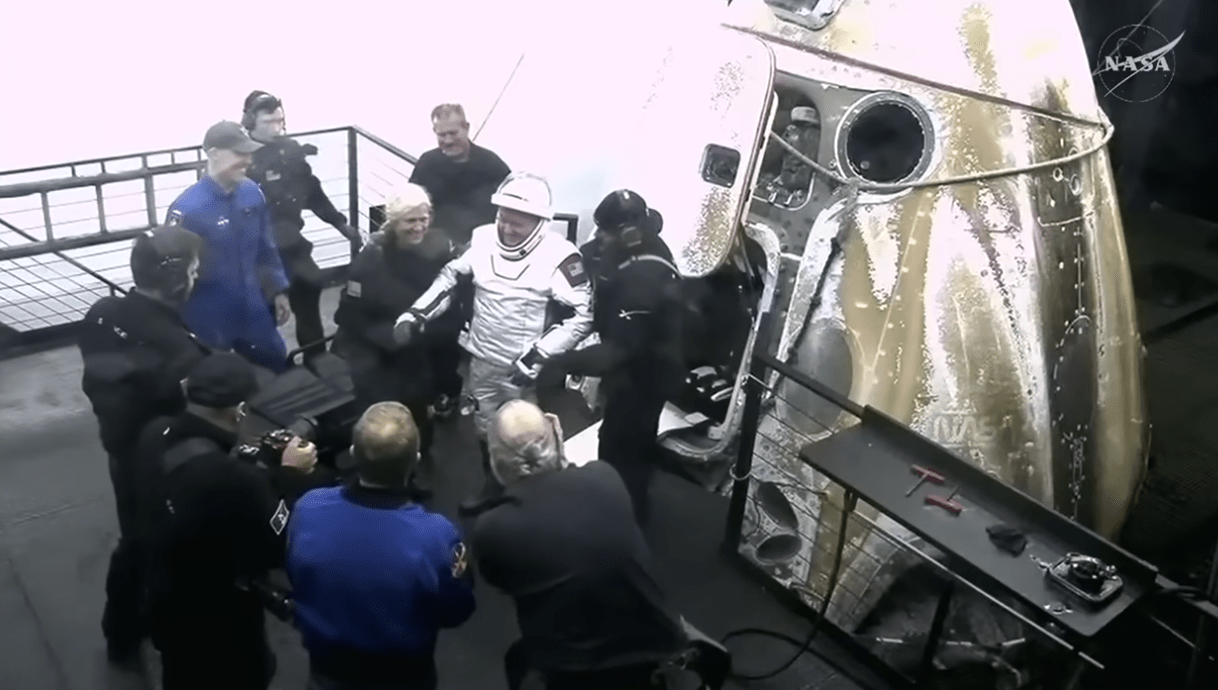
Image (Credit): NASA astronaut Mike Fincke as he exits the Dragon Endeavour spacecraft on January 15, 2025. (NASA)

This week’s image shows return of Crew-11 from the International Space Station (ISS). They landed safely on the morning of January 15th. As shown above, NASA astronaut Mike Fincke was the first member of the mission to exit the capsule. You can watch the entire video here.

Earlier this week, Mr. Fincke posted a few comments about the team’s early departure from the ISS:

What stands out most to me is how clearly NASA cares about its people. Flight surgeons, engineers, managers, and support teams came together quickly and professionally to chart the best path forward. The ground teams—across mission control centers and partner organizations around the world—have been extraordinary. We’re proud of the joint work we’ve done and the camaraderie we’ve shared, including some great songs and more than a few dad jokes.