The Nancy Grace Roman Space Telescope Has Launched

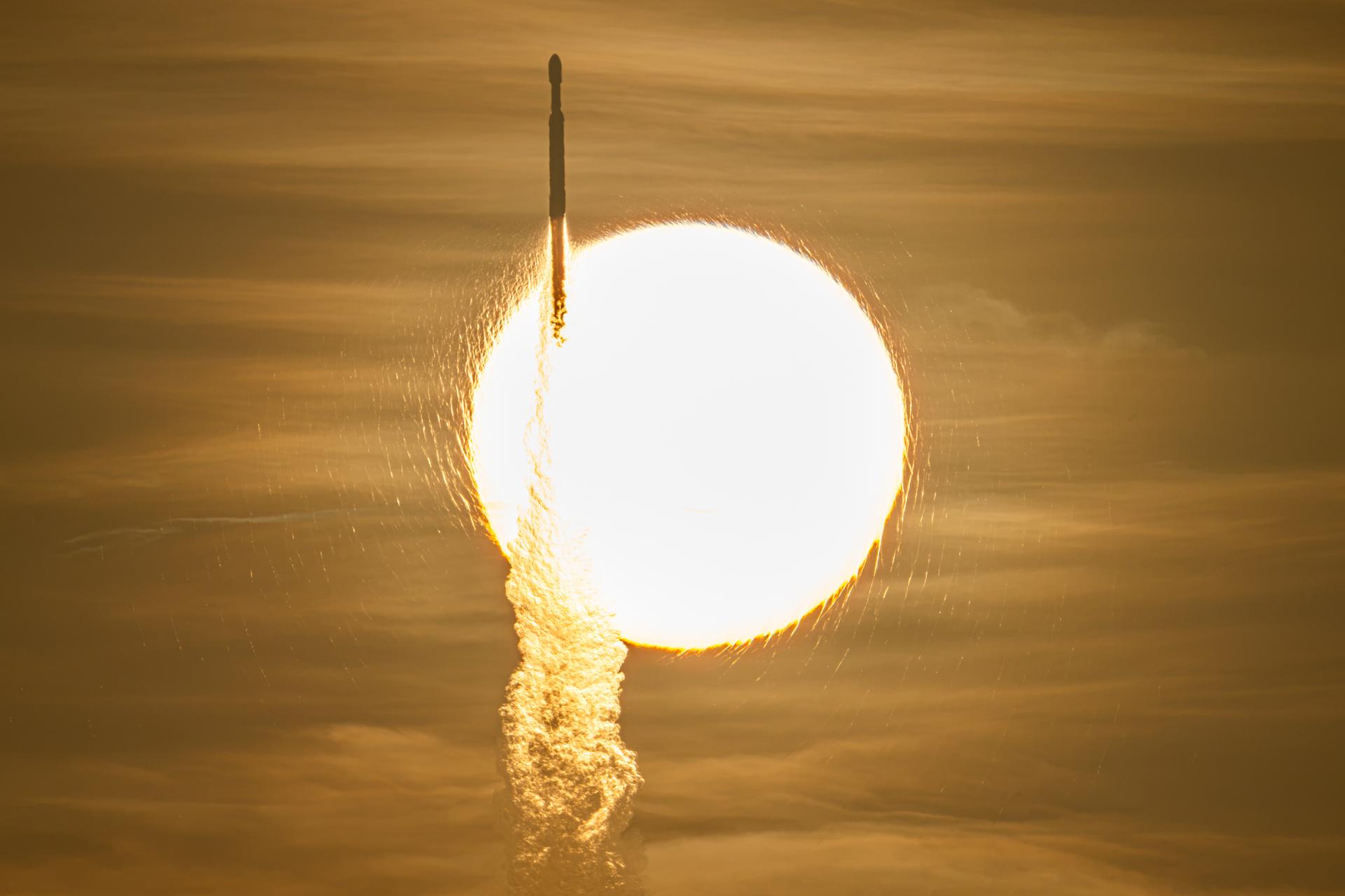
Image (Credit): NASA’s Nancy Grace Roman Telescope aboard a SpaceX rocket transiting the sun during launch from Launch Complex 39A at NASA’s Kennedy Space Center in Florida earlier today. (NASA/John Kraus)

Earlier today, NASA’s Nancy Grace Roman Space Telescope was successfully launched from Florida’ Kennedy Space Center. It is now on a journey toward the second Sun-Earth Lagrange point, or L2, about 1 million miles from Earth where it will start its mission.

The Roman Space Telescope will have a field of view at least 100 times larger than Hubble’s, which it can use to view billions of galaxies as well as answer questions about exoplanets, dark energy, dark matter, and more.

Nicky Fox, associate administrator for the Science Mission Directorate at NASA Headquarters in Washington, stated:

Roman will be a discovery machine that will bring us closer than ever before to answering humanity’s most profound questions about our cosmic history…With its large field of view and fast survey speeds, Roman will usher us into a new era of discovery and make the invisible visible, setting the foundation for humanity’s search for life beyond our solar system.

Not a bad mission for a repurposed spy satellite donated to NASA back in 2012. I wonder if the National Reconnaissance Office has any other old satellites or spacecraft lying around that it might want to put to use discovering more about the universe.

It’s a promising way to turn swords into plowshares.

Establishment of a US Space Academy

Credit: memory-alpha.fandom.com.

According to a new executive order signed earlier today (not the Lake Ontario one – that was yesterday), the White House is establishing a US Space Academy.

The executive order, titled Establishing the United States Space Academy, states:

Space is a critical domain for American national security, economic growth, scientific discovery, and technological innovation. American superiority in space depends on the strength, skill, and character of those who explore, secure, and build the industries critical to it. To continue to lead the world in space exploration and technology, while securing and defending our national interests in space, the Nation must prepare the next generation of astronauts, scientists, engineers, operators, entrepreneurs, civil servants, and warfighters and ensure that they are capable of advancing American interests in space. Achieving this goal requires us to recruit, train, and retain America’s best and brightest from across the Nation.

Did you notice that little military plug “warfighters”? Just like Star Trek’s Starfleet Academy, we need to make room for the Klingons.

This is the same president who gave us the US Space Force, so the militarization of space continues. At least the astronauts and scientists are named before the warfighters.

NASA Administrator Jared Isaacman will serve as Chair of the Presidential Commission on the US Space Academy. The location of the academy itself was not provided, but we should be hearing more about all of the plans shortly.

As with the military academies, it is likely that foreign students will be allowed at some point. For example, the Naval Academy is allowed to enroll up to 60 foreign students. So it would seem Betazoids are a possibility.

Stay tuned.

Pic of the Week: Galactic Gems

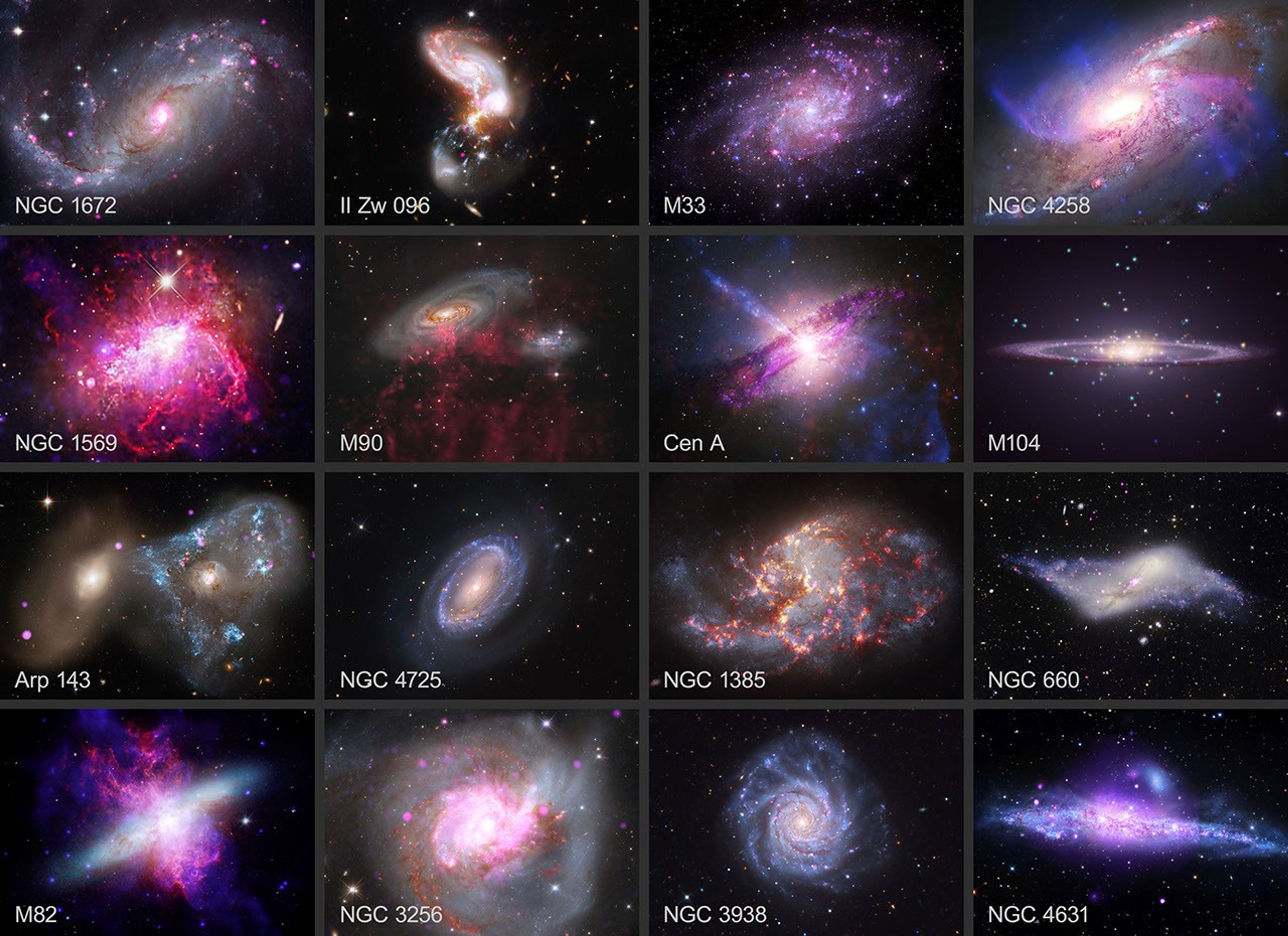
Image (Credit): A collection of 16 galactic images from Chandra and other telescopes. Each galactic image contains X-ray data from Chandra combined with data from telescopes such as NASA’s Webb, Hubble, IXPE, Swift, and NuSTAR, and others both in space and on the ground. (NASA/CXC/SAO)

This week’s images of 16 galaxies are from a variety of NASA telescopes. The galaxies are generally sorted into three types – spiral, elliptical, and irregular. For example, the Milky Way galaxy is a spiral galaxy, whereas Centaurus A (Cen A above) is a giant elliptical galaxy and NGC 1569 (also above) is a compact dwarf irregular galaxy.

Please go to this NASA link to see all of these galaxies in their full glory.

Chinese Spying: The Moon Race Just Got Ugly

Credit: Image by Vicki Hamilton from Pixabay.

The US Department of Justice (DOJ) has reported that the Chinese have been hacking into US government agencies since as early as 2018. One of the targets of the Chinese hacker group, known as QTFY, was NASA.

A DOJ press release from earlier today, titled Justice Department and FBI Seize Platforms Operated and Used by China State-Sponsored Hackers to Target U.S. Critical Infrastructure, stated:

Among the victims of QTFY computer intrusion activity are the National Aeronautics and Space Administration, Federal Reserve, Department of Energy, Department of Justice, Department of Health and Human Services, National Institutes of Health, and the U.S. Senate.

At this time, the nature of what was taken from NASA and other government agencies was not provided. However, given the importance of the Artemis mission for both national and commercial purposes, it is not hard to believe that Artemis information was part of the hack.

It may be to NASA’s advantage that it has been operating by the seat of its pants for more than a year now. There was no Artemis strategy to steal. In addition, much of NASA’s work is in the hands of the private sector, so that extra layer of protection may have helped.

It is worth noting that many federal agencies were spending last year fighting off internal hackers from the US Department of Government Efficiency (DOGE), which did great damage across the federal government.

The Chinese efforts have been detected and ended. I am not sure you can say the same thing about DOGE.

Update: NASA Administrator Jared Isaacman has reported that the Chinese hackers were unable to access NASA data.

Space Stories: A Far Side Satellite, Congressional Space Medals, and the Scrubbing of a Chinese Moon Mission

Image (Credit): Artist’s rendering of the Cosmocube satellite on the far side of the Moon. (Cosmocube)

Here are some recent space-related stories of interest.

—Universe Today: “The CosmoCube Satellite Will Listen to the Early Universe From the Far Side of the Moon”

Multiple space agencies are gearing up to send missions to the Moon in the near future…For one thing, the far side of the Moon is “radio-quiet,” meaning that it is not subject to radio interference from terrestrial sources. This makes the environment the perfect place to conduct radio astronomy research, including the new CosmoCube satellite currently under development at the University of Cambridge. Using the Moon as a natural shield, this satellite will listen for faint whispers (the 21-centimeter line) emitted by hydrogen atoms that existed between the Big Bang and the period known as “Cosmic Dawn.”

—Science Daily: “Trump to Award Congressional Space Medal of Honor to Artemis II Astronauts“

President Donald J. Trump will present the Congressional Space Medal of Honor to each member of NASA’s Artemis II crew during a ceremony at Johnson Space Center in Houston. The event is scheduled for 11 a.m. EDT on Friday, Aug. 28. The medal is one of the highest honors associated with human spaceflight in the United States. It recognizes astronauts whose achievements have made an exceptional contribution to the nation’s space program.

—Scientific American: “China Delays Ambitious Chang’e 7 Moon Mission until 2027“

China’s lunar ambitions took a hit after the country called off the launch of a spacecraft that it has aimed to make the first to ever land on the moon’s south pole. Chang’e 7 was supposed to launch onboard a Long March 5 rocket on August 24, but the launch was scrubbed on Sunday evening, China’s Manned Space Agency (CMSA) said in a statement. Poor weather conditions linked to Typhoon Narra were likely a factor. As a result, the mission will be put on ice until at least 2027.

Note: No podcast will be available this week. The program was finicky and difficult to edit.