SpaceX Rockets: The Good and Bad News

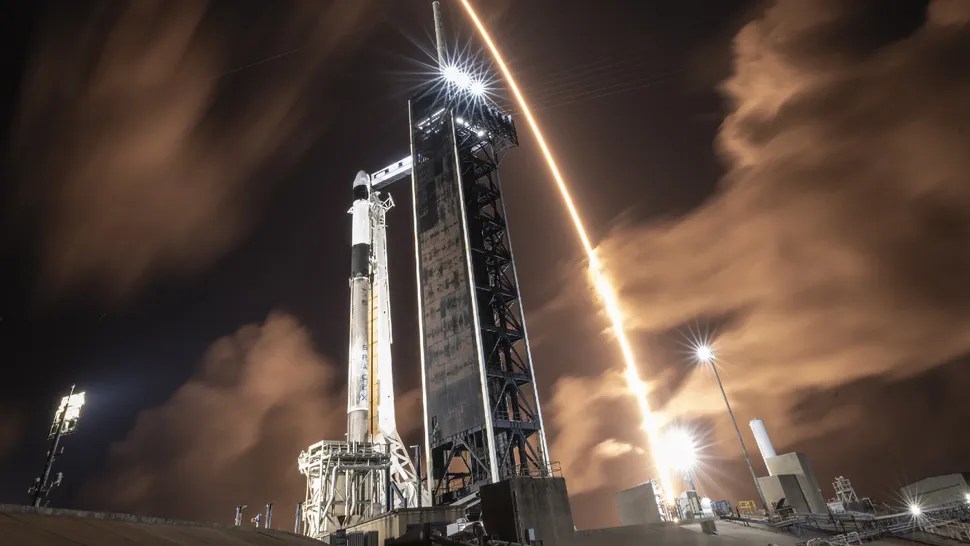
Image (Credit): Launch of a SpaceX Falcon 9 rocket on August 31, 2024. (SpaceX)

First the good news. SpaceX is able to launch its Falcon 9 rockets following a booster issue last week. That led to the immediate launch yesterday of two back-to-back launches of Starlink satellites.

Now the bad news. Russian scientists have reported that SpaceX’s second launch of its Starship rocket last November created a hole in the ionosphere. Specifically, an exploding engine generated the shock wave that created this hole. The scientists claim this is the first time a “human-caused explosion” has had this impact on the ionosphere.

This is the “plain language summary” from the Russian study:

On 18 November 2023, SpaceX launched the Starship, the tallest and the most powerful rocket ever built. About 2 min and 40 s after the liftoff, the Super Heavy engine separated from the Starship spacecraft and exploded at an altitude of 90 km. The main core Starship continued to rise to 149 km and exploded as well. The rocket launch and explosion produced an unexpected response in the ionosphere—the ionized part of the Earth’s atmosphere. The Starship flew at a velocity, exceeding the local sound speed, and generated cone-like atmospheric shock-acoustic waves. Most unexpectedly, the observed disturbances represented long and intensive multi-oscillation wave structures that propagated northward, which is unusual for disturbances driven by a rocket launch. The Starship explosion also generated a large-amplitude total electron content depletion that could have been reinforced by the impact of the spacecraft’s fuel exhaust in the lower atmosphere. This study appears to be the first-time detection of a non-chemical ionospheric hole produced by a man-made explosion.

I like the fact that Russian’s can share results in plain language. However, it is a little disturbing that we needed the Russians to fill us in on the destructive impact of the Starship rockets. Nature noted that “Ionospheric disturbances can affect not only satellite navigation but also communications and radio astronomy.”

We have seen the mess that the rockets can leave on the ground, but this is something else. We need to understand the impact of such launches and related issues if this is to become the new way of doing things. The FAA and NASA should be looking into this matter.

Movie: Slingshot

Credit: bleeckerstreetmedia.com

Just in time for the Labor Day weekend, we are offered a new space film that seemed to have had little publicity until it popped onto the scene. The new film Slingshot, starting today and starring Casey Affleck and Laurence Fishburne, takes us on a trip to Saturn’s moon Titan, or that is the plan.

Here is the general story (and trailer):

A psychological thriller starring Casey Affleck and Laurence Fishburne, SLINGSHOT follows an elite trio of astronauts aboard a years-long, possibly compromised mission to Saturn’s moon Titan. As the team gears up for a highly dangerous slingshot maneuver that will either catapult them to Titan or into deep space, it becomes increasingly difficult for one astronaut to maintain his grip on reality.

The trailer indicates plenty of issues with both the hardware and software – the softest ware being the mind of man on a distant voyage. Yes, we have another story about the struggle of man with himself, with space playing a supporting actor.

Fortunately, we are not dealing with a film that questions the space program, but NASA may be pleased that it is sending a robot to study Europa rather than taking chances with such fragile humans.

Here are a few of the available reviews:

Austin Chronicle:

The derivative look and feel of Slingshot – a little bit of Interstellar, a dash of 2010: The Year We Make Contact for whenever Håfström wants to add some grit, and most especially Steven Soderbergh’s Solaris remake – make it unclear exactly what kind of movie Håfström is trying to make.

The Hollywood Reporter:

It’s fairly boilerplate material, and Håfström frankly seems more interested in exploring John’s memories, nightmares, visions and wavering psyche..If you put aside all the space stuff, Slingshot is basically a one-set, one-character thriller that constantly tests the viewer’s belief in what’s happening.

RogerEbert.com:

It feels like a movie that hates its characters. And hates you too.

Now the movie has some publicity, but maybe not the type it wanted.

Go for the special effects rather than the plot.

That might work.

SpaceX Grounded Before Start of the Polaris Dawn Mission

For the second time in two months, a SpaceX Falcon 9 rocket launch has had problems, leading to a temporary grounding of the rocket by the Federal Aviation Administration. In the latest case, a rocket booster crashed into the Atlantic Ocean after a successful launch of Starlink satellites.

As a result of the malfunction, the privately-funded Polaris Dawn mission scheduled for this Friday will most likely need to be delayed. One of the goals for the Polaris Dawn mission is a spacewalk, which will be the first private space walk to date.

Of greater concern is the role of the Falcon 9 in upcoming International Space Station launches, be it crewed or uncrewed. With the Boeing capsule stuck at the station, SpaceX is currently the one game in town for NASA’s station needs.

Space Quote: NASA’s North Star Means Boeing Astronauts to Return to Earth on SpaceX Capsule

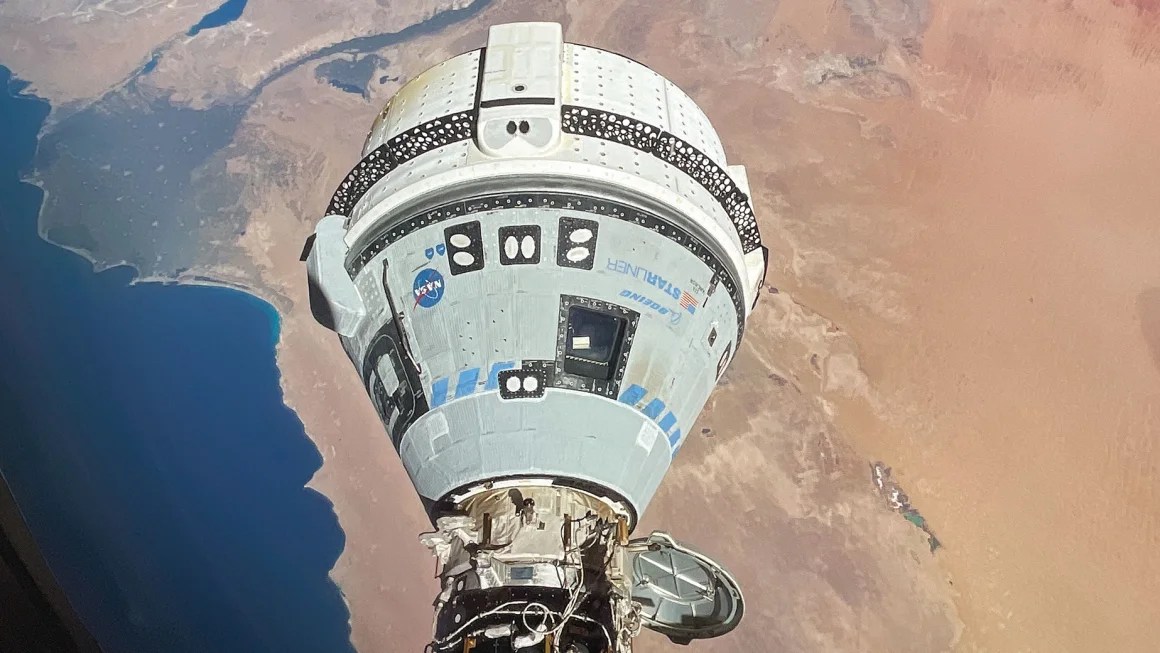
Image (Credit): Boeing Starliner attached to the ISS. (NASA)

“Spaceflight is risky, even at its safest and most routine. A test flight, by nature, is neither safe, nor routine. The decision to keep Butch and Suni aboard the International Space Station and bring Boeing’s Starliner home uncrewed is the result of our commitment to safety: our core value and our North Star…I’m grateful to both the NASA and Boeing teams for all their incredible and detailed work.“

–Statement by NASA Administrator Bill Nelson regarding NASA’s decision to return Boeing’s Starliner to Earth without astronauts Butch Wilmore and Suni Williams aboard the spacecraft. Instead the two astronauts will remain on the International Space Station (ISS) until February 2025 when they will return to Earth aboard a SpaceX Dragon capsule.

Pic of the Week: Sparkling Candy Floss

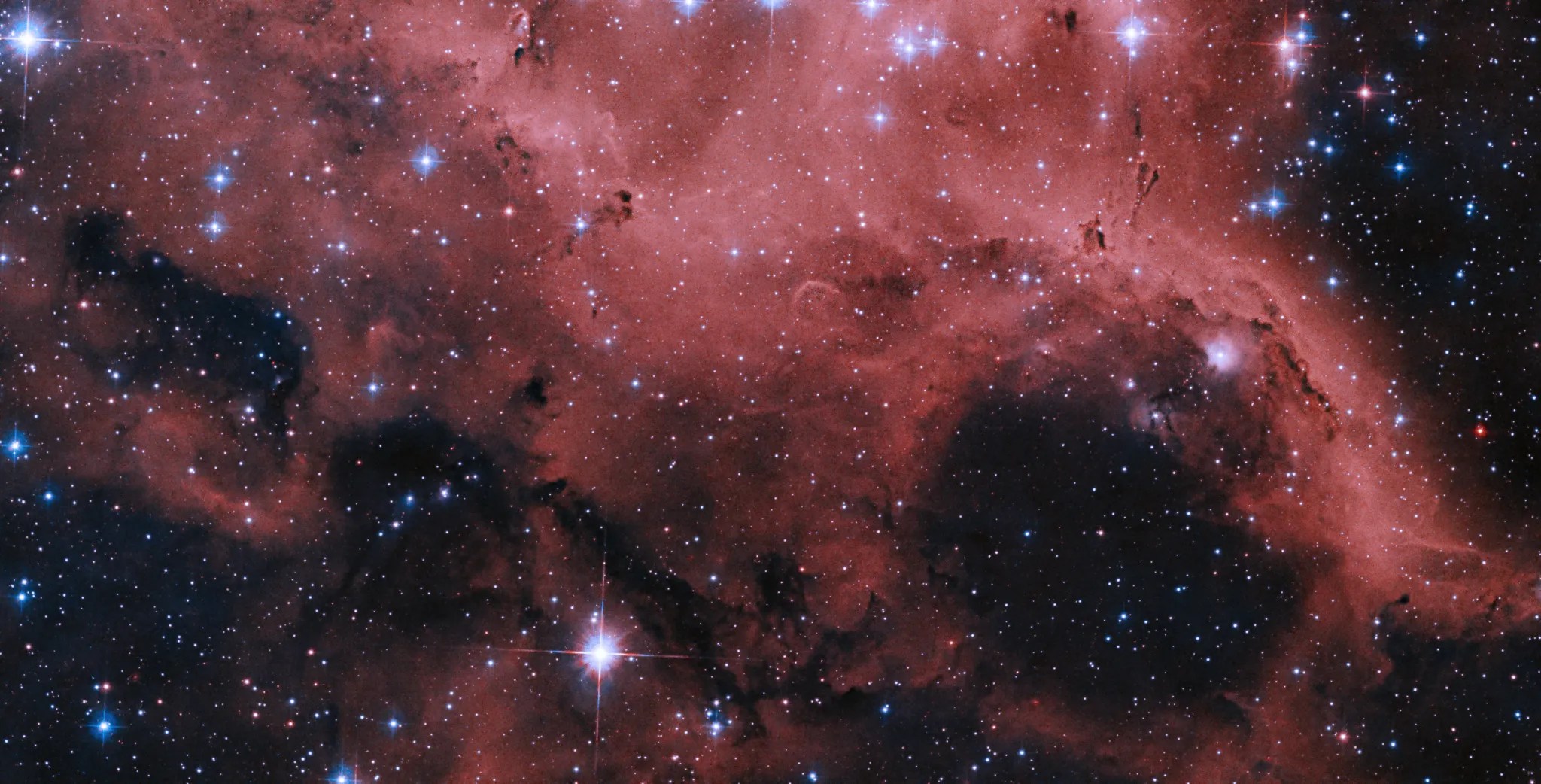
Image (Credit): The complex cluster of emission nebulae is known as N11. (NASA, ESA, J. M. Apellaniz from the Centro de Astrobiologia (CSIC/INTA Inst. Nac. de Tec. Aero., and Gladys Kober from NASA/Catholic University of America)

This week’s image is from the Hubble Space Telescope. It shows a cluster of stars that are about 160,000 light-years away in the Large Magellanic Cloud that orbits our Milky Way.

Here is the full story from NASA:

A bubbling region of stars both old and new lies some 160,000 light-years away in the constellation Dorado. This complex cluster of emission nebulae is known as N11, and was discovered by American astronomer and NASA astronaut Karl Gordon Henize in 1956. NASA’s Hubble Space Telescope brings a new image of the cluster in the Large Magellanic Cloud (LMC), a nearby dwarf galaxy orbiting the Milky Way.

About 1,000 light-years across, N11’s sprawling filaments weave stellar matter in and out of each other like sparkling candy floss. These cotton-spun clouds of gas are ionized by a burgeoning host of young and massive stars, giving the complex a cherry-pink appearance. Throughout N11, colossal cavities burst from the fog. These bubbles formed as a result of the vigorous emergence and death of stars contained in the nebulae. Their stellar winds and supernovae carved the surrounding area into shells of gas and dust.