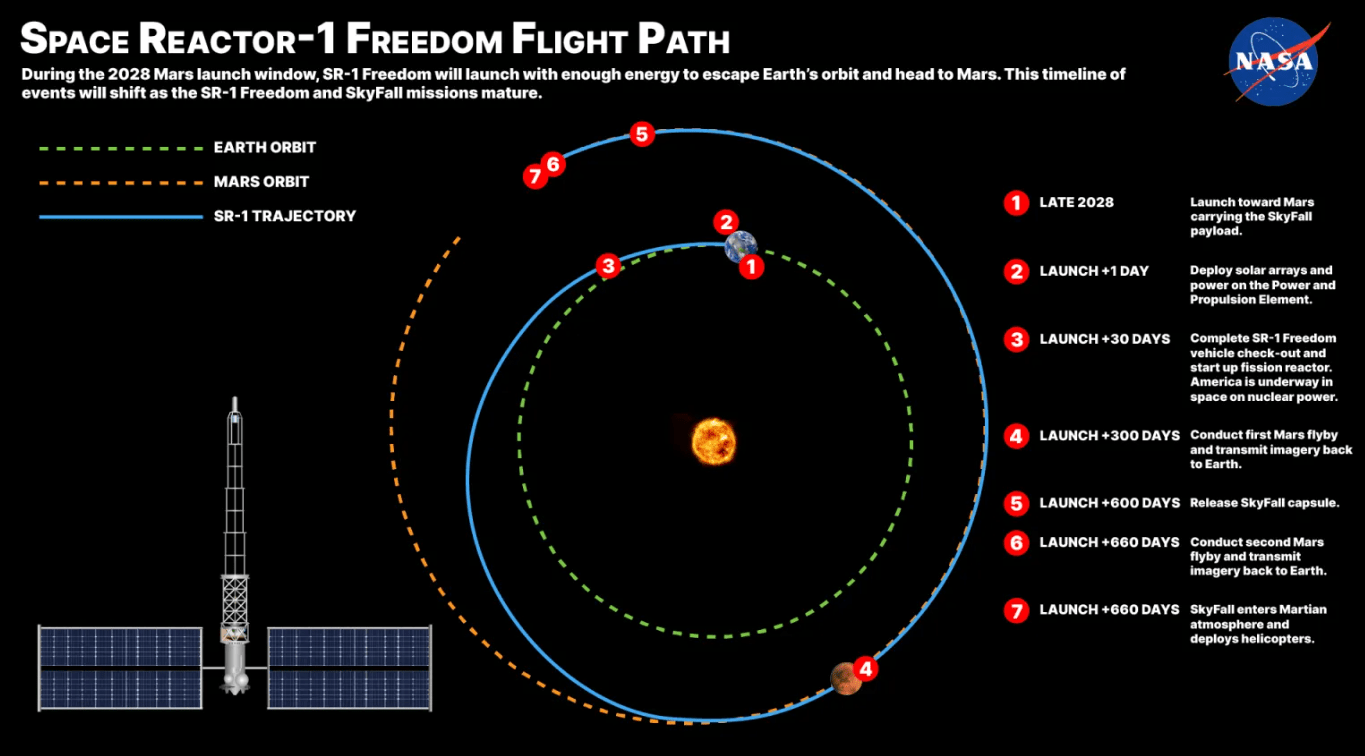
“Early cost estimates are approximately $2.1 billion, and NASA will continue refining that figure through the acquisition process.”
-NASA statement quoted by Politico regarding the estimated cost to send a nuclear-powered spacecraft to Mars. These costs would only cover the recently disclosed Space Reactor-1 Freedom spacecraft, but not the payload of three helicopters called SkyFall. This comes at a time when NASA Administrator Jared Isaacman is meeting with Congress and stating the agency does not need any additional funds at this time. Congress has been good at restoring funds the White House has tried to cut, so maybe Mr. Isaacman feels lucky he has what he has and does not want to seem ungrateful. It appears Congress is making a trip to Mars possible and not the White House, no matter what the president might say on stage about the importance of America’s space program.
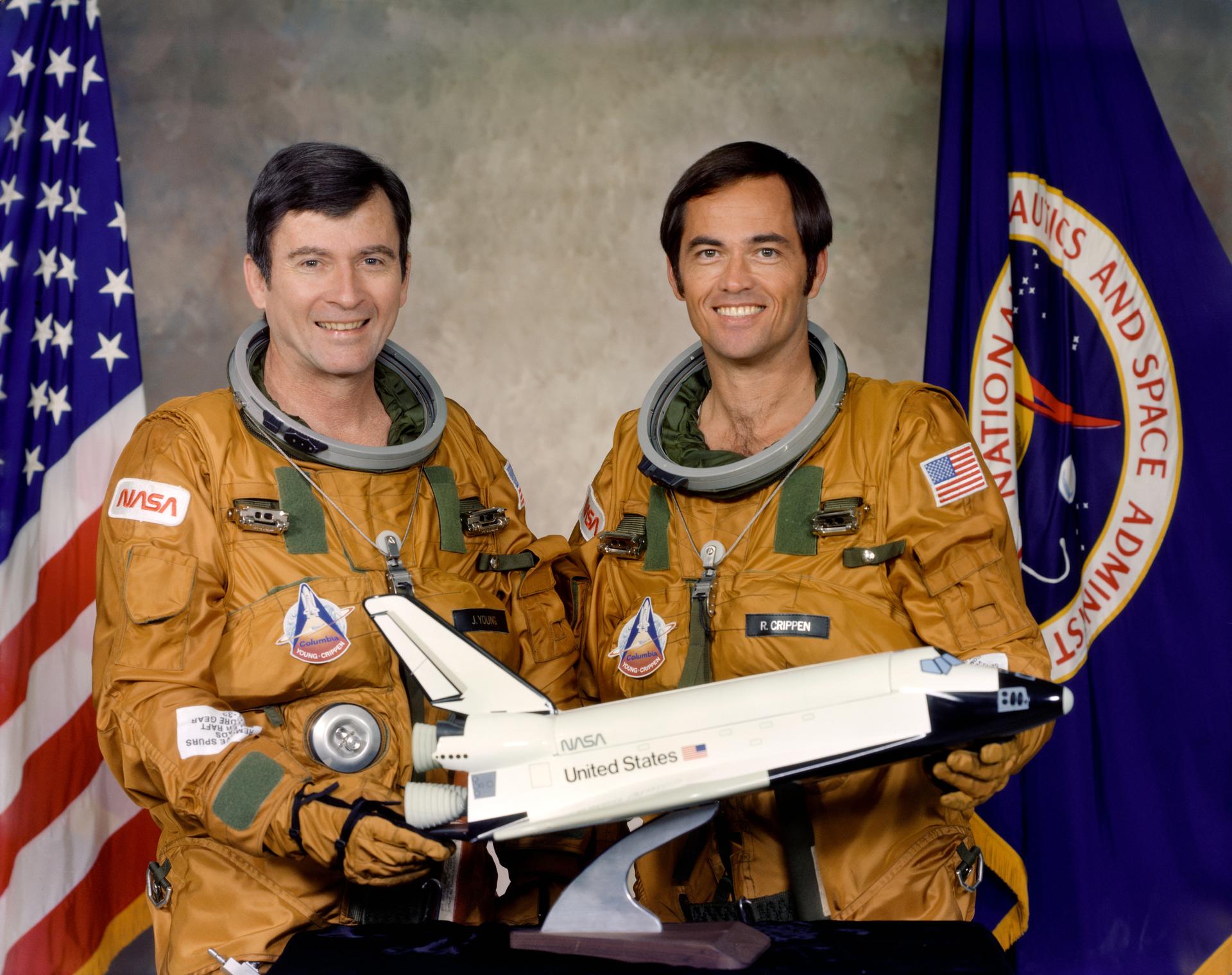
Image (Credit): The first two space shuttle passengers – astronauts John W. Young, left, commander, and Robert L. Crippen, pilot, who flew on the space shuttle orbiter 102 Columbia for the first orbital flight test. (NASA)
On this day in 2011, NASA ended the space shuttle program after 30 years. The space shuttles took 852 passengers on 135 missions. The passengers included astronauts from the U.S. and 60 different countries.
The first space shuttle flight was on April 12, 1981 when Columbia launched from NASA’s Kennedy Space Center in Florida. It was only a two day mission to test whether the shuttle system would work, but it set the stage for the 134 flights that followed.
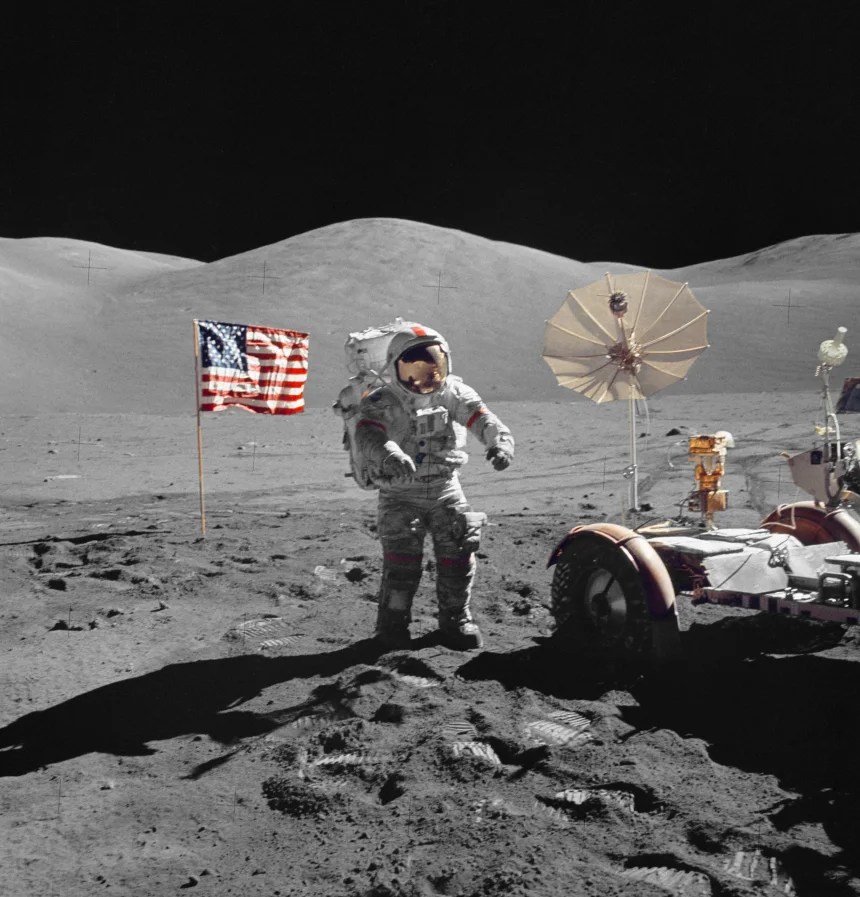
Commenting later on NASA’s Artemis program, Mr. Crippen stated:
We do need to get out of Earth orbit. We need to go back to the Moon. It is the right thing to do. We need to learn to live and work off this planet. There are still some great things we can do on the Moon. And then, eventually fly on to Mars.
Go to this link for more about this first space shuttle mission.
Image (Credit):Mission patch for first space shuttle flight. (NASA)
NASA’s working masterplan for the upcoming lunar landings has a fundamental flaw that could prove fatal to the first American astronauts set to touch down on the Moon in 2028, say experts at the NASA Office of Inspector General, an independent watchdog empowered by Congress to oversee the space agency. During the race to explore the south pole of the Moon, these inspectors say, “While NASA is taking steps to prevent catastrophic events from occurring during the Artemis [Moon] missions, at some point in the future, astronauts will likely encounter a life-threatening emergency in space.” But under NASA’s landing blueprints, they warn, “should the astronauts encounter a life-threatening emergency in space or on the lunar surface, NASA does not have the capability to rescue the stranded crew.”
NASA has canceled a $73 million commercial lunar lander mission after years of delays and cost overruns, ending the project before the spacecraft ever launched. The agency and contractor Draper mutually agreed to terminate the Commercial Lunar Payload Services Task Order CP-12, a mission that began in 2022 and was intended to deliver scientific payloads to a crater near the moon’s south pole…NASA has already paid about $43 million under the contract and said those funds cannot be recovered because they were legally obligated under the agreement.
A groundbreaking mission that explored Pluto and distant solar system objects in unprecedented detail has awakened from its longest sleep ever — and it’s 5.9 billion miles (9.5 billion kilometers) from Earth. NASA’s New Horizons spacecraft went into a planned hibernation mode on August 7, 2025, and woke up on June 23 using commands stored on its main computer. The mission’s flight controllers at the Johns Hopkins University’s Applied Physics Laboratory in Laurel, Maryland, confirmed that New Horizons is in great shape and ready to transmit a stream of science data gathered during hibernation from its location in the region of icy objects known as the Kuiper Belt.
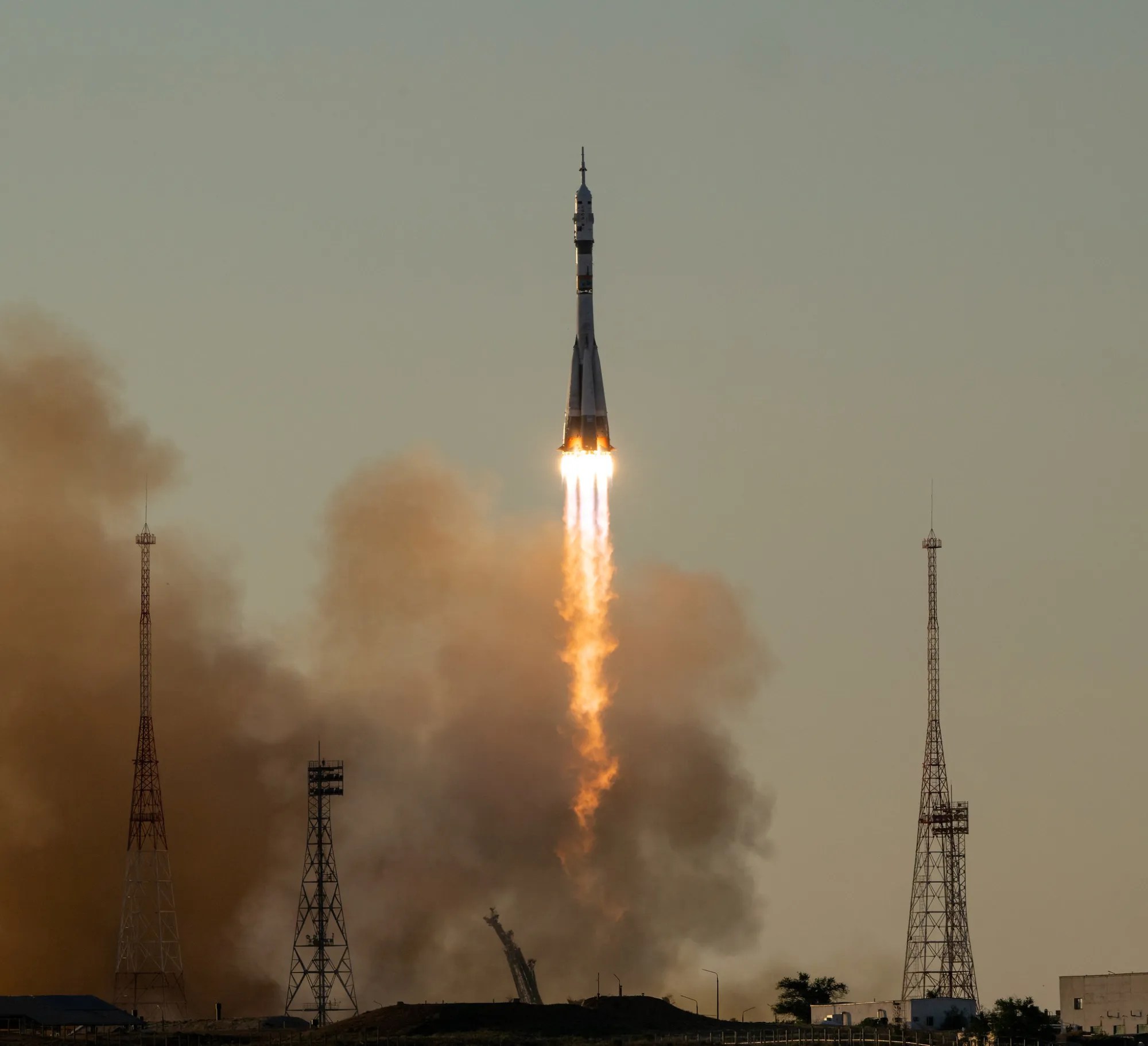
Image (Credit): An American astronaut and two Russian cosmonauts head to the ISS aboard a Soyuz rocket launched earlier today from the Baikonur Cosmodrome in Kazakhstan. (NASA/Bill Ingalls)
With their arrival, Expedition 74 will come to a close by month’s end and Expedition 75 will begin.
The Expedition 74 crew currently on the ISS includes NASA astronauts Jessica Meir, Jack Hathaway, and Chris Williams; European Space Agency astronaut Sophie Adenot; and Roscosmos cosmonauts Sergey Kud-Sverchkov, Sergei Mikaev, and Andrey Fedyaev.
Expedition 75 will begin once NASA’s Williams and Roscosmos’s Kud-Sverchkov, and Mikaev depart the station after an eight month mission.
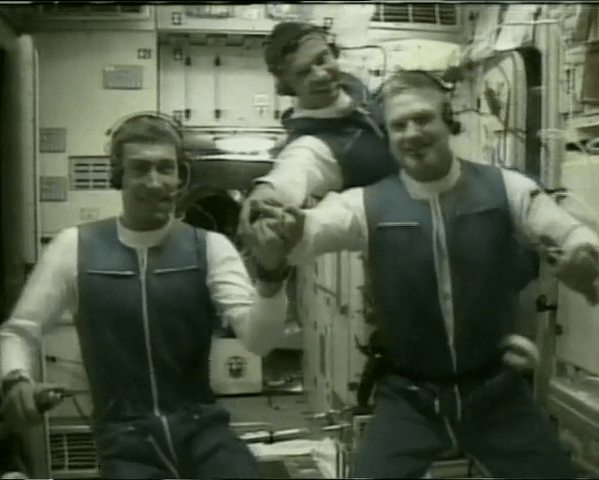
With all of the attention on the Chinese and race to the Moon, it is sometimes easy to forget that Russian cosmonauts have been working together with NASA aboard the ISS for over 25 years. The first crew on the ISS in November 2000 was composed of NASA astronaut William M. Shepherd and Russian cosmonauts Yuri P. Gidzenko and Sergei K. Krikalev (shown below). The three were the Expedition 1 crew, and stayed aboard the station until March 2001.
Image (Credit): Expedition 1 crew members (from left to right) Sergei K. Krikalev, Yuri P. Gidzenko, and William M. Shepherd in the ISS’s Zvezda Service Module. (NASA)
Image (Credit): The crew of the latest mission to China’s Tiangong space station – the Shenzhou 23 mission. (CMSA/CCTV)
“Well, I would just say, first, it’s not arguably like there- we are very much in a space race right now, and the Chinese are moving at incredible speeds, and they are certainly capable of doing what the Soviets were not during the- the first space race. The Chinese will land their taikonauts on the moon. There’s no question. The question is, will the United States return before them, and will we do so in a different way this time, when we build a base, establish that enduring presence? I think the answer is yes.“
-Statement by NASA Administrator Jared Isaacman on CBS’s Face the Nation this past Sunday. The interview addresses other issues in addition to the Artemis mission to the Moon, including efforts to save the Swift space telescope as well as the status of Blue Origin’s efforts to recover from the recent explosion of its New Glenn rocket.