NASA Helps with Mining the Moon

Image (Credit): A false-color composite picture of the Moon taken through three color filters on NASA’s Galileo solid-state imaging system. (NASA)

While everyone was staring up at the dark Moon covering the bright sun during today’s eclipse, NASA was busy chatting about new ways to view the Moon. The image above is one of many that can be created using NASA data to assist commercial companies trying to understand the lunar terrain while looking for useful minerals.

The accompanying NASA story includes comments from multiple commercial companies eyeing the Moon’s resources.

Blair DeWitt, CEO of Lunar Station, stated:

We can find sites for landing pads, for cultivating the best paths for roving, and inform our clients about communications. If you can’t see Earth at a given location like in the polar regions or the far side of the Moon, you have to come up with a relay strategy…We can do this in part thanks to NASA data.

We can assume the Chinese are doing the same for their own commercial sector, though NASA has more data going back decades. Even so, China already has rocks from the far side of the Moon, which is a feat that not even NASA achieved. And not to be outdone, just last week China released its own comprehensive geological map of the Moon.

As with everything else pertaining to the Moon, the race is on.
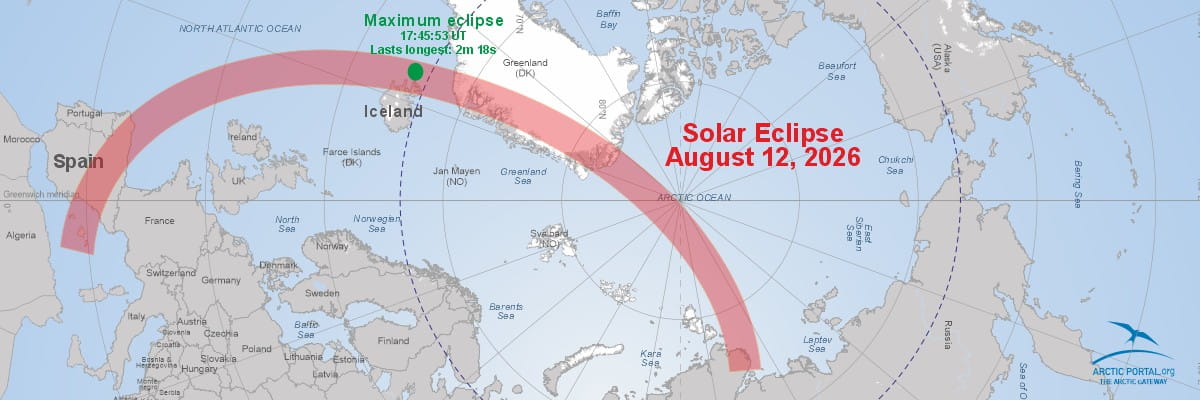
Solar Eclipse – August 12, 2026

Credit: The Arctic Portal

The solar eclipse is almost here. The map above from The Arctic Portal shows you the path of tomorrow’s eclipse, which reaches its maximum over Iceland.

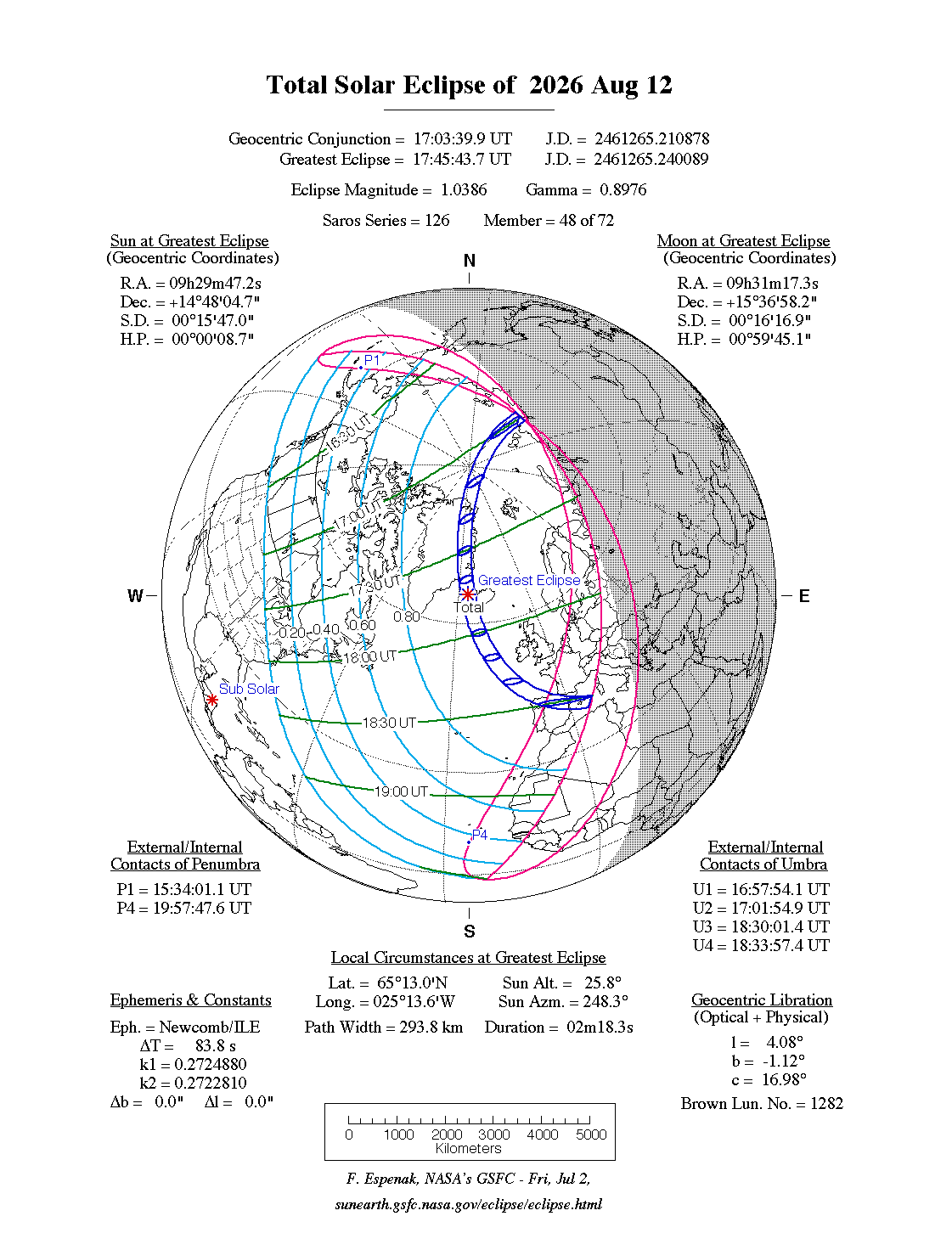
NASA also has a number of handy maps for past and future eclipses at its Eclipse Data site, though it is a bit technical. The graphic for tomorrow’s eclipse is shown below.

Enjoy the view…and mind your eyes.

Credit: NASA

Space Stories: Renaming Wallops, Powering Voyager 2, and Catching the Solar Eclipse

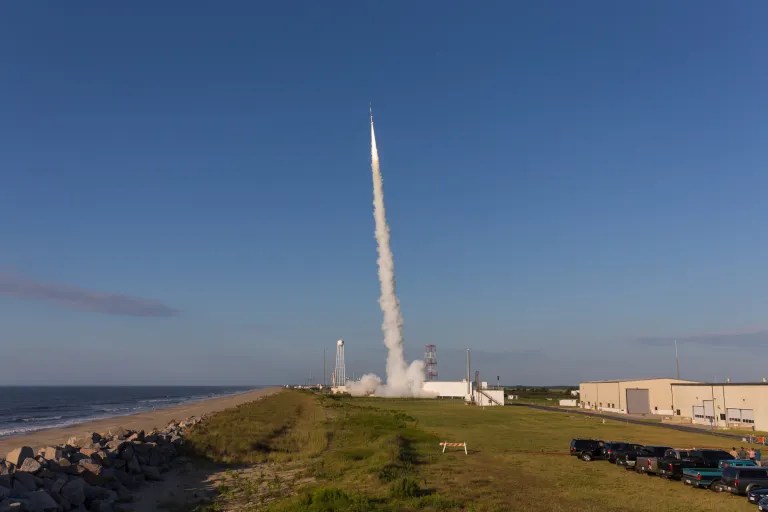
Image (Credit): A rocket departing the Wallops Flight Facility in Virginia. (NASA)

Here are some recent space-related stories of interest.

—WBOC News: “Push to Rename NASA Wallops Facility Sparks Debate Over Eastern Shore History“

A request to honor one of the Eastern Shore’s most accomplished aerospace leaders is facing growing opposition from people who say changing the Wallops name could erase an important piece of local history. The Accomack County Board of Supervisors unanimously approved a resolution July 15 asking NASA to rename the Wallops Flight Facility in honor of A. Thomas Young, a Wachapreague native who built a decades-long career in the nation’s space program and aerospace industry.

—NASA: “NASA Engineers Help Prolong Voyager 2’s Science Mission“

Engineers at NASA’s Jet Propulsion Laboratory have successfully freed up power on Voyager 2, extending how long the spacecraft can continue to do science. Nicknamed the “Big Bang,” the effort involved simultaneously turning off certain powered devices and substituting them with lower-power alternatives while ensuring the spacecraft remains warm enough to operate.

—Sky & Telescope: “Where to See the August 12th Solar Eclipse Online“

On August 12, 2026, millions will witness a total solar eclipse that crosses the north Atlantic and parts of Europe. The path of totality passes over Greenland, Iceland, Spain, and a corner of Portugal. Other parts of Europe and North America will see a partial solar eclipse. If you are in the path of totality or if you will be able to see the partial eclipse, head outside to see it for yourself! (Make sure you bring a good pair of eclipse glasses to protect your eyes.) But if you’re not in the path, or if clouds obscure your view, there are plenty of options for viewing this celestial spectacle online. What’s more, each broadcast listed here has its own roster of experts speaking about different aspects of the eclipse and the science around it.

Note: Here is the podcast version of this post.

Space Quote: LINK May Still Be in the Game

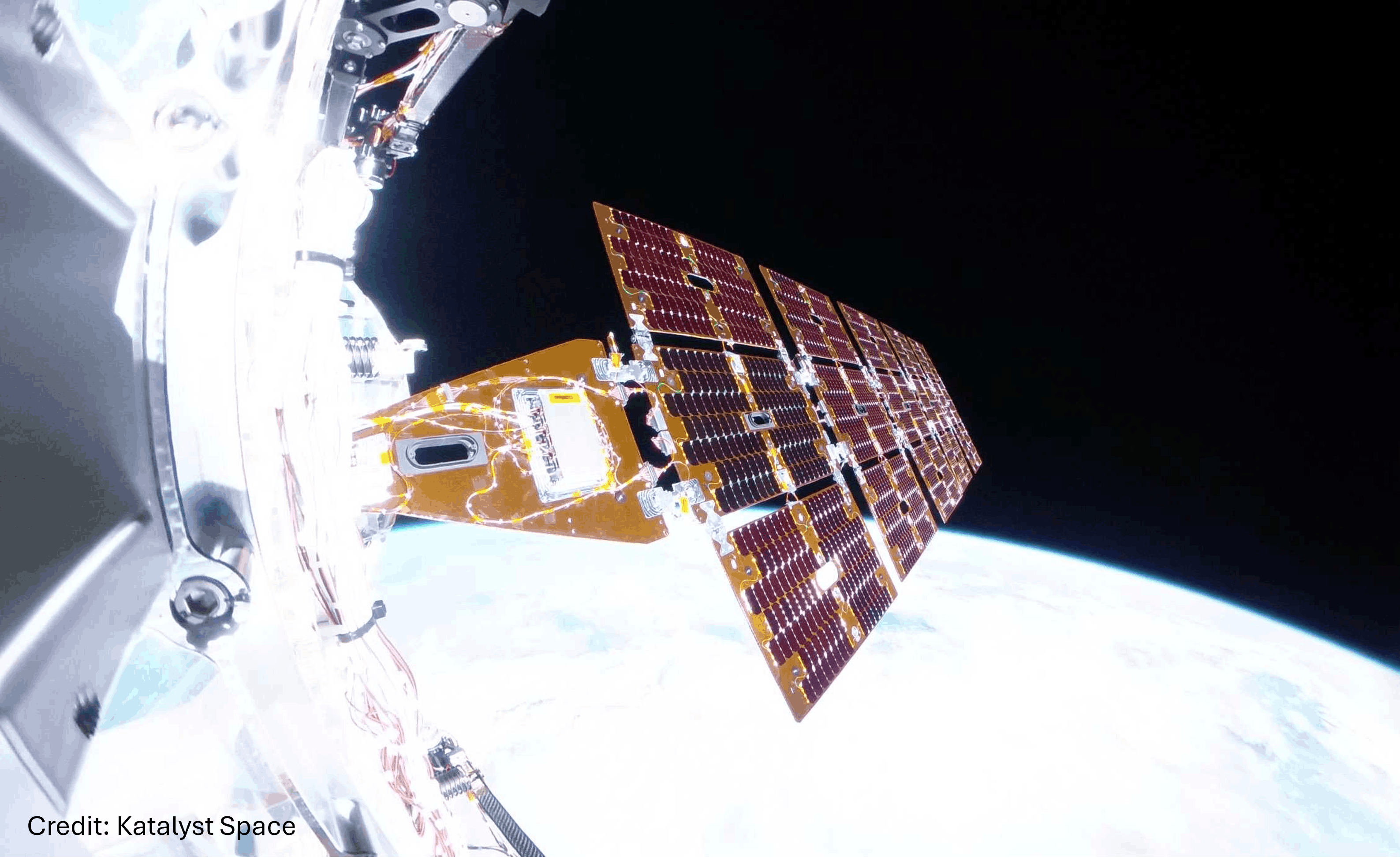
Image (Credit): The LINK spacecraft with a deployed solar array in Earth orbit. (Katalyst Space)

“LINK originally was in a multi-axis spin rotating at about 9 degrees per second, which resulted in sporadic communications and impeded LINK’s progress toward Swift. Using a series of burns from one of LINK’s electric propulsion thrusters, the Katalyst team now has slowed that spin to about 1.47 degrees per second. Katalyst plans to keep LINK at that spin rate as it proceeds with next steps for the mission. This includes uploading a flight software update in the coming days with new attitude controllers designed to maintain LINK’s stability in its current configuration. These updates would allow LINK to begin maneuvering to align with Swift’s orbit.”

-Statement by NASA on August 6, 2026 regarding efforts to resolve issues with the LINK spacecraft sent to boost the Neil Gehrels Swift Observatory to a higher orbital altitude. Launched on July 3, the spacecraft began to spin in space around July 25, which led to a temporary loss of contact with the ground crew. If all goes well, LINK could reach the observatory before the end of August.

Video: NASA’s Progress with Phase 1 of the Moon Base

Image (Credit): An artist’s rending of NASA efforts to create a permanent Moon Base. (NASA)

NASA is quickly learning that it needs to get out front with its own PR to promote efforts to build a Moon base near the lunar South Pole. With budget cuts always looming in the background, public support will be essential to ensure the US has a long-term presence on the Moon.

This latest video from NASA does a good job explaining the status of the various vendors creating landers and rovers for phase 1 of the Moon base, which extends to 2029. This phase will be limited to robotics preparing the lunar surface for later astronauts. The video covers the efforts of Blue Origin, Firefly Aerospace, Intuitive Machines, Voyager Lunar Systems, and Northrop Grumman.

The video is a helpful way to keep the public informed, but the best publicity will be success. The lunar landings to date by commercial partners have been mostly disappointing. The success of these upcoming missions is what will convince the public that we can really settle on the Moon.