Pic of the Week: The Jellyfish Galaxy

Image (Credit): The massive galaxy JO204. (NASA)

This week’s image is from the Hubble Space Telescope. You are looking at JO204, also called the “jellyfish galaxy” because of its tendrils. It is about 600 million light-years away. It is an impressive sight.

Here is a little more on the galaxy from NASA:

While the delicate ribbons of gas beneath JO204 may look like floating jellyfish tentacles, they are in fact the outcome of an intense astronomical process known as ram pressure stripping. Ram pressure is a particular type of pressure exerted on a body when it moves relative to a fluid. An intuitive example is the sensation of pressure you experience when you are standing in an intense gust of wind – the wind is a moving fluid, and your body feels pressure from it. An extension of this analogy is that your body will remain whole and coherent, but the more loosely bound things – like your hair and your clothes – will flap in the wind. The same is true for jellyfish galaxies. They experience ram pressure because of their movement against the intergalactic medium that fills the spaces between galaxies in a galaxy cluster. The galaxies experience intense pressure from that movement, and as a result their more loosely bound gas is stripped away. This gas is mostly the colder and denser gas in the galaxy – gas which, when stirred and compressed by the ram pressure, collapses and forms new stars in the jellyfish’s beautiful tendrils.
Pic of the Week: Starship Explodes Mid-Air

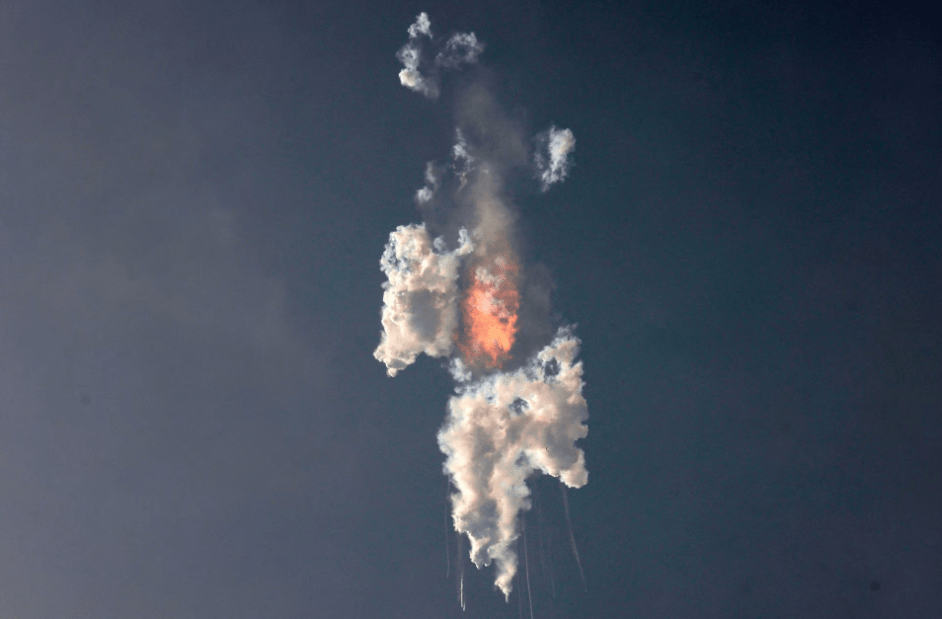
Image (Credit): Starship explosion after launch on April 20, 2023. (Rueters)

This week’s image is from today’s launch of the SpaceX Starship. The rocket experienced engine troubles and exploded about four minutes following the launch after reaching a height of 25 miles. The goal of this mission was to reach at least 90 miles.

SpaceX had this to say about the launch:

At 8:33 a.m. CT, Starship successfully lifted off from the orbital launch pad for the first time. The vehicle cleared the pad and beach as Starship climbed to an apogee of ~39 km over the Gulf of Mexico – the highest of any Starship to-date. The vehicle experienced multiple engines out during the flight test, lost altitude, and began to tumble. The flight termination system was commanded on both the booster and ship. As is standard procedure, the pad and surrounding area was cleared well in advance of the test, and we expect the road and beach near the pad to remain closed until tomorrow.

With a test like this, success comes from what we learn, and we learned a tremendous amount about the vehicle and ground systems today that will help us improve on future flights of Starship.

Pic of the Week: Runaway Black Hole

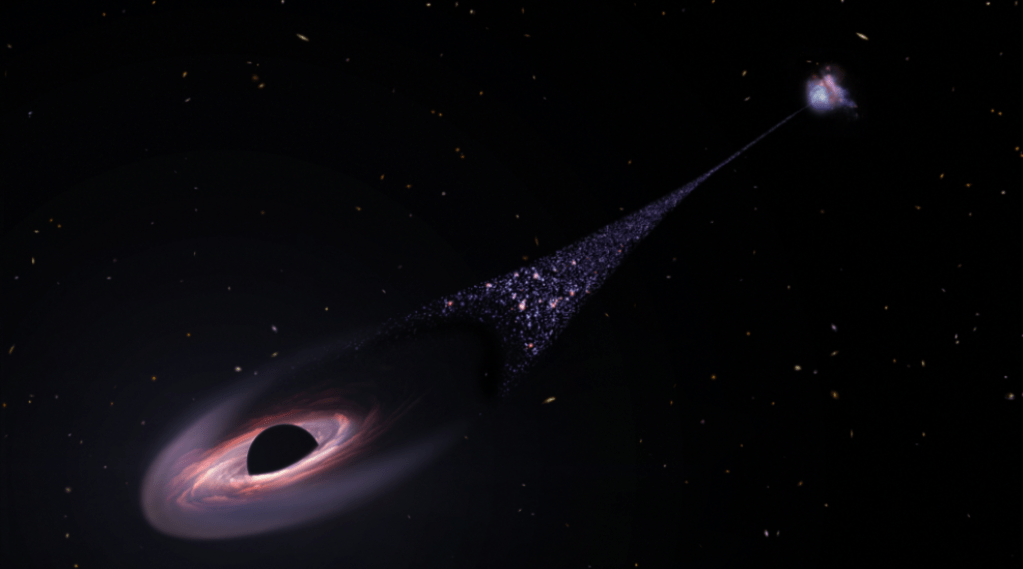
Image (Credit): Artist’s rendering of a black hole with a trail of stars behind it. (NASA, ESA, Leah Hustak, STScI)

This week’s image is an illustration showing what scientists believe the NASA/ESA Hubble Space Telescope has detected, though it initially showed as only a smudge. The dramatic illustration tells a fascinating story, as described by NASA’s Hubblesite

There’s an invisible monster on the loose, barreling through intergalactic space so fast that if it were in our solar system, it could travel from Earth to the Moon in 14 minutes. This supermassive black hole, weighing as much as 20 million Suns, has left behind a never-before-seen 200,000-light-year-long “contrail” of newborn stars, twice the diameter of our Milky Way galaxy. It’s likely the result of a rare, bizarre game of galactic billiards among three massive black holes.

Pic of the Week: ISS Expedition 68 Resupply

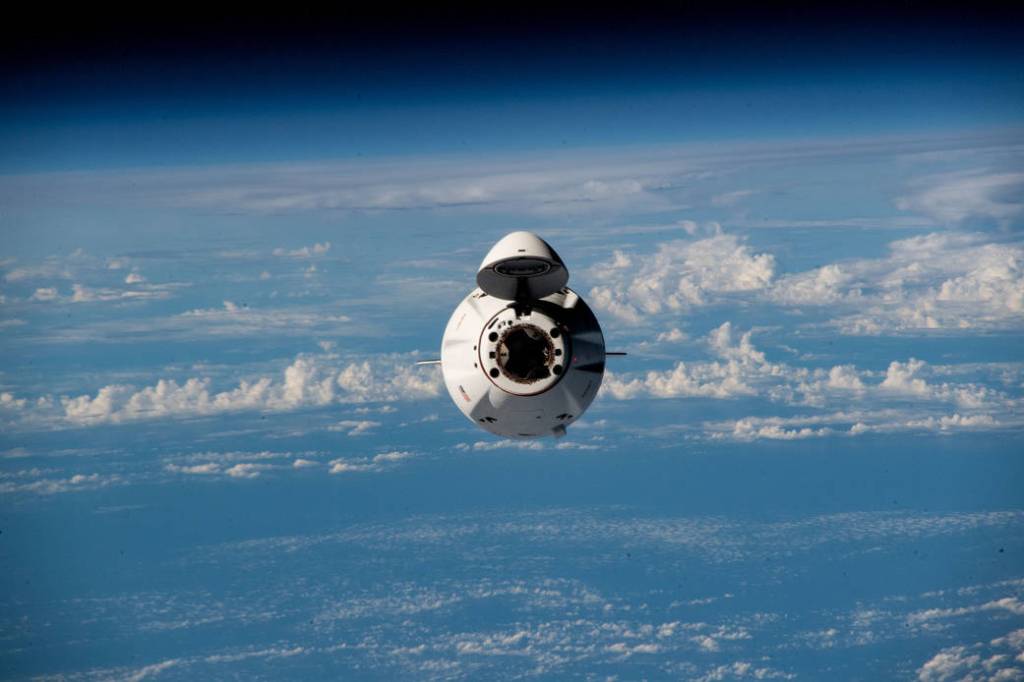
Image (Credit): SpaceX Dragon approaching the ISS. (NASA)

This week’s image comes from NASA showing a Dragon cargo ship approaching the International Space Station (ISS) earlier this month with supplies for the Expedition 68 crew. In this photo, the Dragon is above the Indian Ocean near Madagascar.

It is an amazing image each and every time. What a workplace and what a view. Telework just isn’t the same.