Pic of the Week: The Carina Nebula

Image (Credit): The Carina Nebula as captured by the JWST. (NASA)

This week’s image is an amazing view of the Carina Nebula from the James Webb Space Telescope (JWST). It is one of the first images released by NASA this week. More of the early images are available here.

Here is NASA’s description of what you are seeing in this image:

This landscape of “mountains” and “valleys” speckled with glittering stars is actually the edge of a nearby, young, star-forming region called NGC 3324 in the Carina Nebula. Captured in infrared light by NASA’s new James Webb Space Telescope, this image reveals for the first time previously invisible areas of star birth.

Called the Cosmic Cliffs, Webb’s seemingly three-dimensional picture looks like craggy mountains on a moonlit evening. In reality, it is the edge of the giant, gaseous cavity within NGC 3324, and the tallest “peaks” in this image are about 7 light-years high. The cavernous area has been carved from the nebula by the intense ultraviolet radiation and stellar winds from extremely massive, hot, young stars located in the center of the bubble, above the area shown in this image.

I look forward to posting more such images as they are released.

Pic of the Week: The Durable Hubble

Image (Credit): The Hubble Space Telescope. (NASA/ESA)

This week’s image is the Hubble Space Telescope, still going strong after more than 32 years. It left the Space Shuttle Discovery’s cargo bay on April 25, 1990. With all of the attention on the James Webb Space Telescope (JWST), it’s important to remember this dependable space telescope that brought us so many amazing images over the years, including those shown below.

Given the concern over the recent concerns about a micrometeroid impacting the JWST, let’s not forget that the Hubble had a few growing pains as well. Most importantly, it had to deal with a flawed mirror that required astronauts to visit the space telescope so they could add five pairs of corrective mirrors. More than three years had passed before the astronauts could make this correction. So the current issues with the JWST are pretty minor by comparison.

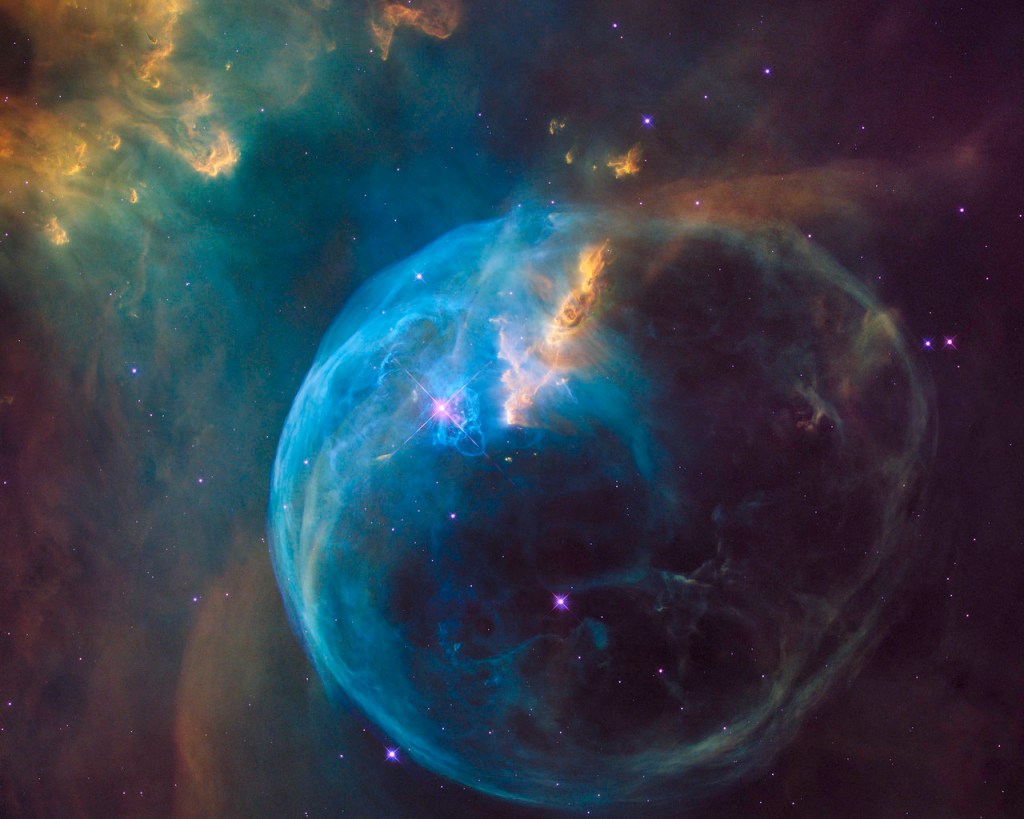
Image (Credit): The Bubble Nebula, also known as NGC 7635, located 8 000 light-years away. (NASA/ESA)
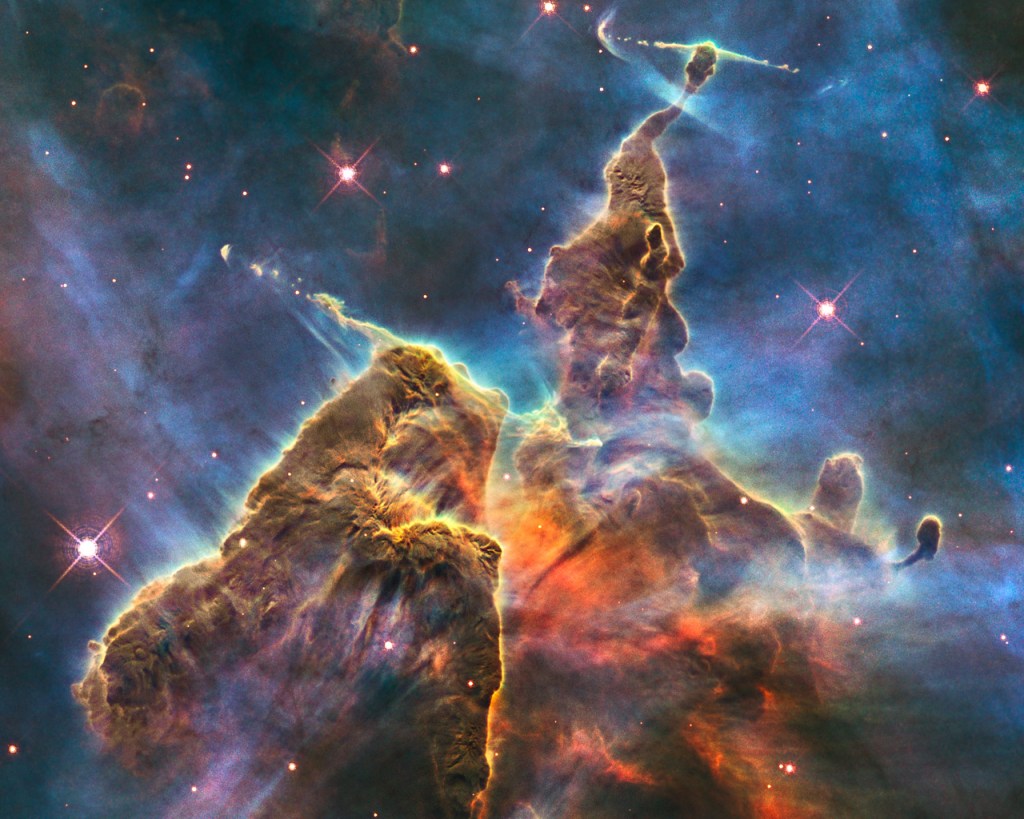
Image (Credit): A pillar of gas and clouds within the stellar nursery called the Carina Nebula, located 7500 light-years away in the southern constellation of Carina. (NASA/ESA).
Image (Credit): The planet Jupiter. (NASA/ESA)

Pic of the Week: Dwarf Starburst Galaxy Henize 2-10

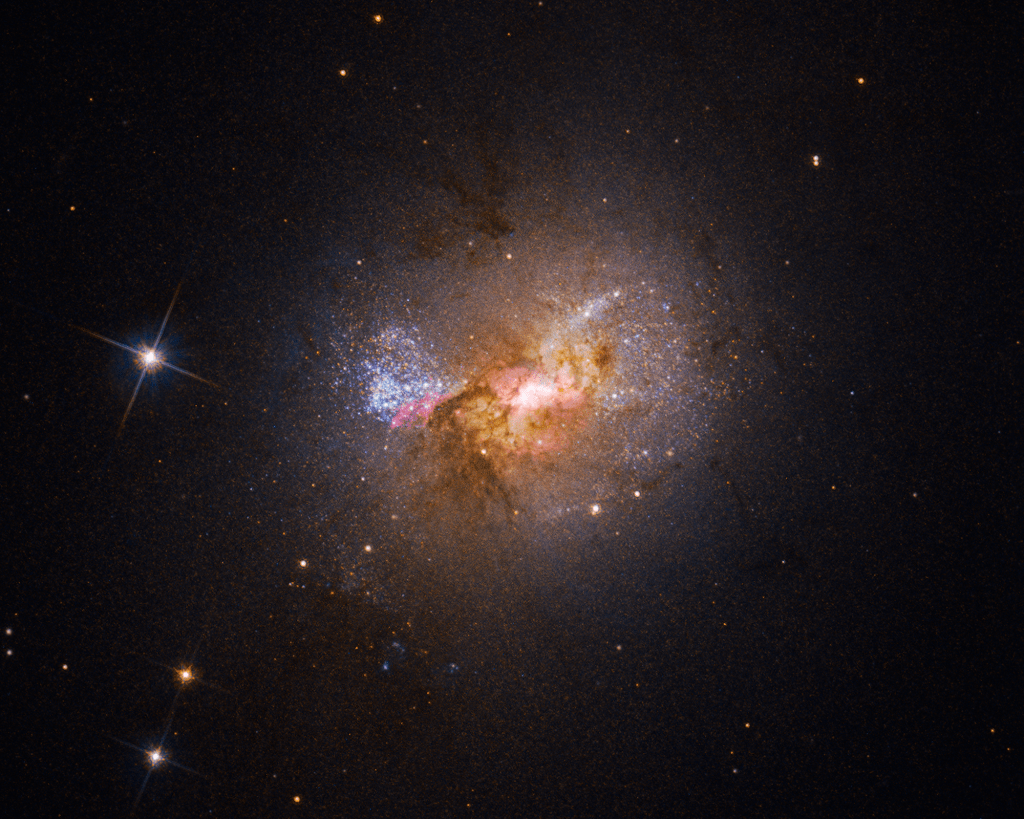
Image (Credit): Dwarf starburst galaxy Henize 2-10. (NASA, ESA, Zachary Schutte (XGI), Amy Reines (XGI), Alyssa Pagan (STScI))

This week’s photo is from the Hubble Space Telescope. It shows the Dwarf starburst galaxy Henize 2-10, which lies 34 million light years away. NASA notes that “The bright region at the center, surrounded by pink clouds and dark dust lanes, indicates the location of the galaxy’s massive black hole and active stellar nurseries.”

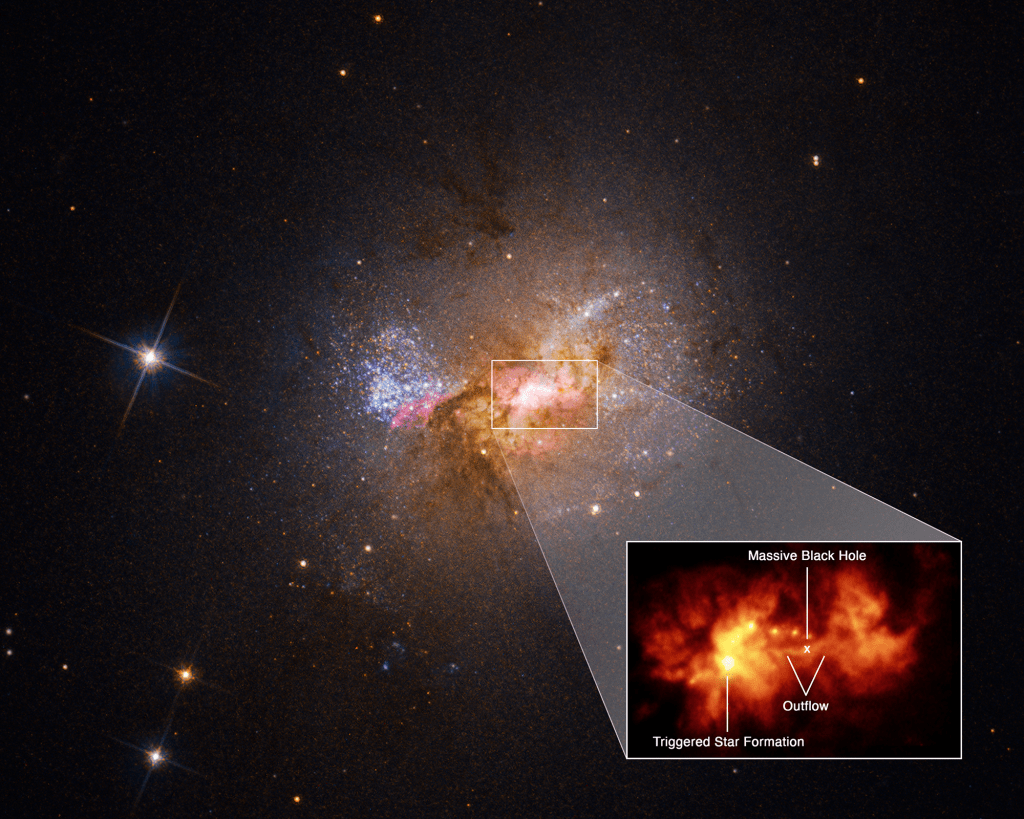
The image below better illustrates the link between the massive black hole and the related star formation. NASA explains:

A pullout of the central region of dwarf starburst galaxy Henize 2-10 traces an outflow, or bridge of hot gas 230 light-years long, connecting the galaxy’s massive black hole and a star-forming region. Hubble data on the velocity of the outflow from the black hole, as well as the age of the young stars, indicates a causal relationship between the two. A few million years ago, the outflow of hot gas slammed into the dense cloud of a stellar nursery and spread out, like water from a hose impacting a mound of dirt. Now clusters of young stars are aligned perpendicular to the outflow, revealing the path of its spread.

Image (Credit): Dwarf starburst galaxy Henize 2-10 with a pullout showing the black hole and related star formation. (NASA, ESA, Zachary Schutte (XGI), Amy Reines (XGI), Alyssa Pagan (STScI))

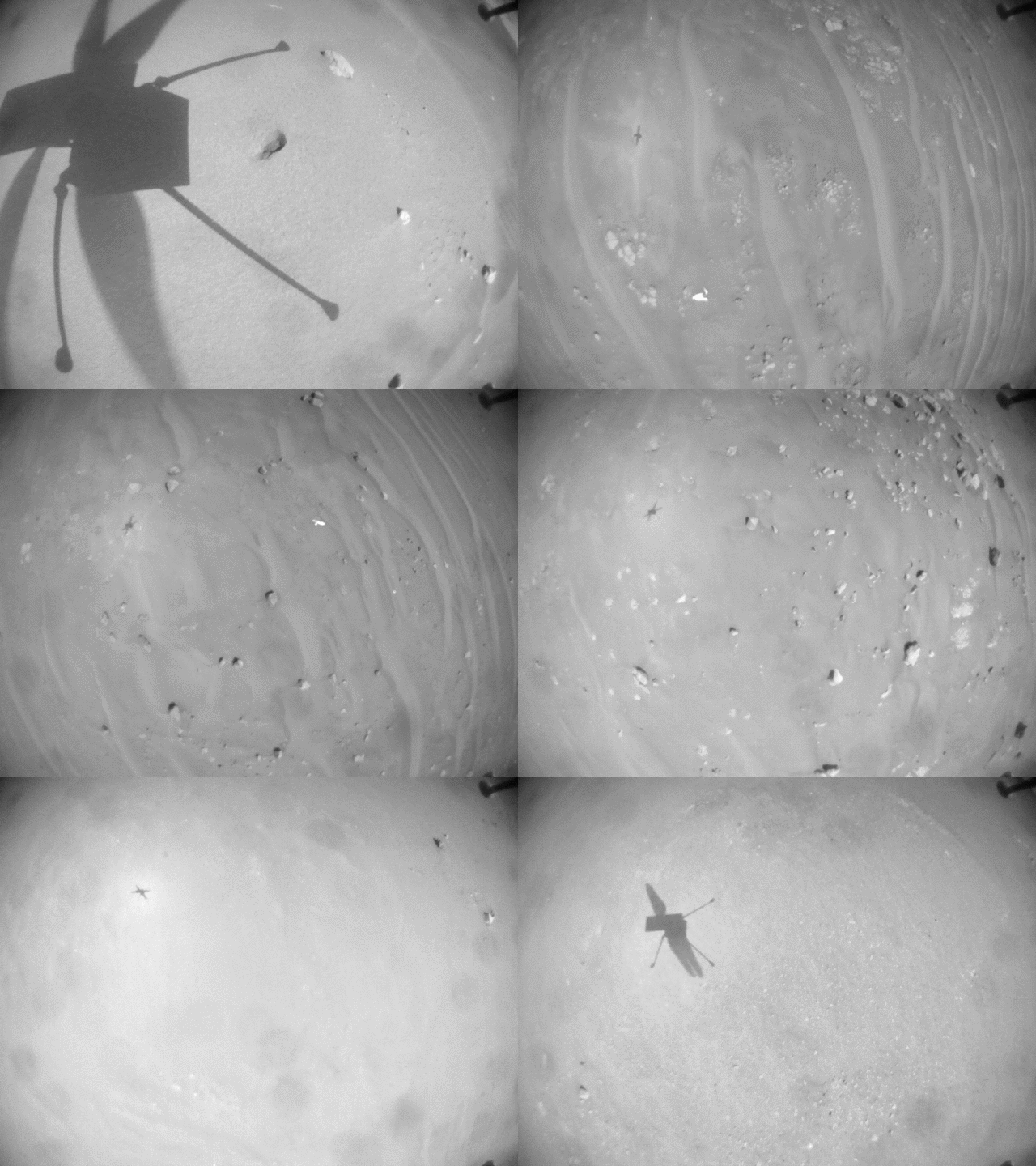
Pic of the Week: The Helicopter’s Shadow

Image (Credit): Shadow of the Ingenuity Helicopter on Mar’s surface. (NASA/JPL-Caltech)

This week’s image, and the related animated gif, are from the navigation camera aboard NASA’s Ingenuity Mars Helicopter during its 25th flight on April 18, 2022 over the surface of Mars. Here is a little more information from NASA’s Jet Propulsion Laboratory (JPL):

The first frame of the clip shows the view about one second into the flight. After reaching an altitude of 33 feet (10 meters), the helicopter heads southwest, accelerating to its maximum speed in less than three seconds. Ingenuity first flies over a group of sand ripples then, about halfway through the video, several rock fields. Finally, relatively flat and featureless terrain appears below, making a good landing spot. The video of the 161.3-second flight was speeded up approximately five times, reducing it to less than 35 seconds.

Ingenuity’s navigation camera has been programmed to deactivate whenever the rotorcraft is within 3 feet (1 meter) of the surface. This helps ensure any dust kicked up during takeoff and landing won’t interfere with the navigation system as it tracks features on the ground.