Space Stories: Chinese Lunar Nuclear Station, Helium Exoplanets, and the UAE Lunar Rover

Image (Credit): Artist’s rendering of a lunar exploration base. (NASA/Dennis Davidson)

Here are some recent stories of interest.

Republic World: “China Plans Development Of New Nuclear System To Power Its Bases On Moon By 2028

China is developing a nuclear system that will be used to power its lunar station planned to be developed on the Moon’s South Pole. Wu Weiren, chief designer of the Chinese lunar exploration programme, told Chinese broadcaster CCTV that this new system will fulfill the ‘high-power energy demands’ of the station, the South China Morning Post (SCMP) reported. Notably, the station is being developed by the China National Space Administration (CNSA) and the Russian space agency Roscosmos and is expected to complete by 2028.

University of Chicago: “Many Planets Could Have Atmospheres Rich in Helium, Study Finds

For centuries, no one knew if we were alone in the universe—or if there were even other planets like ours. But thanks to new telescopes and methods in the past decades, we now know there are thousands and thousands of planets out there circling faraway stars, and they come in all sorts of shapes and sizes—large and small, rocky and gaseous, cloudy or icy or wet. A study by scientists with the University of Chicago, the University of Michigan and the University of Maryland suggests another for the list: planets with helium atmospheres. Moreover, the discovery may suggest a new step in our understanding of planet evolution. Their simulations found that it’s likely that helium would build up in the atmospheres of certain types of exoplanets over time. If confirmed, this would explain a decades-long puzzle about the sizes of these exoplanets.

Astronomy.com: “China and United Arab Emirates Plan Lunar Rover Mission

The United Arab Emirates’ fledgling space program took another step forward last month, securing an agreement to collaborate on China’s planned Chang’e 7 lunar mission, set to land near the Moon’s south pole in 2026. The Mohammed bin Rashid Space Center (MBRSC) in Dubai will build a small robotic rover, which will hitch a ride on the Chang’e 7 lander, according to the agreement signed Sept. 16 between MBRSC and the China National Space Administration (CNSA).

Gift Ideas: Lego Lunar Research Base

Image (Credit): Lego Lunar Research Base playset. (Lego)

While we await the Artemis III crew landing on the Moon and related lunar base, you might want to create your own mission with the Lego Lunar Research Base (shown above), which has “NASA-inspired” details. The playset has almost 800 Lego pieces, so you can build it yourself (to NASA specs, of course).

The playset comes with a “… lunar lander, VIPER rover and a domed accommodation module with laboratories, garage and air lock, plus 6 astronaut minifigures. I’m assuming the rocket that gets the astronaut minifigures to the Moon is sold separately.

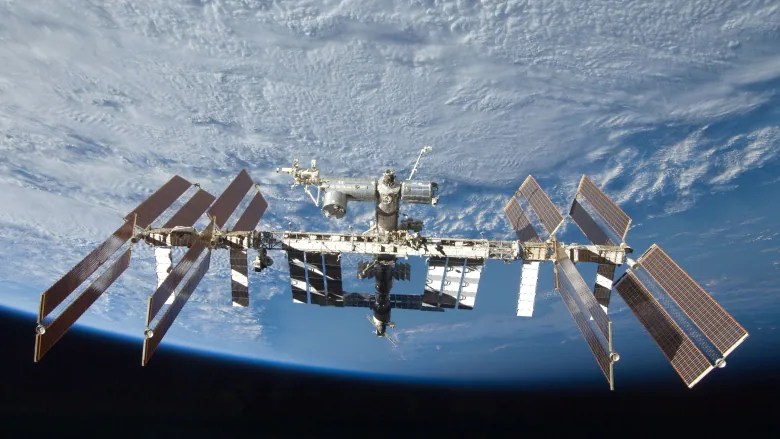
And below is the Lego International Space Station is you are looking for something more traditional (and less expensive).

It’s great to see that Lego is allowing kids to build their own space missions at home.

Image (Credit): Lego International Space Station playset. (Lego)

Some of you may have played with Star Wars and Star Trek sets as kids, but at least these latest Lego set have a ring of credibility. Star Wars helped you destroy the galaxy, whereas Star Trek seemed more interest in exploration and at least had the veneer of Artemis CXXV.

I checked on whether Chinese and Russian kids with have their own space playsets and found the Russian Roscosmos Soyuz MS spacecraft (still a concept) and China’s Jiuquan Satellite Launch Center (made by a Lego copycat), both shown below.

Image (Credit): Lego version of the Russian Roscosmos Soyuz MS spacecraft. (Lego Ideas)
Image (Credit): Sembo Blocks version of the Jiuquan Satellite Launch Center. (http://www.whatsonweibo.com)

The Jiuquan Satellite Launch Center playset comes with a Long March 2F rocket and an authentic warning sign stating, “Those stealing secrets will be caught, once they’re caught they will be killed [decapitated].”

Maybe even reality is not always the best model for play.

Extra: You can find more Lego space models at the NASA gift shop.

Space Mission: ESA’s Euclid Telescope

To follow up on the previous post, Russia also lost out on launching the European Space Agency’s (ESA) Euclid spacecraft. Russia was supposed to launch it on a Soyuz-ST/Fregat rocket this December, but the country’s invasion of Ukraine led to a change in plans. SpaceX will now be launching the spacecraft next year.

Euclid was designed to study dark energy and dark matter, and make a 3D-map of the Universe. The project includes scientists from 14 countries: Austria, Denmark, France, Finland, Germany, Italy, Netherlands, Norway, Spain, Switzerland, Portugal, Romania, the UK, and the US.

Euclid hopes to answer the following questions:

  • How did the Universe originate? What were the conditions just after the Big Bang, and how did these give rise to the large-scale structures we see today?
  • Why is the Universe expanding at an accelerating rate today?
  • Is dark energy – a term often used to signify the mysterious force behind this cosmic acceleration – real? If so, is it a constant energy density intrinsic to and spread throughout space, or a new force of nature that slowly evolves as the Universe expands?
  • What is the nature of dark matter, and how do neutrinos possibly contribute? Are there other as-yet-undetected massive particles in the Universe?

Once launched, Euclid will operate in the Sun-Earth Lagrange point 2 (L2), which is where the James Webb Space Telescope is located as well as ESA’s Gaia spacecraft. Gaia, launched in December 2013, is currently mapping the stars in the Milky Way galaxy. It seems L2 is the place to be.

NASA is contributing infrared flight detectors for one of Euclid’s two science instruments. You can read more about the NASA contribution here.

Has Russia Lost its Space Mojo?

Image (Credit): Russia’s Progress 76 resupply ship approaching the ISS in July 2020. (NASA)

Marina Koren’s article in The Atlantic, titled “The Russian Space Program Is Falling Back to Earth,” has plenty to say about the state of Russia’s space program. Her assessment is pretty bleak outside of the continued collaboration related to the International Space Station (ISS).

She notes:

Beyond the ISS, though, Russia’s space portfolio isn’t all that grandiose these days. Although cosmonauts fly into orbit regularly, Russia does not have a rover on the far side of the moon, as China has, or orbiters around Mars, as India and the United Arab Emirates have. It does not have a fleet of space telescopes like the U.S has. The Soviet Union was the first to send a human being to space, decades ago, and its early accomplishments are a distinct point of national pride. But the Russian space program has stalled for years, plagued by sparse budgets. And that was before Vladimir Putin’s onslaught on Ukraine: Some of the space plans the country still had in the works are falling apart. Now the Russian space effort may be more adrift than ever.

The Russian invasion of Ukraine may be the last straw. It led to the cancellation of various collaborative space projects with other nations. For instance, back in March the European Space Agency (ESA) was forced to suspend its joint ESA/Roscosmos ExoMars Rover mission to Mars.

China seems to be pulling ahead of Russia in the space race, with Russia taking a back seat on future projects, such as a Moon base or new space station. On the ground, Russia has shown it is not up to a war with Ukraine, making its role as a military power questionable. The article notes that Russia’s status as a space power is now also in question.

And shooting down another nation’s satellites will not be seen as a sign of strength in either the military or space arena.

A Day in Astronomy: Visit to Asteroid Gaspra

Image (Credit): Asteroid Gaspra in the asteroid belt, visited by the Galileo spacecraft on its way to Jupiter. (NASA/JPL/USGS)

On this day in 1991, NASA’s Galileo spacecraft flew by asteroid Gaspra, which is located in the asteroid belt between Mars and Jupiter. Galileo conducted a quick fly-by while flying towards Jupiter and its moons. The spacecraft also visited the asteroid Ida.

Asteroid Gasprawas first discovered back in 1916 by Russian astronomer G. N. Neujmin, who decided to name it after the Black Sea retreat of Gaspra, a Ukrainian spa town currently occupied by the Russians.

Here is some additional information from NASA about the asteroid, which has similar features to the asteroids now serving as moons to Mars (Phobos and Deimos):

A striking feature of Gaspra’s surface is the abundance of small craters. More than 600 craters, 100-500 meters (330-1650 feet) in diameter are visible here. The number of such small craters compared to larger ones is much greater for Gaspra than for previously studied bodies of comparable size such as the satellites of Mars. Gaspra’s very irregular shape suggests that the asteroid was derived from a larger body by nearly catastrophic collisions. Consistent with such a history is the prominence of groove-like linear features, believed to be related to fractures. These linear depressions, 100-300 meters wide and tens of meters deep, are in two crossing groups with slightly different morphology, one group wider and more pitted than the other. Grooves had previously been seen only on Mars’s moon Phobos, but were predicted for asteroids as well.

You car read more about the overall Galileo mission here.

Image (Credit): Artist’s rendering of the Galileo spacecraft arriving at Jupiter. (NASA)