Luna-25 Fails to Land (Properly) on the Moon

Image (Credit): Our Moon in all its glory. (NASA/JPL/USGS)

The message from Roscosmos was pretty bland:

During the operation, an abnormal situation occurred on board the automatic station, which did not allow the maneuver to be performed with the specified parameters.

Translated into normal speech, we learned that Luna-25 crashed during its attempted landing on the lunar surface.

This is a blow for Russia and Putin as well. The Soviet Union could threaten the world and run a terrific space program. The Russians are bogged down in Ukraine and unable to pick up a lunar program ceased about 50 years ago. It is sad to watch.

Roscosmos Director General Yury Borisov blamed the crash on Russia’s long absence from the Moon, stating,

The negative experience of interrupting the lunar program for almost 50 years is the main reason for the failures.

He may want to add corruption, economic sanctions, and horrible leadership to that list of reasons.

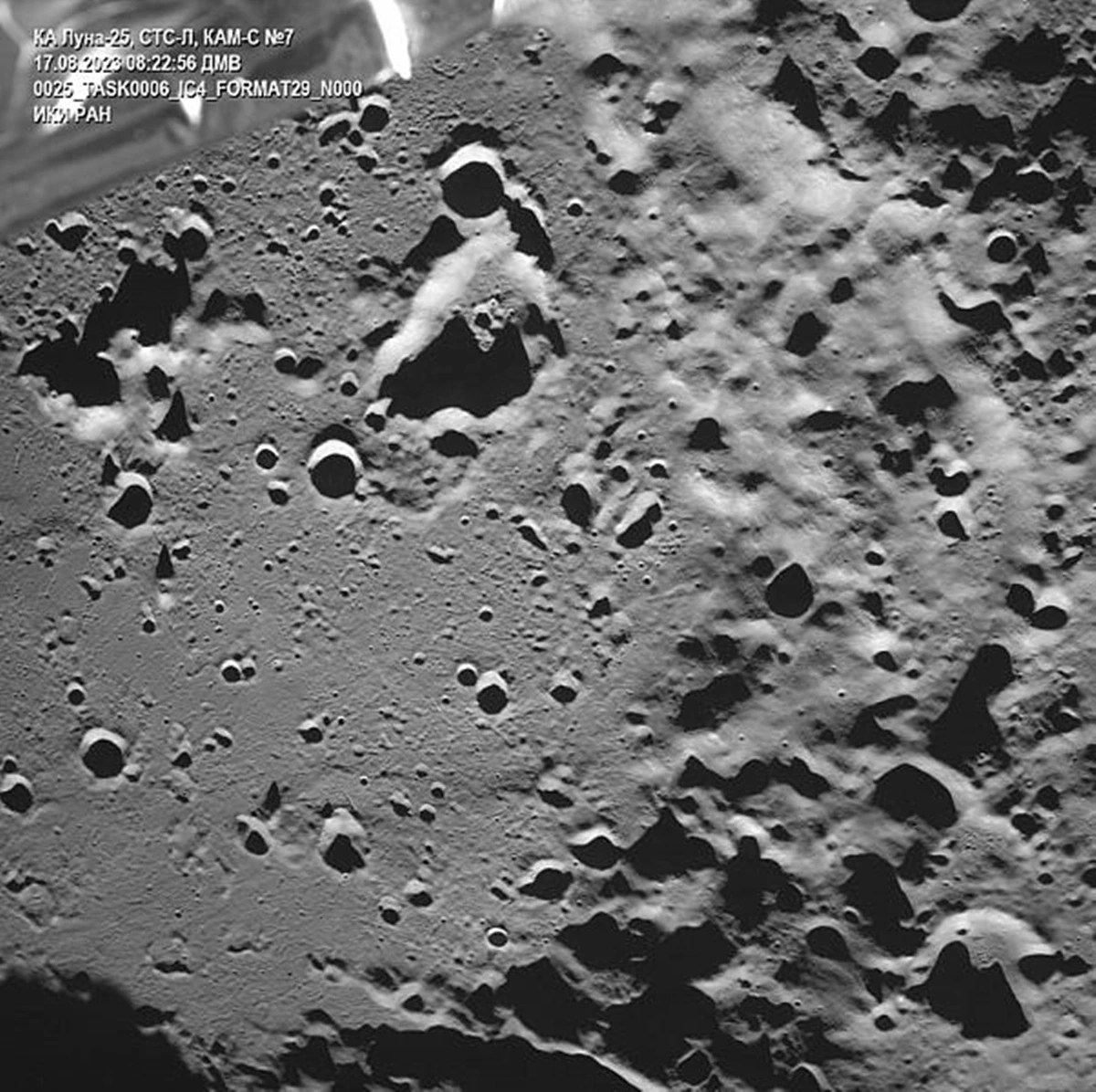
At least the Russian mission was able to share a few photos from orbit before it all ended.

The Moon’s south pole is still available for anyone who wants it. The Indian space program will give it a try this week. We can only wish them well as they fly over the Russian rubble.

A Day in Astronomy: The Launch of Voyager 2

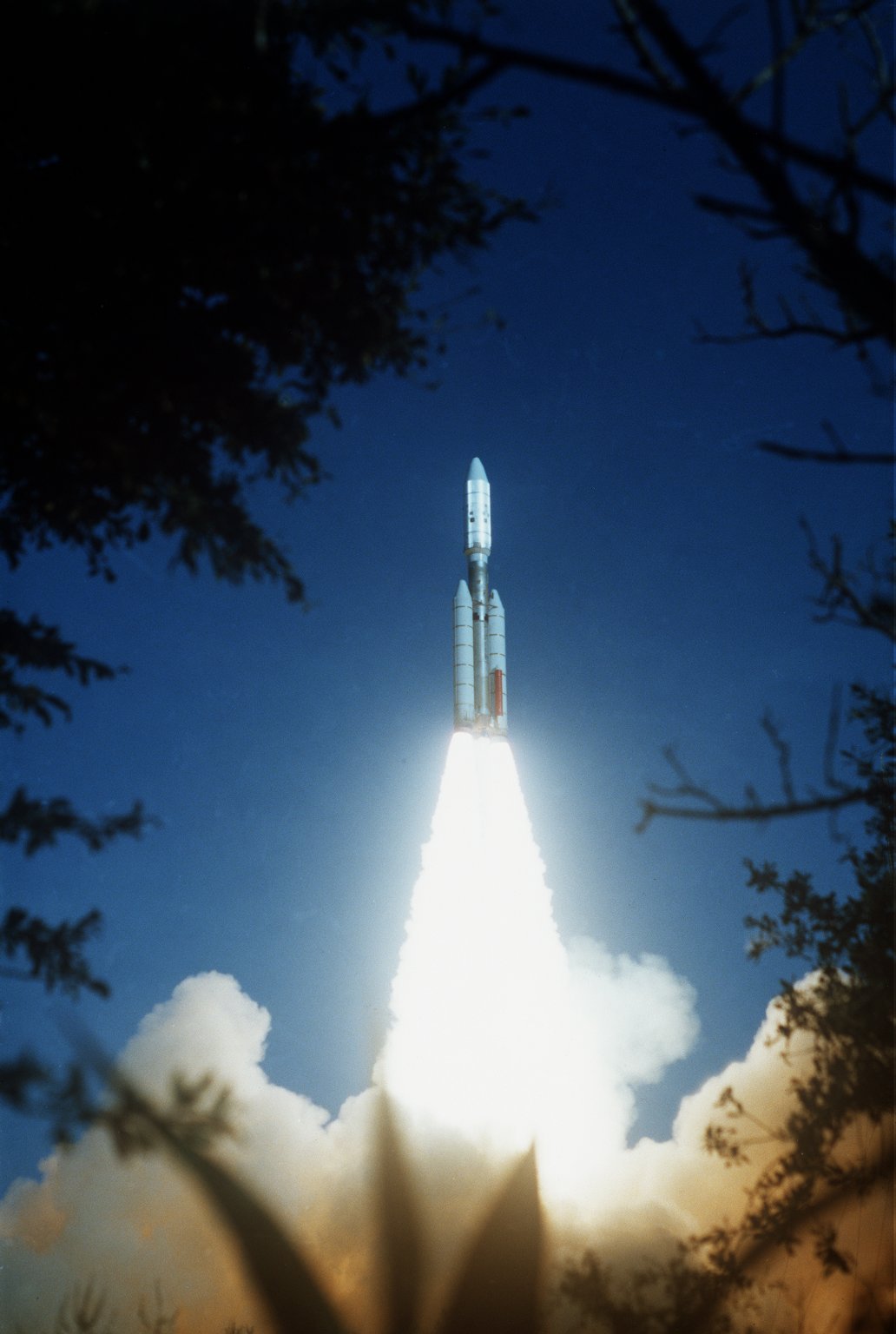
Image (Credit): The launch of Voyager 2. (NASA)

On this day in 1977, NASA launched the Voyager 2 space probe from the Kennedy Space Center at Cape Canaveral in Florida to study the solar system’s outer planets as well as interstellar space beyond the Sun’s heliosphere.

The Voyager 2 space probe is still talking to us as it continues its journey beyond the planets with a special message for anyone it may encounter.

During its initial mission, the space probe provided us with many images from an little known region of our solar system, including the image below of Jupiter’s moon Europa.

Image (Credit): Europa during Voyager 2’s closest approach. (NASA)

A New View of the Moon

Image (Credit): The Zeeman crater as captured by Luna-25. (IKI RAS)

The first images from Russia’s Luna-25 mission have arrived. They show the far side of the Moon permanently hidden from those of us here on Earth.

The spacecraft is now orbiting the Moon, which was last done by the Russians back in 1976. The lander is expected to be on the lunar surface this Monday if all goes well.

For the sake of science (leaving politics out of it), let’s hope for a successful landing.

Russia Returns to the Moon

Image (Credit): The Soyuz rocket carrying the Luna-25 lander launched from Russia’s Vostochny Cosmodrome. (Agence France-Presse)

Russia’s Luna-25 mission has begun with the successful lift-off of the Soyuz 2.1 rocket yesterday (2:11 a.m. on Friday Moscow time or Thursday at 7:10 pm EDT). After its planned arrival on August 21, Luna-25 will be searching for water at the lunar south pole.

The mission was off and then on again over the years as Russia became super cautious with its return to the Moon. The country’s invasion of Ukraine led to the loss of European partners as well as sanction-related shortages, so Russia has no one to blame but itself. Science was pushed aside as it bullied its neighbors.

One can only wonder whether Russia knows how to start anew. Even the name of the mission, Luna, is a Cold War leftover. It would be the same as NASA restarting the Apollo program rather than the more comprehensive and Mars-focused Artemis mission.

There is plenty of room on the Moon for multiple national missions. Moreover, similar to the International Space Station, it would be beneficial for US and Russian scientists to share data and ideas. It would just be easier if Russian rockets were only focused on the Moon rather than Ukrainian cities.

Space Stories: Fast-Spinning Martians, Artemis 3 Mission Issues, and an Ancient Star Cluster

Image (Credit): Image of Mars taken by the United Arab Emirates’ “Amal,” or “Hope,” probe. (Mohammed bin Rashid Space Center/UAE Space Agency, via AP)

Here are some recent stories of interest.

—Space.com : “Mars is Spinning Faster and its Days are Getting Shorter. Scientists Aren’t Sure Why“

The length of Mars’ day is shortening by three-quarters of a millisecond each year as the planet’s rotation spins up, according to new results from NASA’s InSight lander…Planetary scientists are not entirely sure why this is happening, but it is likely related to the redistribution of Mars’ mass, which can have an effect on the planet’s rotation like an ice skater pulling in their arms to spin faster. This redistribution might be caused by the accumulation of ice on Mars’ polar caps, experts believe, or by the surface itself slowly rebounding from residing under the weight of immense glaciers that existed at equatorial latitudes during the world’s most recent ice ages, which ended about 400,000 years ago.

—SpaceNews.com : “NASA Weighs Changes to Artemis 3 if Key Elements are Delayed“

NASA has left the door open for changing the scope of Artemis 3, currently set to be the first crewed lunar landing of the program, if key elements suffer major delays. Speaking at an Aug. 8 briefing at the Kennedy Space Center, Jim Free, NASA associate administrator for exploration systems development, said the Artemis 3 mission still has a formal launch date of December 2025 but that he was monitoring potential delays in hardware needed for the mission. “We may end up flying a different mission if that’s the case,” he said. “If we have these big slips out, we’ve looked at if can we do other missions.” Artemis 3 could also change based on the outcome of Artemis 2, he added.

—ScienceNews.com : “A Star Cluster in the Milky Way Appears to be as Old as the Universe“

One of the oldest known objects in the universe is wandering around the Milky Way. Star cluster M92, a densely packed ball of stars roughly 27,000 light-years from Earth, is about 13.8 billion years old, researchers report in a paper submitted June 3 to arXiv.org. The newly refined age estimate makes this clump of stars nearly the same age as the universe. Refining the ages of clusters like M92 can help put limits on the age of the universe itself. It can also help solve cosmic conundrums about how the universe evolved.