Two Space Probes will be Mothballed

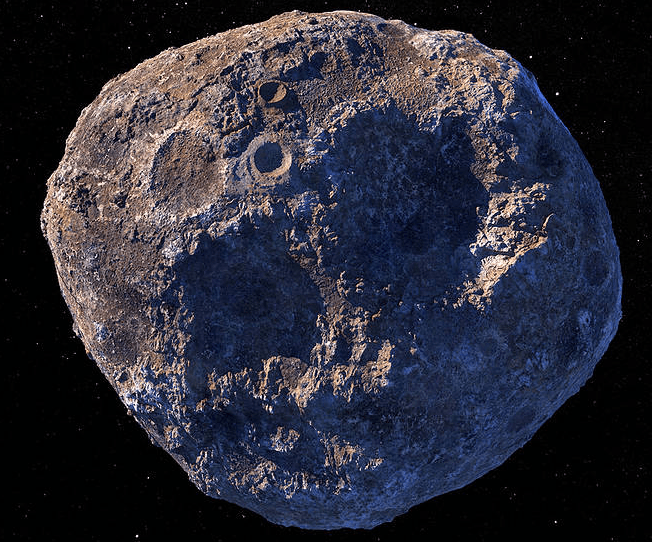
Image (Credit): Illustration of the asteroid Psyche. (NASA)

The delay in the launch of the Psyche spacecraft to visit the asteroid Psyche is having ripple effects on another NASA mission. The $50 million Janus mission with its two probes was supposed to accompany Psyche on the mission to observe two binary asteroid. However, too much time has passed for this separate mission be be accomplished due to the binary asteroids now being too distant from the main mission. Hence, the Janus probes will have to sit this one out. ARSTechnica has a full story on this development.

The good news is that the Psyche spacecraft should be launched this October. So not all is lost.

This will be a tough budget year under this Congress, so NASA will be lucky if it can keep most of its missions on track.

Rocket Launches: Good and Bad News for Lunar Launches

Image (Credit): Chandrayaan-3 launch on July 14, 2023. (Aijaz Rahi/AP)

First, the good news is that India successfully launched a rocket to the Moon last Friday. The Chandrayaan-3 mission, or “moon craft,” includes an orbiter as well as a rover that will explore the southern pole of the Moon. This is India’s second attempt to land on the lunar surface after a failed attempt back in 2019.

The Indian rover is expected to land on the Moon on August 23rd. You can read more about the mission on the Indian government’s mission page.

The other rocket news involves a setback with the United Launch Alliance’s (ULA) new heavy-lift rocket. The launch of the new rocket, the Vulcan Centaur, was delayed until later this year after it was determined that “minor reinforcements” were still needed with the rocket’s upper stage. The upper stage failed back in March.

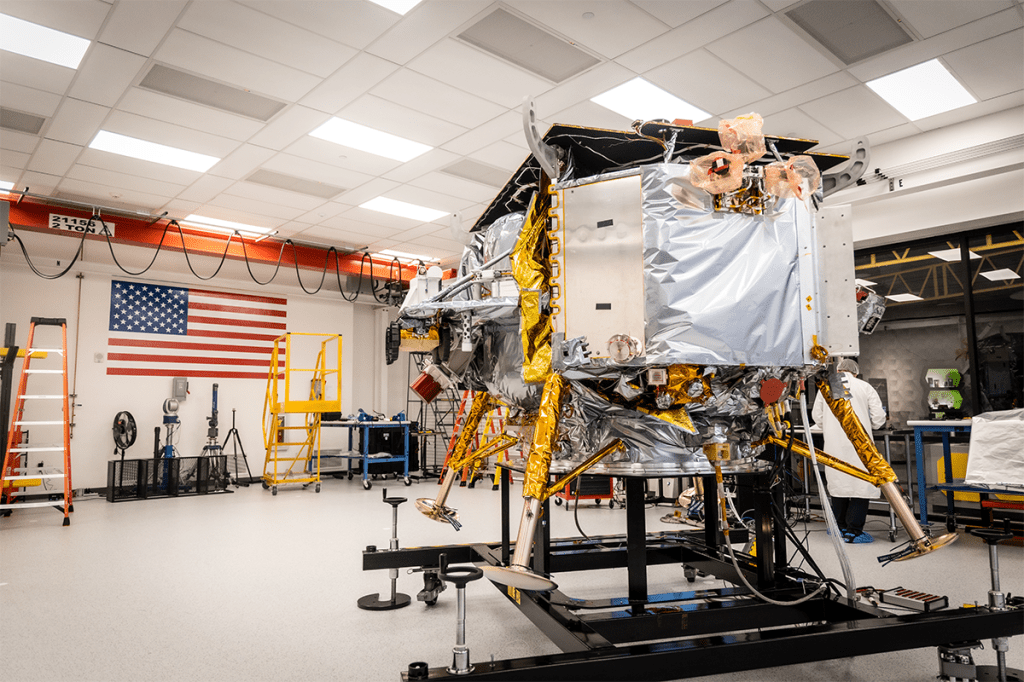
The Vulcan Centaur is the successor to ULA’s Atlas V and Delta IV rockets. It’s planned first launch includes Astrobotic’s Peregrine Lunar Lander (shown below). NASA notes that the lander’s scientific objectives for the upcoming Moon mission include:

…to study the lunar exosphere, thermal properties and hydrogen abundance of the lunar regolith, magnetic fields, and the radiation environment. It will also test advanced solar arrays. 

Image (Credit): Newly assembled Peregrine lunar lander being readied for its journey to Florida for integration with the Vulcan Centaur. (Astrobiotic)

Space Stories: Ingenuity Mars Helicopter is Back, Reclaiming More Water on the ISS, and Directly Imaging an Exoplanet

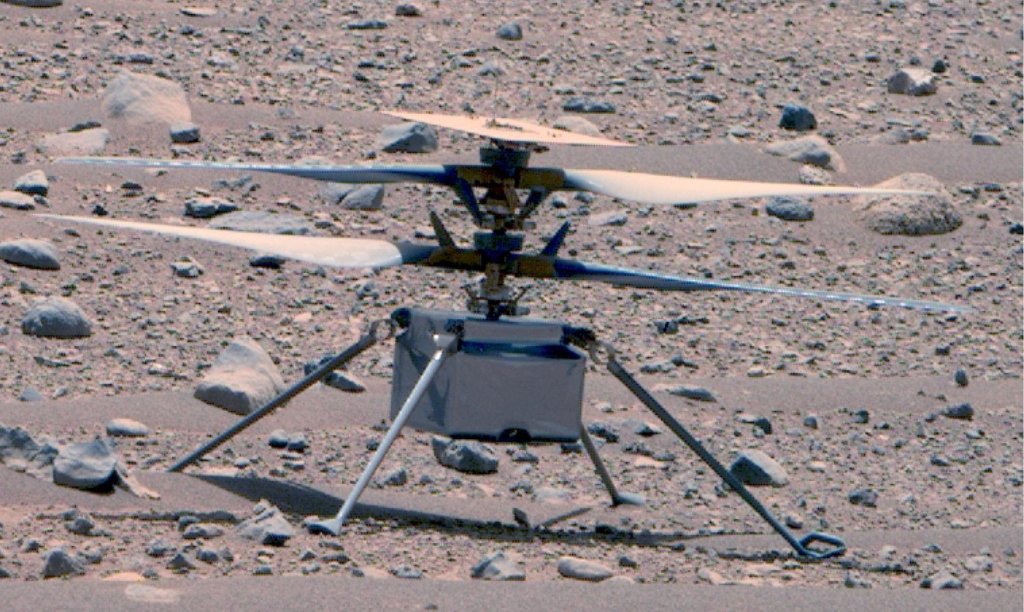
Image (Credit): NASA’s Ingenuity Mars Helicopter. (NASA/JPL-Caltech/ASU/MSSS)

Here are some recent stories of interest.

—NASA: “NASA’s Ingenuity Mars Helicopter Phones Home“

The 52nd flight of NASA’s Ingenuity Mars Helicopter is now in the official mission logbook as a success. The flight took place back on April 26, but mission controllers at NASA’s Jet Propulsion Laboratory in Southern California lost contact with the helicopter as it descended toward the surface for landing. The Ingenuity team expected the communications dropout because a hill stood between the helicopter’s landing location and the Perseverance rover’s position, blocking communication between the two. 

—Phys.org: “NASA Achieves Water Recovery Milestone on International Space Station“

Astronauts on interplanetary missions will be a bit less thirsty after a new NASA system succeeded at reclaiming 98% of waste water aboard the International Space Station (ISS) by converting things like urine into a drinkable state. Future crewed deep space missions that will last months or even years will be very different from any that have come before. Until now, astronauts have either carried their own supplies along or relied on regular visits from cargo ships. As to waste products, these were simply disposed of in a variety of ways. Unfortunately, deep space missions don’t have that luxury.

—SCI.News: “Astronomers Directly Image Jupiter-Like Exoplanet around Nearby Young Star“

AF Leporis is a bright F8V star located about 87.5 light-years away from Earth in the constellation of Lepus. Also known as AF Lep, HD 35850, HIP 25486 and HR 1817, the star has an age of 24 million years and a mass of 1.2 solar masses. The star hosts a young exoplanet, AF Leporis b (AF Lep b), which is located about 8 times the Earth-Sun distance and is among the first ever discovered using a technique called astrometry. This method measures the subtle movements of a host star over many years to help astronomers determine whether hard-to-see orbiting companions, including planets, are gravitationally tugging at it.

ESA’s Euclid Space Telescope Safely Launched

Credit: ESA

Earier today, the European Space Agency’s (ESA) Euclid Space Telescope was safely launched from Cape Canaveral on a Space X Falcon 9 rocket (though the original plan was to use a Russian Soyuz rocket until the invasion nixed that idea). The space telescope is destined for the Sun-Earth Lagrange point 2 (L2), which is an average distance of 1 million miles beyond Earth’s orbit. It will join the James Webb Space Telescope.

In addition to the 1.2 meter diameter telescope, the mission includes two scientific instruments: a visible-wavelength camera (the VISible instrument, VIS) and a near-infrared camera/spectrometer (the Near-Infrared Spectrometer and Photometer, NISP). 

The focus of the new space telescope will be to create a 3D map of the universe to better understand dark matter and dark energy. As noted on the ESA’s website, Euclid hopes to answer these questions:

  • What is the structure and history of the cosmic web?
  • What is the nature of dark matter?
  • How has the expansion of the Universe changed over time?
  • What is the nature of dark energy?
  • Is our understanding of gravity complete?

It is a tall order for this new telescope. Astronomer Isobel Hook from the UK’s Lancaster University put it this way to BBC News:

It will be like setting off on a ship before people knew where land was in different directions. We’ll be mapping out the Universe to try to understand where we fit into it and how we’ve got here – how the whole Universe got from the point of the Big Bang to the beautiful galaxies we see around us, the Solar System and to life.

Space Stories: Launch of the Euclid Space Telescope, Mercury Flyby, and a Super Hot Brown Dwarf

Image (Credit): Artist’s rendering of the ESA’s Euclid Space Telescope. (ESA, CC BY-SA 3.0 IGO)

Here are some recent stories of interest.

—NASA/JPL: “NASA to Provide Coverage for Launch of ESA ‘Dark Universe’ Mission“

The ESA (European Space Agency) and SpaceX are targeting no earlier than 11:11 a.m. EDT (8:11 a.m. PDT) Saturday, July 1, to launch the Euclid spacecraft. Euclid is an ESA mission with contributions from NASA that will shed light on the nature of dark matter and dark energy, two of the biggest modern mysteries about the universe.

—Sky&Telescope: “BepiColombo Mission Makes Third Mercury Flyby“

An intrepid space mission had another brief glimpse of its final destination this week, as the European Space Agency’s BepiColombo flew past Mercury for a third time. The team confirms that the spacecraft is in good health post flyby, and that all instruments performed as planned. “Everything went very smoothly with the flyby and the images from the monitoring cameras taken during the close-approach phase of the flyby have been transmitted to the ground,” said Ignacio Clerigo (ESA) in a recent press release. “While the next Mercury flyby isn’t until September 2024, there are still challenges to tackle in the intervening time.”

—Phys.org: “Discovery of a Brown Dwarf Hotter than the Sun“

An international team of astronomers has discovered a planet-like object that is hotter than the sun. Their report has been accepted for publication in the journal Nature Astronomy and is currently available on the arXiv pre-print server. Brown dwarfs are sometimes called failed stars and do not qualify for the category of either a planet or a star. In this new effort, the researchers have identified one that orbits a star so closely that its temperature is hotter than our sun.