Space Quote: Russia Moves Past Moon Crash and Readies for a New Space Station

Image (Credit): View of the International Space Station from  a Crew Dragon spacecraft. (NASA)

“Mistakes are mistakes. It is a shame for all of us. This is space exploration and everyone understands that. It is experience that we can use in the future.”

-Statement by Russia’s President Putin, as reported by Reuters, addressing the Luna-25 crash on the Moon in August. He added that the lunar missions will continue. He also said Russia also hopes to have its first segment of a new space station in operation by 2027, stating, “As the resources of the International Space Station run out, we need not just one segment, but the entire station to be brought into service.”

Space Quote: The 8 Billion-Year-Old Signal

Image (Credit): The Australian Square Kilometre Array Pathfinder (ASKAP) radio telescope in Western Australia, which detected the 8 billion-year-old signal. (https://www.icrar.org/)

“We were lucky to be looking at that little spot in the sky for that one millisecond after the eight billion years the pulse had travelled to catch it.”

-Statement by Ryan Shannon, an astrophysicist at Australia’s Swinburne University and co-author of a study describing the signal that was received June 10th last year, as quoted by CBS News. The same article noted that “The pulse was so powerful that — in under a millisecond — it released as much energy as the sun emits over 30 years.”

Space Quote: Rich Bounty from the Asteroid Bennu Sample

Image (Credit): Outside view of the OSIRIS-REx sample collector. You an see sample material from asteroid Bennu on the middle right. (NASA/Erika Blumenfeld & Joseph Aebersold)

“As we peer into the ancient secrets preserved within the dust and rocks of asteroid Bennu, we are unlocking a time capsule that offers us profound insights into the origins of our solar system…The bounty of carbon-rich material and the abundant presence of water-bearing clay minerals are just the tip of the cosmic iceberg. These discoveries, made possible through years of dedicated collaboration and cutting-edge science, propel us on a journey to understand not only our celestial neighborhood but also the potential for life’s beginnings. With each revelation from Bennu, we draw closer to unraveling the mysteries of our cosmic heritage.”

Statement by Dante Lauretta, OSIRIS-REx principal investigator, regarding the recently-arrived sample collected from asteroid Bennu. NASA and its partners are expected to study the sample for the next two years to learn more about the asteroid and our solar system.

Space Quote: Astronomers Have a New Term – JuMBOs

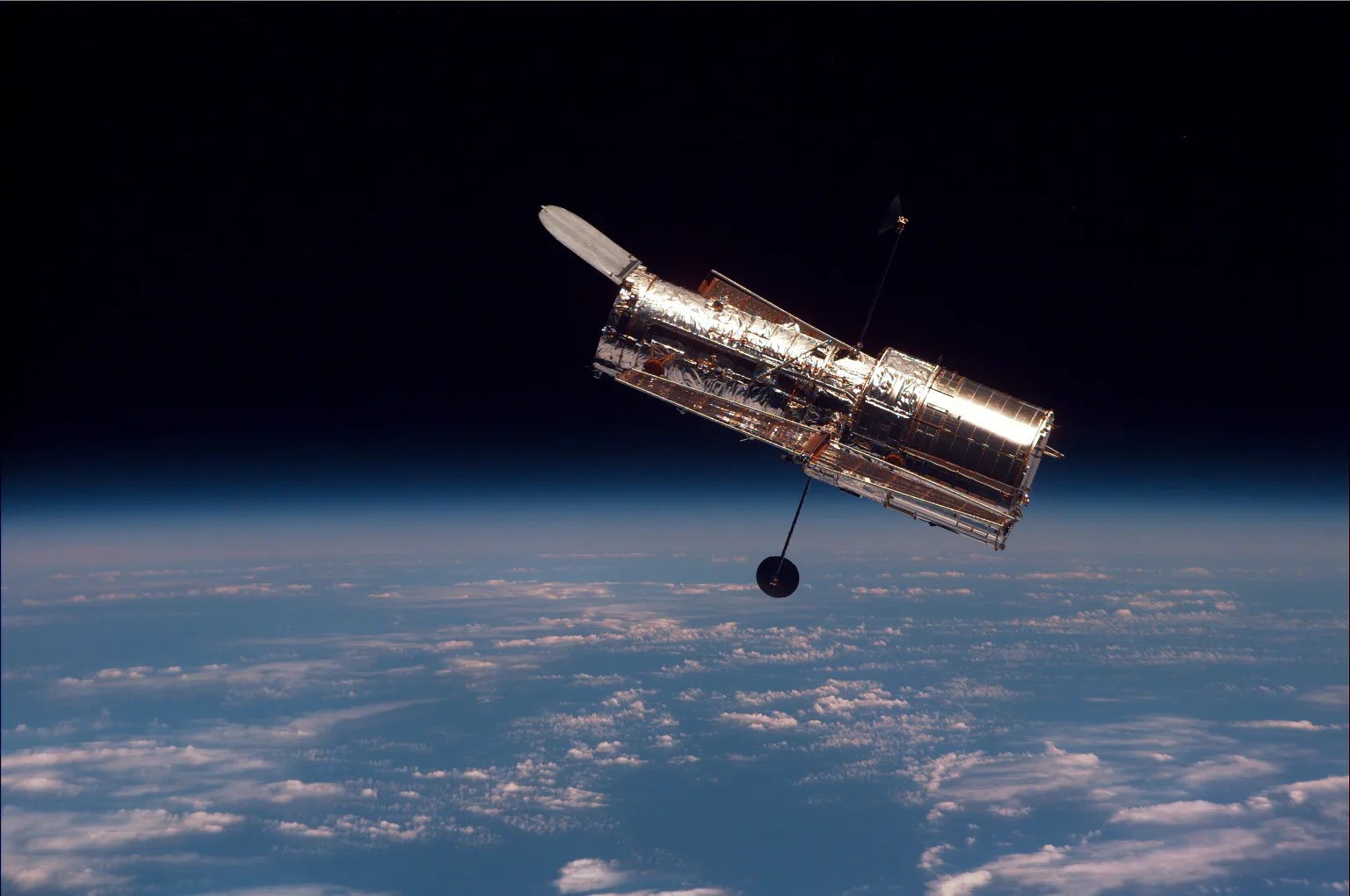
Image (Credit): Image of Jupiter taken by the Hubble Space Telescope. (Amy A. Simon/NASA/European Space Agency)

“We find them down as small as one Jupiter mass, even half a Jupiter mass, floating freely, not attached to a star…Physics says you can’t even make objects that small. We wanted to see, can we break physics? And I think we have, which is good.”

Statement by Mark McCaughrean, a senior adviser for science and exploration at the European Space Agency, regarding Jupiter Mass Binary Objects (JuMBO). These objects were spotted by the James Webb Space Telescope in the Orion Nebula. They may be a new astronomical body as they do not fit into the normal star or planet category.

Space Quote: New Horizons for New Horizons

Image (Credit): Artist’s rending of the New Horizons spacecraft approaching Pluto. (Johns Hopkins University Applied Physics Laboratory/Southwest Research Institute (JHUAPL/SwRI))

“The New Horizons mission has a unique position in our solar system to answer important questions about our heliosphere and provide extraordinary opportunities for multidisciplinary science for NASA and the scientific community…The agency decided that it was best to extend operations for New Horizons until the spacecraft exits the Kuiper Belt, which is expected in 2028 through 2029.”

Statement by Nicola Fox, NASA’s associate administrator for NASA’s Science Mission Directorate in Washington, regarding the plans for the New Horizons spacecraft. The NASA statement notes that starting in fiscal year 2025, the New Horizons spacecraft will focus on gathering unique heliophysics data, which does not preclude additional flybys of later identified items in the Kuiper Belt.