Two Japanese Commercial Missions, Only One Reaching Space

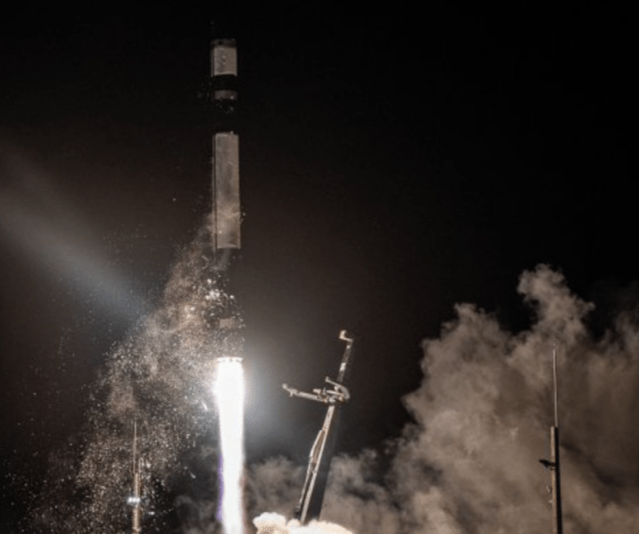
Image (Credit): Rocket Lab’s Electron rocket successfully deploying a fourth synthetic aperture radar satellite to Synspective’s Earth-observation constellation. (Rocket Lab)

Earlier this week, Japanese cargo was launched towards space by two commercial companies. Unfortunately, only of the rockets made it into space.

On March 13, US company Rocket Lab launched a payload for Japan’s Synspective, an Earth-imaging company, from its launch site in New Zealand. The launch was successful and the StriX-3 satellite was placed into Earth orbit.

The second launch on the same day by Japan’s Space One, which would have been the first commercial launch by a Japanese firm, ended quickly when the rocket burst into flames just a few seconds after liftoff. The rocket was carrying a mock-up of a government spy satellite.

Space One President Masakazu Toyoda stated, “We will find out the cause as soon as possible and clarify our measures to prevent a recurrence.”

Getting it right may take time, as we are seeing with SpaceX’s Starship. Japan wants to maintain strong launch capabilities in both the public and private sectors, and this is just part of the process to make that happen.

Image (Credit): Photos showing the launch and midair explosion of Space One’s Kairos rocket. (KYODO)

Pic of the Week: Third Launch of the Starship

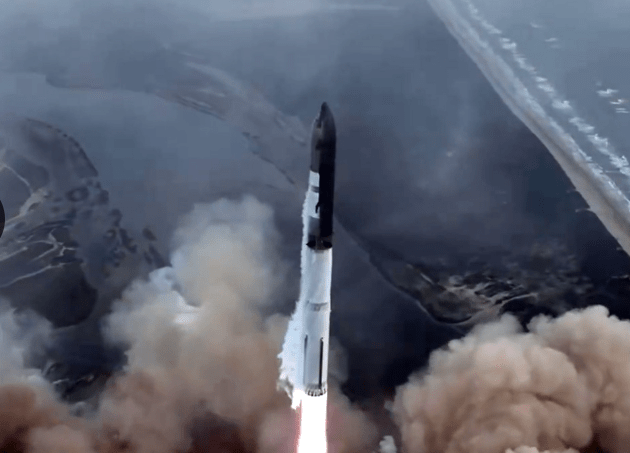
Image (Credit): Starship launch from Boca Chica, Texas on March 14, 2024. (SpaceX)

This week’s pic is from this morning’s launch of the SpaceX Starship from the facility in Boca Chica, Texas. The flight went well until the point of reentry, when SpaceX lost contact and the rocket was lost. The plan had been for both a successful launch and return of the Starship. The Starship’s rocket booster also experienced a malfunction, causing it to crash in the Gulf of Mexico.

Each launch provides more information as it inches towards greater success. We can only hope the progress aligns with NASA’s goals for a return to the Moon.

What is Musk Up to in Ukraine?

Image (Credit): A starlink satellite dish. (Visitukraine.today)

Last year we learned that Elon Musk denied the Ukrainians access to Starlink when operating in the occupied portions of their country. He stated he did not want to be “complicit in a major act of war and conflict escalation.” And yet now we learn that Russia may be using Starlink in this same territory to illegally attack Ukraine, and Mr. Musk seems flustered and cannot seem to believe it is even possible.

It is unlikely that SpaceX is unable to determine where its equipment is being operated and whether it is being used by an invading party to suppress a sovereign nation. Mr. Musk has done a lot of good for Ukraine, yet his statements about Ukraine’s need to give up territory and now this kerfuffle seem to be part of his improper straying into world affairs that are not his affairs. Maybe it is time for the U.S. government to get involved if he is allowing an enemy to use his equipment to destroy a U.S. ally.

When asked about this Russian misuse issue, SpaceX stated:

If SpaceX obtains knowledge that a Starlink terminal is being used by a sanctioned or unauthorized party, we investigate the claim and take actions to deactivate the terminal if confirmed.

Let’s hope this is the case. It may not be an easy task to sort out the users if both Ukranian and Russian troops are operating in the same area, but it may be critical to the survival of Ukranian forces at a time that Washington is sitting on its hands and incapable of assisting Ukraine nor its NATO partners depending on such assistance.

These are bleak times for Ukraine. It would be unfortunate if all the good will Starlink has acquired is erased with this misdirection of company assets.

Note: Former Congressman Adam Kinzinger tweeted, “Why is @elonmusk shilling for Russia now> Why is he still a US govt contractor?” None of this is good for Musk, SpaceX, or America.

Update: Now we read that Elon Musk may be blocking Taiwan’s use of Starlink. I thought the US government was running Starlink under a separate program called Starshield. Mr. Musk really needs to be taken out of the equation.

Pic of the Week: Launch of the PACE Mission

Image (Credit): Engines of the SpaceX rocket carrying the PACE spacecraft into orbit. (SpaceX)

This week’s image is from SpaceX, which launched NASA’s Plankton, Aerosol, Cloud, ocean Ecosystem (PACE) mission into orbit earlier today (the Falcon 9 rocket engines are shown above). 

The spacecraft is designed to monitor the Earth from orbit. NASA explains the mission is this way:

Information collected throughout PACE’s mission will benefit society in the areas of ocean health, harmful algal bloom monitoring, ecological forecasting, and air quality. PACE also will contribute new global measurements of ocean color, cloud properties, and aerosols, which will be essential to understanding the global carbon cycle and ocean ecosystem responses to a changing climate.

The PACE’s mission is designed to last at least three years, though the spacecraft is loaded with enough propellant to expand that timeline more than three times as long.

Space Stories: Preparing for a Commercial Space Station, Ukraine Protests New ISS Crew, and Metal 3D Printing in Space

Image (Credit): Artist’s rendering of the Starlab commercial space station in orbit. (Starlab Space)

Here are some recent stories of interest related to space stations.

—SpaceNews: “Starlab Commercial Space Station to Launch on Starship“

Starlab Space, the joint venture developing the Starlab commercial space station, has selected SpaceX’s Starship to launch the station on a single flight. Starlab Space, a joint venture of Voyager Space and Airbus Space and Defence, announced Jan. 31 it reached an agreement with SpaceX to launch the Starlab station on Starship. The companies did not disclose terms of the agreement or a projected launch date, although a spokesperson for Starlab Space said the company was confident that Starlab would be launched before the decommissioning of the International Space Station, currently scheduled for 2030.

—Kyiv Post: “Ex-Russian Military Officer Joins NASA for ISS Mission; Ukrainian Outrage Follows“

Alexander Grebenkin, a former Russian military officer and current Roscosmos cosmonaut, is set to travel to the International Space Station as part of the NASA team, as announced on the NASA website, where Ukrainians have commented their outrage. NASA, in collaboration with SpaceX, plans to launch Crew-8 to the International Space Station no earlier than Thursday, Feb. 22.

—Aviation Week Network: “European Space Agency Launches ‘First’ Metal 3D Printer To ISS“

The European Space Agency (ESA) has launched what it says is the “first metal 3D printer” to be hosted on the International Space Station (ISS). While plastic 3D printers have been used aboard the ISS since 2014, a machine that prints stainless steel would be new and could allow astronauts greater self-sufficiency, including the ability to make complex metallic structures in orbit, as well as at future Moon and Mars bases, ESA said Jan. 30.