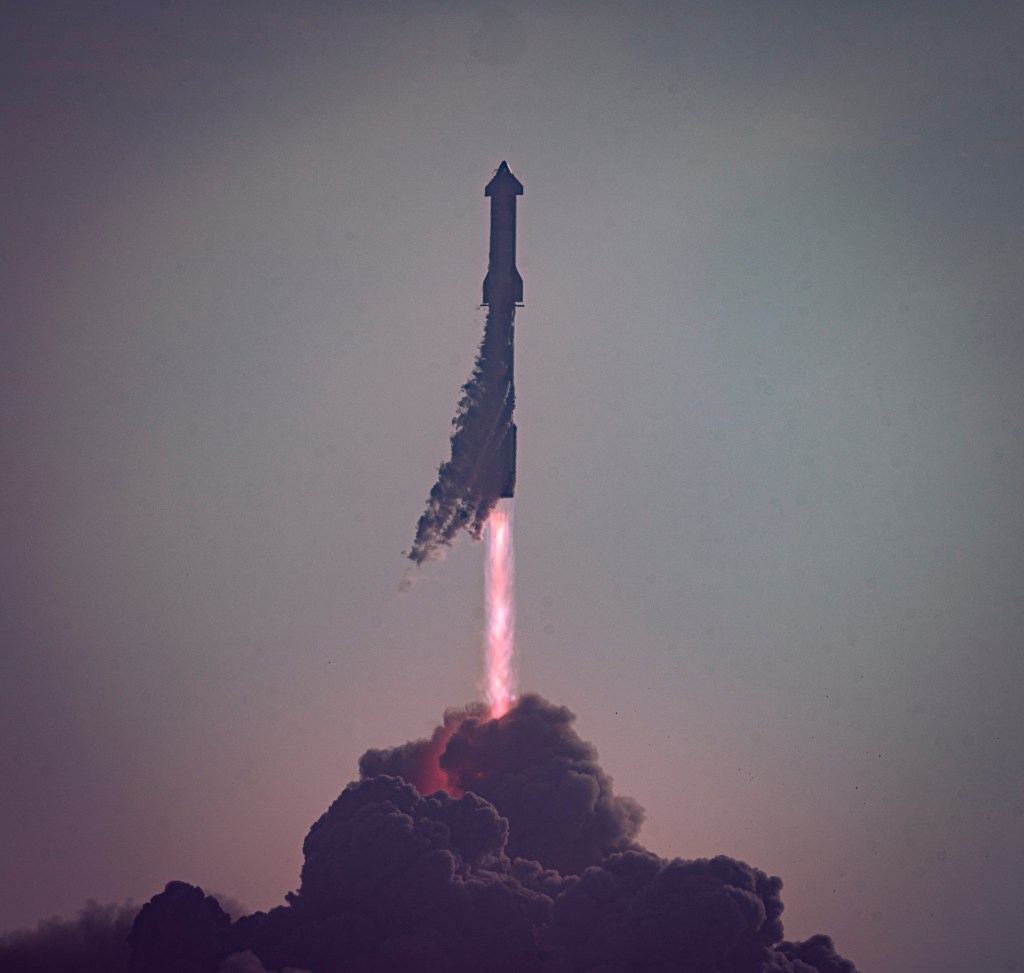
Image (Credit): The Starship before the “rapid unscheduled disassembly.” (SpaceX)
“As if the flight test was not exciting enough, Starship experienced a rapid unscheduled disassembly before stage separation.”
-Statement by SpaceX following the self-destruct of the Starship rocket after it started to spin out of control. What a way to put a spin on a malfunction. I am sensing the rapid unscheduled disassembly of the English language.
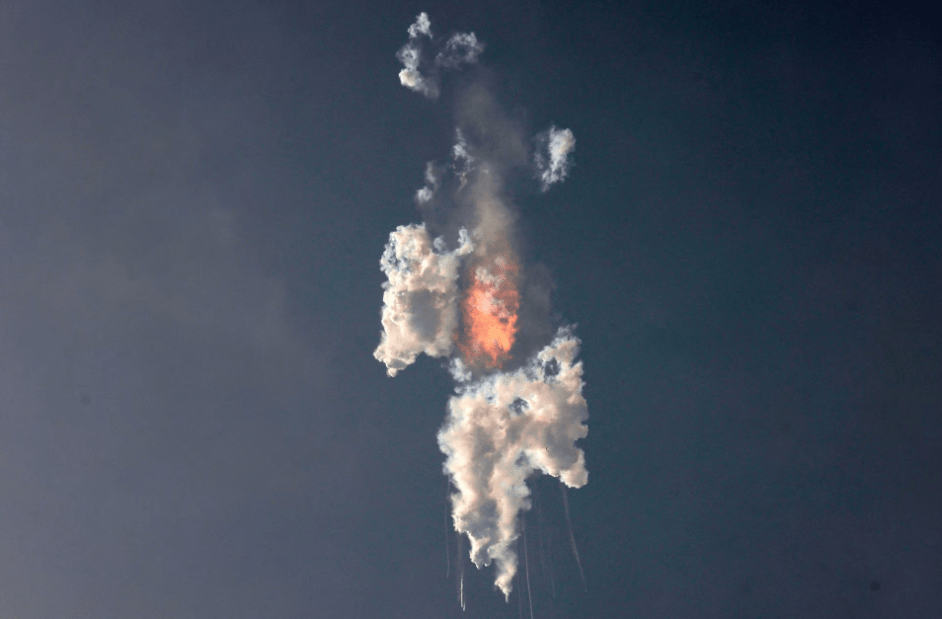
Image (Credit): Starship explosion after launch on April 20, 2023. (Rueters)
This week’s image is from today’s launch of the SpaceX Starship. The rocket experienced engine troubles and exploded about four minutes following the launch after reaching a height of 25 miles. The goal of this mission was to reach at least 90 miles.
At 8:33 a.m. CT, Starship successfully lifted off from the orbital launch pad for the first time. The vehicle cleared the pad and beach as Starship climbed to an apogee of ~39 km over the Gulf of Mexico – the highest of any Starship to-date. The vehicle experienced multiple engines out during the flight test, lost altitude, and began to tumble. The flight termination system was commanded on both the booster and ship. As is standard procedure, the pad and surrounding area was cleared well in advance of the test, and we expect the road and beach near the pad to remain closed until tomorrow.
With a test like this, success comes from what we learn, and we learned a tremendous amount about the vehicle and ground systems today that will help us improve on future flights of Starship.
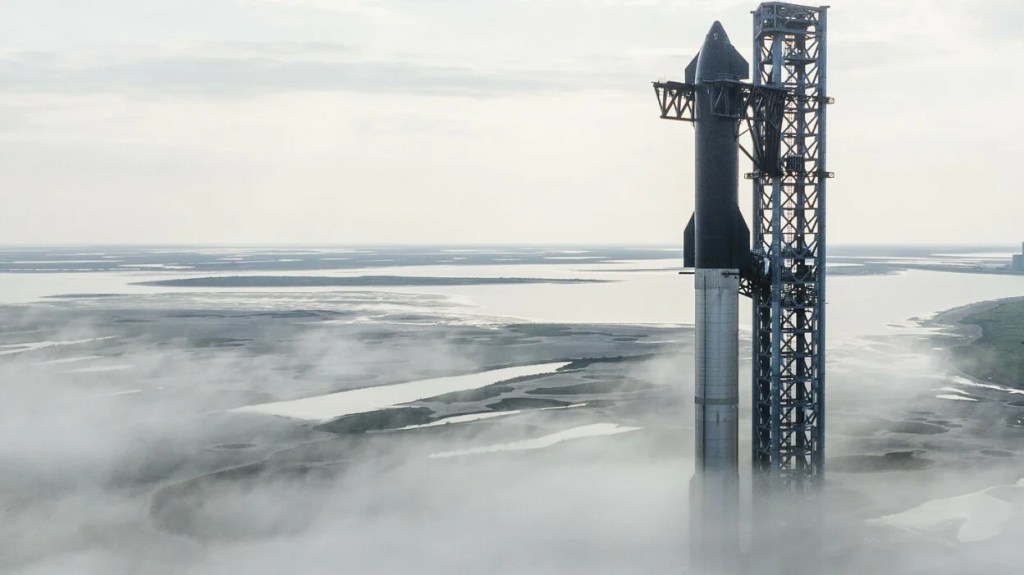
Image (Credit): The SpaceX Starship at the launch pad. (SpaceX)
Today was supposed to be the day SpaceX flight tested the Starship from its facility in Texas, but less than 10 minutes before the launch a problem with the Super Heavy booster put everything on hold.
The Starship is a key part of NASA’s Artemis III mission to place astronauts on the Moon, so the tests are crucial to move that project forward.
SpaceX will need to wait at least 48 hours before attempting another launch.
The Washington Post recently published a story, “China’s military aims to launch 13,000 satellites to rival Elon Musk’s Starlink,” that can only terrify astronomers here on Earth trying to view the stars. The title says it all – the space race continues to clutter the skies with more and more low-Earth satellites broadcasting back to the surface. It is a dippy Dyson Sphere that contains scientists rather than energy.
Starlink’s success in Ukraine really bothers the Chinese, who see the network as a lifeline for Taiwan as well. The article quotes Chinese military researchers, who state:
Once the Starshield is completed, it will be tantamount to installing networked surveillance cameras all over the world. At that time, military operations including the launch of ballistic missiles, hypersonic missiles and fighter jets will hardly escape the monitoring of the United States.
I would prefer the space race between the US and China focused on the Moon or Mars rather than local invasions, but that is the state of the world at the moment. Not that the race to the Moon was a completely tame affair. For instance, the US contemplated exploding a nuclear bomb on the surface of the Moon to impress the Russians and everyone else. Fortunately, Project A119 never happened.