Space Mission: Saudi Arabians to Visit the International Space Station

Image (Credit): Nighttime photograph of Riyadh, Saudi Arabia, taken in November 2012 by one of the Expedition 33 crew members aboard the ISS. (NASA)

While the Biden Administration appears to have its issues with Saudi Arabia, this is not stopping the visit of two Saudi Arabian private astronauts to the International Space Station (ISS). Space News reports that NASA has confirmed that a male and female astronaut from Saudi Arabia will travel to the ISS next spring aboard a SpaceX rocket as part of the privately-run Axiom Space. Plans for this mission were reported back in September.

This will be the second Axiom Space mission to the ISS. Other missions are being planned involving additional countries, including astronauts from Turkey, Hungary, Canada, and the United Arab Emirates. Mission participants need to be approved by a NASA-chaired panel that includes the countries involved with the ISS program.

Axiom Space will send four crew members to the ISS for 12 days. Here is the pitch for the second mission, or Ax-2:

The Axiom Mission 2 (Ax-2) astronauts are part of the latest class of space explorers and Axiom’s next crew to advance a new method of access to the International Space Station (ISS) and low-Earth orbit. Aboard the orbiting laboratory, the four-person, multinational crew will conduct extensive research, investigate novel technologies, and engage with audiences around the world as champions of science, technology, engineering, mathematics, and the arts. Their efforts will continue to lay the groundwork and establish key capabilities for the future Axiom Station, the world’s first commercial space station.  

You may recall that Saudi Arabia also signed onto the Artemis Accords over the summer. The Accords were established in 2020 to affirm each signatory’s commitment to sustainable space exploration “guided by a common set of principles that promote the beneficial use of space for all of humanity.”

All of this shows that space still remains a realm that does not need to be militarized or abused even if we have yet to figure out to resolve these issues here on Earth. Whatever problems with have with our neighbors, it’s good to see we are building some things together.

As noted earlier, even if the press on this Ax-2 mission demonstrates some unity, let’s just hope these “astronauts” are there for more than a joy ride. I am not convinced that space tourism is what we need. But given that Axiom Space is considering its own commercial space station, maybe there is some interest in real work in space by these parties.

Space Stories: A New Martian Crater, the Final Piece of China’s Space Station, and the Falcon Heavy Flies Again

Image (Credit): Recent impact crater on the surface of Mars. It was formed on December 24, 2011 in the Amazonis Planitia region. (NASA/JPL-Caltech/University of Arizona)

Here are some recent stories of interest.

NASA: “NASA’s InSight Lander Detects Stunning Meteoroid Impact on Mars

NASA’s InSight lander recorded a magnitude 4 marsquake last Dec. 24, but scientists learned only later the cause of that quake: a meteoroid strike estimated to be one of the biggest seen on Mars since NASA began exploring the cosmos. What’s more, the meteoroid excavated boulder-size chunks of ice buried closer to the Martian equator than ever found before – a discovery with implications for NASA’s future plans to send astronauts to the Red Planet.

Aljazeera: “Final Module Docks at China’s ‘Heavenly Palace’ Space Station

The final module required for the completion of China’s Tiangong space station has successfully docked with the core structure, state media say, a key step in Beijing’s ambitious plans for space exploration…The module – named Mengtian, which means “heavenly dream” – was launched on Monday on a Long March 5B rocket from the Wenchang launch centre on China’s tropical island of Hainan, CCTV reported.

Wall Street Journal: “SpaceX’s Falcon Heavy Rocket, World’s Most Powerful Rocket, Launches After Three-year Hiatus

SpaceX’s Falcon Heavy — a towering, three-pronged vehicle that is the most powerful operational rocket in the world — returned to the skies on Tuesday for the first time since mid-2019. The rocket launched at 9:41 a.m. ET from NASA’s Kennedy Space Center in Florida, hauling satellites to space for the US military in a secretive mission dubbed USSF-44.

Space Mission: ESA’s Euclid Telescope

To follow up on the previous post, Russia also lost out on launching the European Space Agency’s (ESA) Euclid spacecraft. Russia was supposed to launch it on a Soyuz-ST/Fregat rocket this December, but the country’s invasion of Ukraine led to a change in plans. SpaceX will now be launching the spacecraft next year.

Euclid was designed to study dark energy and dark matter, and make a 3D-map of the Universe. The project includes scientists from 14 countries: Austria, Denmark, France, Finland, Germany, Italy, Netherlands, Norway, Spain, Switzerland, Portugal, Romania, the UK, and the US.

Euclid hopes to answer the following questions:

  • How did the Universe originate? What were the conditions just after the Big Bang, and how did these give rise to the large-scale structures we see today?
  • Why is the Universe expanding at an accelerating rate today?
  • Is dark energy – a term often used to signify the mysterious force behind this cosmic acceleration – real? If so, is it a constant energy density intrinsic to and spread throughout space, or a new force of nature that slowly evolves as the Universe expands?
  • What is the nature of dark matter, and how do neutrinos possibly contribute? Are there other as-yet-undetected massive particles in the Universe?

Once launched, Euclid will operate in the Sun-Earth Lagrange point 2 (L2), which is where the James Webb Space Telescope is located as well as ESA’s Gaia spacecraft. Gaia, launched in December 2013, is currently mapping the stars in the Milky Way galaxy. It seems L2 is the place to be.

NASA is contributing infrared flight detectors for one of Euclid’s two science instruments. You can read more about the NASA contribution here.

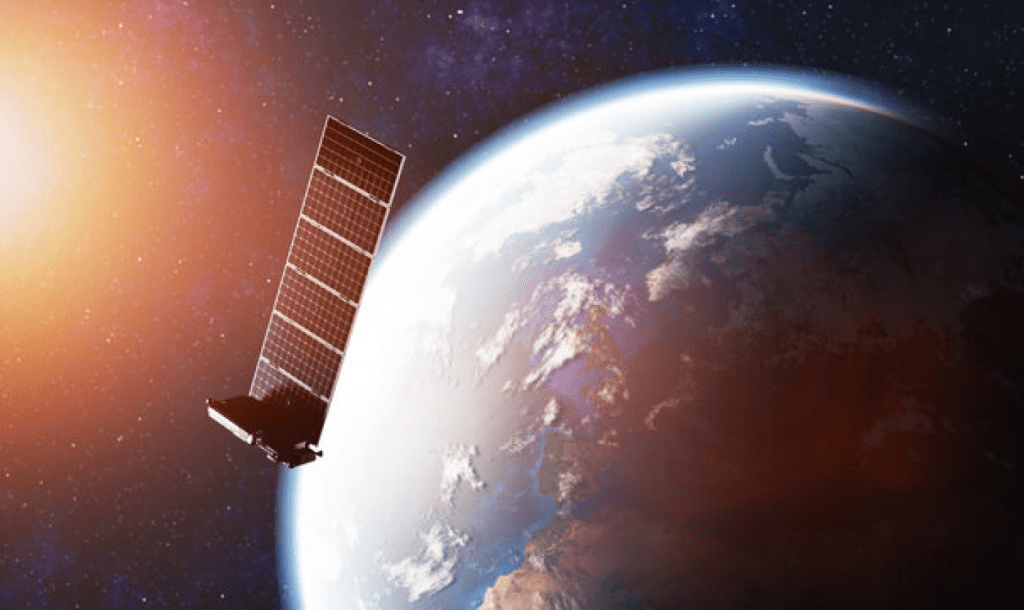
Space Quote: Starlink Threatened by the Russians

Image (Credit): November 13, 2021 SpaceX launch of 53 Starlink satellites. (SpaceX)

“Quasi-civilian infrastructure may be a legitimate target for a retaliatory strike.”

-Statement to the United Nations by Russian senior foreign ministry official Konstantin Vorontsov in reference to attacking SpaceX’s Starlink satellites being used by the Ukrainian military as it pushes back the Russian invasion. In a Reuters article, “Russia’s Anti-satellite Threat Tests Laws of War in Space,” Iridium chief executive Matt Desch stated, “If somebody starts shooting satellites in space, I’d imagine it would quickly make space unusable.”

Space Stories: Venusian Balloons, Sun Observations, and a Private Moon Trip

Image (Credit): Test of the one-third scale prototype aerobot designed to withstand the corrosive chemicals in Venus’ atmosphere. (Near Space Corporation)

Here are some recent stories of interest.

NASA.gov: “JPL’s Venus Aerial Robotic Balloon Prototype Aces Test Flights

A scaled-down version of the aerobot that could one day take to the Venusian skies successfully completed two Nevada test flights, marking a milestone for the project…The shimmering silver balloon ascended more than 4,000 feet (1 kilometer) over Nevada’s Black Rock Desert to a region of Earth’s atmosphere that approximates the temperature and density the aerobot would experience about 180,000 feet (55 kilometers) above Venus. Coordinated by Near Space, these tests represent a milestone in proving the concept’s suitability for accessing a region of Venus’ atmosphere too low for orbiters to reach, but where a balloon mission could operate for weeks or even months.

SkyandTelescope.org: “‘Chinese Observatory Will Study Violent Events on the Sun

China has launched a solar observatory to study solar flares and eruptions, and their connection with the Sun’s magnetic field…[the Advanced Space-based Solar Observatory (ASO-S)] is planned to operate at 720 kilometers (447 miles) above Earth’s surface in a Sun-synchronous orbit that will allow it to observe the Sun at all times. Its primary, four-year mission is timed to make the most of the 2024–2025 solar maximum, when the Sun is at its most active during its 11-year cycle.

Space.com: “‘SpaceX Says its 2nd Private Starship Trip Around the Moon will Help Make Humanity Multiplanetary

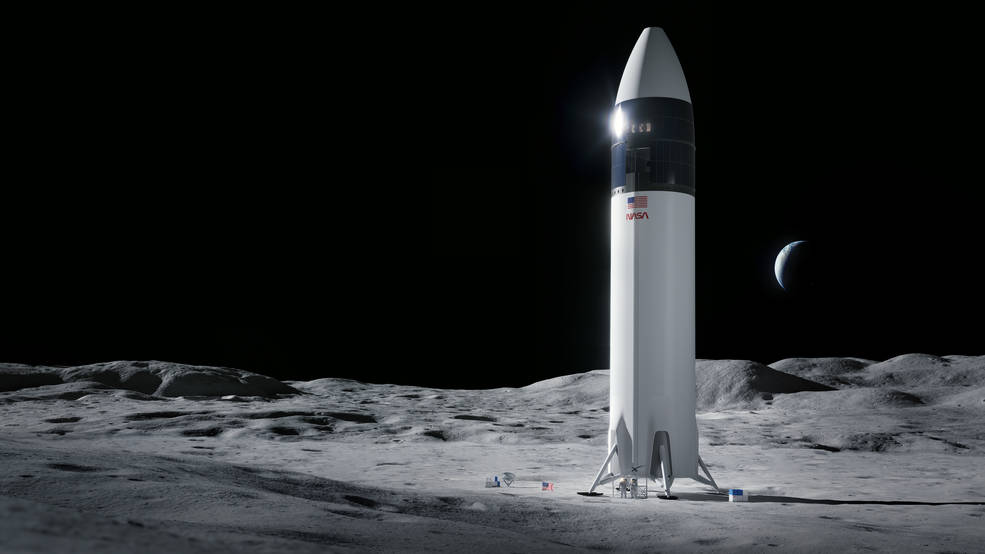
SpaceX’s newly announced tourist mission to the moon could help humanity extend its footprint far beyond Earth, company representatives say. That mission, which was revealed today (Oct. 12), will send wealthy entrepreneur Dennis Tito, his wife Akiko and 10 other people on a weeklong journey around the moon aboard SpaceX’s huge Starship vehicle, which is still in development. Who those 10 other passengers will be is unknown; only the Titos have reserved seats at the moment.