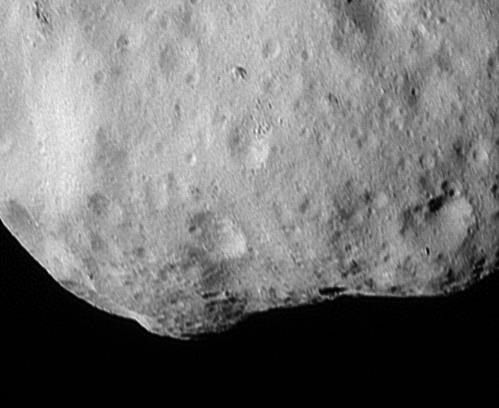
Take a look at the image above. Can you determine where this image originated? Take a guess and then check your answer by going to the “Where is This? The Answer Sheet” page.

Take a look at the image above. Can you determine where this image originated? Take a guess and then check your answer by going to the “Where is This? The Answer Sheet” page.

With the Star Wars series Andor back for a second season, it is only appropriate that astronomers believe they found a Tatooine-like exoplanet. You may remember Tatooine as the planet where Luke Skywalker spent his youth.
The exoplanet is located about 120 light-years away and orbits two brown dwarfs (also called failed stars because they failed to ignite like a regular star and therefore have low luminosity). As noted below, binary star exoplanets have been found in the past, so this is not unprecedented.
Here is the abstract from the study, Evidence for a Polar Circumbinary Exoplanet Orbiting a Pair of Eclipsing Brown Dwarfs, if you want to read more:
One notable example of exoplanet diversity is the population of circumbinary planets, which orbit around both stars of a binary star system. There are, so far, only 16 known circumbinary exoplanets, all of which lie in the same orbital plane as the host binary. Suggestions indicate that circumbinary planets could also exist on orbits highly inclined to the binary, close to 90°, polar orbits. No such planets have been found yet, but polar circumbinary gas and debris discs have been observed, and if these were to form planets, then those would be left on a polar orbit. We report strong evidence for a polar circumbinary exoplanet, which orbits a close pair of brown dwarfs that are on an eccentric orbit. We use radial velocities to measure a retrograde apsidal precession for the binary and show that this can only be attributed to the presence of a polar planet.
Of course, the Tatooine in Star Wars was in a galaxy far, far away. Hence, this are not the exoplanet you are looking for.

Elon Musk has decided to step away from the Department of Government Efficiency (DOGE) after watching his reputation crater, his car company falter, and his rockets litter the Caribbean. Plus he damaged NASA, the space agency that funds his company SpaceX. Maybe he finally realized that a plumber has no business pretending to be brain surgeon.
The most disturbing part of Musk’s short time with the government is his lies about fraud, attacks on government employees, and horrible math regarding savings. For example, regarding the US Agency for International Development, he called it a “criminal organization” and then said it is “Time for it to die.” He never took the time to even understand the organization or verify his “findings”, most of which were wrong. I cannot believe a single Fortune 500 company would want this guy anywhere near its operations. So why would you trust any organization headed by this man?
We can only hope this means he will start to take the development of Starship seriously, since his company is still contracted to assist NASA with its Artemis mission to the Moon. So far in 2025, SpaceX has lost both of its Starship rockets (#7 and #8) over the Caribbean, though it was scheduled to conduct 25 tests in 2025, or twice a month.
Mr. Musk may know nothing about government programs, but he is supposed to know something about rockets. He cannot bully or lie his way out of this one. As with Tesla, performance and promises is everything, and he seems to be struggling.
And now before he can come close to meeting his NASA commitments, he is promising to send Starship to Mars next year, tweeting ““Starship will hopefully depart for Mars at the end of next year with Optimus explorer robots!”.
Maybe it is time to stop listening to this man.
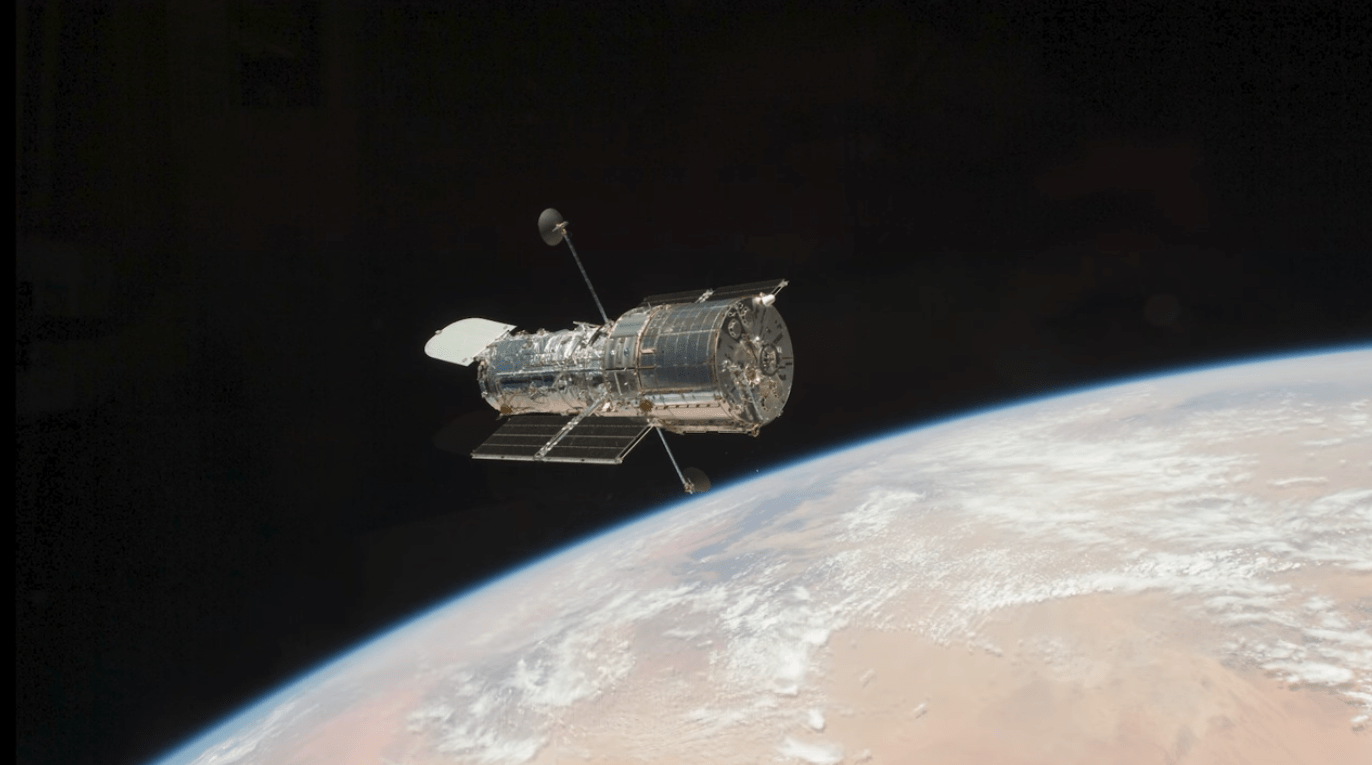
This year marks the 35th anniversary of the Hubble Space Telescope. It was launched on April 24, 1990 aboard the Space Shuttle Discovery. The telescope was expected to have a service life of 35 years, though it is still going strong with various proposals to update the telescope and keep it operating for years to come.
To mark the occasion, NASA put together a video highlighting missions and related images. The celebration will continue throughout the year with new images and other selected items.
Here are a few interesting facts related to the Hubble:


On this day in 1962, the United States launched the Ranger 4 lunar probe from Cape Canaveral. Its mission was to photograph the lunar surface, place scientific equipment on the Moon, and perform other tests before crashing into the surface of the Moon. A computer glitch caused the probe to crash on the far side of the Moon before it could send back any useful data. Nonetheless, it was the first US spacecraft to reach another moon or planet (the Soviets had reached the Moon in 1959) as well as the first spacecraft to reach the far side of the Moon.
NASA launched a total of nine probes to the Moon under the Ranger program, with the last missions – Rangers 7,8, and 9 – being successful. Rangers 1 and 2 never left Earth orbit, while Rangers 3 and 5 missed the moon altogether. As noted above, Ranger 4 made it to the Moon, but not where is was supposed to land. And Ranger 6 made it to the Moon, but experienced a camera failure.
The Ranger missions set the stage for the later Apollo missions, which allowed the US to put the first man on the Moon.
Note: This NASA paper, Lunar Impact: A History of Project Ranger, provides greater detail on the earlier missions.

