ISS Crew Safely Back from ISS via Russian Spacecraft

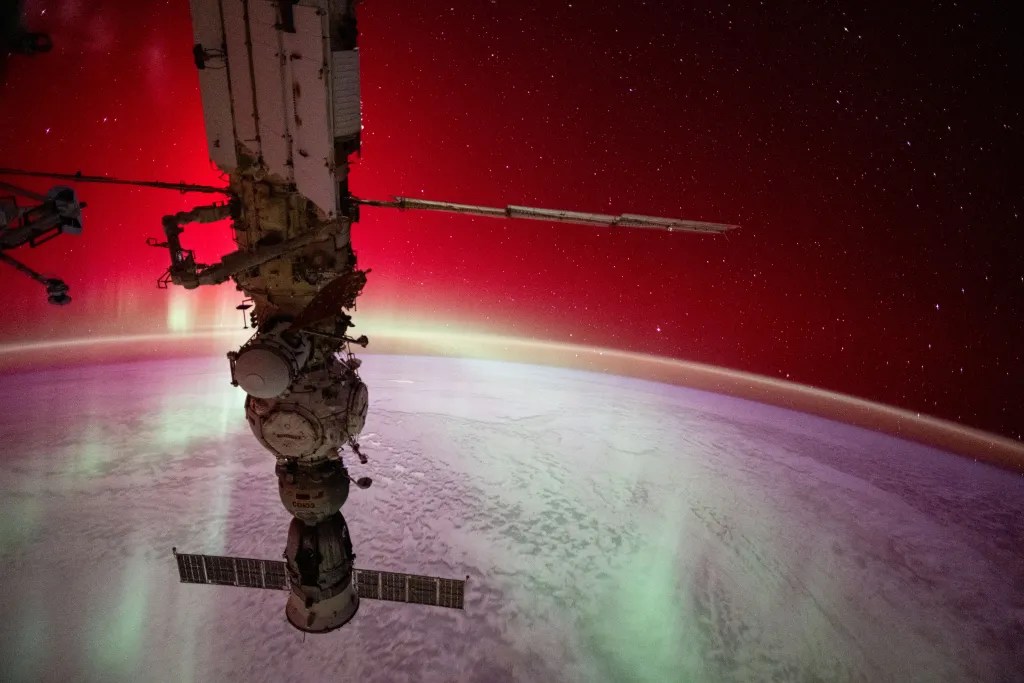
Image (Credit): The Soyuz MS-25 crew ship attached to the ISS as an aurora radiates brightly above the Indian Ocean. (NASA)

Astronaut Tracy C. Dyson is now safely back on Earth thanks to the Russian Soyuz MS-25 spacecraft, which also returned cosmonauts Oleg Kononenko and Nikolai Chub. The no drama return from the International Space Station (ISS) was very different from the recent Boeing Starliner return. The press barely paid attention, which is a good thing.

NASA highlighted Dyson’s six-month tour in this way:

Spanning 184 days in space, Dyson’s third spaceflight covered 2,944 orbits of the Earth and a journey of 78 million miles as an Expedition 70/71 flight engineer. Dyson also conducted one spacewalk of 31 minutes, bringing her career total to 23 hours, 20 minutes on four spacewalks.

I just hope that future Starliner’s can intentionally place astronauts in space for six-months or longer and then return to Earth with little attention. That type of clockwork will be success.

NASA is Looking for Help with its Upcoming Moon Mission

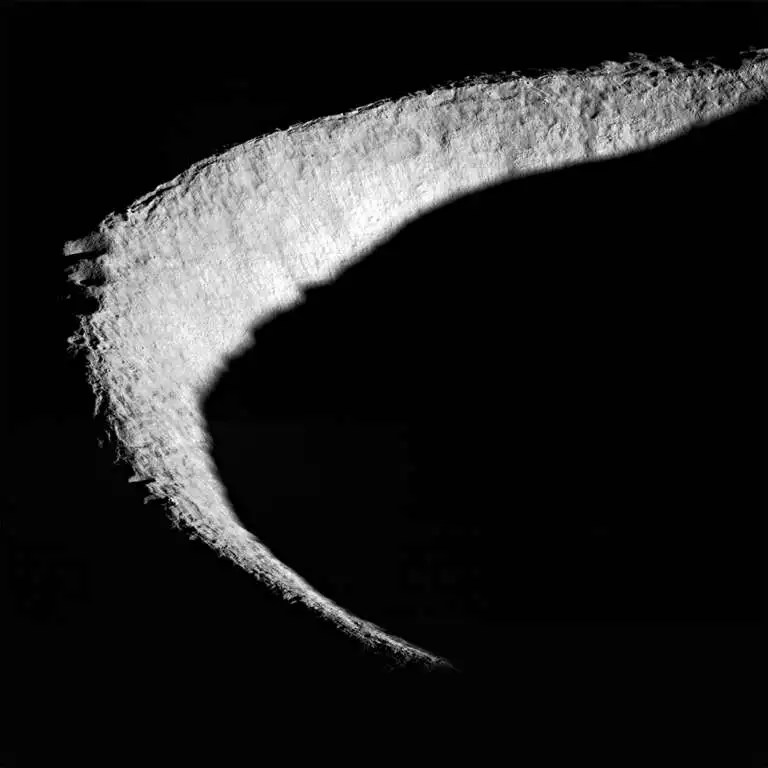
Image (Credit): Shackleton crater at the Moon’s south pole. (NASA/GSFC/Arizona State University)

With NASA planning to return to the Moon shortly as part of the Artemis mission, it is tying up loose end and figuring out what else it may need. It seems that one of the needed items is a better way to conduct its work at the lunar south pole. This comes down to two challenges, both of which have a payout to the winner.

Here’s NASA’s description of the two challenges:

Challenge 1: NASA is seeking an orienteering aid that will help the astronauts navigate on traverses away from the lunar lander and return back. While there were similar devices available to the Apollo astronauts, NASA is looking for new and unique solutions. Among other considerations, devices must be accurate, easy to use, able to be used on the moon’s surface by an astronaut wearing pressurized gloves. If your solution is one of the best, you could be eligible for a share of the $15,000 prize purse.

Challenge 2: NASA is looking for assistance in getting to and mapping the bottom of Shackleton Crater. The design must work in the extreme conditions of the lunar south pole and Shackleton Crater, map the crater, characterize and quantify what is in the crater, and send the data back to be used for future missions. If you can solve this challenge by describing your design concept in detail, you could be eligible for a share of the $30,000 prize purse.

You might wonder why NASA is only thinking of these needs now. I am hoping NASA has some less refined solutions and is only seeking for a better way.

If you have an idea or two, be sure to share it with NASA by November 25, 2024.

Good luck!

Video: An Argument Against Grabby Aliens

Image (Credit): Grabby alien model. (grabbyaliens.com)

Check out a recent video from the YouTube channel Cool Worlds titled “Do ‘Grabby Aliens’ Solve The Fermi Paradox?” for an interesting argument against a now popular idea.

Grabby aliens, as defined by Google AI, are

…a hypothetical type of “loud” alien civilization that are known for inhibiting the development of other technological civilizations in their area of influence. The concept of quiet and loud aliens is used to model hypotheses about the existence of extraterrestrial intelligence, particularly in the context of the Fermi Paradox.

You can read all about this theory at grabbyaliens.com. Then you can listen to Professor David Kipping provide three reasons why he does not believe this theory is workable.

As always, he provides an entertaining and enlightening view of the cosmos.

Space Quote: Maryland Delegation Wants NASA to Explain Canceling the OSAM-1 Mission

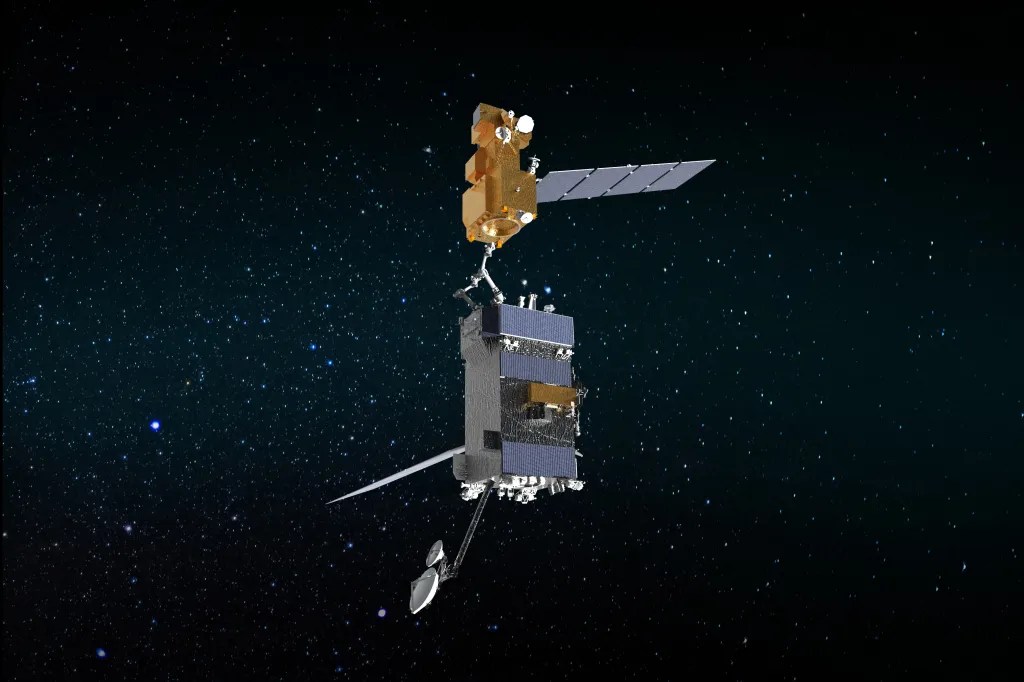
Image (Credit): Artist’s rendering of the OSAM-1 (bottom) docking with a satellite. (NASA)

“As members of the Maryland Delegation, we write to request information regarding NASA’s decision to cancel the On-Orbit Servicing, Assembly, and Manufacturing 1 (OSAM-1) mission on September 4, 2024. OSAM-1 is a space technology mission developed to demonstrate NASA’s capabilities to extend the lifespans of government-owned satellites and other satellites that were not originally built or intended to be serviced in space…On September 4, 2024, members of the Maryland delegation were notified of NASA’s intent to proceed with canceling the OSAM-1 mission. NASA officials cited feasibility of the 2026 launch plan, risk tolerance, lack of interest from potential partners per verbal communication, return on investment, and interest in expanding other Space Technology Mission Directorate (STMD) priorities. The Delegation wishes to note that return on investment and other STMD priorities are extraneous factors that Congress did not include in its direction. Furthermore, we have concerns regarding the Agency’s decision-making process.”

-Statement by Maryland Democratic Senators and Congress members in a September 16, 2024 letter to NASA regarding the status of the OSAM-1 mission. NASA explained on its website that it re-evaluated its earlier decision to cancel the mission and found it was still proper to cancel the mission, noting “factors that informed the decision were cost, schedule, and technical risk associated with the 2026 launch plan, the return on investment of flying OSAM-1 technology, uncertain technology infusion path to industry, and impacts on other NASA technology development efforts.” While these are serious reservations, the growing level of space debris in orbit is also a serious concern. Hopefully, NASA has a back-up plan if it does not move forward with this specific mission.

Pic of the Week: Galactic Emoji

Image (Credit): A composite image of Arp 107.(NASA, ESA, CSA, STScI)

This week’s image comes from the James Webb Space Telescope. It shows two colliding galaxies creating a unique image from the telescope’s viewpoint.

Here is more information about the image from NASA:

Smile for the camera! An interaction between an elliptical galaxy and a spiral galaxy, collectively known as Arp 107, seems to have given the spiral a happier outlook thanks to the two bright “eyes” and the wide semicircular “smile.” The region has been observed before in infrared by NASA’s Spitzer Space Telescope in 2005, however NASA’s James Webb Space Telescope displays it in much higher resolution. This image is a composite, combining observations from Webb’s MIRI (Mid-Infrared Instrument) and NIRCam (Near-Infrared Camera)...Webb has captured these galaxies in the process of merging, which will take hundreds of millions of years. As the two galaxies rebuild after the chaos of their collision, Arp 107 may lose its smile, but it will inevitably turn into something just as interesting for future astronomers to study. Arp 107 is located 465 million light-years from Earth in the constellation Leo Minor.