
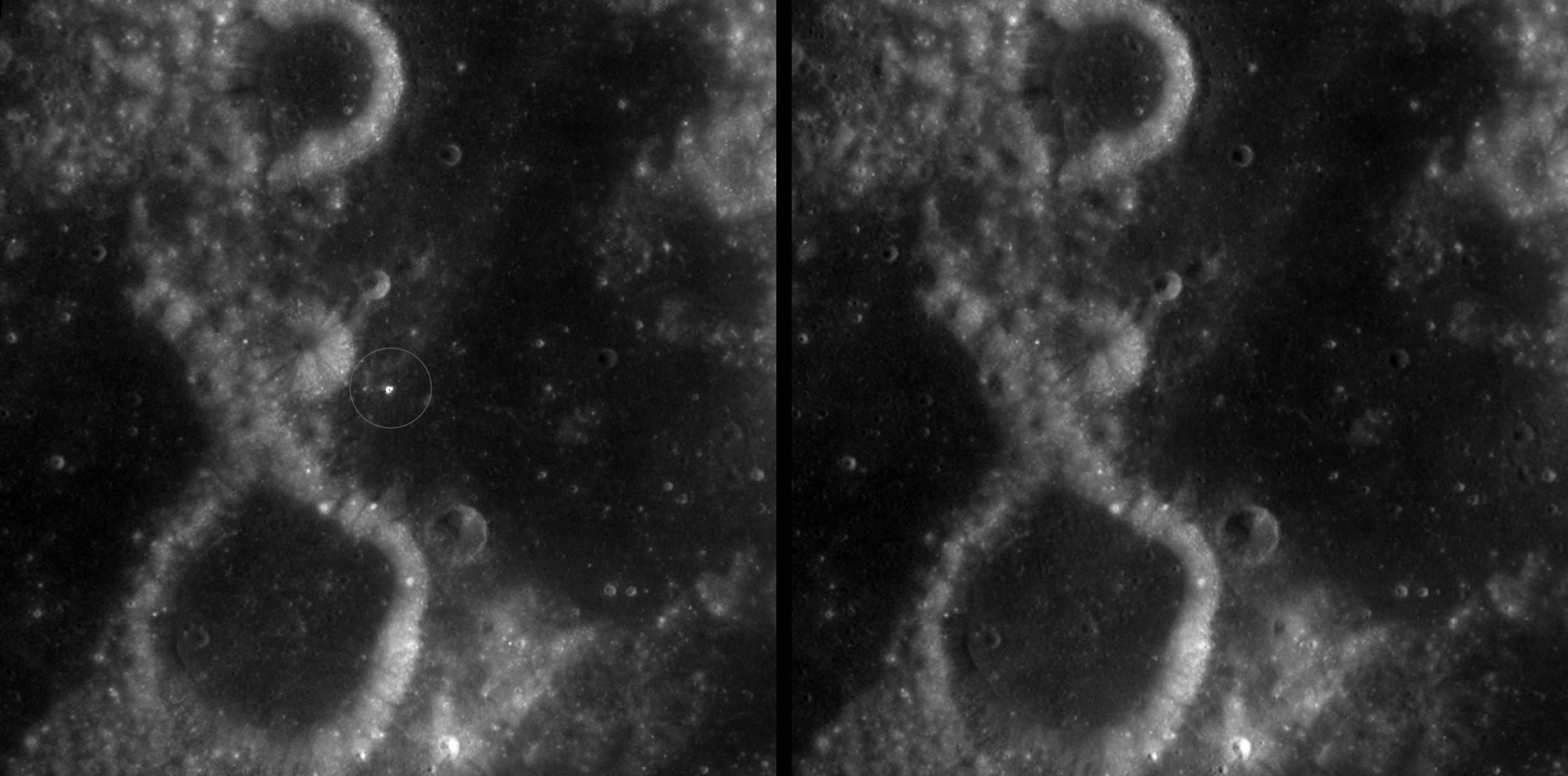
Sciences Advances abstract of study findings:
A new ∼222-meter-diameter impact crater formed on the Moon in spring 2024. Discovered in repeat Lunar Reconnaissance Orbiter Camera images, it provides a unique opportunity to study surface modification by a pristine impact, prior to subsequent fading. Nighttime temperatures measured by the Diviner instrument reveal an ∼7-kilometer-wide cold spot that is 8 to 9 kelvin cooler than its surroundings, consistent with decompaction of the upper centimeters to decimeters of regolith. We investigate all newly formed craters >20 meters identified to date and find that all craters larger than ∼30 meters produce detectable cold spots, indicating that cold spot formation is a common consequence of fresh lunar impacts. Cold spot temperature anomaly increases with crater size, implying deeper regolith modification around larger craters. This scaling suggests that the cumulative effect of cold spot formation may modify the shallow regolith at rates comparable to impact gardening by primary craters, making them a substantial driver of regolith evolution on regolith-covered airless bodies.
Citation: T. M. Powell, B. T. Greenhagen, T. Horvath, et al. New lunar crater reveals extensive distal regolith modification. Science Advances, Vol 12, Issue 38 (2026).
DOI: https://doi.org/10.1126/sciadv.aeh9568
Study-related stories:
Discover Magazine – “Newly Discovered ‘Once-in-a-Century’ Moon Crater Larger Than Two Football Field”
Phys.org – “NASA Spacecraft Discovers a Huge New Crater on the Moon”
CNN – “Lunar Orbiter Spots ‘Once-in-a-Lifetime’ New Crater on the Moon”

