
Here are some recent space-related stories of interest.
—CNBC: “SpaceX Rival Launches Rocket in Historic First, Says Industry is ‘Desperate’ For More”
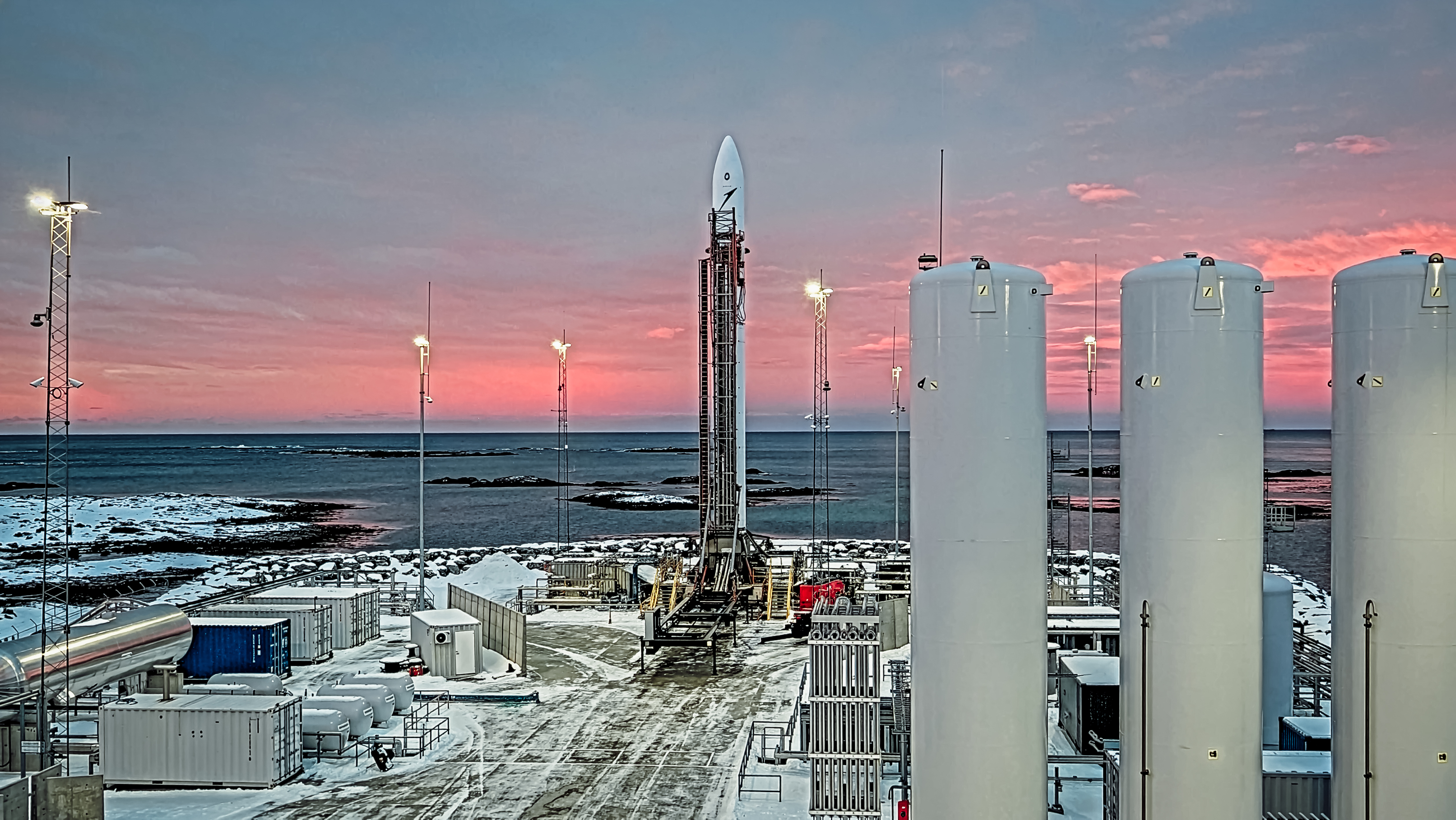
German rocket maker Isar Aerospace successfully reached orbit for the first time over the weekend, marking a milestone for Europe’s commercial space industry as the company looks to ramp up launches to meet what it says is booming demand. The Munich-based company’s Spectrum rocket reached orbit on Saturday and successfully deployed its payloads in low Earth orbit, an achievement that came on only its second test flight. Chief Commercial Officer Stella Guillen told CNBC on Monday that the company was now focused on scaling production, saying the space industry was “desperate” for additional launch capacity and that Isar had a pipeline worth more than 10 billion euros ($11.6 billion).
—Royal Astronomical Society: “‘Fingerprints’ Inside the Sun Could Reveal If It Once Swallowed a Planet“
It is thought the Sun may have engulfed a super-Earth-sized planet early in its history. Now a new study has gone a step further by suggesting that such an event may have left behind detectable clues inside our star which could still be visible today. This idea of a measurable signature or ‘fingerprints’ in the present-day solar interior was explored by research published today in Monthly Notices of the Royal Astronomical Society. Professor Mutlu Yildiz, of Ege University in Turkey, said: “Our new study suggests that a planet several times more massive than Earth may have fallen into the young Sun and left a lasting chemical imprint deep inside it.
—Physics World: “Moon’s Water Reserves Insufficient to Sustain a Lunar City, Astronomers Find“
Some countries and even wealthy individuals are setting their sights on the Moon with ambitious plans to create a lunar colony. That would require a lot of resources launched from Earth, but how much water and power would be required to keep a lunar city going?…Even assuming one billion tonnes of water on the Moon, if nothing was recycled then a city of a million would last only a few years while a population of 100 000 would run for 20 years before running dry. Even when recycling the water with an efficiency of 98% – as performed on the International Space Station – a city of a million would only have enough water for around a century.
Note: Here is the podcast version of this post.

