Telescopes Caught the Eclipse From Across the Country

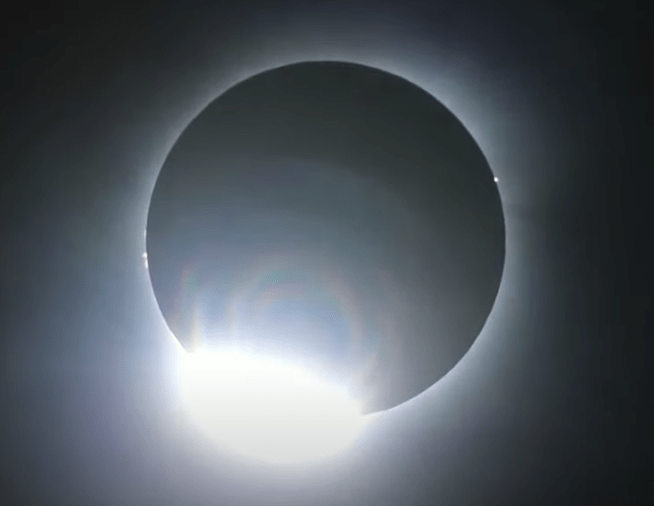
Image (Credit): TheTotal Solar Eclipse as seen in Houlton, Maine. (David Bowman of NASA Langley Research Center)

If you missed the Total Solar Eclipse or just want to see what it looked like in other parts of the country, NASA and other observatories have you covered. Check out the NASA video, “2024 Total Solar Eclipse: Through the Eyes of NASA (Telescope Feed),” showing the eclipse from Texas to Maine.

The Total Solar Eclipse Mayhem is Underway

No good astronomical event happens without accompanying pain, or so it would seem given all of the news stories about tomorrow’s eclipse. We are hearing plenty of stories about overpriced hotels, traffic jams, and even the intervention of FEMA. Just wait until you hear all of the stories about people who paid a fortune to find the eclipse blocked by clouds.

Here are a few of the crazy headlines from the areas impacted by the pending eclipse:

As far as hotel rooms, The Guardian news story above states:

Amid the clamor for accommodation, one travel agency said it had been forced to rearrange lodging for more than 150 people after bookings made two years earlier at two Buffalo hotels were canceled. Rooms that had cost $129 to $159 were canceled and resold at $450 or more, according to Sugar Tours, owner, Chris Donnelly, who said it was “total price gouging”.

It is all pretty silly, but no one wants to be left out. NASA will have the better pictures and eclipse details, given its planned rocket launches, yet these folks need something for Facebook or Instagram.

I do not really care for the crowds, so I will await the press stories and NASA images. Nonetheless, for those who feel the need to be on the front lines, I wish them a safe trip with clear skies.

Have You Heard of Orbital Drug Factories?

Credit: Varda Space Industries

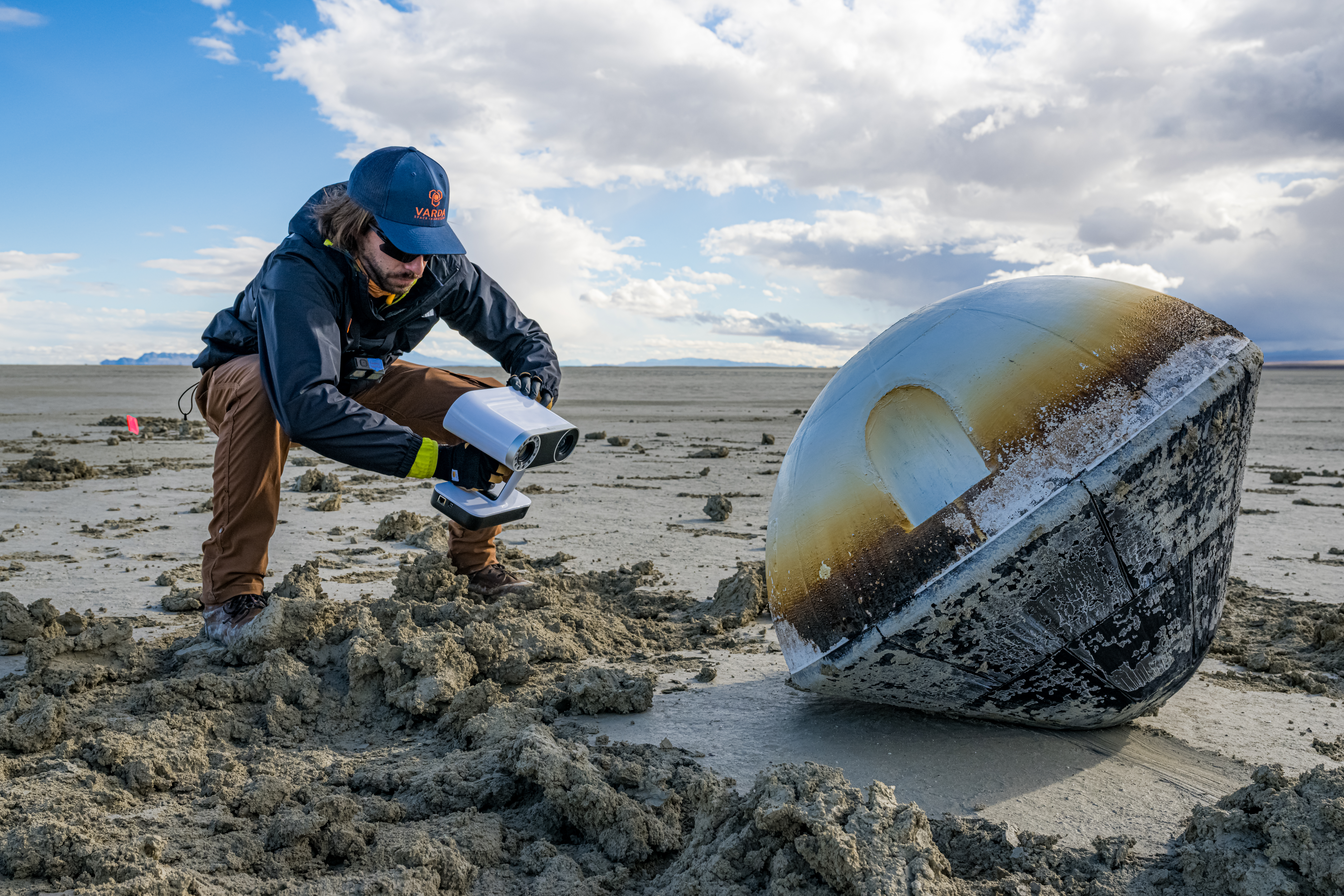
The International Space Station is not the only orbiting platform for experiments. Varda Space Industries has its own orbiting facility, or at least it had one in orbit for 10 months until it returned to Earth in February (shown below). And now the company has another $90 million in funding to continue to develop its capsules.

Varda, founded in 2020, represents the next phase of the space industry, where lower cost launches allow companies to be creative with their own spacecraft. In this case, biopharma is being asked to consider the advantages of a launches that remove gravity from the equation:

While gravitational forces do not directly impact thermodynamic properties of systems, they do significantly impact kinetic and hydrodynamic processes. Microgravity suppresses convection and sedimentation, resulting in more uniform supersaturation, as well as diffusion-driven transport. The resulting environment enables crystallization outcomes that lead to improvements in bioavailability, enhanced physicochemical properties, differentiated intellectual property, and new routes of administration — all realized by conducting research in microgravity.

While Varda is taking advantage of the lower launch costs made available by reusable rockets, it too wants to have reusable capsules down the line to reduce costs even further. Of course, it is not as glamorous as a permanently manned space station, but these crewless capsules should be sufficient for the needs of many if not most companies.

Note: Varda is also the name of a dwarf planet, which took its name from JRR Tolkien’s Middle Earth.

Image (Credit): The W-1 capsule after landing in the Utah desert. (Varda Space Industries/John Kraus)

One Week Left to Sign-up for NASA Internships/Fellowships

If you are a high school or college student and have always wanted to work on a human landing system,  Mars mission architecture integration, or even crater navigation, then NASA has a place for you. In fact, NASA has published 100 areas where interns and fellows are needed, with many of them being paid positions. You can find the list and start the application process here.

If any of these areas sound like fun, you still have until April 12 to submit an application for an internship or fellowship. And don’t worry. You do not need to be an engineering student or even interested in engineering. NASA has stated,

A common misconception is that NASA only offers engineering internships. Please know that we have opportunities for students who are not majoring in engineering. NASA needs employees with a variety of knowledge and skills. At NASA, our engineers, mathematicians, scientists, accountants, writers, IT specialists, project managers, program analysts, and many other professionals work together to break barriers to achieve the seemingly impossible. Non-engineering interns may support a variety of business and program management work, including procurement, budgeting, accounting, information technology, and security.

For example, among the 100 openings you have assignments such as a NASA audio storytelling intern, an illustration/graphic design intern, and an Earth Information Center coordinator. NASA is a big organization with a variety of needs.

This is a great opportunity if you have any interest at all in a NASA career, or just want to have a unique experience.

Pic of the Week: The Gediz Vallis Channel

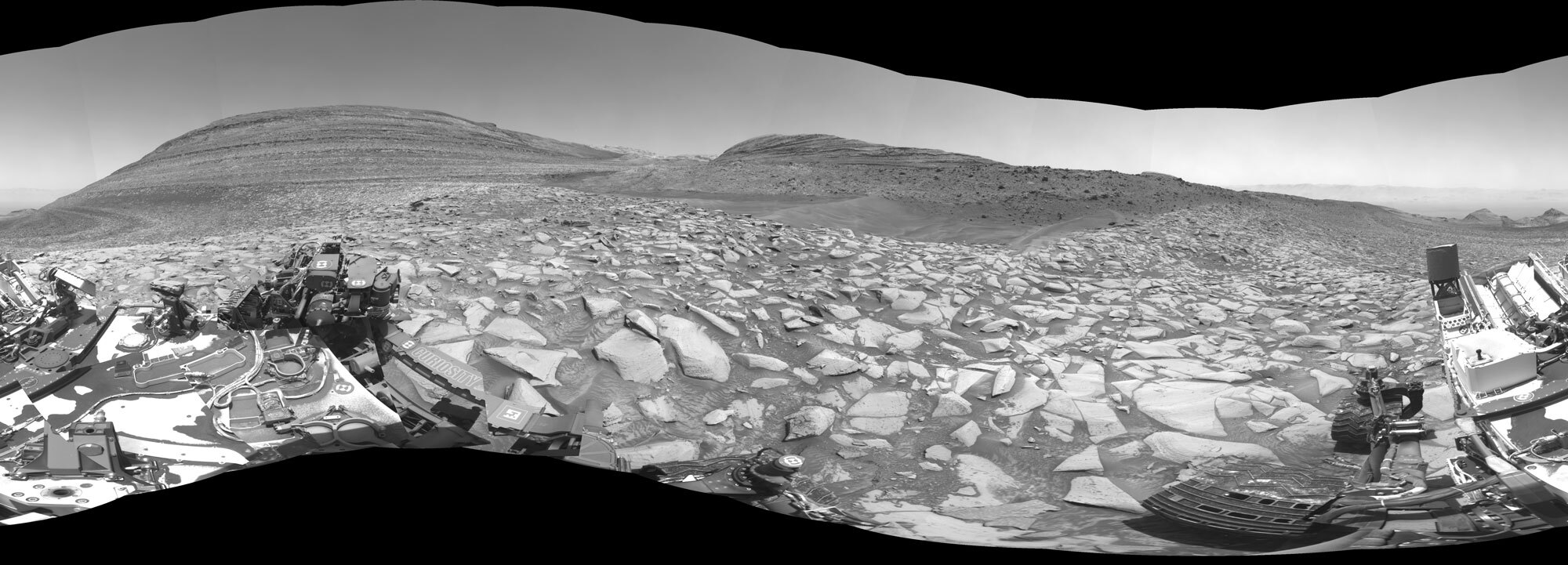
Image (Credit): Panoramic shot of Mar’s Gediz Vallis channel taken by the Curiosity rover. (NASA/JPL-Caltech)

This week’s image comes from NASA’s Curiosity rover in the Gediz Vallis channel. It is a 360-degree panorama shot from back on February 3. The rover has diligently continued its exploration of the Martian surface since it first landed in 2012.

In terms of this latest rover location, NASA stated:

NASA’s Curiosity rover has begun exploring a new region of Mars, one that could reveal more about when liquid water disappeared once and for all from the Red Planet’s surface. Billions of years ago, Mars was much wetter and probably warmer than it is today. Curiosity is getting a new look into that more Earth-like past as it drives along and eventually crosses the Gediz Vallis channel, a winding, snake-like feature that – from space, at least – appears to have been carved by an ancient river.

That possibility has scientists intrigued. The rover team is searching for evidence that would confirm how the channel was carved into the underlying bedrock. The formation’s sides are steep enough that the team doesn’t think the channel was made by wind. However, debris flows (rapid, wet landslides) or a river carrying rocks and sediment could have had enough energy to chisel into the bedrock. After the channel formed, it was filled with boulders and other debris. Scientists are also eager to learn whether this material was transported by debris flows or dry avalanches.