Movie: The Story of Carl Sagan

Image (Credit): Dr. Carl Sagan. (NASA)

Have you heard about the upcoming movie about Carl Sagan called Voyagers? Andrew Garfield of Spiderman fame will be playing Dr. Sagan. Daisy Edgar-Jones will play the part of Ann Druyan. The new film will be one of many shown at this year’s Cannes Film Festival, starting next week.

Here is the basic outline of the film by The Hollywood Reporter:

The film is set in 1977 as NASA is preparing to launch humanity’s first interstellar probes, the Voyager 1 and Voyager 2 missions. A team, led by Sagan, sets out to create a message to accompany them: the Golden Record, a group of images and sounds meant to express the essence of humanity and act as a first-contact greeting for any galactic lifeforms the probes might reach. But what starts out as a race-against-the-clock mission becomes an epic, unexpected love story between Sagan and his collaborator Druyan.

I have seen Andrew Garfield in a number of films and TV shows, and he never disappoints. Seeing his take on Dr. Sagan’s story should be fascinating and fun.

With all the recent films and series on twisted business icons, I will be happy to take a break and watch a film that covers one of science’s great icons. Maybe it can encourage a new generation of scientists and supporters of science.

Podcast: Two Worlds Collide in This Episode

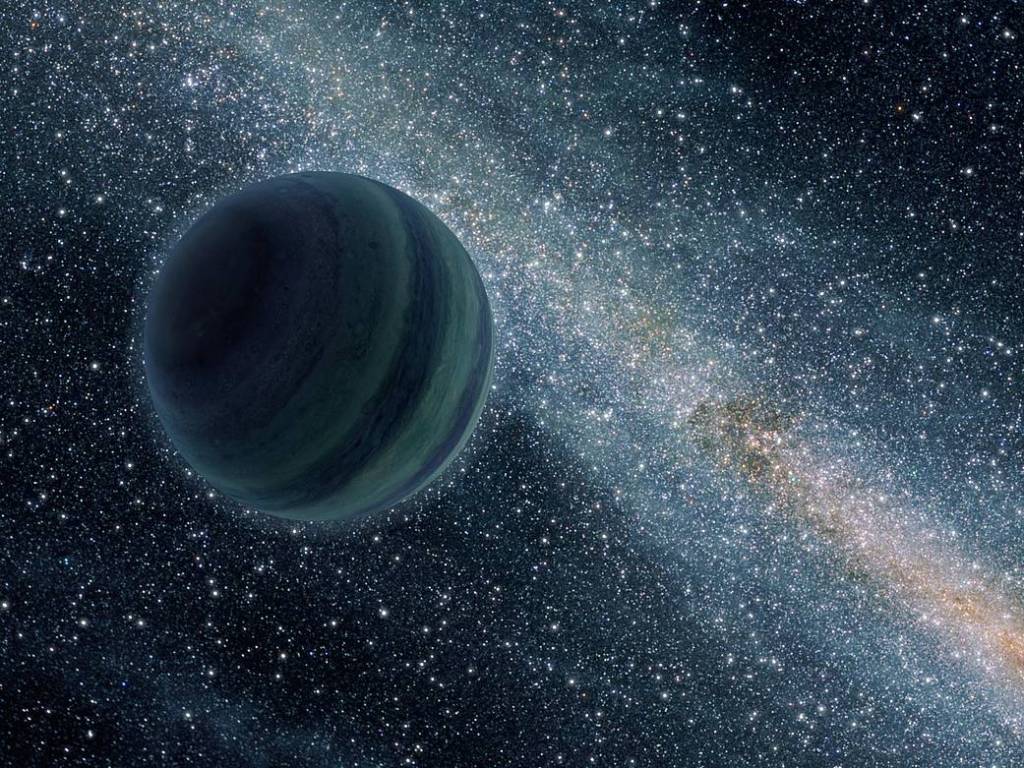
Image (Credit): Artist’s rending of exoplanet GJ 1132b. (MIT News)

If you are looking for a fun podcast this week, you cannot go wrong with Neil DeGrasse Tyson’s Startalk podcast when it hosts Cool Worlds‘ creator David Kipping. The episode, Cosmic Queries – Cool Worlds with David Kipping, covers questions related to exoplanets, exomoons, and more. It is fun to hear the two scientists play off each other.

You will also learn from this podcast that Cool Worlds should be releasing its own podcast in the near future. Its Youtube videos are already a great source of information, so I expect more of the same in these podcasts.

At the end of the podcast, Professor Kipping also mentioned a few upcoming space missions related to exoplanets, including the European PLAnetary Transits and Oscillations of stars (Plato) mission in 2026. You can learn more about the mission from this European Space Agency factsheet, which notes:

Does a second Earth exist in the Universe? Planet hunter Plato will focus on the properties of rocky planets orbiting Sun-like stars. In particular, Plato will discover and characterise planets in orbits up to the habitable zone – the ‘goldilocks’ region around a star where the temperature is just right for liquid water to exist on a planet’s surface.

Plato will characterise hundreds of rocky (including Earth twins), icy or giant planets by providing exquisite measurements of their radii (3% precision), masses (better than 10% precision) and ages (10% precision). This will revolutionise our understanding of planet formation and the evolution of planetary systems, as well as the potential habitability of these diverse worlds.

As well as looking at these planets, Plato will analyse their host stars. Using data from the mission, scientists hope to perform stellar seismology, gathering evidence of ‘starquakes’ in the imaged stars. This will give insight into the characteristics and evolution of the stars, improving our understanding of entire planetary systems.

It’s a fun, fact-filled show worth your time.

Pic of the Week: Mysterious Spiral Over Alaska

Image (Credit): The northern lights and a spiral in the early morning sky over Fairbanks, Alaska. (Christopher Hayden, via Associated Press)

This week’s image was captured in the morning sky over Alaska on April 15. It was later determined to be related to a SpaceX Falcon 9 launch the prior day in California. As The New York Times reported, the spiral was attributed to “…the reflection of the excess fuel it released into the atmosphere.”

Below is another image taken by a local resident. The Internet is full of them.

While the northern lights are impressive enough, the addition of the spiral is extra special.

Image (Credit): Another image of the northern lights and a spiral over Fairbanks, Alaska. (Nick Marchuk/KTVF)

Space Stories: A Private Space Station, Chinese Space Plane Returns, and Russia Doubts Moon Landing

Image (Credit): Vast Space Haven-1 Space Station. (Vast Space)

Here are some recent stories of interest.

Digital Trends:SpaceX and Vast Aim to be First to Deploy Private Space Station

As the International Space Station nears the end of its life, SpaceX and Los Angeles-based startup Vast have unveiled a plan to launch the first commercial space station. SpaceX will use a Falcon 9 rocket to send the station’s main module, Haven-1, into low-Earth orbit as early as August 2025.

Space.com: “China’s Mysterious Space Plane Returns to Earth after 9-month Orbital Mission

The second orbital mission of China’s robotic space plane has come to a close. The mysterious reusable vehicle touched down Monday (May 8) at the Jiuquan Satellite Launch Center in northwest China, wrapping up a 276-day mission to Earth orbit, according to China’s state-run Xinhua news agency.

ARS Technica: “Former Head of Roscosmos Now Thinks NASA Did Not Land on the Moon

Dmitry Rogozin was fired as director general of Russia’s main space corporation, Roscosmos, nearly a year ago. He has spent much of the time since near the front lines of Russia’s invasion of Ukraine, sharing various hateful, threatening, and nationalistic sentiments on his Telegram account. Occasionally, however, the pugnacious politician still opines about space on his “Rogozin at the Front” social media account. He did so this weekend, calling into question whether the United States really did land astronauts on the Moon.

TROPICS Starts its Mission

Image (Credit): Rocket Lab’s Electron rocket at Launch Complex 1 in Mahia, New Zealand. (NASA)

On Sunday, the TROPICS mission was successfully launched after an earlier delay. The Rocket Lab Electron launch took place in New Zealand and involved two small CubeSats tasked with monitoring deadly storms. This is the first pair to be launched, with a total of four satellites planned to accomplish the TROPICS mission.

And yes, TROPICS is an acronym (fortunately) for Time-Resolved Observations of Precipitation structure and storm Intensity with a Constellation of Smallsats. And you thought the Congress was going crazy with its acronyms for legislation.

You can read more about the TROPICS mission here.