Video: Brian Cox Talks About Alien Life – A 2026 Special

Image (Credit): Professor Brian Cox discussing the evolution of intelligence. (Science Time channel)

If you have followed the career of English physicist Brian Cox, then you know he is a dynamic speaker who has hosted several series on astronomy, including Wonders of the Solar System and Wonders of the Universe.

In this short video from Science Time channel, “Brian Cox Talks About Alien Life – A 2026 Special,” Professor Cox walks the viewer through the chances of finding intelligent life among the 60 billion exoplanets in our galaxy that lie within the habitable zone. To be clear, he is not very optimistic.

The series does not cover much new ground except for some hopeful comments about the James Webb Space Telescope investigating the atmospheres of exoplanet (with Professor Cox wondering whether we will find life on an exoplanet before we find it on Mars). Even so, it is still enjoyable to spend a little bit of time playing around with the Fermi Paradox again.

One of the more intriguing ideas being discussed here and elsewhere is the idea that we may not want to limit our ideas to biological life. The longevity of a civilization may be dependent on its ability to evolve from carbon-based to silicon-based lifeforms. While not explicitly discussed in the video, that could broaden our search beyond a star’s habitable zone yet also frustrate our attempts to find biological signatures in an exoplanet’s atmosphere.

Again, it is worth your time to listen in. I would just ignore the goofy animations that accompany the discussion.

Space Quote: Are We Ready for Extended Space Travel by Humans?

Credit: Image by Olena from Pixabay.

“As an astronaut, I believe our current technology may not have solutions for critical situations we are bound to face moving away from low Earth orbit, and this incident illustrates exactly that. NASA needs to address some urgent and sometimes uncomfortable questions. For example, should a doctor always be on the crew? Should a spaceship heading to Mars have high-tech medical capabilities and facilities — not just a ‘med kit’? A kit consisting of only medications, saline solution, a defibrillator and a few basic instruments places a crew at a serious disadvantage if things really go south.”

-Statement for former NASA astronaut Clayton Anderson in a Washington Post editorial published after this week’s return of four crew members who needed to be evacuated from the International Space Station due to a medical emergency. Had the health issue occurred six months into a trip to Mars the circumstances would have been dire without sufficient health resources. This is more evidence that acquiring the necessary hardware for space travel may be the easy part compared to the software, also known as humans.

Pic of the Week: The Safe Return of Crew-11

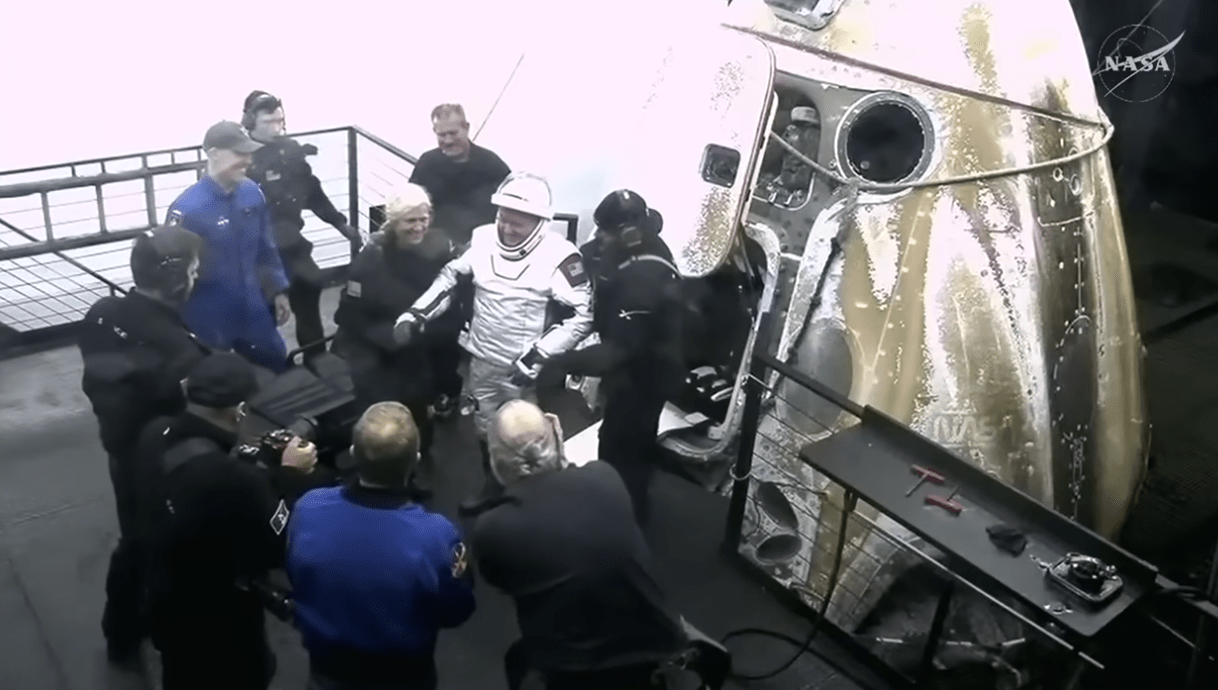
Image (Credit): NASA astronaut Mike Fincke as he exits the Dragon Endeavour spacecraft on January 15, 2025. (NASA)

This week’s image shows return of Crew-11 from the International Space Station (ISS). They landed safely on the morning of January 15th. As shown above, NASA astronaut Mike Fincke was the first member of the mission to exit the capsule. You can watch the entire video here.

Earlier this week, Mr. Fincke posted a few comments about the team’s early departure from the ISS:

What stands out most to me is how clearly NASA cares about its people. Flight surgeons, engineers, managers, and support teams came together quickly and professionally to chart the best path forward. The ground teams—across mission control centers and partner organizations around the world—have been extraordinary. We’re proud of the joint work we’ve done and the camaraderie we’ve shared, including some great songs and more than a few dad jokes.

ISS Astronauts on Their Way Home as Part of Medical Evacuation

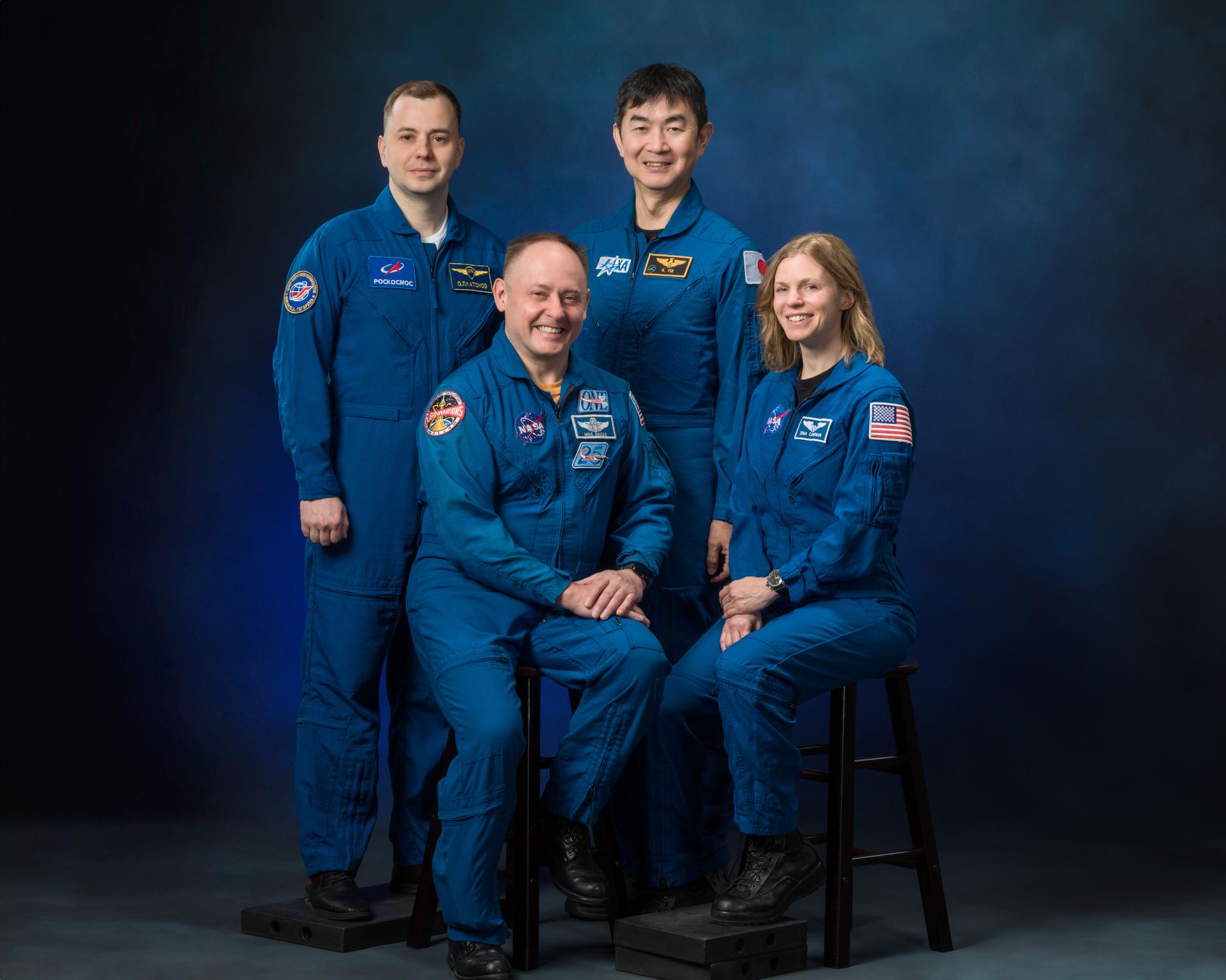
Image (Credit): The official portrait of the four members of NASA’s SpaceX Crew-11 mission aboard the ISS. From left, are Roscosmos cosmonaut Oleg Platonov, NASA astronaut Mike Fincke, Japan Aerospace Exploration Agency (JAXA) astronaut, and NASA astronaut Zena Cardman. (NASA)

The Crew-11 mission departed the International Space Station (ISS) earlier today for their trip home. The four astronauts that are part of this medical evacuation – NASA astronauts Zena Cardman and Mike Fincke, Japan Aerospace Exploration Agency (JAXA) astronaut Kimiya Yui, and Roscosmos cosmonaut Oleg Platonov – are expected to splash down off the coast of California early Thursday morning.

Here is NASA’s schedule of events from yesterday covering both days:

Wednesday, Jan. 14

  • 3 p.m. – Hatch closure coverage begins on NASA+, Amazon Prime, and YouTube.
  • 3:30 p.m. – Hatch closing
  • 5 p.m. – Undocking coverage begins on NASA+, Amazon Prime, and YouTube.
  • 5:20 p.m. – Undocking

Following the conclusion of undocking coverage, NASA will distribute audio-only communications between Crew-11, the space station, and flight controllers during Dragon’s transit away from the orbital complex.

Thursday, Jan. 15

  • 2:15 a.m. – Return coverage begins on NASA+, Amazon Prime, and YouTube.
  • 2:51 a.m. – Deorbit burn
  • 3:41 a.m. – Splashdown
  • 5:45 a.m. – NASA Administrator Jared Isaacman will lead a Return to Earth news conference streaming live on NASA+, Amazon Prime, and the agency’s YouTube channel.

The remaining member of Expedition 74 will be commanded by Roscosmos cosmonaut Sergey Kud-Sverchkov, who will remain on board with Flight Engineers Sergei Mikaev (Roscosmos) and Chris Williams (NASA). The Crew-12 mission may be moved up to cover the gap caused by this early departure.

NASA is keeping quite about the underlying medical conditions, yet something will probably need to be said sooner rather than later. Maybe the news conference tomorrow will give us a few more details.