Space Stories: Stranded Mars Samples, Cancelled Lunar Rover, and New Plans for Martian Travel

Image (Credit): Artist’s rendering of a Mars Sample Return initiative. (NASA)

Here are some recent space-related stories of interest.

Scientific American: NASA Spent Billions to Bring Rocks Back from Mars. Trump Wants to Leave Them There

on May 2 the White House’s Office of Management and Budget (OMB) dropped a budgetary bombshell, proposing to cut NASA’s top-line funding by a quarter, slash the space agency’s science budget by nearly half and entirely eliminate [the Mars Sample Return (MSR)}. The cancellation is justified, the OMB document claims, because MSR is “grossly overbudget” and its goals of sample return will instead “be achieved by human missions to Mars.”

Space News: NASA Backtracks on VIPER Commercial Partnership

 NASA has canceled plans to find a commercial partner to launch a robotic lunar rover and will instead pursue “alternative approaches” to fly the mission. In a May 7 statement, NASA said it is canceling a solicitation it released in February seeking proposals from industry on ways they could work with NASA to launch the Volatiles Investigating Polar Exploration Rover (VIPER) spacecraft. NASA envisioned having a company send VIPER to the south polar regions of the moon and handing operations of the rover there to look for water ice.

Politico: NASA, in Surprise Shift, May Launch Rockets to Mars Next Year

NASA is considering launching rockets to Mars next year, a major shift in priorities that could boost the fortunes of Elon Musk’s space company and speed up the timeline for astronauts to reach the red planet. The sudden switch follows the release of the White House’s 2026 budget proposal, which would increase funding for Mars-related projects by $1 billion and pay for the launches. It also signals the Trump’s administration’s intentions to prioritize sending people to Mars.

Aeon Article: Extraterrestrial Tongues

Credit: Image by Peggy und Marco Lachmann-Anke from Pixabay

If you do not usually visit the stories in Aeon, you may want to make an exception and check out a new article titled “Extraterrestrial Tongues.” It discusses the ways science fiction have portrayed different languages and how it may be too simplistic considering all of the possibilities for “communication” with an alien civilization.

The author cites a few examples from Star Trek, including the Klingon language as well as one episode with Captain Picard (the “Darmok” episode) where the alien speaks in allegories. Of course, any language that makes reference to an unknown history will be almost impossible to understand.

I expect mathematics will probably come to the fore as the primary language from the start. Moreover, I think it is more likely that AI machines will be communicating between the stars rather than humans, but time will tell.

Given our communication problems here on Earth when the underlying language is well understood by all, we will have a mighty challenge in the future surviving an encounter with alien intelligence. We can only hope that the alien civilization does the hard work beforehand to ensure they have a chance to be understood.

Video: Andor Versus Star Trek

Credit: Reason Magazine.

If you are watching the Star Wars series Andor on Disney+, you are well aware of the dark workings of the imperial bureaucracy as it crushes the spirit of its citizens.

Reason magazine, always a proponent of less government, has created a fun video that highlights the realistic nature of the bureaucracy in Andor versus the overly-optimistic Star Trek universe where competence and teamwork save the day every time.

I am not saying the Star Trek universe lacks bureaucracy. In fact, more often than not the Enterprise crew is breaking those rules to accomplish their mission. Yet the sheer incompetence of both the rebels and imperial overmasters in Andor is noteworthy, and it that way all the more human.

Take a look at the Reason video yourself and make up your own mind.

Enjoy.

Space Quote: Soviet-Era Space Probe May Come Down Tonight

Image (Credit): Replica of the Soviet Union’sVernera 8 landing capsule launched towards Venus. (European Space Agency)

“As this is a lander that was designed to survive passage through the Venus atmosphere, it is possible that it will survive reentry through the Earth atmosphere intact, and impact intact.”

-Statement by Marco Langbroek, an expert on Space Situational Awareness at Delft Technical University in the Netherlands, pertaining to the Venera 8 probe that was to be sent to Venus by the Soviets more than 50 years ago. However, the probe, renamed Kosmos 482, never left Earth orbit. Only now is it ready to return to the Earth’s surface tonight, though the exact location is unknown.

Update: Sunday morning at 2:24 am EST the lander broke up over the Indian Ocean west of Jakarta.

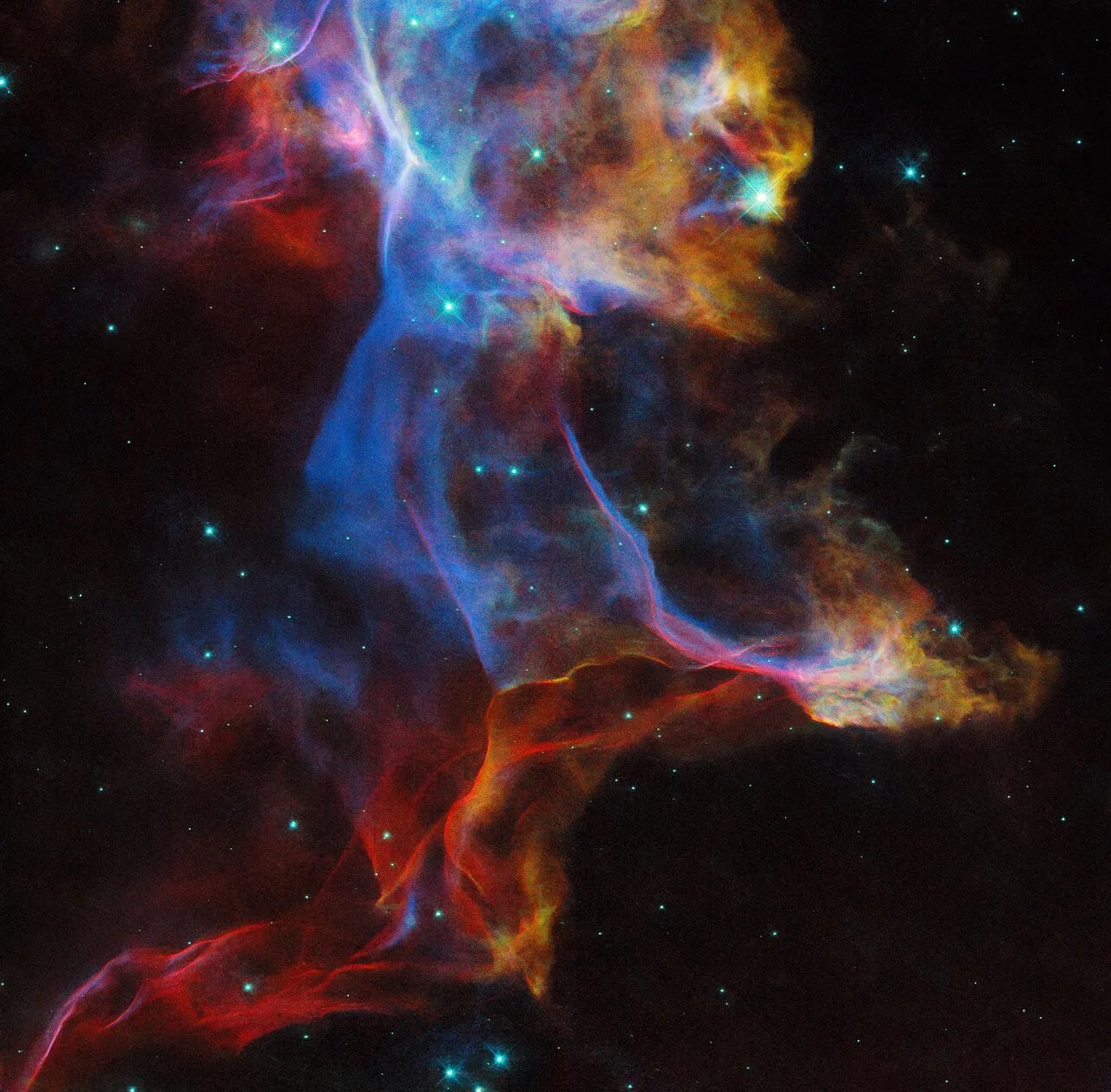
Pic of the Week: The Eagle Nebula

Image (Credit): Messier 16, or the Eagle Nebula. (ESA/Hubble & NASA, K. Noll)

This week’s updated image is from the Hubble Space Telescope. It shows the Eagle Nebula in all its glory, located not too far from the Pillars of Creation.

For more on this spectacular image, we turn to the European Space Agency’s (ESA) Hubble page:

Unfurling along the length of the image is a pillar of cold gas and dust that is 9.5 light-years tall. As enormous as this dusty pillar is, it’s just one small piece of the greater Eagle Nebula, which is also called Messier 16. The name Messier 16 comes from the French astronomer Charles Messier, a comet hunter who compiled a catalogue of deep-sky objects that could be mistaken for comets.

The name Eagle Nebula was inspired by the nebula’s appearance. The edge of this shining nebula is shaped by dark clouds like this one, giving it the appearance of an eagle spreading its wings.

Not too far from the region pictured here are the famous Pillars of Creation, which Hubble has photographed multiple times, with images released in 1995 and 2015.

The heart of the nebula, which is located beyond the edge of this image, is home to a cluster of young stars. These stars have excavated an immense cavity in the centre of the nebula, shaping otherworldly pillars and globules of dusty gas. This particular feature extends like a pointing finger toward the centre of the nebula and the rich young star cluster embedded there.

The Eagle Nebula is one of many nebulae in the Milky Way that are known for their sculpted, dusty clouds. Nebulae take on these fantastic shapes when exposed to powerful radiation and winds from infant stars. Regions with denser gas are more able to withstand the onslaught of radiation and stellar winds from young stars, and these dense areas remain as dusty sculptures like the starry pillar shown here.