
Here are some recent stories of interest.
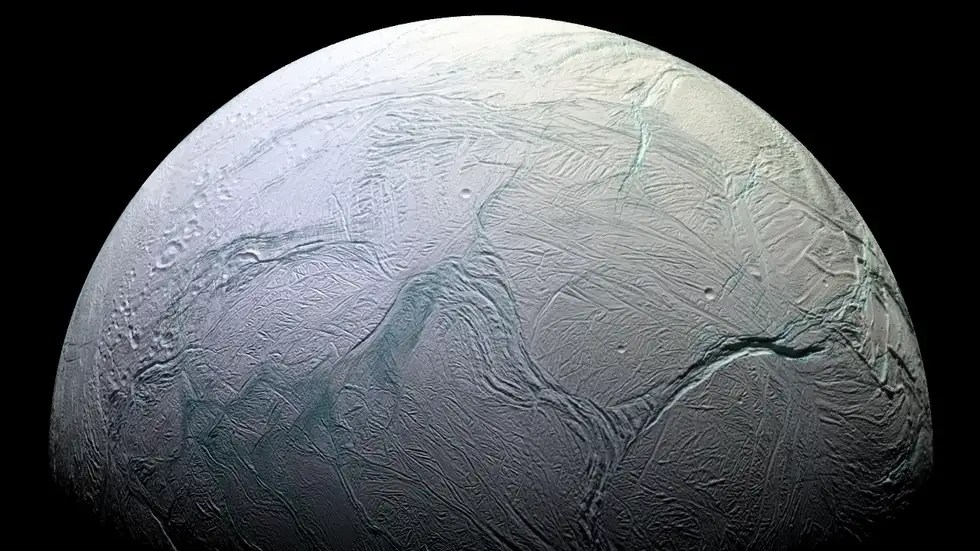
—Weather.com: “A Habitable Ocean? Scientists Believe An Essential Life Component May be Abundant on Saturn’s Icy Moon, Enceladus!“
Previously, NASA’s Saturn-studying Cassini spacecraft had discovered Enceladus’ subsurface liquid water as well as the plumes of ice grains and water vapour that erupted from cracks in the moon’s icy surface. Analysis of the plumes had revealed that they contain almost all the basic requirements of life as we know it. But while the bioessential element phosphorus is yet to be identified directly, scientists have now found evidence of its availability in the ocean beneath the moon’s icy crust.
—WashingtonPost.com: “Maarten Schmidt, Astronomer Who Explained Quasars, Dies at 92“
Maarten Schmidt, the Dutch-born American astronomer who explained the mysterious heavenly bodies known as quasars and in so doing helped create the modern picture of the universe, its structure and its history, died Sept. 17 at his home in Fresno, Calif. He was 92.
—Space.com: “FCC Denies SpaceX $900 Million in Starlink Funding“
The space launch services giant was recently rejected for nearly $900 million dollars in rural connectivity funding from the Wireline Competition Bureau (a branch of the Federal Communications Commission, or FCC). SpaceX characterized that decision(opens in new tab) as “grossly unfair” in its Sept. 9 appeal to the regulator, which is under review.

 Our Awesome Universe