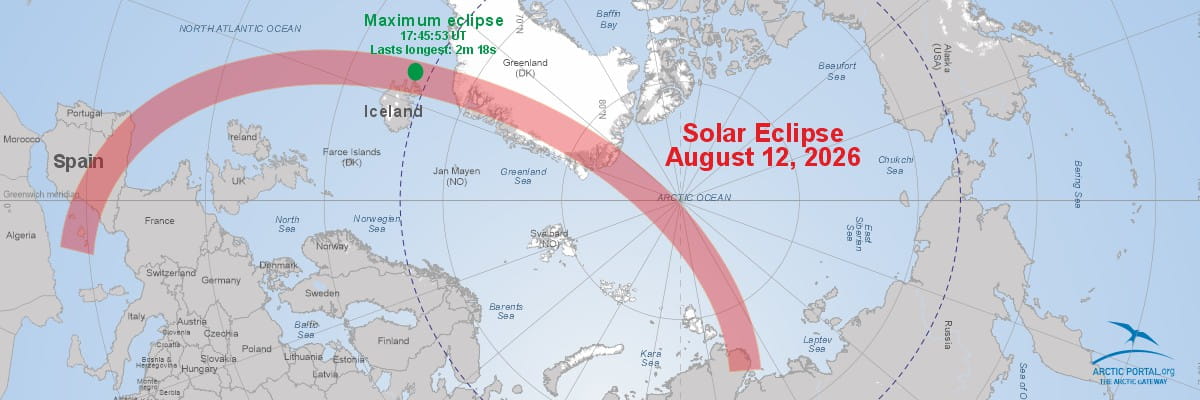
The solar eclipse is almost here. The map above from The Arctic Portal shows you the path of tomorrow’s eclipse, which reaches its maximum over Iceland.
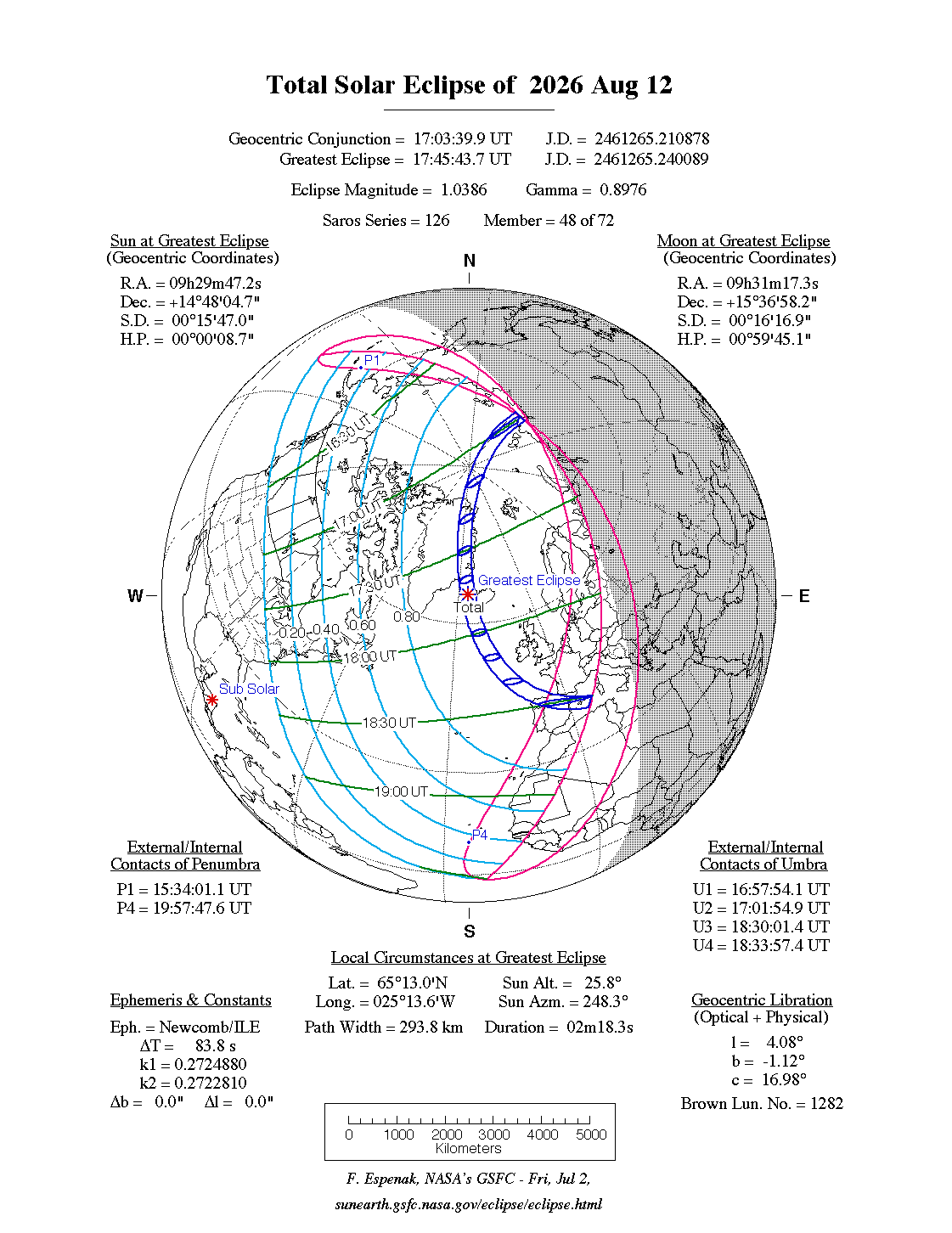
NASA also has a number of handy maps for past and future eclipses at its Eclipse Data site, though it is a bit technical. The graphic for tomorrow’s eclipse is shown below.
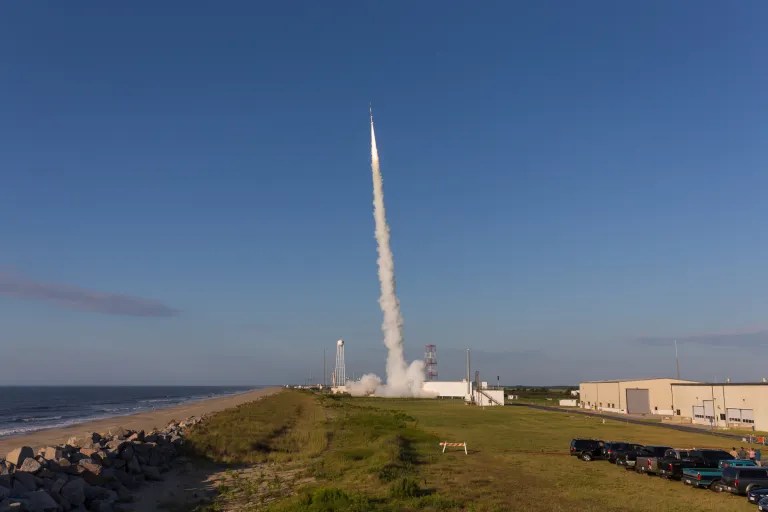
A request to honor one of the Eastern Shore’s most accomplished aerospace leaders is facing growing opposition from people who say changing the Wallops name could erase an important piece of local history. The Accomack County Board of Supervisors unanimously approved a resolution July 15 asking NASA to rename the Wallops Flight Facility in honor of A. Thomas Young, a Wachapreague native who built a decades-long career in the nation’s space program and aerospace industry.
Engineers at NASA’s Jet Propulsion Laboratory have successfully freed up power on Voyager 2, extending how long the spacecraft can continue to do science. Nicknamed the “Big Bang,” the effort involved simultaneously turning off certain powered devices and substituting them with lower-power alternatives while ensuring the spacecraft remains warm enough to operate.
On August 12, 2026, millions will witness a total solar eclipse that crosses the north Atlantic and parts of Europe. The path of totality passes over Greenland, Iceland, Spain, and a corner of Portugal. Other parts of Europe and North America will see a partial solar eclipse. If you are in the path of totality or if you will be able to see the partial eclipse, head outside to see it for yourself! (Make sure you bring a good pair of eclipse glasses to protect your eyes.) But if you’re not in the path, or if clouds obscure your view, there are plenty of options for viewing this celestial spectacle online. What’s more, each broadcast listed here has its own roster of experts speaking about different aspects of the eclipse and the science around it.
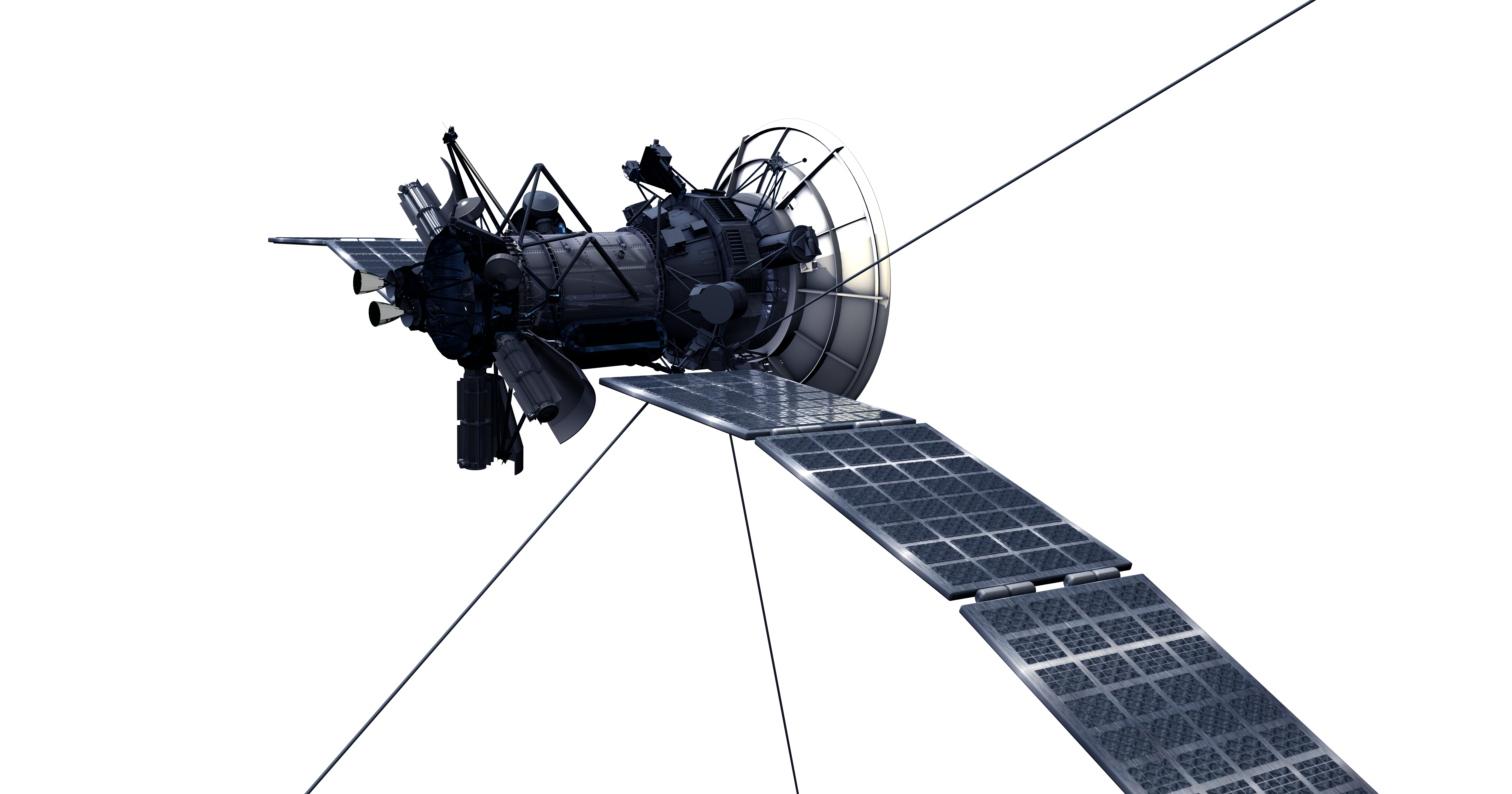
The Outer Space Treaty (OST) was opened to signatures in 1967 and, since then, 117 countries, including China, the USA and Russia, have become part of it. Among other stipulations, the treaty bans the placement of nuclear weapons in outer space. Recently, the US government has raised worries that Russia is testing nuclear-armed anti-satellite weapon (ASAT) components, with the possibility that it will place a nuclear weapon in space. Such a device, if detonated, would destroy most of the satellites in the low Earth orbit. This danger is compounded by the lack of a verification mechanism for the OST. No methodologies of verification have been proposed in the open peer-reviewed literature. Here a concept and feasibility study is presented for verifying a satellite’s compliance to the OST by observing the neutrons induced by spallation from the approximately GeV protons in the inner Van Allen radiation belts. The calculations show that a 9U-CubeSat-sized detection platform can identify a thermonuclear weapon from a distance of 4 km in approximately one week of observation. This conceptual study will stimulate and inform future research and development of verification platforms for the OST.
Citation: Danagoulian, A. Verification of the Outer Space Treaty with cosmic protons. Nature, 655, 585–590 (2026).
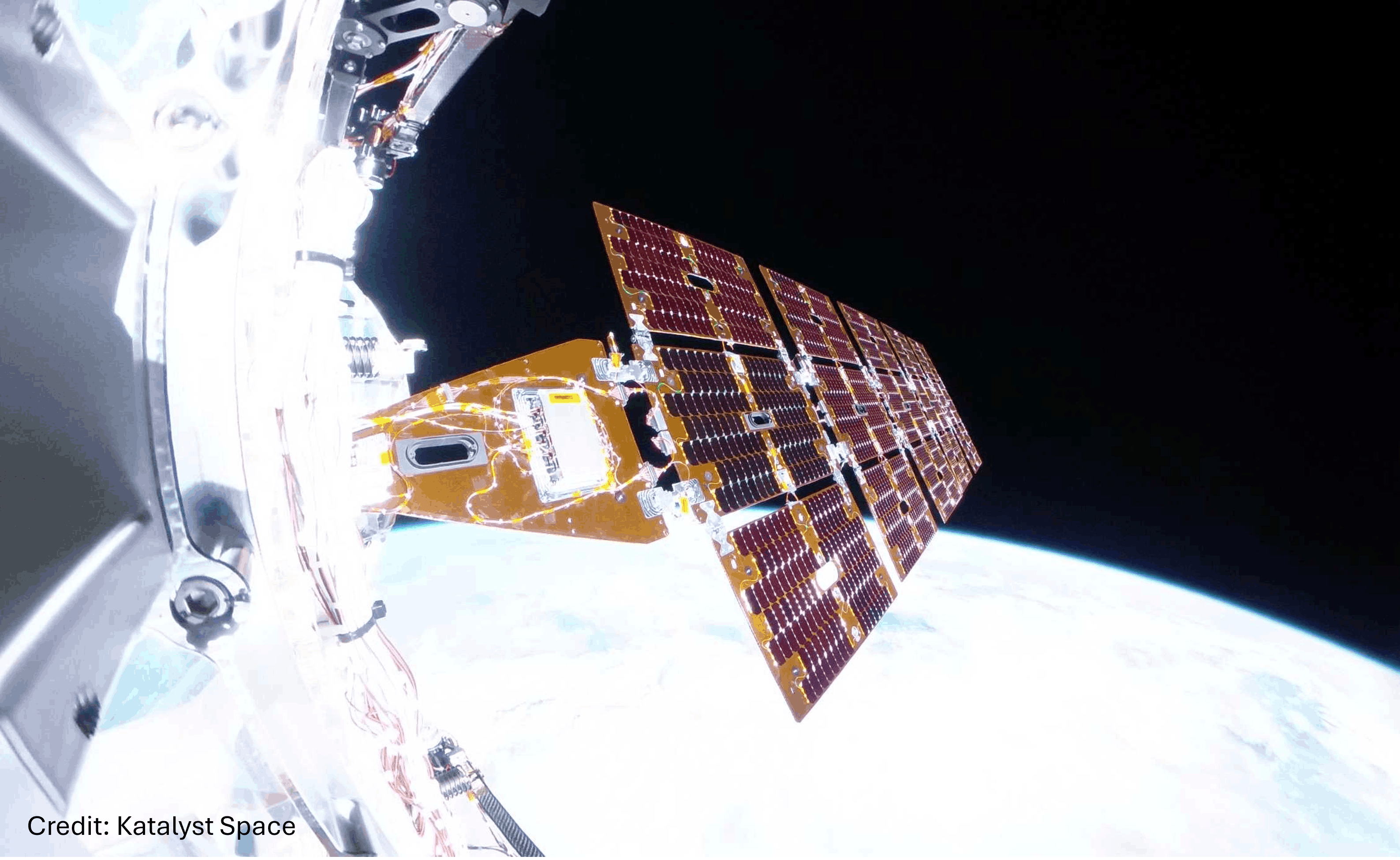
Image (Credit): The LINK spacecraft with a deployed solar array in Earth orbit. (Katalyst Space)
“LINK originally was in a multi-axis spin rotating at about 9 degrees per second, which resulted in sporadic communications and impeded LINK’s progress toward Swift. Using a series of burns from one of LINK’s electric propulsion thrusters, the Katalyst team now has slowed that spin to about 1.47 degrees per second. Katalyst plans to keep LINK at that spin rate as it proceeds with next steps for the mission. This includes uploading a flight software update in the coming days with new attitude controllers designed to maintain LINK’s stability in its current configuration. These updates would allow LINK to begin maneuvering to align with Swift’s orbit.”
-Statement by NASA on August 6, 2026 regarding efforts to resolve issues with the LINK spacecraft sent to boost the Neil Gehrels Swift Observatory to a higher orbital altitude. Launched on July 3, the spacecraft began to spin in space around July 25, which led to a temporary loss of contact with the ground crew. If all goes well, LINK could reach the observatory before the end of August.
The episode, “We Need to Talk About That “First Exomoon” Discovery,” is basically an hour-long monologue by Dr. Kipping as he discussed the discovery, compares it to earlier similar discoveries, goes over the current definition of a exomoon, and quotes other astronomers regarding their position on the discovery.
The bottom line is that the media may have overplayed the discovery, similar discoveries happened in the past, and the lack of a good definition for an exomoon makes any decision on this new discovery troublesome.
Dr. Kipping has a particular interest in exomoons, and he admits this bias at the start of the show, but he does a good job covering all of the terrain. It is an informative one-man debate reminiscent of the difficulties in defining Pluto.
I recommend you check it out.
Note: The episode can also be found on YouTube. Also, go to this earlier story for more by Dr. Kipping on exomoons.