The Few, The Proud, The Moon Watchers

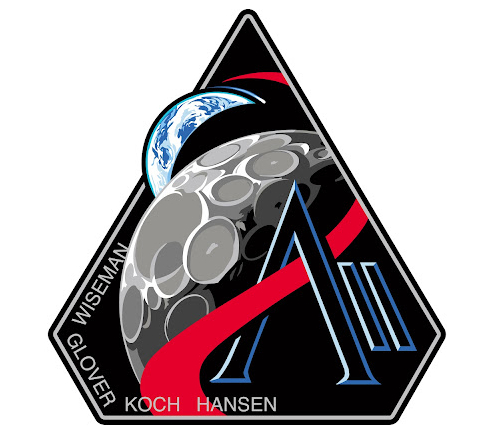
Image (Credit): Artemis II mission crew patch. (NASA)

NASA is looking for volunteers to assist next year’s Artemis II mission, which is expected to take place in April 2026. The volunteers will help track of the Artemis II Orion crewed spacecraft as it travels around the Moon.

The volunteers will monitor Orion’s signal using their respective ground antennas to help track and measure changes in the radio waves transmitted by the spacecraft. Volunteers similarly assisted with uncrewed Orion tracking during Artemis I.

This is a unique opportunity for international space agencies, academic institutions, commercial companies, nonprofit entities, and even private citizens to be part of the Artemis II mission.

Give it some thought and, if you are interested, read through NASA’s Artemis II Orion One-Way Doppler Measurements Tracking solicitation. You have until October 27th to apply.

Note: Below is a list of the 18 volunteers that assisted with the Artemis I mission:

Government Space Agencies

  • Canadian Space Agency, Canada
  • Centre National d’Etudes Spatiales (CNES), France
  • German Aerospace Center (Deutsches Zentrum für Luft- und Raumfahrt), Germany
  • Korea Aerospace Research Institute (KARI), Republic of Korea
  • National Space Centre, Elfordstown Earthstation, Ireland

Commercial Companies

  • Clearbox Systems Pty Ltd., Australia
  • Goonhilly Earth Station Ltd., United Kingdom
  • Intuitive Machines, USA
  • Kongsberg Satellite Services (U.S. office), USA
  • Leaf Space LLC, USA
  • Swedish Space Corporation (U.S. office), USA
  • Telespazio, Italy
  • Vambrace Inc., USA
  • Viasat, USA

Non-profit

  • CAMRAS, Netherlands

Academic Institutions

  • Space Systems Design Laboratory, Georgia Tech Research Institute, USA

Private Citizens

  • Scott Chapman, USA
  • Scott Tilley, Canada

Starship: The 10th Try Was a Success

Image (Credit): Artist’s rendering of a Starship human lander to the Moon’s surface. (SpaceX)

On Tuesday, Starlink finally launched its 10th test flight after a rough patch of three bad launches. Regarding this tenth test, SpaceX stated:

Every major objective was met, providing critical data to inform designs of the next generation Starship and Super Heavy.

Everything from the booster splash landing in the Gulf of Mexico shortly after ascending from Starbase, Texas, to the rocket itself splash landing in the Indian Ocean was a positive sign that things are back on track for the company and its rocket.

Now maybe talk can begin again about NASA’s Artemis program and the role of the Starship to bring humans back to the Moon. It is not clear how many tests will be required before the rocket is ready, but the Artemis program is already suffering from delays.

Hopefully, this successful test is a sign that things are getting back on track.

SpaceX is Eager to Launch the Next Starship

Image (Credit): Image from 2019 showing the SpaceX’s Starship prototype (left) next to a Falcon 1 rocket. (SpaceX)

Elon Musk is eager to get his Starship launches back on track, but the 10th launch scheduled for yesterday had to be scrubbed due to “ground system” issues. The launched was pushed by a day or two.

The most recent reminder of the difficulties getting this rocket into orbit came in June, when a pre-flight engine test ended in an explosion.

Even with all of the acrimony between Musk and President Trump, NASA and the White House are depending on the Starship rocket to make the Artemis program a reality.

Like him or not, the US space program’s success is locked in with Musk’s company at the moment.

We can only hope for a successful test.

Update: The launch was scheduled for late Monday, August 25th, but cancelled again, this time due to the weather.

Space Stories: New Glenn’s Martian Probes, AI Space Doctors, and Questions About a Mission to Uranus

Image (Credit): Blue Origin’s New Glenn Rocket. (Blue Origin)

Here are some recent space-related stories of interest.

Space.com: Blue Origin’s 2nd New Glenn Rocket Launch will Fly Twin NASA Mars Probes to Space on Sep. 29

Blue Origin is gearing up for the second-ever launch of its powerful New Glenn rocket, which will loft NASA’s ESCAPADE mission to Mars. The company says it has been working closely with NASA on preparations leading up to New Glenn’s next launch, dubbed NG-2, and is targeting no earlier than (NET) Sep. 29. The twin ESCAPADE (Escape and Plasma Acceleration and Dynamics Explorers) probes have been awaiting their turn aboard New Glenn, which was originally slated to carry the satellites on its maiden launch in January. However, NASA opted not to risk a costly mission delay due to the debut liftoff of the new rocket.

American Bazaar: NASA and Google Test AI Medical Assistant for Astronaut Missions

NASA, which is committing to a new era of human spaceflight with its Artemis mission, is working with Google to test a proof of concept for Crew Medical Officer Digital Assistant (CMO‑DA), a type of Clinical Decision Support System (CDSS). This has been created to allow astronauts to diagnose and treat symptoms when no doctor is available or communications to Earth are blacked out. “Trained on spaceflight literature, the AI system uses cutting-edge natural language processing and machine learning techniques to safely provide real-time analyses of crew health and performance,” Google representatives said in a statement.

Scientific American:“NASA Budget Cuts Could End U.S. Exploration of the Outer Solar System

In the spring of 2022 the U.S. space community selected its top priority for the nation’s next decade of science and exploration: a mission to Uranus, the gassy, bluish planet only seen up close during a brief spacecraft flyby in 1986. More than 2.6 billion kilometers from Earth at its nearest approach, Uranus still beckons with what it could reveal about the solar system’s early history—and the overwhelming numbers of Uranus-sized worlds that astronomers have spied around other stars. Now President Donald Trump’s proposed cuts to NASA could push those discoveries further away than ever—not by directly canceling the mission but by abandoning the fuel needed to pull it off.

Pic of the Week: Student-Designed Artemis II Posters

Credit: Mingyi Gan.

The above image is one of 24 winning posters designed by students at the School of Visual Arts (SVA) in New York City. The contest, sponsored by SVA and NASA, is called The Artemis II/Earthrise Poster Project.

All of the posters will be on display next month at the SVA Gramercy Gallery located at 209 East 23rd Street, 1st floor, New York, NY 10010.

You can learn more about the event and view more of these creative posters at this link.