
Here are some recent space-related stories of interest.
—Scientific America: “NASA Reveals New Lunar Rover, PROMISE, to Launch to Moon in 2028“
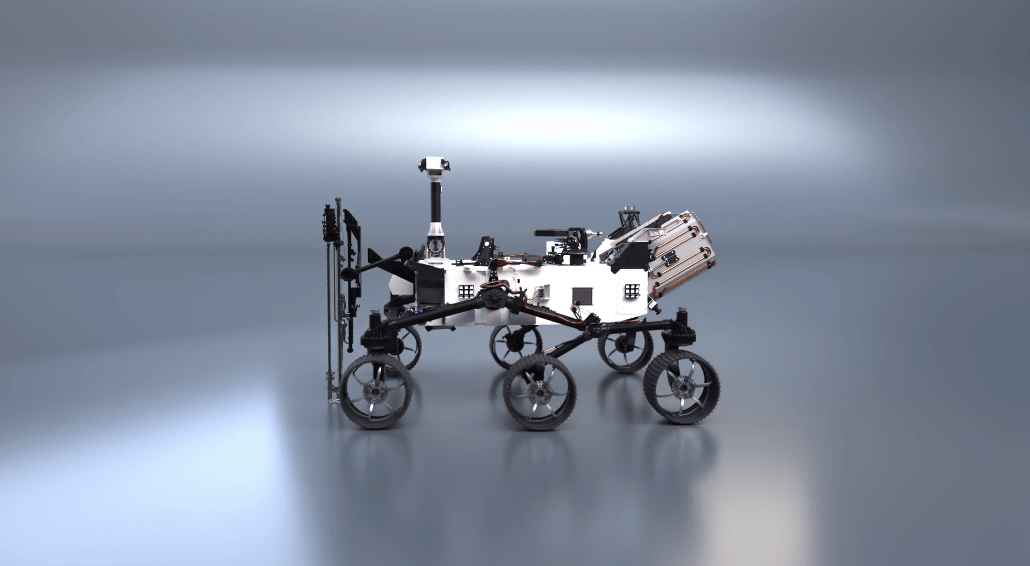
NASA officials on Saturday stressed that the agency is working to speed up testing and development of the hardware that will ensure human missions to the moon. The agency plans to have rovers and other infrastructure already waiting on the moon to greet any human crews when they do eventually arrive there. This is critical, according to NASA chief Jared Isaacman: “the missions themselves will help us characterize an environment that we’ve really not visited in a very long time,” he said at Saturday’s press event…One of the biggest updates to that ambition is the decision to fly a rover, PROMISE (Polar Rover for Observation, Mapping and In-Situ Exploration), which is modeled after the Mars rovers Perseverance and Curiosity. Previously only proposed as a possibility by Isaacman, PROMISE will fly to the moon and land using a Blue Origin lander in late 2028 for an 18-month primary mission.
—Business Times: “Pakistani Astronaut to Join China’s Shenzhou-24 Space Mission“
A Pakistani astronaut will join China’s space station as a payload specialist on the upcoming Shenzhou-24 mission as the Chinese state media reported on Saturday. The milestone marks the first foreign visitor to China’s space station and the first joint spaceflight featuring both Chinese and foreign astronauts in the history of China’s manned space program…In February 2025, China and Pakistan signed an agreement covering astronaut selection, training and participation in Chinese space station flights. Following a rigorous three-stage assessment, two Pakistani pilots Zeeshan Ali and Khurram Daud were selected as candidates and have been training at the China Astronaut Research and Training Center in Beijing. While one will carry out the primary flight mission and the second will serve as a backup.
—Vice: “There’s a 93-Billion-Mile Structure in Space, and Astronomers Can’t Fully Explain It“
In a study published last month in The Astrophysical Journal Letters, astronomers at the University of Arizona made a major discovery using the Hubble Space Telescope. They caught a visible-light glimpse of a gargantuan, 93-billion-mile-long cosmic dust feature dubbed the “Cat’s Tail,” sitting just 63 light-years away in the Beta Pictoris system. If you’re trying to wrap your brain around that scale, this thing is roughly 1,000 astronomical units long, long enough to wrap between the Earth and the Sun about 500 times. If I put it in the only measurable terms Americans are familiar with, it would be about 1.3 billion American football fields, endzones included.
Note: Here is the podcast version of this post.

