ULA is Up for Sale

Image (Credit): ULA’s new Vulcan Centaur rocket. (ULA)

United Launch Alliance (ULA), a space rocket partnership between Boeing and Lockheed Martin, is now being offered for sale. Both Blue Origin and Cerberus are showing interest, which could upset the space business as Blue Origin takes a big step forward or Cerberus gets into the space business.

ULA, formed in 2006, has both a wealth of experience as well as the confidence of the US military, even though SpaceX has been eating into that business. ULA also has ready commercial customers, including a partnership with Amazon to launch 47 rockets to bring the Kuiper broadband constellation into orbit.

The ties to Mr. Bezos, owner of Amazon, go even deeper than that. The ULA’s new rocket, the Vulcan Centaur, will use engines built by Blue Origin, another one of Mr. Bezos’ companies. This may make a Blue Origin a natural new owner to ULA.

The potential buyers may want to wait until the test launch of the Vulcan on January 8th. At that time, the Vulcan rocket will be used to launch the Astrobotic Peregrine commercial lunar lander, the first of NASA’s Commercial Lunar Payload Services initiative designed to deliver science and technology experiments to the lunar surface.

None of this means Boeing or Lockheed Martin are moving away from space altogether. Boeing is still working on its Starliner to bring individuals and cargo to low-Earth orbit as well as its Space Launch System, which serves as the backbone of the Artemis program. Lockheed Martin will be busy as well with its Orion capsule and human landing system (with Blue Origin and Boeing as well), additional key components of the Artemis program.

Any reshuffling is okay as long as it adds to the array of commercial options for NASA. A new player like Cerberus might be welcome, but I also see some value to pushing an experienced and involved Blue Origin to the top of its game a little quicker so it can go head-to-head with SpaceX.

This should be interesting. Stay tuned.
Blue Origin is Going to Mars, Hopefully

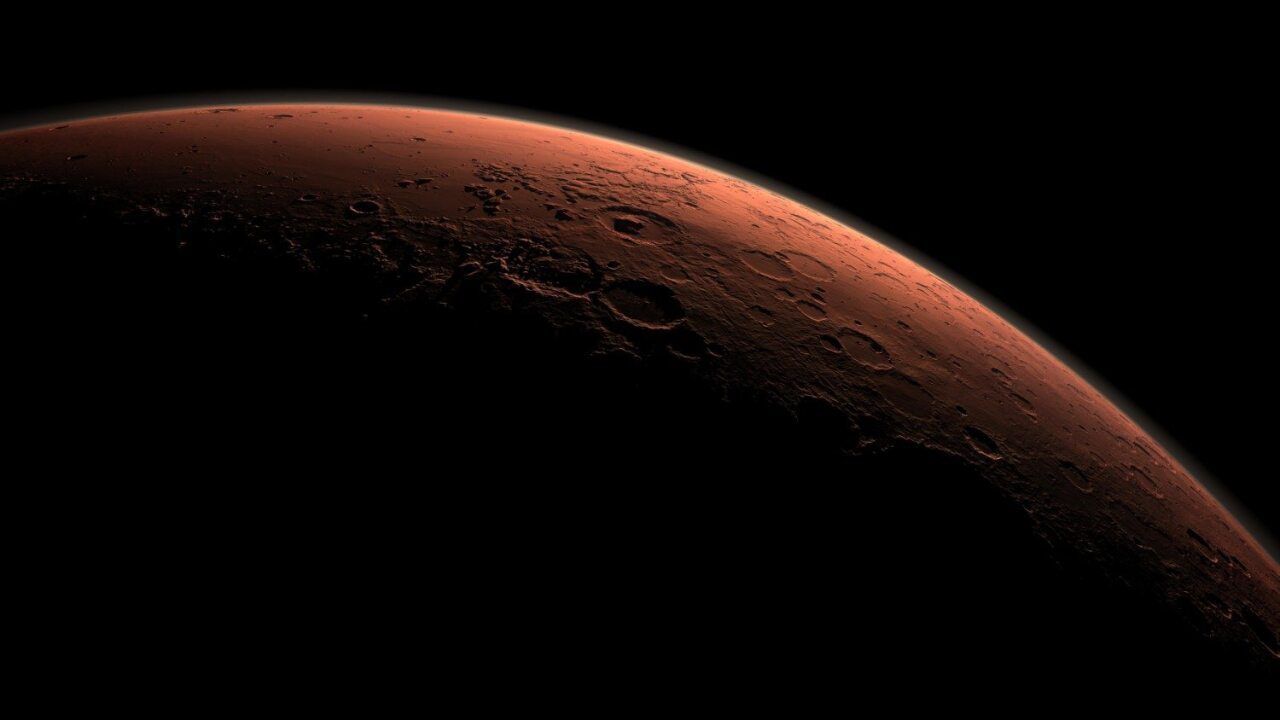
Image (Credit): Surface of Mars. (NASA)

Okay, the plan is for Blue Origin to launch NASA satellites towards Mars, so don’t worry about Jeff Bezos and Elon Musk fighting it out on the Martian surface.

NASA has tapped Blue Origin to take two satellites worth about $79 into space, which will be the first use of the company’s New Glenn rocket. The launch is planned for next year, giving Blue Origin time to test the rocket and prepare for the mission.

The NASA mission, called the Escape and Plasma Acceleration and Dynamics Explorers (EscaPADE), involves two identical probes that were originally scheduled to fly with the Psyche mission.

The goals of the EscaPADE mission are to:

  • understand the processes controlling the structure of Mars’ hybrid magnetosphere and how it guides ion flows;
  • understand how energy and momentum are transported from the solar wind through Mars’ magnetosphere; and
  • understand the processes controlling the flow of energy and matter into and out of the collisional atmosphere.

Can Blue Origin be ready by next year when the window to Mars opens up? That is the big question given the continued delays with the New Glenn rocket.

It is good to see NASA spreading its launches into more hands. Now we just need the industry to meet the challenge.

Not Again: Boeing Still Isn’t Ready for a Crew-Carrying Starliner

Image (Credit): Northrop Grumman’s Cygnus supply ship delivering cargo to the ISS. (NASA)

If you were eager to see the first flight of Boeing’s Starliner with a human crew, you will just need to wait a little longer. The original plan was to send two astronauts to the International Space Station (ISS) on July 15, after many earlier delays. But now Boeing said it still needs time to fix a few issues, including “adhesive tape that’s flammable and defects with the spacecraft’s parachute system,” according to NPR.

Boeing made this statement on June 1:

Boeing’s priority for Starliner’s Crew Flight Test is the safe launch, docking and return of Butch Wilmore and Suni Williams. For that reason, we have recommended to NASA that we reevaluate our launch window to allow for closing out the remaining technical and certification items.

Starliner is already about six year behind schedule at this point. That does not mean safety takes a back seat, but it does make you wonder about Boeing’s ongoing role in the ISS transport business.

We need at least two strong companies to support the ISS and future missions, but maybe Boeing is not up to the task and NASA should be looking for another partner, such as Northrop Grumman, which has already been busy shipping cargo to the ISS, or even Blue Origin, which is now part of the Artemis Moon mission.

Two Space Stations, Two Stories

Image (Credit): The three Chinese astronauts who left for the Tiangong space station this week. (VCG/VCG via Getty Images)

This week astronauts aboard the International Space Station (ISS) said goodbye to the second set of private astronauts who are part of the Axiom Space mission, while China sent its first non-military astronaut to its Tiangong space station. It is not surprising that China started out with military astronauts. NASA also recruited from the US military for its early astronauts, and still does today. Yet it is encouraging that China is already shifting to scientists.

So while China is following the expected trajectory towards more scientists, the ISS (and more particularly its US partners) is shifting towards greater tourism since Axiom missions are for quick flybys rather than deep research. For instance, the “astronauts” on the second Axiom mission were on the ISS for about a week. At least the second mission included a few scientists, whereas the first Axiom mission consisted of wealthy investors.

With commercial space stations in development, we can expect to see tourism as a key piece of the space industry, as we already see with SpaceX, Blue Origin, and Virgin Galactic. China is not far behind, indicating that it wants to find ways to be part of the space tourism industry as well.

Maintaining the right balance between the militarization of space, real science, and tourism will not be an easy balance, as we watch it all in play this week. I would rather see more tourists than military crews in space, but I am hoping we can find a way to keep the scientists fully engaged and the main players for now. Space mining and related industries will probably beat all of these other uses, but we are not at that stage just yet.

Blue Origin is Now Part of the Artemis Mission

Image (Credit): Artist’s rending of the Blue Origin lander on the Moon’s surface. (Blue Origin).

While SpaceX is building the lunar lander for the Artemis III mission, Blue Origin is back in the game building the next lunar lander for a follow-up human landing at the Moon’s southern polar region as part of Artemis V. The NASA contract with Blue Origin for this second mission is $3.4 billion.

Blue Origin’s partners in this venture include Lockheed Martin, Draper, Boeing, Astrobotic, and Honeybee Robotics.  All of this is good news for the space program in that its expands the knowledge and risk related to a lunar landing among even more companies. Such redundancy will increase resilience.

NASA Administrator Bill Nelson welcomed Blue Origin to the team with this statement:

Today we are excited to announce Blue Origin will build a human landing system as NASA’s second provider to deliver Artemis astronauts to the lunar surface…We are in a golden age of human spaceflight, which is made possible by NASA’s commercial and international partnerships. Together, we are making an investment in the infrastructure that will pave the way to land the first astronauts on Mars.

Note: I am glad to hear that Mr. Bezos is still plugging away with his space company Blue Origin and not spending all of his money on play things, such as his $500 million yacht. The commercial space industry is party one run by billionaire playboys, which may not be the most stable foundation. Yet all the same, if part of their money is going to public projects, that is a good thing. Just as Andrew Carnegie invested in public libraries and Bill Gates fighting disease and poverty in Africa, we can all benefit from the money going into the space arena. Mind you, it is not charity, but it is starter funds for critical projects to keep the US in the space race.