Space Stories: Oceans on Ariel, Dinosaur-Killer Asteroid from Beyond Jupiter, and the Launch of the Polaris Dawn Mission

Image (Credit): Uranus and distant galaxies as seen by the James Webb Space Telescope. (NASA, ESA, CSA, STScI)

Here are some recent stories of interest.

—Forbes: “NASA’s Webb Telescope Finds Evidence For An Ocean World Around Uranus“

New observations by the James Webb Space Telescope suggest that an icy moon around Uranus may have an underground liquid ocean. Ariel is one of 27 moons around Uranus, the seventh planet from the sun and the third largest planet in the solar system. It’s one of four moons that scientists have long been interested in as part of a search for water across the solar system, the others being Umbriel, Titania and Oberon.

—Nature: “Dinosaur-killing Chicxulub Asteroid Formed in Solar System’s Outer Reaches“

The object that smashed into Earth and kick-started the extinction that wiped out almost all dinosaurs 66 million years ago was an asteroid that originally formed beyond the orbit of Jupiter, according to geochemical evidence from the impact site in Chicxulub, Mexico. The findings, published on 15 August in Science, suggest that the mass extinction was the result of a train of events that began during the birth of the Solar System. Scientists had long suspected that the Chicxulub impactor, as it is known, was an asteroid from the outer Solar System, and these observations bolster the case.

—Space Daily: “Polaris Dawn Mission Set for August 26 to Advance Commercial Space Exploration“

The Polaris Program, focused on testing and developing new spaceflight technology, is preparing to launch its first mission, Polaris Dawn, aboard SpaceX’s Falcon 9 rocket on Monday, August 26, 2024. This mission marks a significant step forward in commercial space exploration. Key objectives include testing a next-generation spacesuit during the first commercial spacewalk, attempting to achieve the highest altitude for a human spaceflight since the Apollo missions, and evaluating a new communication system through Starlink.


One More Wrinkle Related to the Starliner Delay

Credit: NASA

As if NASA needed another issue with the Boeing Starliner stranded at the International Space Station (ISS), the media (particularly the Indian media) is now reporting that one of the Starliner astronauts is having eyesight issues.

According to one media source, Astronaut Sunita Williams is experiencing eyesight problems that may be linked to her exposure to microgravity. The issue, called Spaceflight Associated Neuro-ocular Syndrome (SANS), is not an uncommon symptom related to space flight. It can lead to blurred vision over time and worsens over time.

NASA has noted that:

Most astronauts’ eyes and brain structure change in space…Weightlessness causes blood and cerebrospinal fluid to shift toward the head. This fluid shift is believed to be the underlying cause of the eye and brain structural changes…The longer they are in space, the more they may be impacted. Many astronauts only experience effects in space, but some changes may be permanent in some astronauts.

This has only become an issue now that an 8-day tour has turned into a potential 8-month tour. This Gilligan’s Island tour needs to come to an end so that the ISS can return to regular operations.

Image (Credit): Scene from the television show Gilligan’s Island. (CBS Television Network)

Space Stories: More Quality Control Issues at Boeing, Blue Origin’s Planned Lunar Landing, and Citizen Scientists Assisting with Exoplanet Research

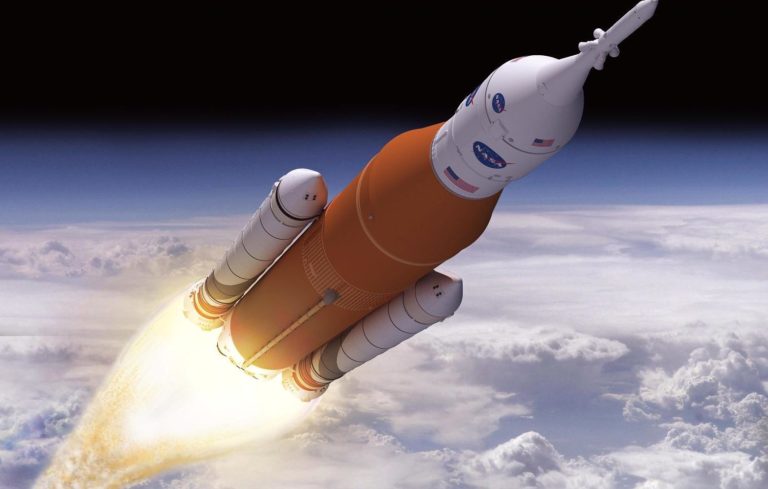
Image (Credit): Artist’s rendering of the SLS in flight. (NASA)

Here are some recent stories of interest.

—NBC News: “NASA Inspector General Gives Damning Assessment of Boeing’s Quality Control in New Report“

The report, released Thursday by NASA’s Office of Inspector General, calls into question Boeing’s standards and quality control for its part in NASA’s efforts to return astronauts to the moon. In NASA’s development of its next-generation megarocket, known as the Space Launch System, it gave Boeing the contract to build the rocket system’s powerful upper stage. But according to the report, Boeing’s quality control systems fall short of NASA’s requirements, and some known deficiencies have gone unaddressed. What’s more, the workers on the project are not, as a whole, sufficiently experienced or well trained, according to the inspector general.

—Space News: “NASA Payload to Fly on First Blue Origin Lunar Lander Mission“

A NASA payload will hitch a ride to the moon on Blue Origin’s first lunar lander mission, scheduled to launch as soon as next March. In an Aug. 6 procurement filing, NASA revealed it selected Blue Origin to fly a camera system to study how engine plumes interact with regolith at south polar regions of the moon, collecting data to support future crewed landing missions. The payload, called Stereo Cameras for Lunar Plume Surface Studies (SCALPSS), will fly through NASA’s Commercial Lunar Payload Services (CLPS) program.

—NASA: “How NASA Citizen Science Fuels Future Exoplanet Research“

NASA’s upcoming flagship astrophysics missions, the Nancy Grace Roman Space Telescope and the Habitable Worlds Observatory, will study planets outside our solar system, known as exoplanets. Over 5,000 exoplanets have been confirmed to date — and given that scientists estimate at least one exoplanet exists for every star in the sky, the hunt has just begun. Exoplanet discoveries from Roman and the Habitable Worlds Observatory may not be made only by professional researchers, but also by interested members of the public, known as citizen scientists.

Starliner: Return Date Now 2025

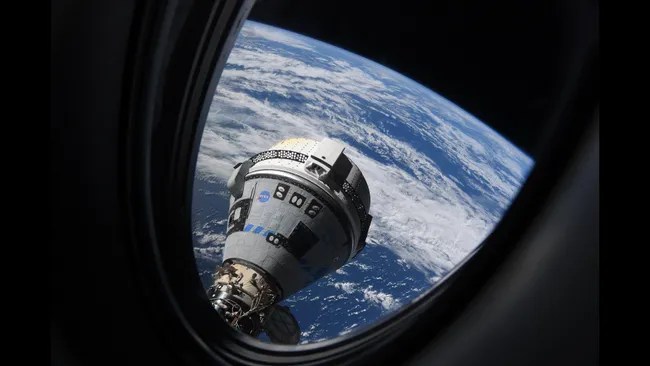
Image (Credit): Boeing’s Starliner capsule viewed from the ISS. (ESA)

I did not think it could get worse, but it has. NASA has announced that Boeing’s Starliner capsule attached to the International Space Station (ISS) might not return until next year, making it an unwanted appendage on a busy space station.

At a press conference today, NASA discussed leaving the two Boeing astronauts on the ISS until February 2025 and cutting in half the planned crew for the September 24 SpaceX Dragon mission. This would keep the number of astronauts on the space station to its normal number. There was also discussion about bringing the Boeing astronauts back on another capsule if the Starliner was not ready.

This looks bad for Boeing and NASA’s commercial space efforts. Boeing does not agree with NASA’s assessment, stating in an August 2 mission update:

Boeing remains confident in the Starliner spacecraft and its ability to return safely with crew. We continue to support NASA’s requests for additional testing, data, analysis and reviews to affirm the spacecraft’s safe undocking and landing capabilities. Our confidence is based on this abundance of valuable testing from Boeing and NASA. The testing has confirmed 27 of 28 RCS thrusters are healthy and back to full operational capability. Starliner’s propulsion system also maintains redundancy and the helium levels remain stable. The data also supports root cause assessments for the helium and thruster issues and flight rationale for Starliner and its crew’s return to Earth.

All of this is happening while the ISS crew are unloading supplies from a recently arrived Northrop Grumman Cygnus cargo capsule launched over the weekend. It does make you wonder whether Grumman should be the next best hope for a crewed capsule rather than Boeing. Grumman has a proven track record of more than 20 resupply runs. Clearly, crewed capsule are different, but it is something to consider.

Sierra Space is also testing its Dream Chaser next month, which is also expected to make cargo runs to the ISS. It this another potential crew option down the road?

The purpose of commercial involvement was greater options. Let’s work on expanding those options as quickly as possible. Placing all of our eggs in the Elon Musk SpaceX basket makes me nervous as he calls for civil war in the United Kingdom.

The Space Station Supplies Have Been Launched

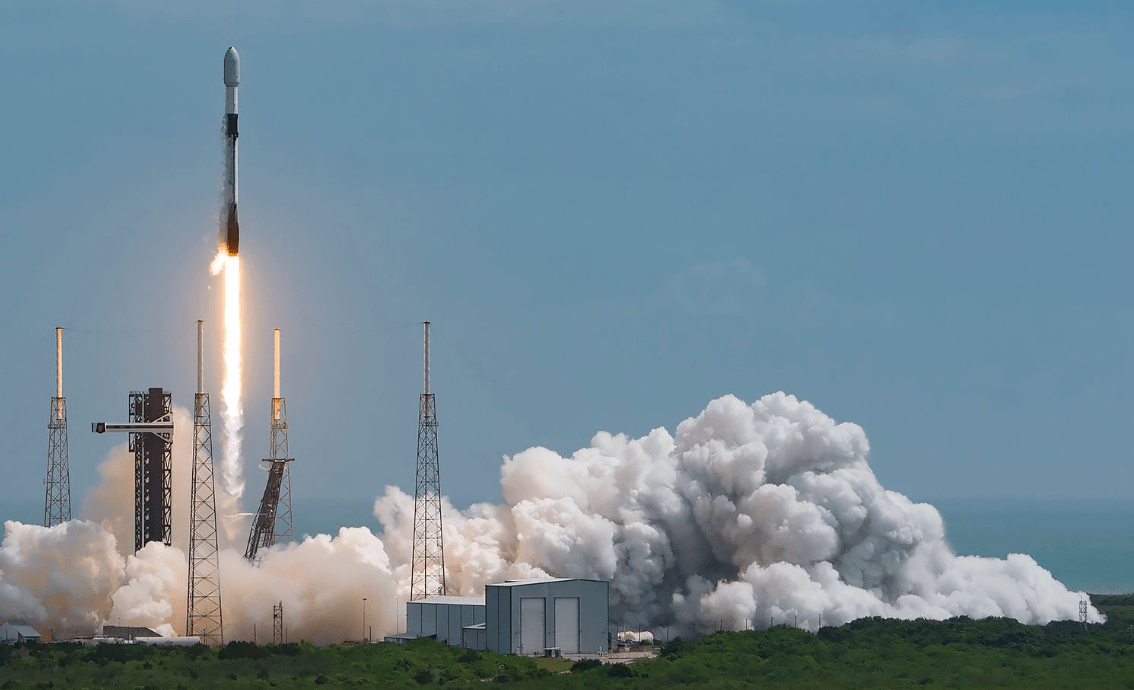
Image (Credit): Successful launch of a SpaceX Falcon 9 on August 4, 2024 sending supplies to the ISS. (SpaceX)

The weather cleared enough in Florida on Sunday for the SpaceX launch to take place, sending the Northrop Grumman Cygnus cargo spacecraft towards the International Space Station (ISS) after some earlier delays.

At 11:02 am ET, SpaceX’s Falcon 9 launched Northrop Grumman’s 21st Commercial Resupply Services mission (NG-21) to the ISS from Space Complex 40 (SLC-40) at Cape Canaveral Space Force Station in Florida.

The spacecraft will intercept the ISS on Tuesday, August 6. With the extra Starliner astronauts on board awaiting permission from Boeing to return to Earth, it is likely that the supplies will be very welcome.

Another three astronauts will be launched to the ISS on August 18 as part of the normal crew rotation. Hence, it will get even more crowded at the station by mid-August.

Update: The next crewed mission to the ISS was moved to “no earlier than” September 24 to give the Starliner more time to return to Earth.