Protect NASA Astrobiology Research

Image (Credit): Artist’s conception of a planetary lineup showing habitable-zone exoplanets with similarities to Earth, featured on the far right. (NASA/Ames/JPL-Caltech)

The astrobiology community is looking for individuals to show their support for NASA’s efforts in this area. In a white paper highlighting the benefits of astrobiology research, some of the key points are:

  • Preserve Astrobiology Leadership: Astrobiology is a pillar of NASA’s mission with a storied legacy that must be safeguarded.
  • Unprecedented Discoveries Ahead: Mars, Ocean Worlds, and exoplanet missions in the coming decades could finally answer one of humanity’s most profound questions: “are we alone?
  • Public Passion and Impact: The public passionately supports the search for life – a pursuit that inspires, unites, and advances STEM engagement.
  • NASA’s Unique Role: NASA’s unique capabilities and infrastructure position it as a leader in astrobiology, working in collaboration with U.S. academia and industry to advance this field.
  • Preserve Astrobiology at Its Peak: Astrobiology is thriving; workforce and research funding reductions must not derail our best chance to find life beyond Earth.

At a time of unprecedented threats to NASA’s program and mission, it is important to send a message to Congress and others that we have just begun to understand the universe and its potential for other forms of life, and now is not the time to back away.

The paper notes:

As NASA navigates the administration’s government-wide workforce optimization initiative, it is vital that we do not undermine astrobiology research – a field at the very heart of our agency’s purpose and future. Acting leadership has rightly stated that any reductions must align with mission needs. Few needs are more central to NASA’s science mission than understanding life’s existence beyond Earth.

The same site provides a link to an endorsement page.

I expect this is one of many initiatives to bring attention to the threats facing our space program. It is true that some efficiencies can be found in government with the right level of analysis and careful consideration of existing programs (as has been done in the past), but that is not happening right now with the random and unexplainable cuts.


Upcoming Hearing on NASA Nominee

The process continues to bring on a new NASA Administrator, even as Elon Musk and his DOGE team do all they can to cripple the agency.

The nomination hearing for Jared Isaacman, announced earlier today by the Senate Committee on Commerce, Science, and Transportation, will take place next Wednesday, April 9, at 10am. The hearing will be streamed live via the Committee’s website as well as YouTube.

The same hearing will also discuss the nomination of Olivia Trusty to be a Member of the Federal Communications Commission, so it is not clear how much time will be dedicated to the NASA piece. Generally, the nominee reads from a prepared statement and the Senators who show up that day pepper the nominee with a few questions.

These hearings are usually pretty tame, but that may not be the case if Mr. Isaacman’s ties with Elon Musk become a topic. A recent Wall Street Journal story stated that Mr. Isaacman was hand-picked by Mr. Musk, which followed Mr. Isaacman paying SpaceX an undisclosed amount to go into orbit last year.

It has also been reported that Mr. Isaacman’s own companies may come under scrutiny because of their DEI initiatives, a big no-no with the White House and the ever-destructive DOGE.

Maybe it will be an interesting hearing.

Space Quote: The Cutting Continues at NASA

Credit: Image by David Yonatan González from Pixabay

“Good work by @NASA this week:
-Eliminated their unused Purchasing Cards (~80%)
-Terminated ~$420M in unneeded contracts, including $45M ($15M each) to three separate consultants, all for “Change Management Support Services””

-Statement on Twitter/X by the Department of Government Efficiency (DOGE). The specific “unneeded” contacts being cut beyond the three provided contracts is unclear. What is the chance that any of the cuts will impact SpaceX or other Musk interests? Probably zero at this point. We will need to wait for more transparency once the dust settles.

Space Quote: Hurry Up with that New Administrator

“The global space race is accelerating, and America faces an urgent challenge in maintaining its leadership in space exploration, technological innovation, and national security – especially in the face of China’s rapidly advancing space program…Jared Isaacman is uniquely qualified to deliver strong leadership that will strengthen NASA’s core programs and ensure the United States remains at the forefront of scientific discovery, space commerce, and exploration.”

-Statement by Tennessee Governor Bill Lee and six other governors in a letter to the Senate Commerce, Science, and Transportation Committee regarding the appointment of NASA’s next Administrator. It is likely that the governors see the continuing disruptions at NASA, including the recent elimination of two departments and office of chief scientist, and understand that this destruction will probably continue without permanent leadership at the agency.

A Very Mixed Week in Space

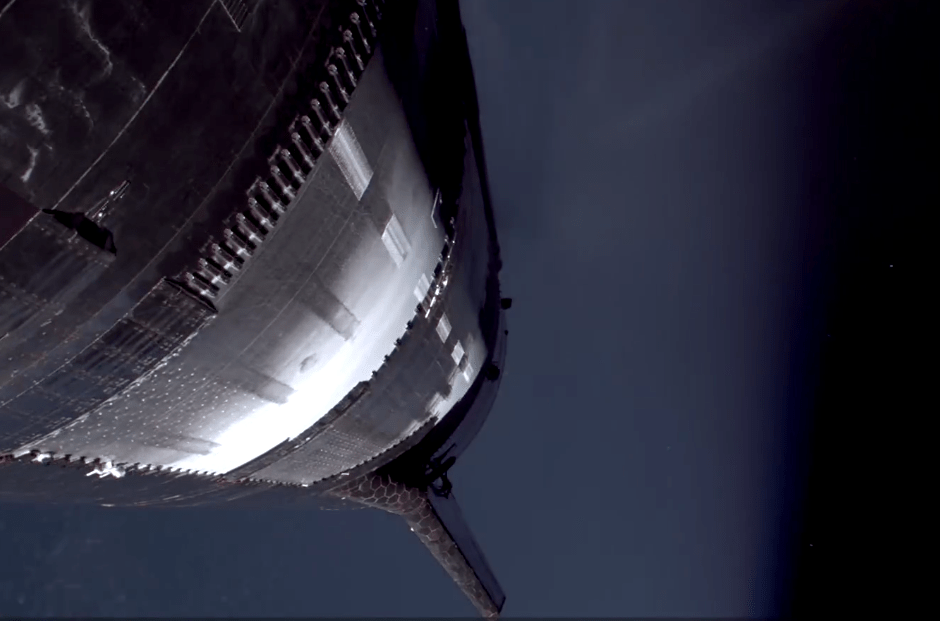
Image (Credit): One of the last images of the eighth Starship flight on Thursday right before the rocket exploded. (SpaceX)

Let’s start with the good news. This past week two U.S. commercial space companies put landers on the Moon. Both Firefly’s Blue Ghost and Intuitive Machines’ Athena are now residents of the Moon. This is a terrific accomplishment for these relatively new players.

Now the bad news. Athena landed incorrectly and cannot carry out its mission. In fact, it died after only one day on the lunar surface. In addition, the Lunar Trailblazer that accompanied Athena on this mission with plans to orbit and map the Moon also appears to be a lost cause. And finally, SpaceX’s eighth test of its Starship ended with a fiery explosion over the Caribbean, much like its seventh test.

Add to this the potential dismantling of NASA should rumors of a 50 percent cut be true, and you have a very mixed week with too little good news (much like the stock market).

One common element in at least two of the stories – Starship explosion and NASA cuts – relates to Mr. Musk. One wonders whether more attention to SpaceX and less time ransacking the federal government might have led to better outcomes this week. I’m not a rocket scientist, but that seems to make some sense to me.