Space Stories: Old Stars Harboring Exoplanets, a Hot “Earth” Located, and the Role of Exomoons

Image (Credit): Artist’s rendering of an Earth-like exomoon orbiting a gas giant planet in a star’s habitable zone. (NASA/JPL-Caltech)

Here are some recent stories of interest related to exoplanets.

Phys.org: “Old Stars May Be the Best Places to Search for Life

Once upon a cosmic time, scientists assumed that stars apply an eternal magnetic brake, causing an endless slowdown of their rotation. With new observations and sophisticated methods, they have now peeked into a star’s magnetic secrets and found that they are not what they expected. The cosmic hotspots for finding alien neighbors might be around stars hitting their midlife crisis and beyond. This groundbreaking study, shedding light on magnetic phenomena and habitable environments, has been published in The Astrophysical Journal Letters.

NASA: “Earth-sized Planet Has a ‘Lava Hemisphere’

In a system with two known planets, astronomers spotted something new: a small object transiting across the Sun-sized star. This turned out to be another planet: extra hot and Earth-sized…The newly-spotted planet, called HD 63433 d, is tidally locked, meaning there is a dayside which always faces its star and a side that is constantly in darkness. This exoplanet, or planet outside of our solar system, orbits around the star HD 63433 (TOI 1726) in the HD 63433 planetary system. This scorching world is the smallest confirmed exoplanet younger than 500 million years old. It’s also the closest discovered Earth-sized planet this young, at about 400 million years old.

UniverseToday: “Big Planets Don’t Necessarily Mean Big Moons’”

Does the size of an exomoon help determine if life could form on an exoplanet it’s orbiting? This is something a February 2022 study published in Nature Communications hopes to address as a team of researchers investigated the potential for large exomoons to form around large exoplanets (Earth-sized and larger) like how our Moon was formed around the Earth. Despite this study being published almost two years ago, its findings still hold strong regarding the search for exomoons, as astronomers have yet to confirm the existence of any exomoons anywhere in the cosmos. But why is it so important to better understand the potential for large exomoons orbiting large exoplanets?

Top Astronomy Stories in 2023

Image (Credit): Chart showing the planned travel of the JUICE spacecraft. (ESA, work performed by ATG under contract to ESA)

I wanted to start out the new year by first remembering all of the great missions from 2023. I also decided to group this work rather than focus on single missions.

Here is what I came up with:

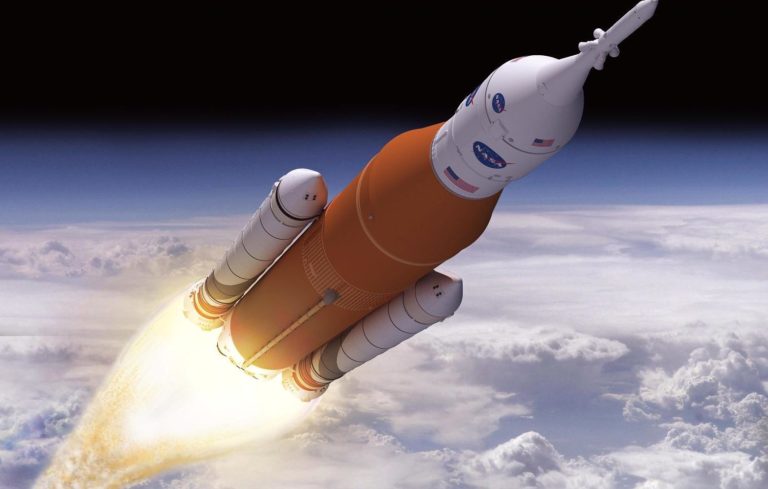
NASA’s Moon Mission: We saw more progress towards the next steps in the Artemis program to put humans on the Moon, including NASA’s announcement of the four astronauts to lead the Artemis II mission, SpaceX’s tests of the Starship rocket, and the design of new spacesuits for the Artemis astronauts.

Other Attempts to Land on the Moon: We saw other nations also reaching for the Moon. While India had great success landing a rover on the lunar South Pole, both Russia and a commercial venture from Japan did not have similar luck. We also saw Japan trying it again late last year.

NASA Asteroid Missions: Asteroids were the big news this year, with Lucy encountering a surprise pair of asteroids, OSIRIS-REx bringing back a sample from the asteroid Bennu, and NASA launching the Psyche mission.

JWST Discoveries: This year we celebrated the anniversary of the James Webb Space Telescope (JWST), which has been better than ever imaged. It is helping to change our understanding of the origin of the universe while poking and prodding at exoplanets to review their secrets.

ESA Missions: The European Space Agency (ESA) has also been very busy in 2023. For instance, the launch of the Euclid mission to study dark matter and dark energy, as well as the JUICE mission to study Jupiter and its moons, will assist with our understanding of the big picture as well as our own neighborhood.

That’s an impressive record, and I look forward to even more great news in 2024.

Study Findings: Atmospheric Carbon Depletion as a Tracer of Water Oceans and Biomass on Temperate Terrestrial Exoplanets

Credit: NASA/JPL-Caltech

Nature Astronomy abstract of the study findings:

The conventional observables to identify a habitable or inhabited environment in exoplanets, such as an ocean glint or abundant atmospheric O2, will be challenging to detect with present or upcoming observatories. Here we suggest a new signature. A low carbon abundance in the atmosphere of a temperate rock`y planet, relative to other planets of the same system, traces the presence of a substantial amount of liquid water, plate tectonics and/or biomass. Here we show that JWST can already perform such a search in some selected systems such as TRAPPIST-1 via the CO2 band at 4.3 μm, which falls in a spectral sweet spot where the overall noise budget and the effect of cloud and/or hazes are optimal. We propose a three-step strategy for transiting exoplanets: detection of an atmosphere around temperate terrestrial planets in about 10 transits for the most favourable systems; assessment of atmospheric carbon depletion in about 40 transits; and measurements of O3 abundance to disentangle between a water- versus biomass-supported carbon depletion in about 100 transits. The concept of carbon depletion as a signature for habitability is also applicable for next-generation direct-imaging telescopes.

Citation: Triaud, A.H.M.J., de Wit, J., Klein, F. et al. Atmospheric carbon depletion as a tracer of water oceans and biomass on temperate terrestrial exoplanets. Nat Astron (2023).
https://doi.org/10.1038/s41550-023-02157-9

Study-related stories:

Space Stories: Tom Hanks Returns to the Moon, Exomoons are Questioned, and Our Moon Enters a New Phase

Image (Credit): Tom Hanks at the opening of his new show in London. (Apollo Remastered)

Here are some recent stories of interest.

Reuters: “Tom Hanks Brings Love of Space to New Immersive London Show

Archive footage of space rockets taking off beam across giant walls in a new immersive show in London, as Hollywood actor Tom Hanks narrates the story of human voyages to the moon. “The Moonwalkers: A Journey With Tom Hanks” looks at the first moon landings of the Apollo missions from 1969 to 1972 and their successor, NASA’s human spaceflight program, Artemis. The next mission – the Artemis II lunar flyby – is planned for next year and interviews with the four-member team are also projected on the walls at the Lightroom gallery space in London’s King Cross area.

Max Planck Institute for Solar System Research: “Giant Doubts About Giant Exomoons

Just as it can be assumed that the stars in our Milky Way are orbited by planets, moons around these exoplanets should not be uncommon. This makes it all the more difficult to detect them. So far, only two of the more than 5300 known exoplanets have been found to have moons. A new data analysis now demonstrates that scientific statements are rarely black or white, that behind every result there is a greater or lesser degree of uncertainty and that the path to a statement often resembles a thriller. In observations of the planets Kepler-1625b and Kepler-1708b from the Kepler and Hubble space telescopes, researchers had discovered traces of such moons for the first time. A new study now raises doubts about these previous claims. As scientists from the Max Planck Institute for Solar System Research and the Sonnenberg Observatory, both in Germany, report in the journal Nature Astronomy, “planet-only” interpretations of the observations are more conclusive.

The University of Kansas: “Scholars Say it’s Time to Declare a New Epoch on the Moon, The ‘Lunar Anthropocene’

Human beings first disturbed moon dust Sept. 13, 1959, when the USSR’s unmanned spacecraft Luna 2 alighted on the lunar surface. In the following decades, more than a hundred other spacecraft have touched the moon — both crewed and uncrewed, sometimes landing and sometimes crashing. The most famous of these were NASA’s Apollo Lunar Modules, which transported humans to the moon’s surface to the astonishment of humankind. In the coming years, missions and projects already planned will change the face of the moon in more extreme ways. Now, according to anthropologists and geologists at the University of Kansas, it’s time to acknowledge humans have become the dominant force shaping the moon’s environment by declaring a new geological epoch for the moon: the Lunar Anthropocene.

Space Stories: Mad Rush for the Moon, An Unusual Exoplanet, and Flinging the Earth

Image (Credit): Crescent Moon as seen from the International Space Station. (NASA)

Here are some recent stories of interest.

Science.org: “Moon’s Scientifically Important Sites could be ‘Lost Forever’ in Mining Rush

Science and commerce may be headed for a clash on remote terrain: the Moon. For the first time in half a century, NASA is sending a craft to the lunar surface, with the launch at the end of this year of Peregrine Mission 1, a lander built by the private company Astrobotic Technology. Dozens of other craft will soon follow, many as part of NASA’s Artemis program to return astronauts to the Moon. Most researchers are looking forward to a new golden age of exploration and science. But some are worried. They foresee that the advent of private landers will lead to a “Moon rush,” as companies race to grab valuable minerals and resources while trampling over scientifically important lunar sites. With space law offering little or no protection to these areas, researchers are starting to lobby governments and international agencies to do something before it’s too late.

SciTechDaily: “Unusually Massive” – Astronomers Discover a Planet That Shouldn’t Exist

Researchers at Penn State have discovered an unusually massive planet, LHS 3154b, orbiting an ultracool dwarf star. This finding, contradicting current theories, prompts a reassessment of star and planet formation processes. The discovery of a planet that is far too massive for its sun is calling into question what was previously understood about the formation of planets and their solar systems, according to Penn State researchers. In a paper published on November 30 in the journal Science, researchers report the discovery of a planet more than 13 times as massive as Earth orbiting the “ultracool” star LHS 3154, which itself is nine times less massive than the sun. The mass ratio of the newly found planet with its host star is more than 100 times higher than that of Earth and the sun.

New Scientist: “Passing Star Could Fling Earth Out Past Pluto into the Oort Cloud

If a passing star came near the solar system, Earth would probably be fine – but there is a small chance our entire world could get thrown to the outer reaches of the solar system, crash into another planet or even get stolen by the wandering star. The other planets in the solar system could suffer similar fates, and Mercury in particular would be at risk of falling into the sun.